
This article contains affiliate links. We may earn a commission from qualifying purchases.
As an Amazon Associate I earn from qualifying purchases.
Soft shackles have become one of the most useful connectors in modern off-road recovery systems. They are light, easy to store, and can replace a steel screw-pin shackle in many properly matched recovery setups.
The advantage is not simply weight. A quality soft shackle can wrap around compatible smooth recovery points, connect kinetic ropes and winch rigging, and reduce the amount of heavy metal hardware in a recovery bag. But that convenience only works when the shackle is correctly rated and the attachment surface will not cut or abrade the synthetic fibers.
We have not personally tested every soft shackle in this guide. The comparisons below are based on current manufacturer information, published ratings where available, construction, protective sleeves, kit contents, and how each option fits different recovery systems.
The All Guy rule: buy the shackle for the recovery system, not just the biggest breaking-strength number on the product page.
As an Amazon Associate I earn from qualifying purchases. Some links below are affiliate links. Manufacturer-direct links are used where appropriate.
This guide is part of our larger overlanding recovery cluster. Start with Best Overlanding Recovery Gear in 2026, then see our Best Kinetic Recovery Ropes in 2026 and Best Recovery Boards for Overlanding in 2026. If you are building your first setup, our Overlanding for Beginners guide puts the entire system in context.
QUICK PICKS: BEST SOFT SHACKLES FOR OVERLANDING IN 2026
Eight soft shackle options for kinetic recovery, winching, and general trail recovery. Keep reading for ratings, safety, and detailed comparisons.
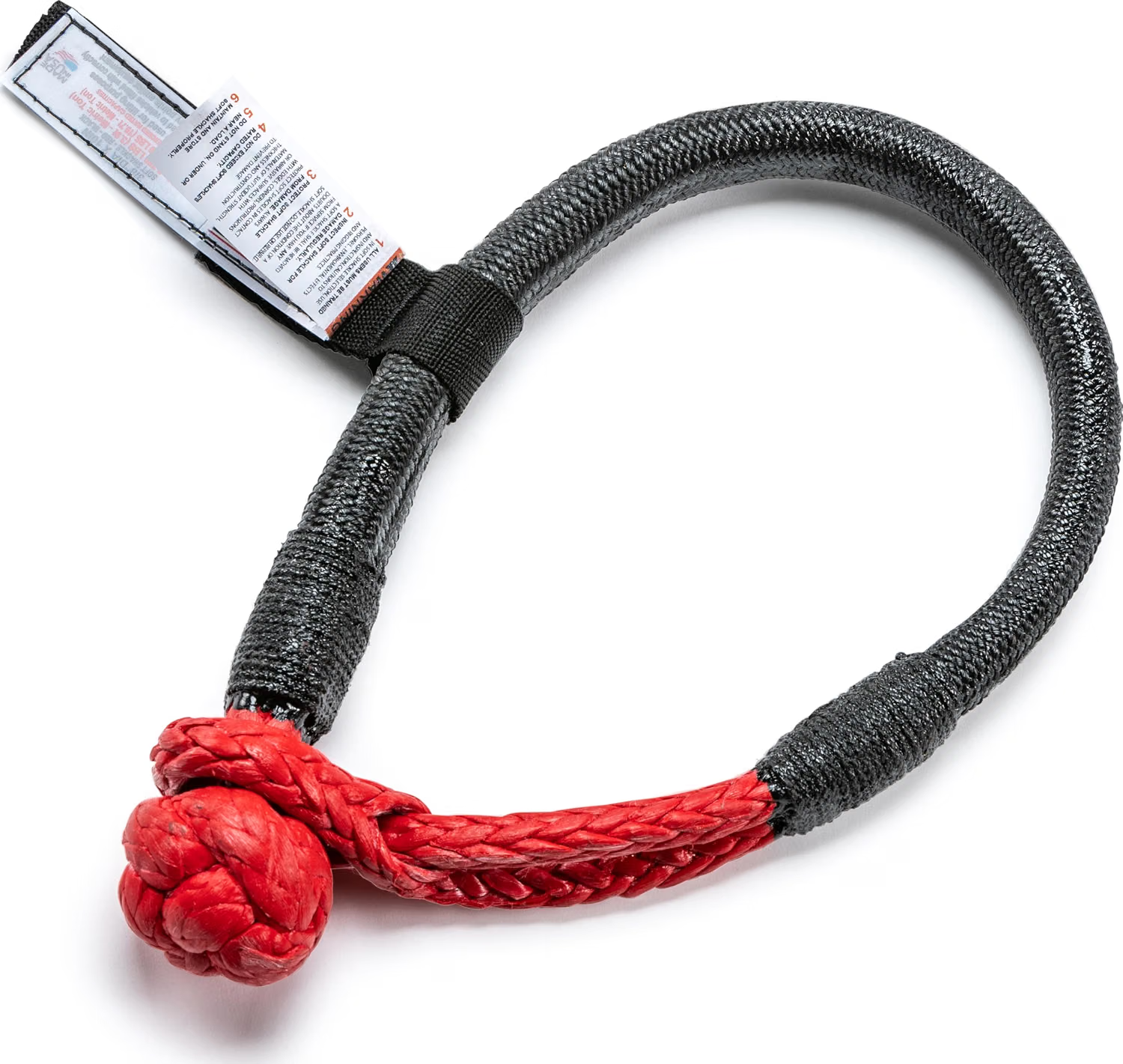
Factor 55 Extreme Duty Soft Shackle
View on Amazon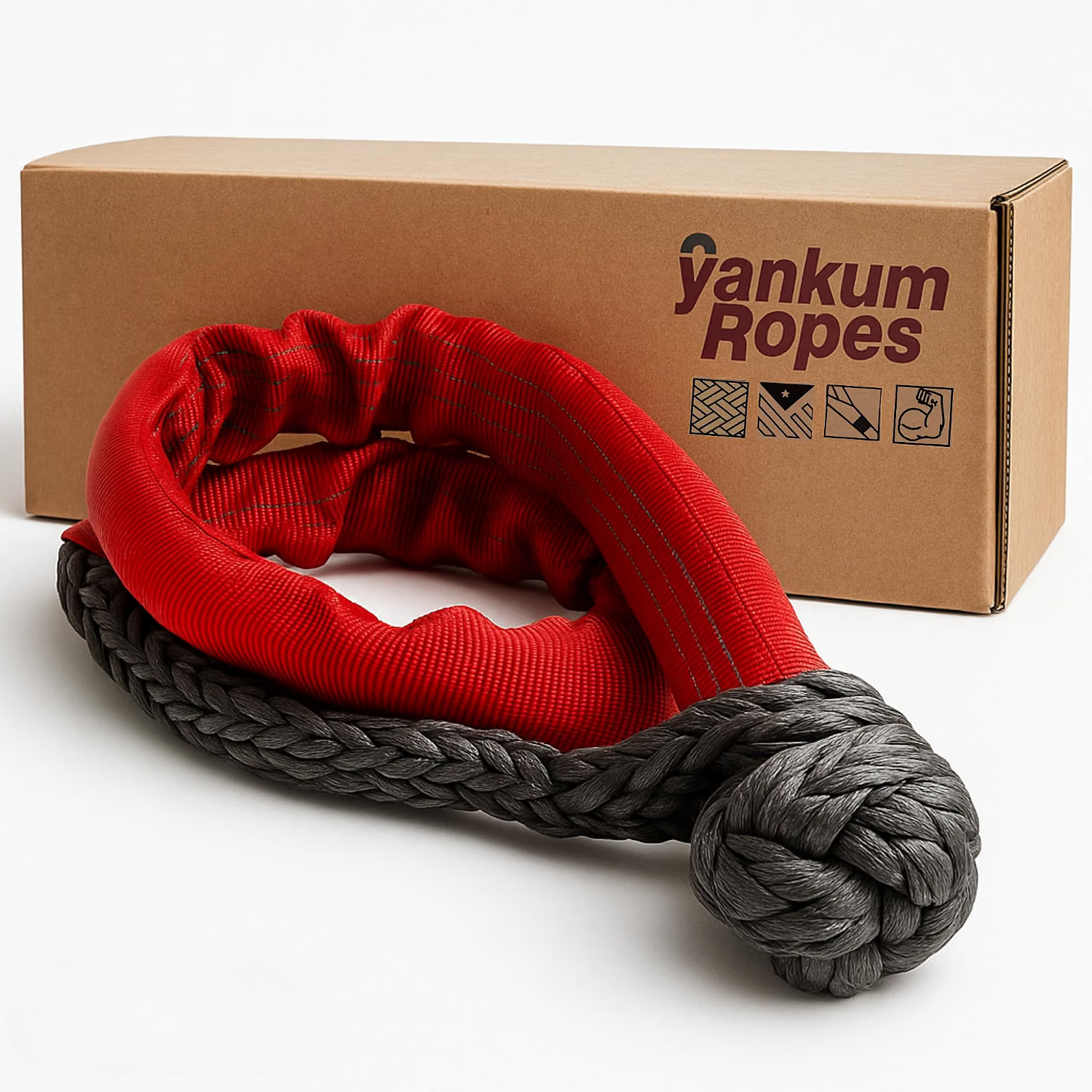
Yankum Ropes Soft Shackle
View on Amazon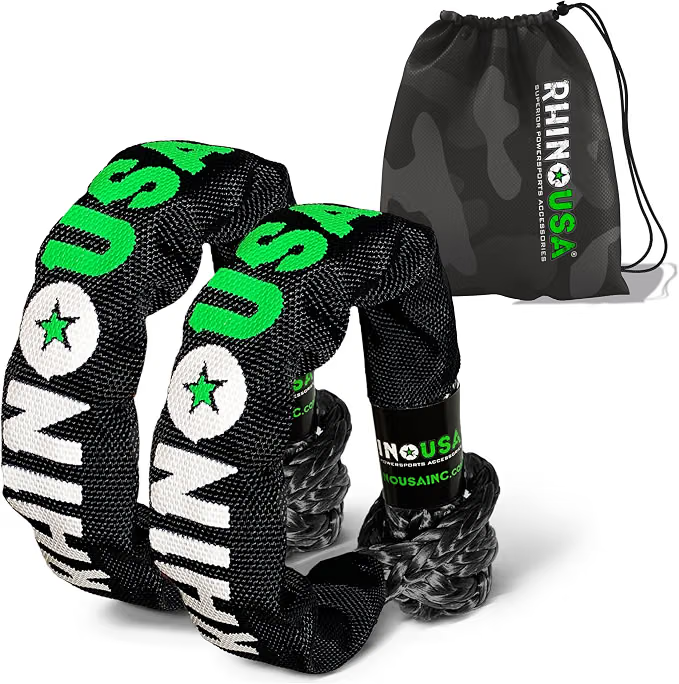
Rhino USA Synthetic Soft Shackle
View on Amazon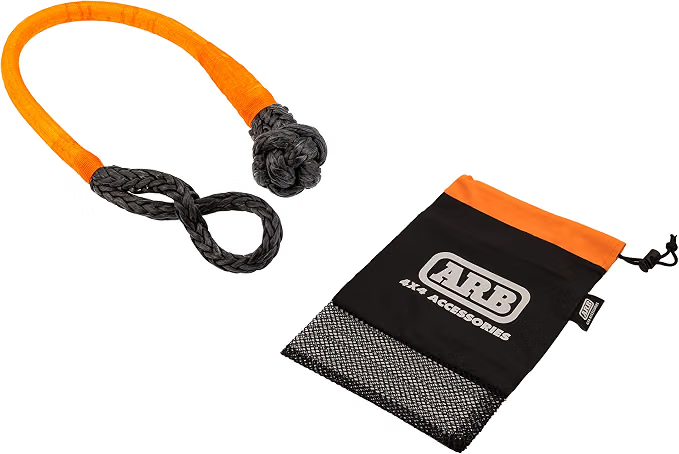
ARB Soft Rope Recovery Shackle
View on Amazon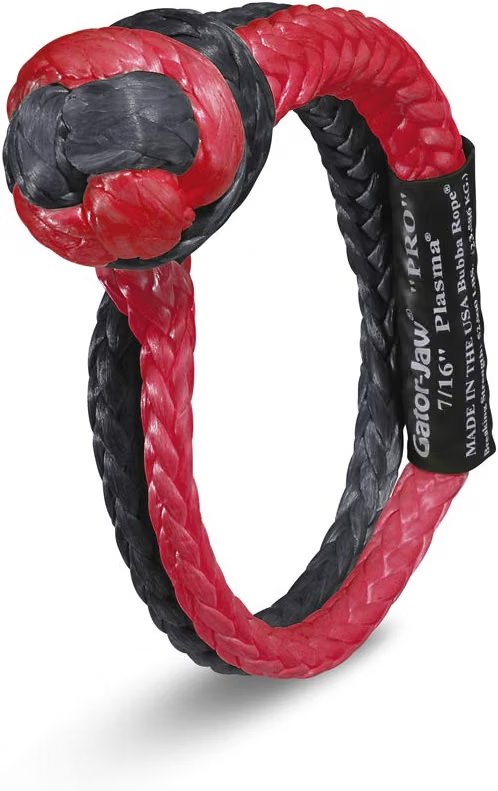
Bubba Rope Gator-Jaw Soft Shackle
View on Amazon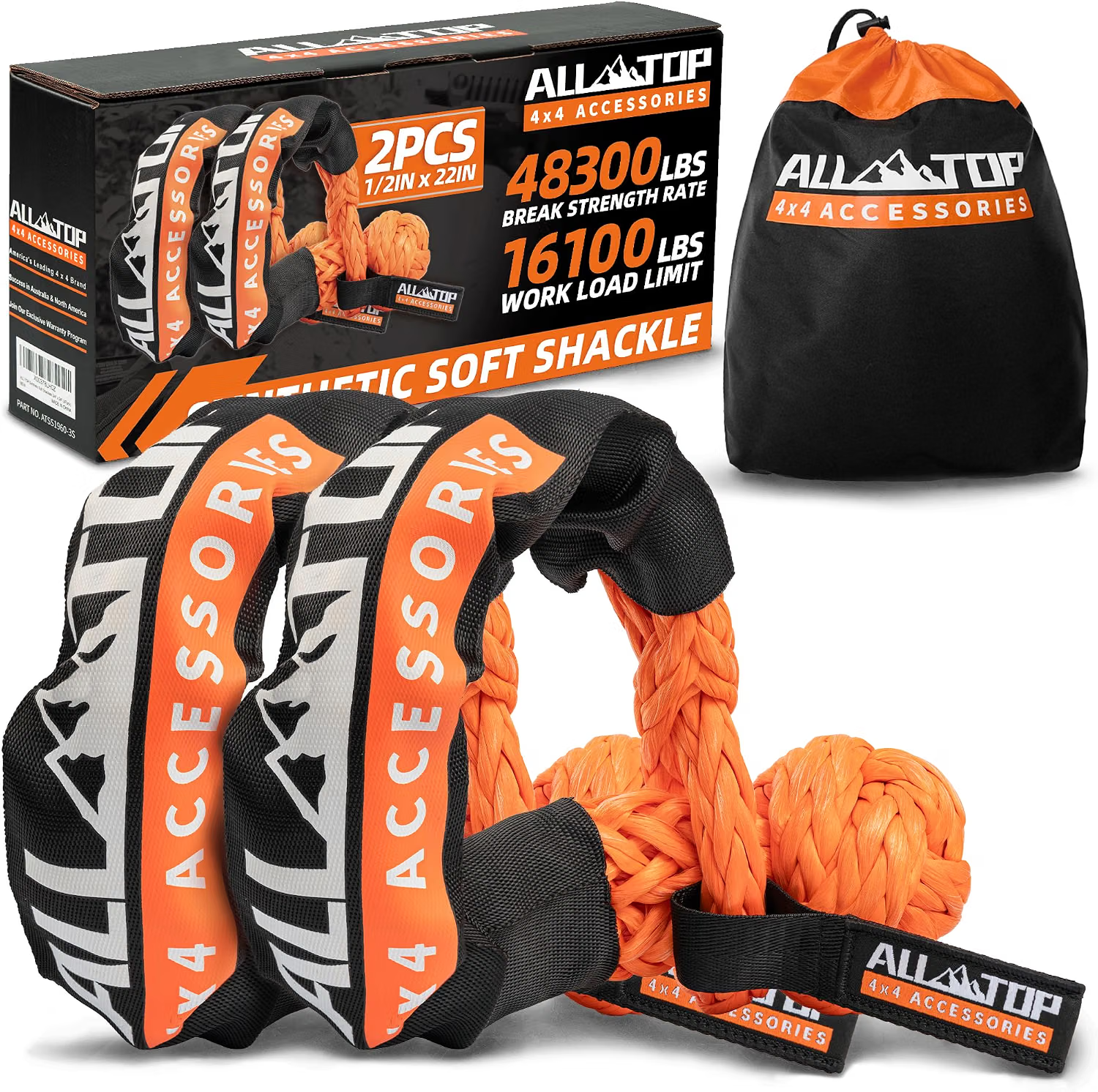
ALL-TOP Synthetic Soft Shackle
View on Amazon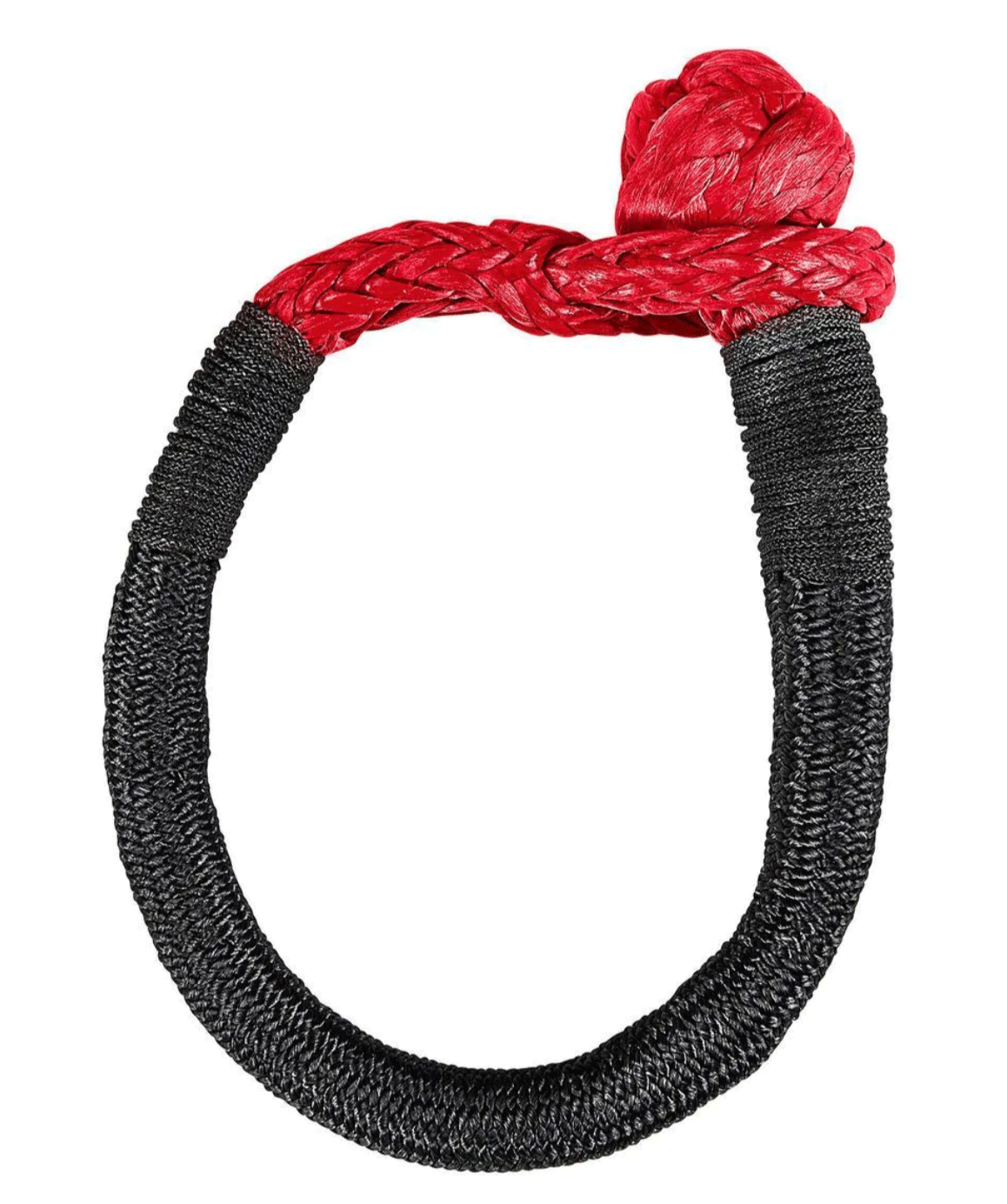
BADLAND Soft Shackle
View at Harbor Freight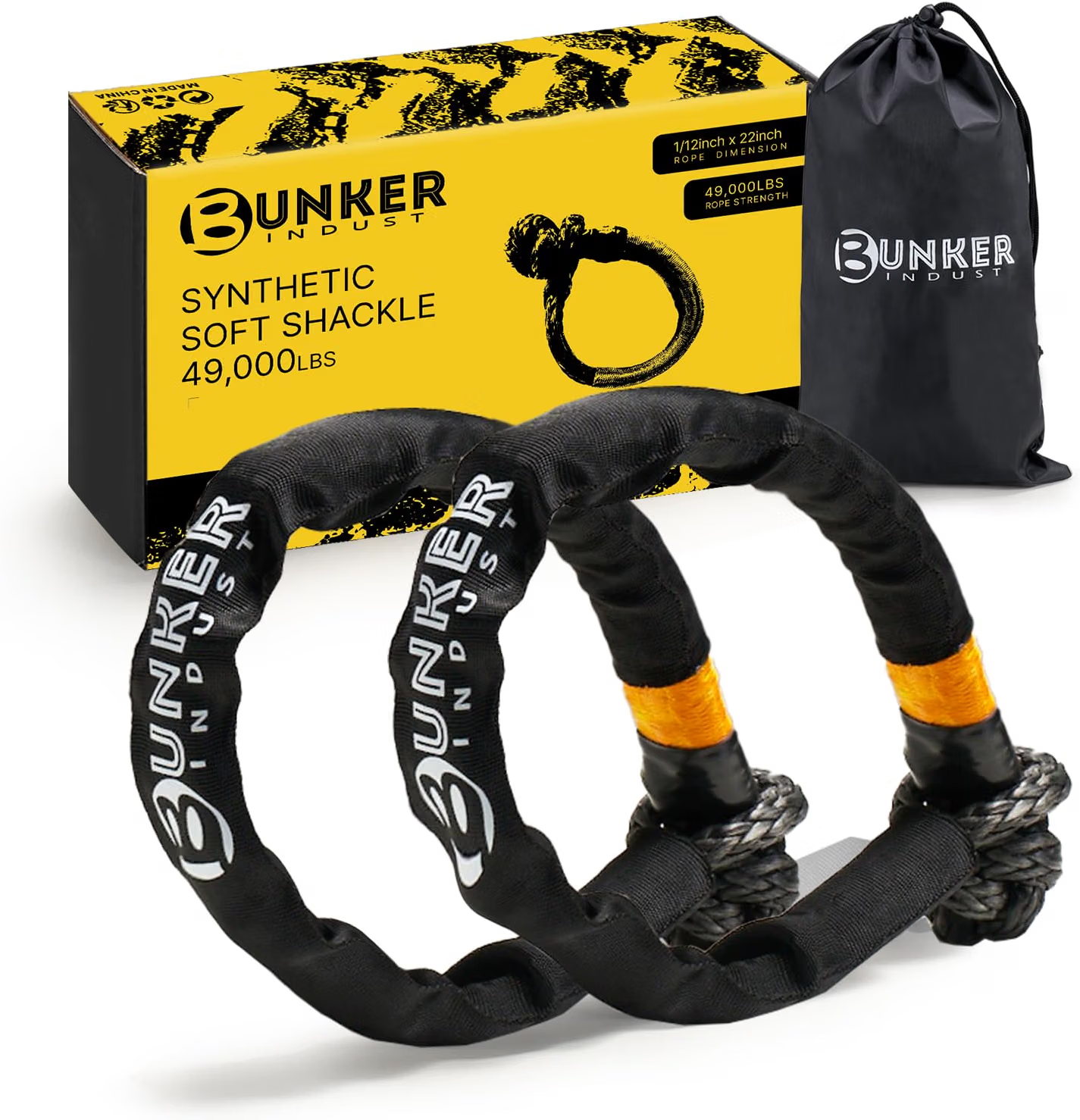
BUNKER INDUST Soft Shackle Kit
View on AmazonQuick Comparison: Best Soft Shackles for Overlanding in 2026
Soft shackle | Published / notable feature | Best fit |
|---|---|---|
Factor 55 Extreme Duty | 3/8 x 20 in. version: 43,500 lb MBS, 8,700 lb WLL | Premium recovery systems and clearly published ratings |
Yankum Ropes Soft Shackle | Multiple sizes with published MBS and WLL by diameter | Matching shackle size to the recovery vehicle |
Rhino USA Synthetic Soft Shackle | Synthetic shackle with protective sleeve | General truck, SUV, and trail recovery kits |
ARB Soft Rope Recovery Shackle | Soft recovery connector from ARB | ARB-focused recovery systems |
Bubba Rope Gator-Jaw | Synthetic Gator-Jaw design | Buyers pairing soft rigging with kinetic recovery gear |
ALL-TOP Synthetic Soft Shackle | Value-oriented synthetic recovery connector | Budget-conscious recovery kits |
BADLAND Soft Shackle | 7/16 in.; 47,500 lb break strength; 9,500 lb working load | Harbor Freight shoppers and clearly published ratings |
BUNKER INDUST Soft Shackle Kit | Kit-oriented option with soft recovery hardware | Buyers wanting multiple recovery components together |
What Is a Soft Shackle?
A soft shackle is a loop of high-strength synthetic fiber that closes around a large stopper knot. Instead of inserting a steel pin through two recovery eyes, you open the synthetic loop, pass it through the compatible connection points, and close it around the knot.
That design makes soft shackles extremely compact compared with steel hardware. It also removes a heavy screw pin from the connection. The tradeoff is that synthetic fibers are vulnerable to sharp edges, burrs, heat, chemical contamination, and abrasion. The recovery point matters just as much as the shackle.
Soft Shackle vs. Steel Shackle
Neither design is automatically right for every recovery. Steel bow shackles remain useful on recovery points designed around traditional hardware. Soft shackles are often easier to handle and store, and they work especially well with modern closed-link recovery systems.
The key limitation is surface condition. A soft shackle should not be dragged across sharp stamped-steel edges, damaged tow hooks, rough castings, or other surfaces that can cut the fibers. Smooth, radiused recovery points are the better match.
MBS vs. WLL: Do Not Confuse the Two
Minimum breaking strength, or MBS, describes the minimum force at which a product is expected to fail in controlled testing. Working load limit, or WLL, is a lower published operating limit. They are not interchangeable numbers.
When a manufacturer publishes a WLL, use that guidance along with the instructions for the rest of your recovery system. If a listing only advertises an enormous breaking-strength number without clear sizing or operating guidance, look closer rather than assuming it is automatically the safer choice.
What to Look For in a Soft Shackle
Clearly published load ratings or manufacturer sizing guidance.
A protective sleeve or jacket where abrasion is most likely.
Construction intended for vehicle recovery rather than generic rope work.
Compatibility with your recovery points, kinetic rope, winch line, or recovery ring.
Enough length to pass through the intended connection without forcing the shackle against sharp edges.
Clear inspection and retirement guidance from the manufacturer.
1. Factor 55 Extreme Duty Soft Shackle
Best fit: Buyers who want a premium soft shackle with clearly published ratings and a strong emphasis on modern closed-system winching.
Factor 55 offers several Extreme Duty sizes. Its 3/8-inch by 20-inch version is designed for Jeeps, midsize trucks, full-size trucks, CUVs, SUVs, and UTV/XTV applications with published guidance for vehicles up to 8,500 pounds gross vehicle weight.
Factor 55 publishes a 43,500-pound minimum breaking strength and 8,700-pound working load limit for that version. The company uses HMPE Plasma rope, added abrasion and UV protection, and a woven polyester protective jacket positioned close to the knot.
Why consider it: the attraction is not just headline strength. Factor 55 clearly publishes both MBS and WLL and builds the shackle around a defined recovery system.
2. Yankum Ropes Soft Shackle
Best fit: Buyers who want multiple sizes and manufacturer guidance for matching the shackle to the recovery vehicle.
Yankum offers its soft shackle in multiple diameters, with published minimum breaking strength and working load limits by size. That makes it easier to build a recovery kit around the actual vehicle instead of simply choosing the largest shackle available.
The product uses high-strength synthetic construction and a protective sleeve. Yankum also emphasizes pairing shackle size with the recovery vehicle and compatible recovery rope.
Why consider it: the sizing range and published guidance are especially useful if you are building different kits for a UTV, Jeep, midsize truck, or heavier full-size vehicle.
3. Rhino USA Synthetic Soft Shackle
Best fit: General truck, SUV, Jeep, and trail-recovery kits that need an easy-to-pack synthetic connector.
Rhino USA's synthetic soft shackle fits naturally into the same type of recovery bag as a kinetic rope, recovery strap, and hitch receiver. The protective sleeve helps keep the main synthetic body away from direct abrasion at the connection point.
Why consider it: this is a straightforward option for someone already building around Rhino USA recovery products or who wants a mainstream synthetic shackle without adding steel hardware to every connection.
4. ARB Soft Rope Recovery Shackle
Best fit: Overlanders building around ARB recovery equipment and smooth, soft-shackle-friendly recovery points.
ARB has increasingly designed recovery hardware with soft rigging in mind. Its current recovery guidance stresses using load-rated recovery shackles, while newer ARB recovery points use smooth, rounded edges specifically intended to be friendly to soft shackles.
Why consider it: ARB is a strong fit when you want the connector, recovery point, straps, and other rigging to come from the same broader ecosystem. Confirm the exact rating and compatibility of the specific shackle and recovery point you are using.
5. Bubba Rope Gator-Jaw Soft Shackle
Best fit: Buyers already using kinetic recovery ropes or synthetic recovery gear who want a soft connector from an established recovery-rope brand.
The Gator-Jaw design is built around synthetic recovery rigging rather than traditional metal hardware. That makes it a logical pairing for kinetic-rope systems where keeping the connection lightweight and easy to handle is a priority.
Why consider it: Bubba Rope is closely associated with dynamic recovery gear, so the Gator-Jaw is a natural option for a recovery bag centered on kinetic ropes and synthetic connections.
6. ALL-TOP Synthetic Soft Shackle
Best fit: Value-focused recovery kits where you want synthetic connectors without moving immediately into premium-priced rigging.
ALL-TOP's synthetic soft shackle gives buyers another way to reduce reliance on heavy steel connectors while keeping the recovery kit compact.
Why consider it: the appeal is value and simplicity. Verify the current listing's rating and dimensions against your vehicle, recovery point, and other recovery equipment before use.
7. BADLAND Soft Shackle
Best fit: Harbor Freight shoppers who want a clearly published working load and breaking strength.
Harbor Freight publishes a 9,500-pound rated working load and 47,500-pound breaking strength for the BADLAND Soft Shackle. It uses 7/16-inch UHMWPE construction with an abrasion guard and UV-resistant coating.
Harbor Freight describes it as a lightweight replacement for common steel screw-pin shackles and lists it as equivalent in strength to a 3/4-inch steel shackle.
Why consider it: the ratings are easy to find, the product is widely accessible, and it pairs naturally with the rest of the BADLAND recovery ecosystem.
8. BUNKER INDUST Soft Shackle Kit
Best fit: Buyers who want soft recovery hardware as part of a more complete value-oriented kit.
BUNKER INDUST sells soft-shackle-based recovery hardware in several configurations, including kits that combine soft shackles with recovery rings or kinetic recovery ropes.
One current soft-shackle and recovery-ring configuration uses a 12-strand UHMWPE shackle and publishes a 45,000-pound breaking force for the shackle. The exact Amazon-linked kit can vary, so check the current listing for included components and ratings before relying on any published number.
Why consider it: it makes sense for someone who wants to build several synthetic recovery connections without buying every part individually.
How to Use a Soft Shackle Safely
Inspect the connection before loading the system. The attachment point should be structurally rated for recovery and should not have a sharp edge, burr, open seam, or damaged surface that can cut the shackle. Keep the protective sleeve positioned at the highest-abrasion area when the design allows it.
Seat the shackle correctly around its stopper knot and keep the connection as straight as practical. Avoid side-loading hardware that is not designed for it, and do not allow the soft shackle to rub against a tire, exhaust component, sharp bumper edge, or moving winch line.
After recovery, clean off grit and inspect the fibers. Retire the shackle if you find cuts, melted or glazed fibers, significant abrasion, chemical damage, severe discoloration, damaged stitching, or deformation that conflicts with the manufacturer's instructions.
Can You Use a Soft Shackle With a Kinetic Rope?
Yes, when both products and the recovery points are properly rated and compatible. Soft shackles are commonly used to connect kinetic ropes to suitable recovery points because the synthetic-on-synthetic connection can be compact and easy to handle.
The dynamic forces are still substantial. Match the kinetic rope to the vehicle weights, then make sure the shackle and vehicle recovery points are appropriate for the load. Our Best Kinetic Recovery Ropes in 2026 guide covers rope sizing and the differences between dynamic recovery and towing.
Can You Use a Soft Shackle With a Winch?
Yes, soft shackles can be part of a synthetic winch-recovery system when used with compatible rated hardware. They are commonly paired with recovery rings, tree protectors, and soft-shackle-friendly recovery points.
For the broader system, see Best Overlanding Recovery Gear in 2026. That guide covers winches, pulleys, tree protection, kinetic recovery, traction boards, and how the pieces work together.
When a Soft Shackle Is the Wrong Choice
The recovery point has a sharp, rough, damaged, or non-radiused edge.
You cannot confirm the shackle's rating or manufacturer guidance.
The shackle is visibly cut, melted, heavily abraded, or contaminated.
The connection requires the shackle to sit against an exhaust component or other heat source.
The recovery method or hardware manufacturer specifically calls for a different connector.
Frequently Asked Questions
Are soft shackles stronger than steel shackles?
Some soft shackles publish very high breaking strengths relative to their weight, but the comparison is not as simple as fiber versus steel. The useful question is whether the specific connector is rated appropriately for your recovery system and compatible with the recovery point.
Do soft shackles need a protective sleeve?
A sleeve can help reduce abrasion where the shackle contacts a recovery point, but it does not make a sharp recovery point safe. The underlying surface still needs to be smooth and appropriate for synthetic rigging.
How many soft shackles should I carry?
Two is a practical starting point for many overlanding recovery kits because it gives you flexibility at both ends of a kinetic rope or winch setup. More complex recovery systems may justify additional shackles in different sizes.
Can a soft shackle connect to a factory tow hook?
Only if the vehicle manufacturer and recovery-equipment guidance support that attachment and the surface will not damage the shackle. Many factory transport or tie-down points are not recovery points. Verify the vehicle-specific guidance rather than assuming any visible hook is safe for recovery.
How These Fit Into a Complete Overlanding Recovery Kit
Soft shackles solve one specific problem: connecting rated recovery equipment without relying entirely on heavy steel hardware. They do not replace recovery points, kinetic ropes, traction boards, winches, tree protectors, or recovery training.
For the full setup, work outward from the connector. Start with rated recovery points, add the recovery method that fits your terrain, and then choose the shackle that matches that system. Our Best Overlanding Gear in 2026 guide covers the broader vehicle kit, while Best Portable Air Compressors for Overlanding in 2026 handles the tire-management side of trail travel.
Sources and Further Reading
For current specifications and recovery guidance, consult Factor 55 soft shackle specifications, Yankum Ropes soft shackle sizing, ARB recovery guidance, BADLAND Soft Shackle specifications, and the current product documentation for the exact shackle you purchase.
Final Thoughts
A soft shackle is one of the easiest ways to modernize an overlanding recovery bag, but it deserves the same attention as every other load-bearing part of the system. Match the rating to the recovery, use smooth rated attachment points, inspect the fibers, and replace damaged gear.
The best choice is the one that fits your vehicle and recovery system with clear published guidance. Premium options from Factor 55 and Yankum emphasize detailed ratings and sizing, while accessible options from BADLAND, Rhino USA, ARB, Bubba Rope, ALL-TOP, and BUNKER INDUST give you several ways to build the rest of the kit around your budget and preferred ecosystem.
This post may contain affiliate links. We may earn a commission when you purchase through links on this site at no additional cost to you.


