This article contains affiliate links. We may earn a commission from qualifying purchases.
As an Amazon Associate I earn from qualifying purchases.
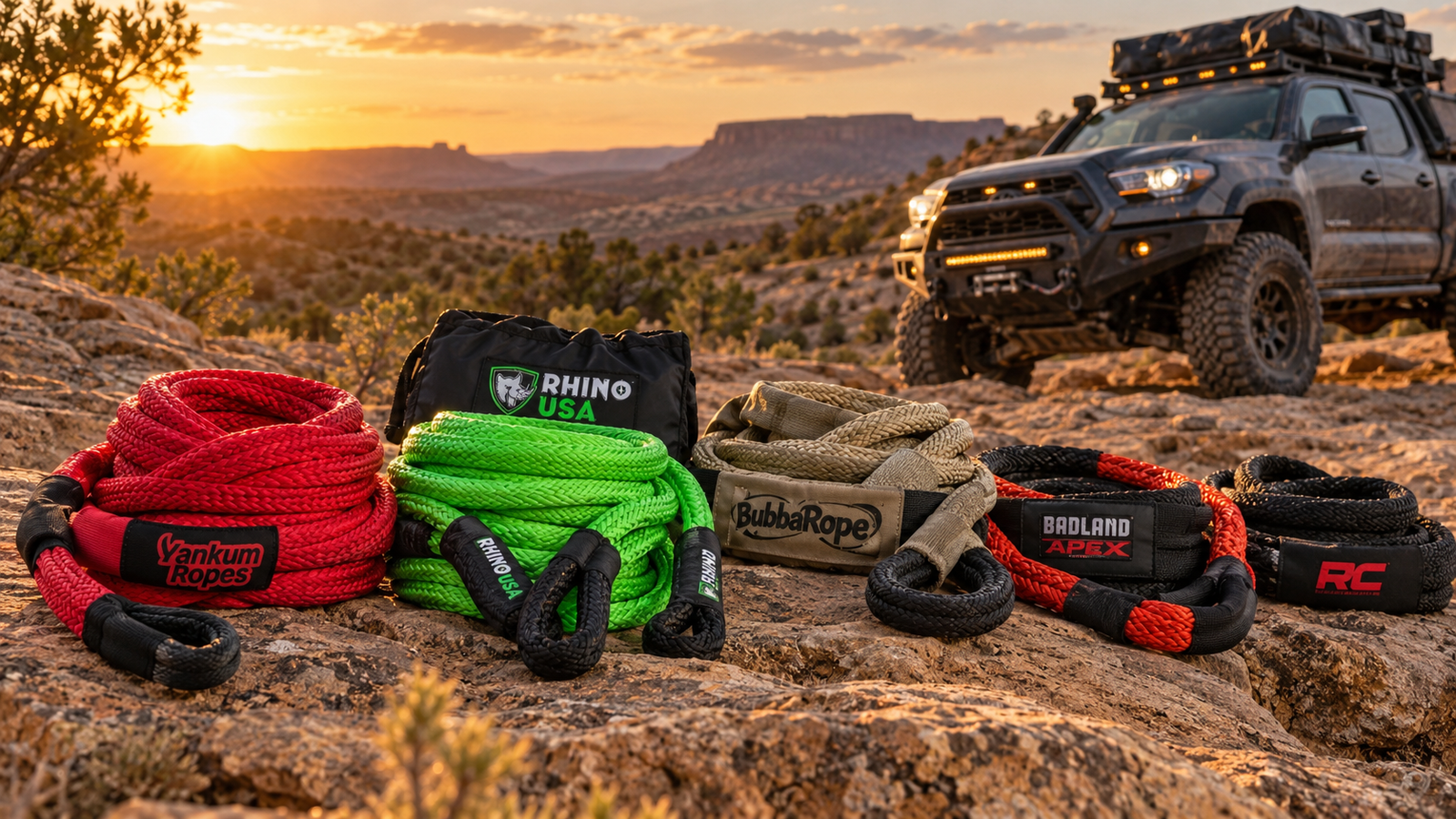
A kinetic recovery rope can be one of the most useful pieces of recovery equipment in an overlanding truck, but only when the rope, vehicles, attachment points, and recovery technique are matched correctly.
Unlike a static tow strap, a kinetic rope is designed to stretch under load. That stretch stores energy and releases it progressively, helping a recovery vehicle pull a stuck vehicle free without the same abrupt shock load you would get from trying to perform a dynamic recovery with non-stretch equipment.
The important part is not buying the rope with the biggest number printed on the package. Diameter, minimum breaking strength, working load guidance, stretch, vehicle weight, recovery points, shackles, and the manufacturer's sizing instructions all matter.
We have not personally tested every rope in this guide. The comparisons below are based on current manufacturer specifications, published product information, construction, included equipment, and how each option fits into a complete recovery system.
The All Guy rule: match the recovery rope to the vehicles and the recovery system. Bigger is not automatically safer.
As an Amazon Associate I earn from qualifying purchases. Some links below are affiliate links. Manufacturer-direct links are used where appropriate.
This guide is part of our larger recovery cluster. Start with Best Overlanding Recovery Gear in 2026 for the complete recovery system, our Best Recovery Boards for Overlanding in 2026 for traction-based self-recovery, and Best Portable Air Compressors for Overlanding in 2026 if you regularly air down off pavement. New to the whole setup? See our Overlanding for Beginners guide.
QUICK PICKS: BEST KINETIC RECOVERY ROPES IN 2026
Eight kinetic recovery rope options for different vehicles, kits, and budgets. Keep reading for sizing, safety, and detailed comparisons.
Yankum Ropes Python 7/8"
View on Amazon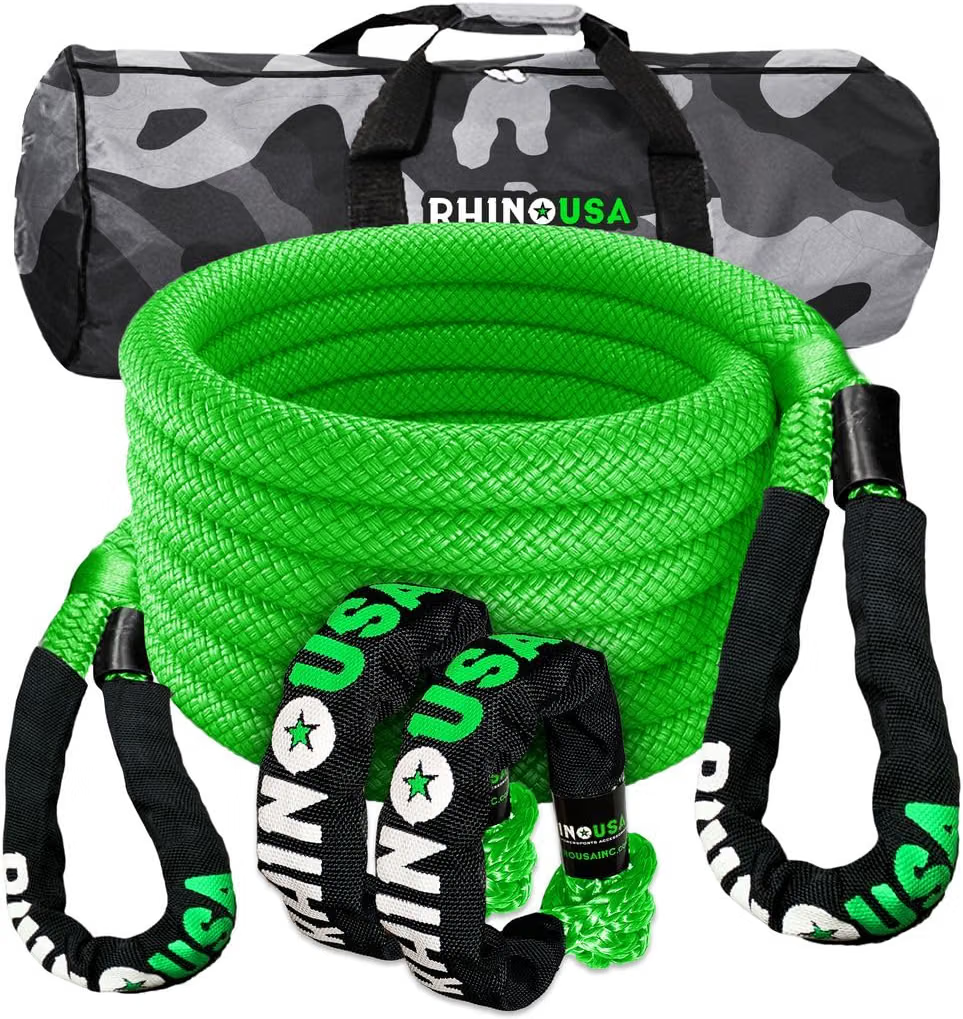
Rhino USA 7/8" x 30' Kinetic Recovery Kit
View on Amazon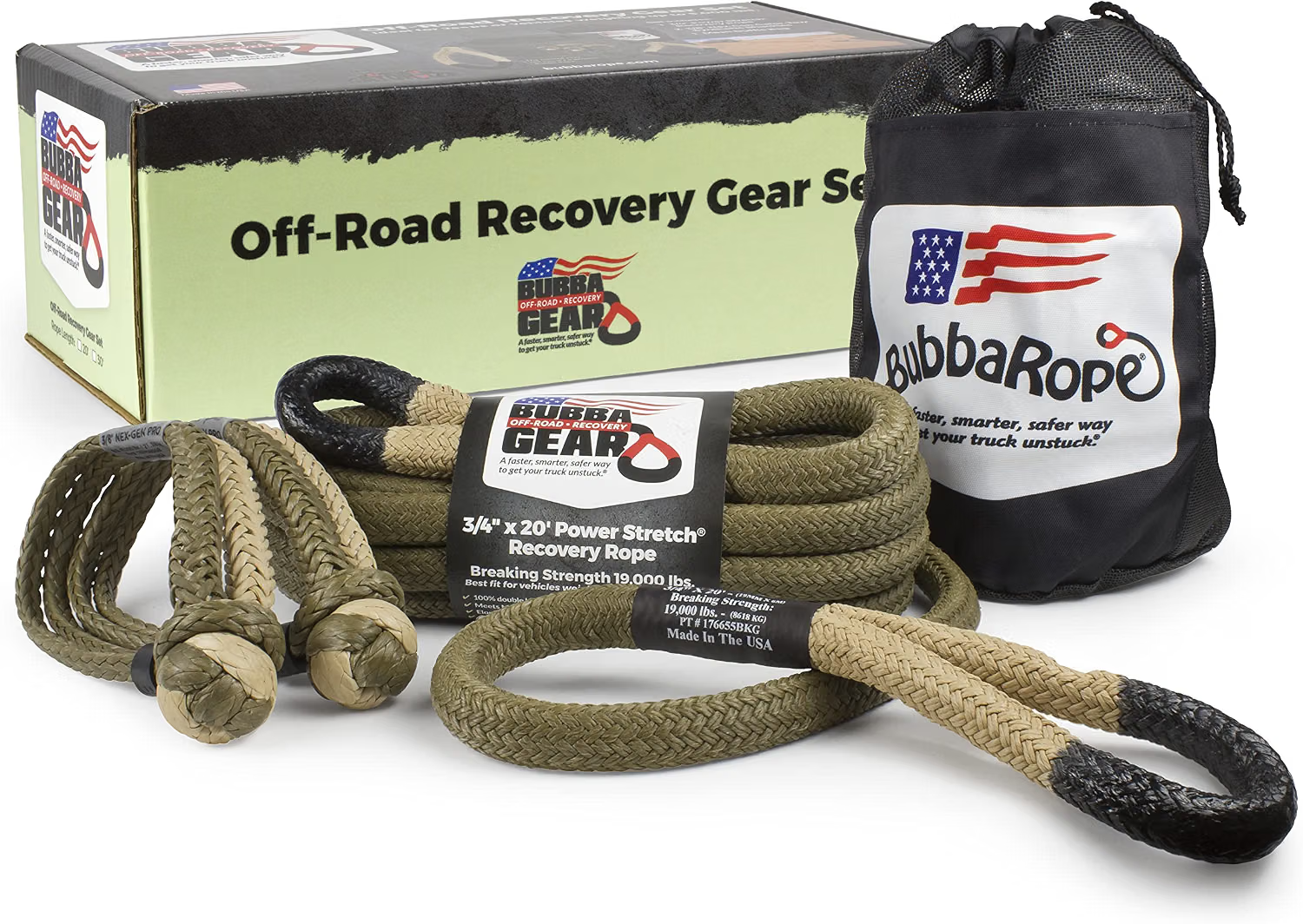
Bubba Rope Power Stretch
View on Amazon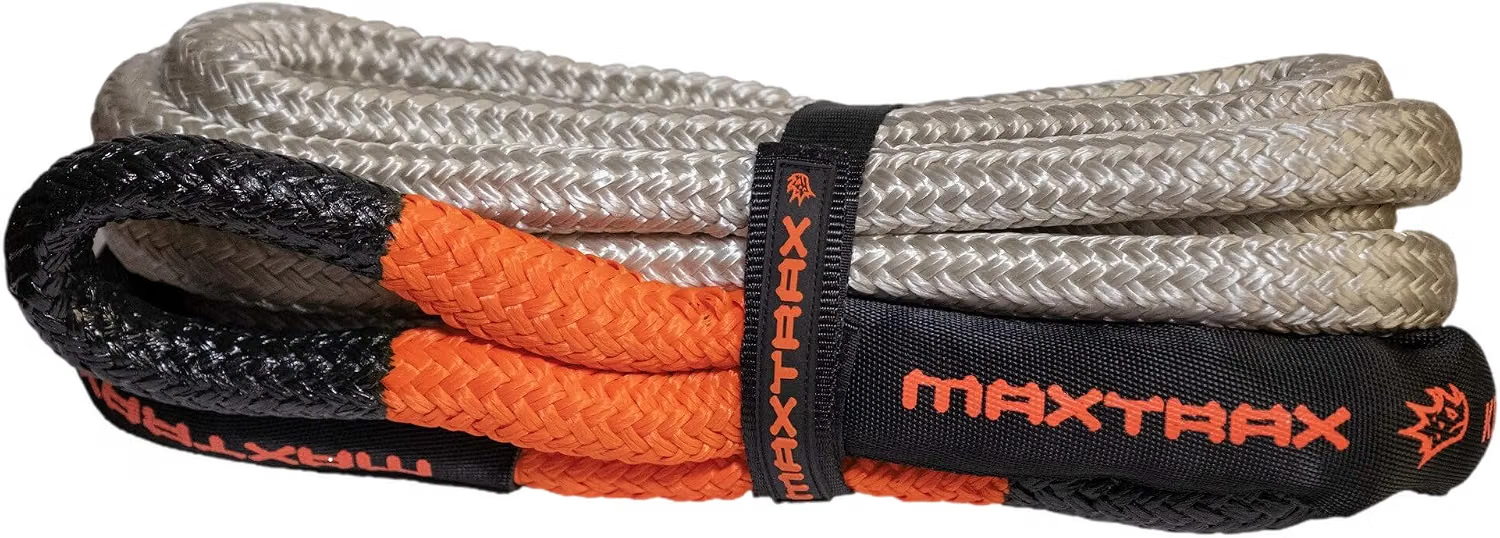
MAXTRAX Kinetic Rope
View on Amazon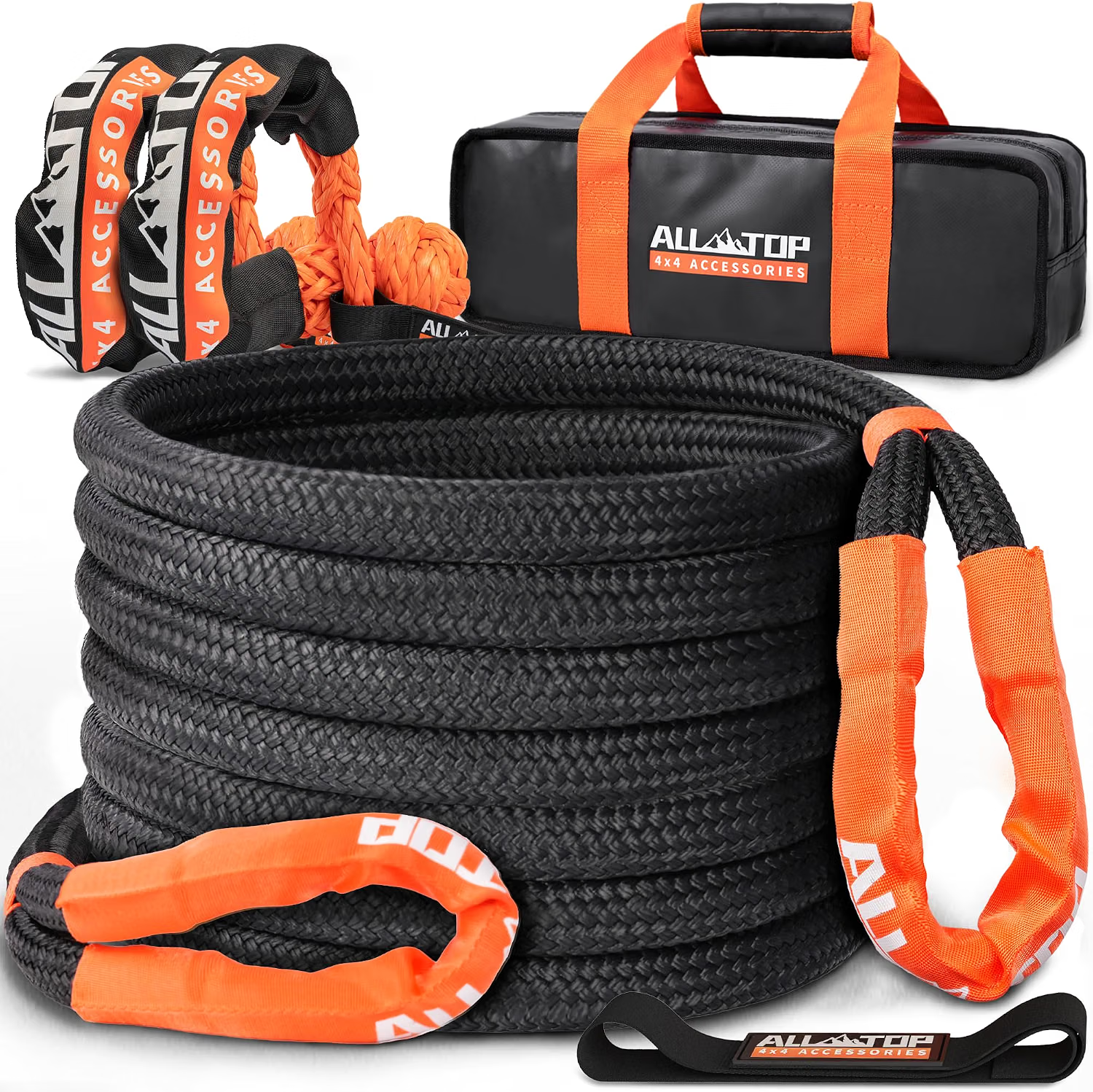
ALL-TOP Kinetic Recovery Rope
View on Amazon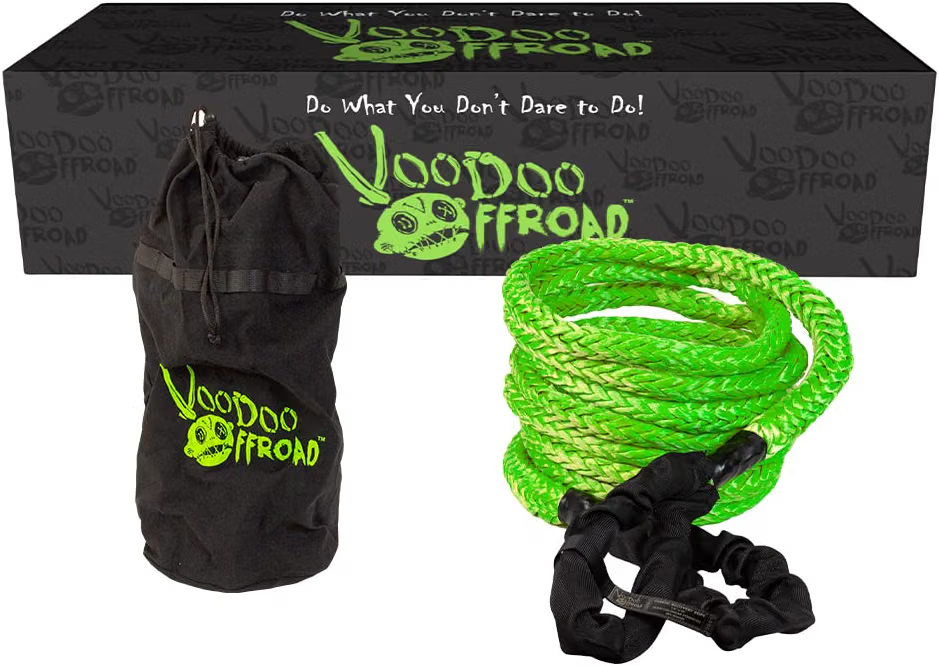
VooDoo Offroad Kinetic Rope
View on Amazon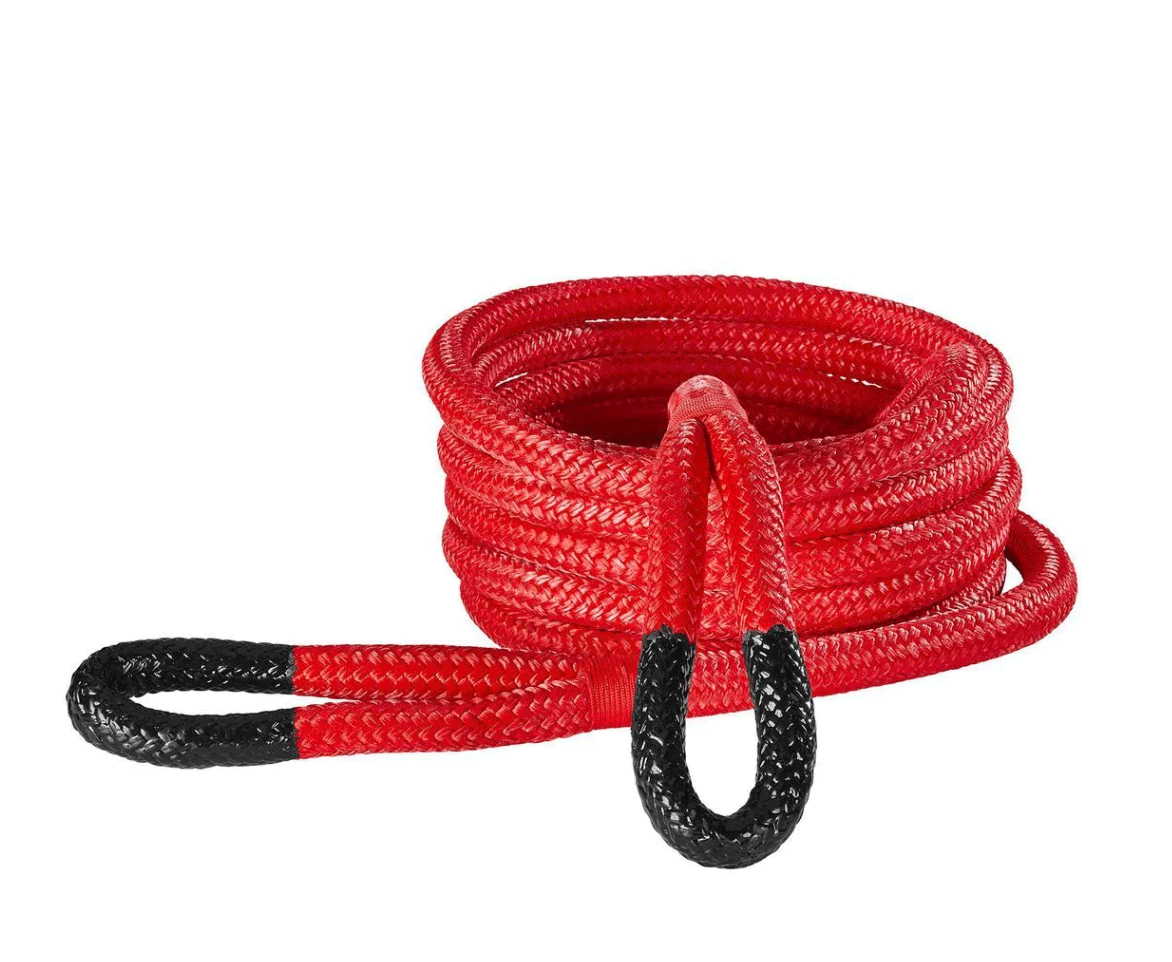
BADLAND APEX Kinetic Recovery Rope
View at Harbor Freight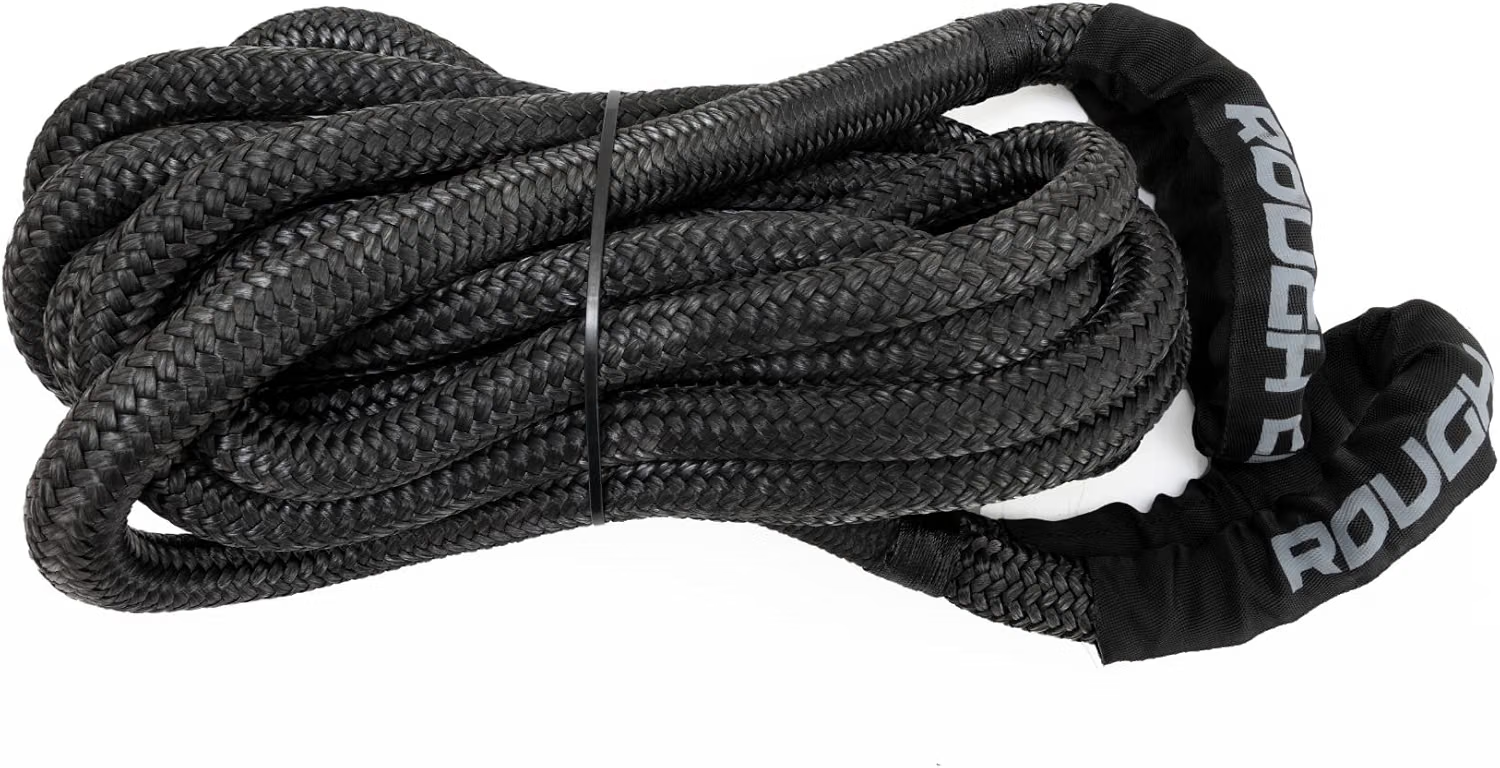
Rough Country Kinetic Recovery Rope RS173
View on AmazonQuick Comparison: Best Kinetic Recovery Ropes in 2026
Rope | Published size / rating | Best fit |
|---|---|---|
Yankum Ropes Python 7/8" | 7/8 in.; 28,600 lb minimum breaking strength | Jeeps, half-ton trucks, and large SUVs within Yankum's published sizing guidance |
Rhino USA 7/8" x 30' Kit | 7/8 x 30 ft; 28,600 lb MBS; soft shackles included | Buyers who want rope, shackles, and storage in one kit |
Bubba Rope Power Stretch | 7/8 x 30 ft; 28,600 lb breaking strength | Traditional premium 7/8-inch kinetic-rope setup |
MAXTRAX Kinetic Rope | 24 mm; up to 30% elongation; 12,000 kg MBS | MAXTRAX Recovery System users and buyers who want multiple rope lengths |
ALL-TOP Kinetic Recovery Rope | 1 x 30 ft option; 48,000 lb break strength and 16,000 lb WLL published by ALL-TOP | Heavier-duty buyers who want a 1-inch rope option |
VooDoo Offroad Kinetic Rope | Multiple sizes; product line publishes up to 38% stretch | Buyers comparing several rope diameters within one product family |
BADLAND APEX Kinetic Recovery Rope | 1 x 30 ft; 29,000 lb break strength; 9,666 lb working load | Harbor Freight shoppers who want clearly published ratings |
Rough Country RS173 | 1 x 30 ft; 30,000 lb published capacity | Truck and SUV owners who want a straightforward 1-inch, 30-foot option |
How a Kinetic Recovery Rope Works
A kinetic rope is made from fibers that can elongate under load, commonly nylon. During a vehicle-to-vehicle recovery, the pulling vehicle creates tension in the rope. The rope stretches, stores energy, and then releases that energy into the stuck vehicle more progressively than a static tow strap would.
That does not make a kinetic recovery gentle by default. Dynamic recoveries can create enormous forces. The rope, shackles, recovery points, and both vehicles have to be appropriate for the load. Clear communication and proper technique matter just as much as the rope itself.
Kinetic Rope vs. Tow Strap vs. Snatch Strap
A static tow strap is primarily intended for towing or controlled pulling where very little stretch is desired. A snatch strap is a flat webbing recovery product designed to stretch during a dynamic recovery. A kinetic rope performs the same general energy-storage job but uses rope construction rather than flat webbing and often provides more elongation.
Do not substitute whatever strap happens to be in the truck. Use equipment specifically designed and rated for the recovery method you are attempting.
How to Size a Kinetic Recovery Rope
Start with the manufacturer's vehicle-weight recommendation, not only the rope's maximum breaking-strength number. A rope that is substantially oversized for a lighter recovery vehicle may not stretch as intended, while an undersized rope can be overloaded.
Know the actual loaded weight or gross vehicle mass of the recovery vehicle and the stuck vehicle.
Follow the rope manufacturer's sizing chart or vehicle-weight guidance.
Make sure every attachment point and connector in the system is rated for recovery use.
Inspect the rope before use for cuts, melted fibers, abrasion, chemical contamination, or damaged eyes and sleeves.
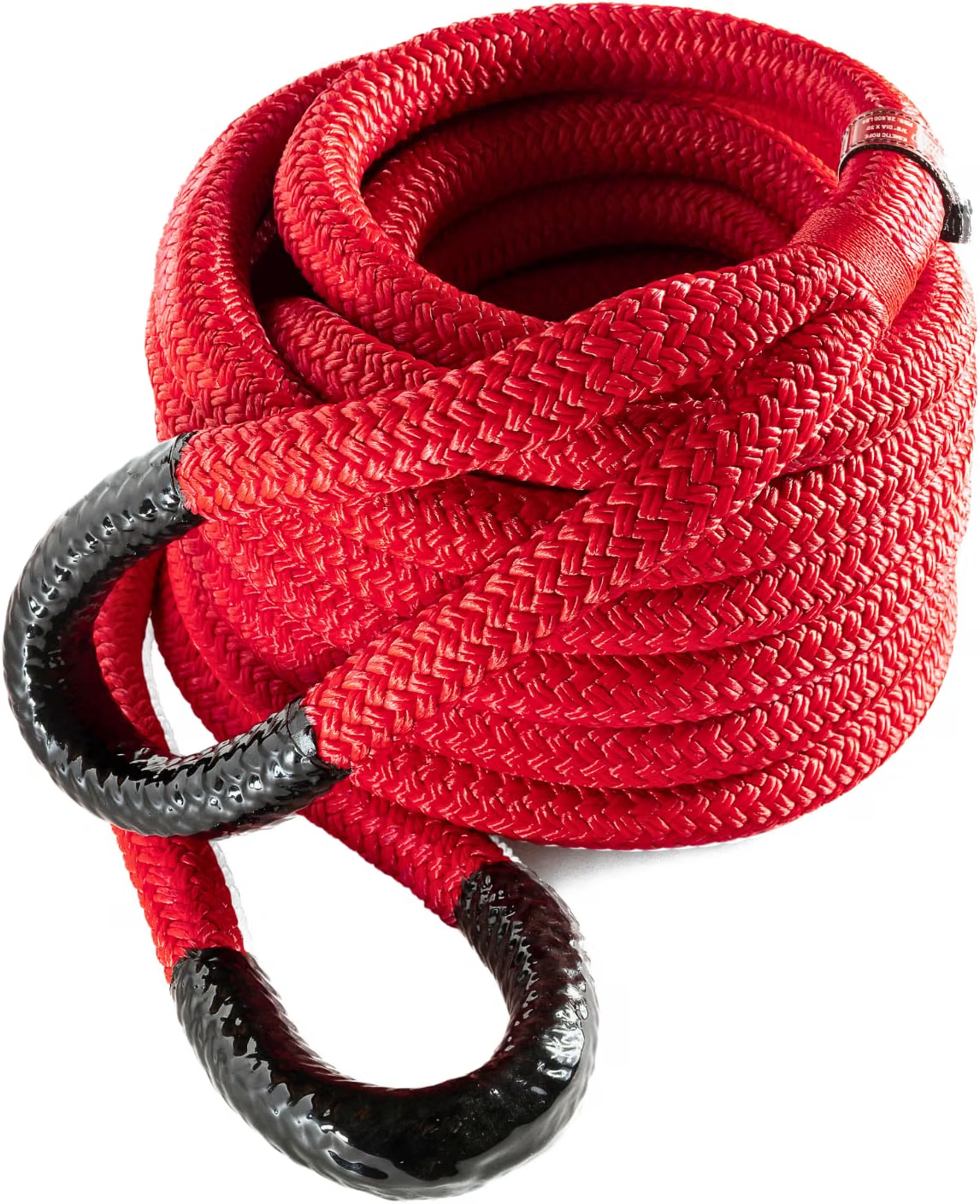
1. Yankum Ropes Python 7/8" Kinetic Recovery Rope
Best fit: A premium 7/8-inch rope for Jeeps, half-ton pickups, and large SUVs that fall within Yankum's current sizing guidance.
Yankum publishes a 28,600-pound minimum breaking strength for the 7/8-inch Python and recommends the size for recovery vehicles roughly in the 5,000-to-7,199-pound range. The rope uses double-braid nylon construction, and Yankum describes a polymeric coating intended to resist UV exposure, water, staining, and abrasion.
The Python is available in multiple lengths. That matters because a 20-foot rope is easier to manage in tighter terrain, while a 30-foot rope can provide more separation between vehicles when space allows.
Why consider it: Yankum publishes unusually clear vehicle-weight guidance and positions the Python as a dedicated recovery rope rather than a general towing product. Follow the current manufacturer sizing chart for your specific vehicle.
2. Rhino USA 7/8" x 30' Kinetic Recovery Rope Kit
Best fit: Buyers who want a complete kinetic-recovery package instead of sourcing the rope and shackles separately.
Rhino USA publishes a 9,533-pound working load limit and 28,600-pound minimum break strength for the 7/8-inch by 30-foot rope. The kit also includes two 3/8-inch soft shackles and a storage bag. Rhino lists the soft shackles at a 10,466-pound working load limit and 31,400-pound minimum break strength.
The kit format is the main advantage. If you are starting from zero, you get the rope, compatible-style soft shackles, and organized storage in one package. You still need properly rated recovery points on both vehicles.
3. Bubba Rope Power Stretch
Best fit: Buyers looking for an established 7/8-inch by 30-foot kinetic rope with a published 28,600-pound breaking strength.
The commonly listed 7/8-inch by 30-foot Power Stretch uses double-braided nylon and is rated at 28,600 pounds breaking strength. Current product information also describes roughly 30 percent stretch and a protective polymer coating designed to help with water, UV, and abrasion resistance.
Why consider it: The Power Stretch sits in the same general 7/8-inch truck-and-SUV recovery class as the Yankum Python, making it a useful alternative for buyers comparing established premium rope brands.
4. MAXTRAX Kinetic Rope
Best fit: Overlanders already building around the MAXTRAX Recovery System or buyers who want several rope-length options within one recovery platform.
MAXTRAX lists its kinetic rope at 24 mm diameter with up to 30 percent elongation and a 12,000 kg minimum breaking strength, approximately 26,455 pounds. MAXTRAX also offers multiple lengths, allowing the recovery setup to be tailored to the space available.
One important detail is that MAXTRAX states its recovery-system components are designed and tested together as a system. If you mix brands, verify compatibility and ratings yourself rather than assuming one component's rating makes the entire system safe.
5. ALL-TOP Kinetic Recovery Rope
Best fit: Buyers looking at a larger 1-inch rope and published high-capacity ratings.
ALL-TOP's current 1-inch by 30-foot product information lists a 48,000-pound break-strength rating and a 16,000-pound working load limit. The rope uses double-braided Nylon N66 construction, and ALL-TOP describes more than 30 percent elasticity along with protective sleeves at the eye loops.
Those larger numbers do not mean the rope is automatically the right choice for a lighter vehicle. A kinetic rope still needs to stretch correctly during the recovery, so vehicle-weight matching matters.
6. VooDoo Offroad Kinetic Rope
Best fit: Buyers who want to compare multiple diameters and vehicle classes within one kinetic-rope product family.
Current VooDoo Offroad product information describes 100 percent 12-strand nylon construction with water, UV, and abrasion resistance. The product line has been offered in several diameters and lengths, with published stretch up to 38 percent depending on the model.
Availability and exact variants can change, so verify the diameter, length, capacity, and current manufacturer part number on the listing before ordering. That is especially important with recovery gear where two visually similar ropes may be intended for very different vehicle weights.
7. BADLAND APEX Kinetic Recovery Rope
Best fit: Harbor Freight shoppers who want a straightforward 1-inch by 30-foot kinetic rope with clearly published ratings.
Harbor Freight currently lists the BADLAND APEX rope at 1 inch by 30 feet, with a 29,000-pound breaking strength and 9,666-pound working load. The rope is nylon and is positioned as part of the BADLAND APEX off-road recovery lineup.
Why consider it: The published break-strength and working-load figures make it easier to understand where the rope fits than listings that show only a large marketing number with no additional context.
8. Rough Country Kinetic Recovery Rope RS173
Best fit: Truck and SUV owners looking for a simple 1-inch by 30-foot recovery rope from a familiar off-road brand.
Rough Country lists the RS173 at 1 inch in diameter, 30 feet long, and 30,000 pounds capacity. A lightweight storage bag is included, which helps keep recovery gear organized and protected inside a truck or SUV.
The published specification is straightforward, but as with every rope here, the capacity number is only part of the buying decision. Verify that the rope is appropriate for your loaded vehicle weights and that your recovery points and connectors are compatible.
What Matters Most When Buying a Kinetic Recovery Rope
Vehicle-weight guidance
This should come before price or brand. Use the manufacturer's sizing guidance for the actual loaded vehicles involved. A half-ton truck loaded for a week of overlanding can weigh substantially more than its empty curb weight.
Minimum breaking strength and working load
These terms are not interchangeable. Minimum breaking strength describes the force at which a new product is expected to fail under test conditions. Working-load guidance builds in a safety factor for actual use. When a manufacturer publishes both, use the working-load guidance for planning rather than treating breaking strength as a target.
Stretch
Stretch is what makes a kinetic rope useful. More stretch is not automatically better, but the rope needs enough elongation to store and release energy progressively. Follow the manufacturer's technique and speed guidance rather than improvising.
Protective sleeves and coated eyes
The rope's connection areas see concentrated wear. Protective sleeves, coated eyes, and clean smooth recovery points can help limit abrasion. Inspect those areas before every recovery.
Length
Twenty-foot ropes are easier to use when vehicles are close together or terrain is tight. Thirty-foot ropes create more vehicle separation and can be easier to position in open terrain. Neither is universally better.
Kinetic Recovery Safety: The Rope Is Only One Part of the System
Dynamic vehicle recovery can generate enough force to turn failed hardware into a serious hazard. A kinetic rope should never be attached to a tow ball, tie-down loop, random suspension component, or any point that is not specifically intended and rated for vehicle recovery.
Use manufacturer-approved rated recovery points on both vehicles.
Use rated shackles or soft shackles that are compatible with the recovery points and rope.
Keep bystanders well away from the recovery path and line of pull.
Agree on signals and a recovery plan before either driver moves.
Start conservatively. Do not treat kinetic recovery like a full-throttle running start.
Stop if the first attempts are not working and reassess the obstacle, tire pressure, digging, traction boards, or winch options.
If you are assembling the rest of the system, our Best Overlanding Recovery Gear in 2026 guide covers soft shackles, recovery points, winch accessories, tree protection, recovery boards, and complete kits.
When a Kinetic Rope Is Not the Right Tool
A kinetic rope is not the answer to every stuck vehicle. If there is no safe recovery vehicle, no rated attachment point, very limited space, a high rollover risk, severe vehicle damage, or a recovery that requires precise controlled movement, a winch or professional recovery may be more appropriate.
Traction boards can also be a better first step when the vehicle simply needs a firm surface under the tires. See our Best Recovery Boards for Overlanding in 2026 guide for that approach.
How to Store and Maintain a Kinetic Recovery Rope
Do not leave a recovery rope packed away wet and dirty for months. Mud, sand, road chemicals, moisture, and abrasion can shorten the life of synthetic recovery equipment. Follow the manufacturer's cleaning instructions, rinse with clean water when appropriate, air dry thoroughly, and store the rope away from excessive heat, chemicals, and direct UV exposure.
Before each trip, inspect the full length of the rope and both eyes. If you find cuts, melted fibers, severe abrasion, chemical contamination, damaged stitching or sleeves, or anything that makes you question the rope's condition, replace it rather than guessing.
Frequently Asked Questions
What size kinetic recovery rope do I need for a half-ton truck?
There is no universal diameter for every half-ton truck because loaded vehicle weights differ and manufacturers use different rating systems. Several 7/8-inch ropes in this guide are marketed for half-ton trucks, but use the current rope manufacturer's vehicle-weight chart for your loaded vehicle rather than choosing by truck class alone.
Is a kinetic rope safer than a tow strap?
They are designed for different jobs. A kinetic rope is intended to stretch during dynamic vehicle recovery. A static tow strap is intended for towing or controlled pulling. Using either product outside its intended purpose can be dangerous.
Can I connect a kinetic rope to a trailer hitch ball?
No. A hitch ball is not a vehicle-recovery point and can become a dangerous projectile if it fails. Use a properly rated recovery point or a purpose-built receiver recovery device installed and used according to its manufacturer instructions.
Do I need soft shackles with a kinetic rope?
Not every setup requires soft shackles, but they can be a useful lightweight connection method when the recovery points are compatible with synthetic rigging. Use only rated connectors and inspect the contact surfaces for sharp edges.
Is a 30-foot kinetic rope better than a 20-foot rope?
Not automatically. Thirty feet provides more separation and positioning flexibility in open terrain. Twenty feet is easier to manage when space is limited. Choose based on your terrain, vehicles, and the manufacturer's available sizes.
Final Thoughts
The best kinetic recovery rope is not simply the rope with the largest published breaking strength. The better choice is the rope that matches your vehicles, provides clear ratings and sizing guidance, works with your recovery points and connectors, and fits the terrain you actually travel.
For many Jeep, large SUV, and half-ton-truck owners, the 7/8-inch class represented by Yankum, Rhino USA, and Bubba Rope is a logical place to research first. Buyers wanting 1-inch options can compare ALL-TOP, BADLAND APEX, and Rough Country, while MAXTRAX and VooDoo Offroad provide different system and sizing approaches.
Whatever you carry, learn how to use it before the trail forces you to learn under pressure. Recovery capability is not just owning the equipment. It is knowing the ratings, understanding the load path, recognizing when to stop, and choosing the safest recovery method for the situation.
Sources and Further Reading
This post may contain affiliate links. We may earn a commission when you purchase through links on this site at no additional cost to you.


