
This article contains affiliate links. We may earn a commission from qualifying purchases.
As an Amazon Associate I earn from qualifying purchases.
Recovery boards are one of the simplest self-recovery tools you can carry on an overlanding trip. When a tire is spinning in sand, mud, snow, or loose dirt, a good board can give it a firm surface to climb onto without immediately reaching for a winch or recovery strap.
The hard part is choosing the right style. Full-size rigid boards are easy to deploy and can double as shovels or bridging aids in limited situations. Foldable traction tools take up much less storage space. Some premium boards use replaceable or more heat-resistant traction teeth, while value-focused options concentrate on giving you a usable pair, carrying bag, and mounting hardware for less money.
The All Guy takeaway: Recovery boards are not about buying the most aggressive-looking tread pattern. The right choice depends on your terrain, vehicle weight, storage space, mounting plan, and how often you expect to use them.
We have not personally tested every board in this roundup. Recommendations are based on current manufacturer specifications, product design, intended use, included equipment, storage considerations, and how each option fits different overlanding setups.
As an Amazon Associate I earn from qualifying purchases. Some links below are affiliate links, while manufacturer-direct links are used where appropriate.
If you are building your first rig, start with our Best Overlanding Gear in 2026: 18 Essentials Worth Carrying, then read the Overlanding for Beginners guide. If you air down for trail driving, our Best Portable Air Compressors for Overlanding in 2026 guide covers the other half of the tire-management equation.
Quick Comparison: Best Recovery Boards for Overlanding
Recovery board | Best fit | Key design advantage |
|---|---|---|
MAXTRAX MKII | Proven premium all-around choice | Full-size nylon board with integrated shovel ends |
MAXTRAX XTREME | Frequent or demanding recovery use | More aggressive replaceable-style traction hardware |
ARB TRED Pro | Premium traction and flex | Nylon-blend board with EXOTRED-style tooth system |
ActionTrax | USA-made durability | Field-repairable design and oversized handles |
GoTreads XL | Compact storage | Folds to about 12 inches long for storage |
X-BULL Recovery Boards | Value-focused full-size kit | Carry bag and mounting hardware included |
BUNKER INDUST Recovery Boards | Feature-packed value option | Mounting kit, straps, and carry bag |
Rhino USA Traction Boards | Balanced everyday trail kit | Full-size boards with case and leashes |
What Matters Most When Buying Recovery Boards
Board length and width
A longer board gives the tire more runway to climb onto and can be easier to position in deep sand or a dug-out rut. Most full-size boards in this guide are roughly 40 to 46 inches long and around 12 to 13 inches wide. That is a useful size for pickups, SUVs, Jeeps, and many overlanding builds.
Material and heat resistance
Most rigid recovery boards use reinforced nylon or polypropylene blends. The exact material matters because a spinning tire creates heat very quickly. Even a strong board can be damaged if you stay on the throttle and let the tire burn across the traction teeth.
The technique matters as much as the product: stop digging, clear material away from the tire, wedge the board against the tread, then use smooth, controlled throttle.
Rigid boards vs. foldable traction tools
Rigid boards are fast to grab, easy to slide under a tire, and often have handles and shovel-shaped ends. The downside is storage. A pair of 45-inch boards takes real space unless you mount them externally.
GoTreads take a different approach. The XL model provides 58 inches of traction but folds down to roughly 12 inches long, making it attractive for daily-driven trucks or SUVs where roof-rack and bed space are limited.
Mounting and storage
Before buying a recovery board, decide where it will live. Roof-rack and bed-rack mounts keep muddy boards outside the cabin, but exposed gear also faces UV, weather, and theft. Carry bags keep the interior cleaner, while foldable designs can fit under seats or in smaller storage compartments.
Two boards or four?
For many recreational 4x4 situations, a pair is a practical starting point. Two boards can be placed under the tires that are spinning most. Four boards provide more options when all four corners are buried, when the vehicle has open differentials, or when you want a longer controlled path out of soft terrain.
More boards also mean more cost, weight, and storage, so there is no universal reason every beginner needs four.
1. MAXTRAX MKII
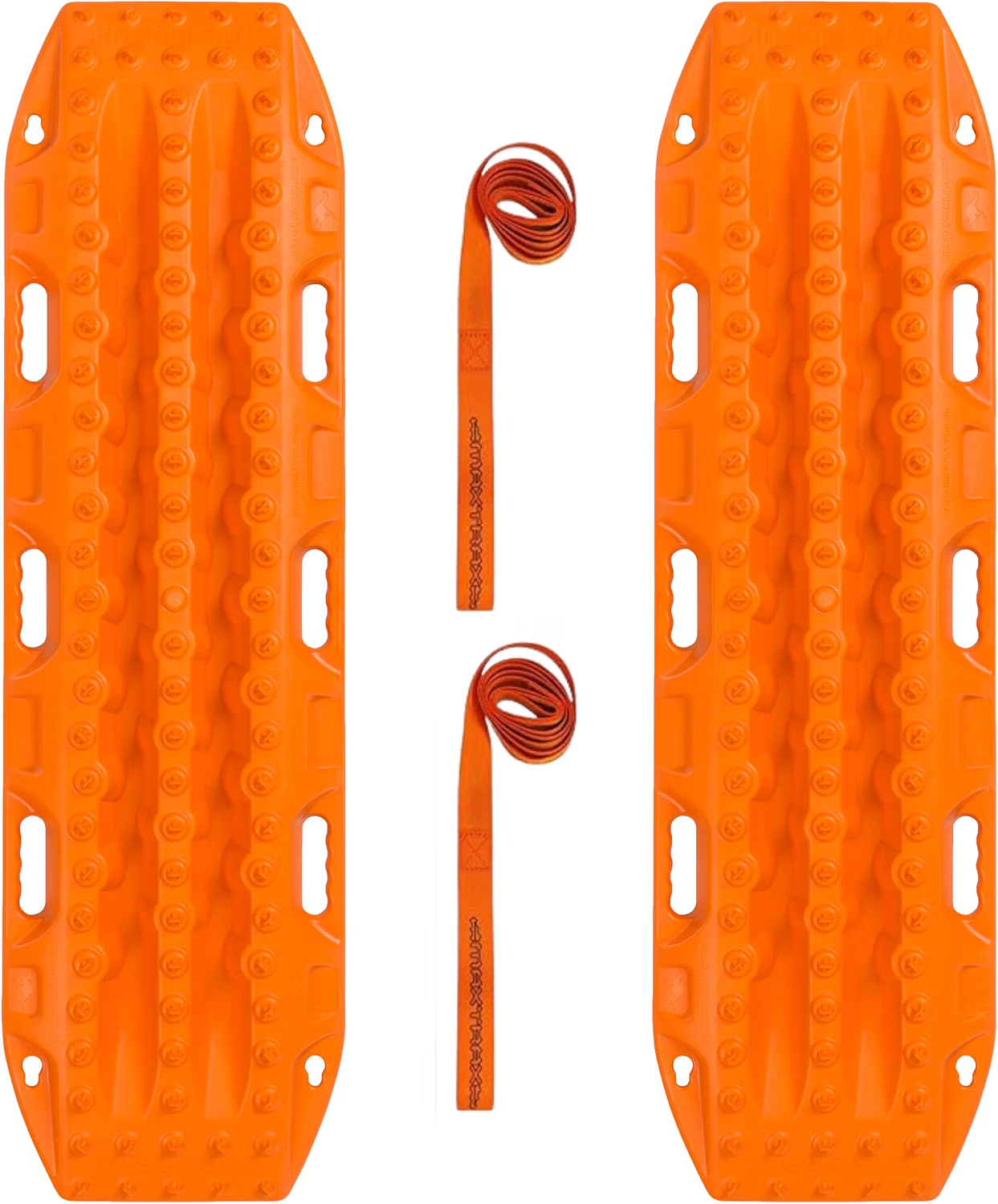
Best proven premium all-around recovery board
MAXTRAX MKII is the established full-size choice in this group. MAXTRAX lists each board at 45 inches long, 13 inches wide, and 3.5 inches high, with a weight of about 7.5 pounds per board.
The boards are made from UV-stabilized engineering-grade reinforced nylon and include six built-in handles plus shovel-shaped ends. That combination is useful because a self-recovery often starts with clearing material away from the tire before the board can do its job.
The MKII makes the most sense for an overlander who wants a premium, widely supported platform with established mounting options and a straightforward full-size design.
Who it fits: frequent trail travelers who want a proven premium board and do not mind dedicating exterior or cargo space to a full-size pair.
2. MAXTRAX XTREME
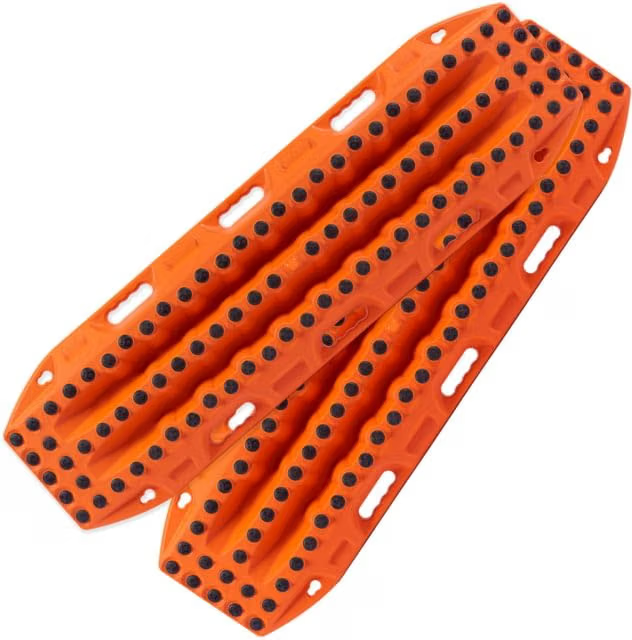
Best for frequent or harder recovery use
MAXTRAX XTREME keeps the familiar full-size MAXTRAX footprint but is aimed at users who expect harder or more frequent recovery work. MAXTRAX states that XTREME boards are the same general length and width as the MKII while stacking slightly higher.
The XTREME's more aggressive traction hardware is the reason to consider it over the MKII. For a casual trail driver, that added capability may be unnecessary. For a heavier build, expedition vehicle, or driver who spends a lot of time in difficult terrain, the upgrade can make more sense.
Who it fits: experienced off-roaders and overlanders who expect repeated recoveries and are willing to pay for the more aggressive MAXTRAX platform.
3. ARB TRED Pro
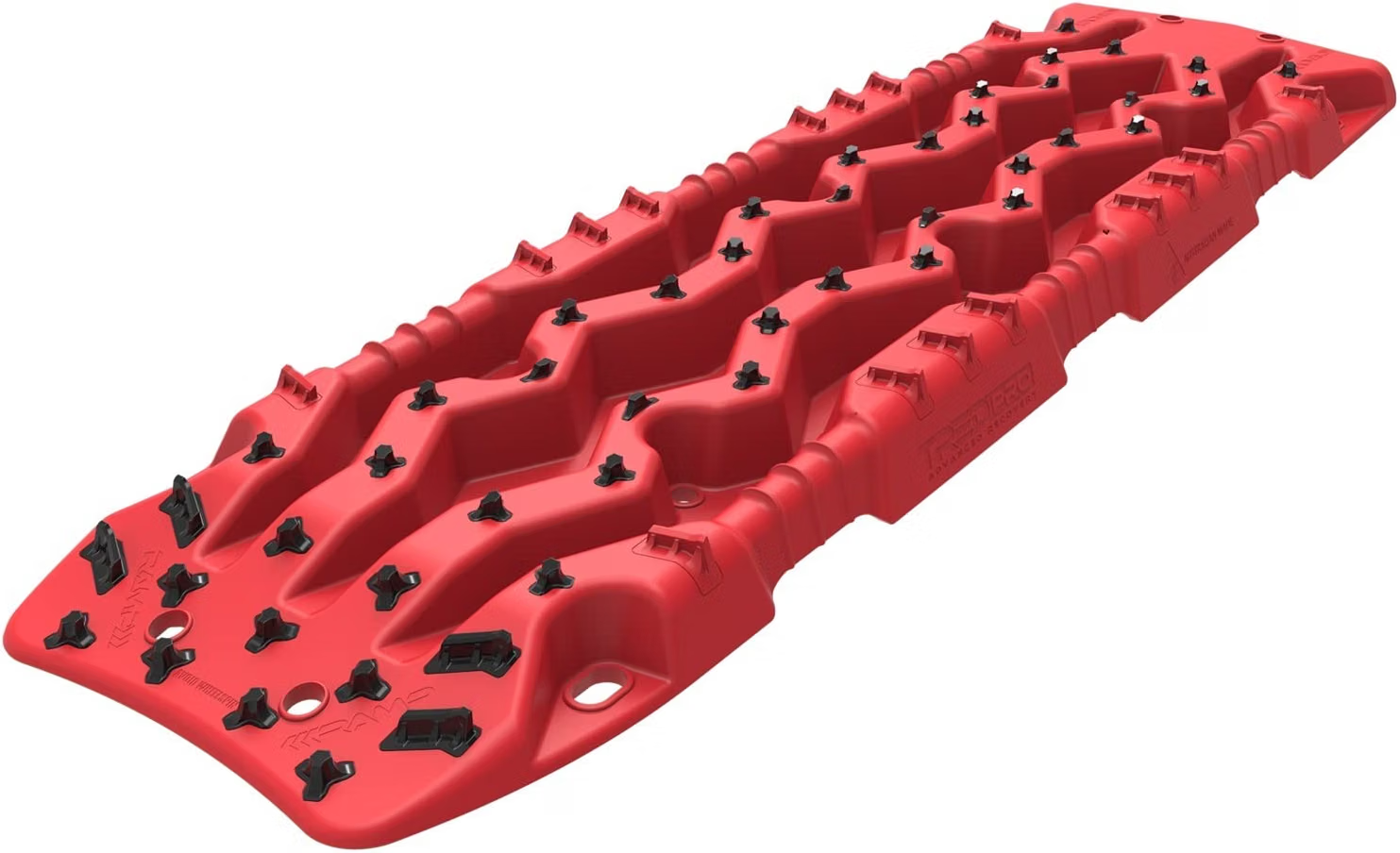
Best premium alternative to MAXTRAX
ARB's TRED Pro is one of the strongest premium alternatives to MAXTRAX. ARB lists each board at about 45.67 inches long, 12.99 inches wide, and 2.56 inches high, with a pair weighing about 18.08 pounds.
The TRED Pro uses a nylon blend designed to flex under load, and ARB rates it for vehicles up to 9,900 pounds. The directional design, contour ramp, shovel features, and variable tooth layout are intended to improve initial tire engagement and terrain contact.
ARB also backs TRED Pro with a lifetime warranty, which matters on a product designed to be stepped on, buried, flexed, and dragged through abrasive terrain.
Who it fits: overlanders who want a premium full-size board with a different traction design and strong brand support.
4. ActionTrax
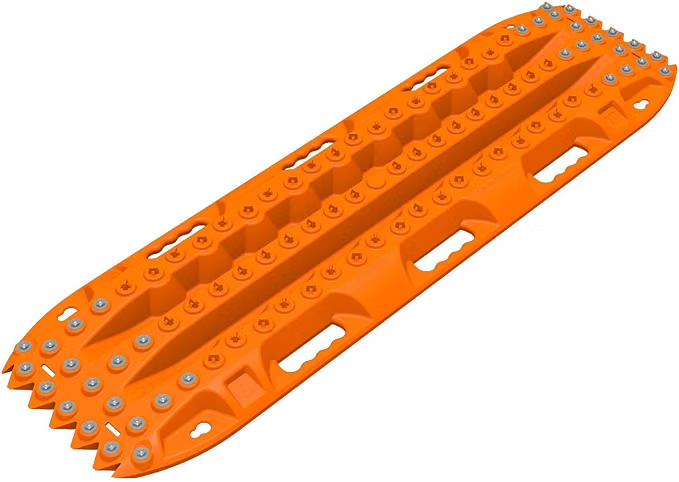
Best USA-made recovery board
ActionTrax is the option here for buyers who value a USA-made recovery board and field-serviceable design. The current standard boards measure about 44.5 inches long by 12.88 inches wide.
ActionTrax highlights oversized handles, sawtooth ends for clearing material, UV stabilization, a quick-link system for connecting boards, and pre-formed locations that make damaged traction lugs easier to repair in the field.
That serviceability is an interesting difference. Recovery boards are consumable gear if they are abused with wheel spin, so a design that considers repair rather than treating the entire board as disposable can be valuable for frequent users.
Who it fits: buyers who prioritize American manufacturing, repairability, and a rugged full-size board.
5. GoTreads XL
Best recovery traction option for compact storage
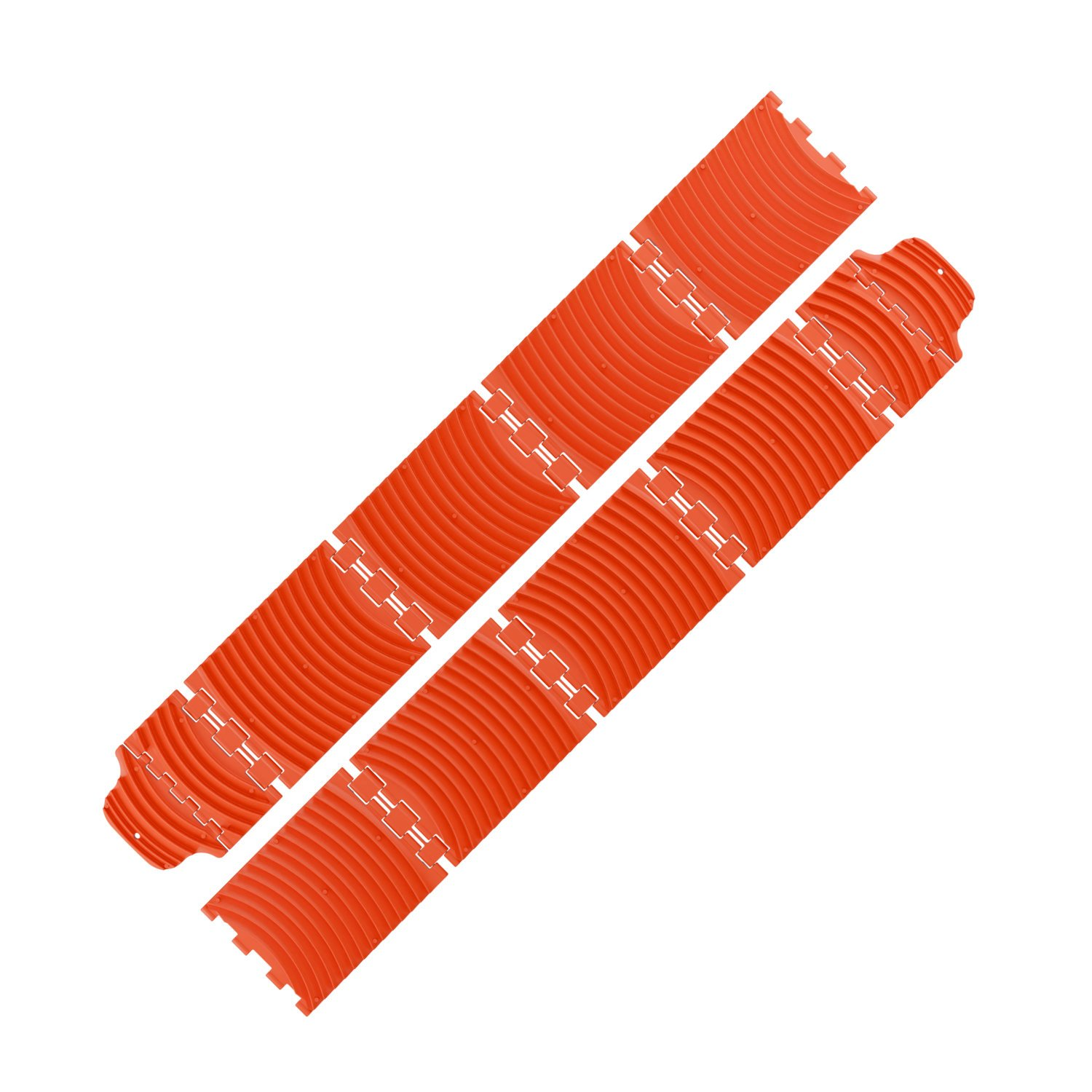
GoTreads XL is the outlier in this group because it folds instead of stacking like a conventional rigid recovery board. Each XL unit provides 58 inches of traction, is 9 inches wide, and folds to roughly 12 inches long for storage.
GoTreads recommends the XL size for medium-to-large vehicles and tires around 33 inches and larger. The company also positions it as a leveling tool when used correctly, giving campers another use for the space it takes up.
The tradeoff is that GoTreads does not function exactly like a rigid shovel-ended board. What you gain is dramatically easier storage and a long self-feeding traction surface.
Who it fits: daily-driven trucks, SUVs, vans, and overland rigs where interior storage space matters more than exterior rack mounting.
6. X-BULL Recovery Boards
Best value full-size recovery kit
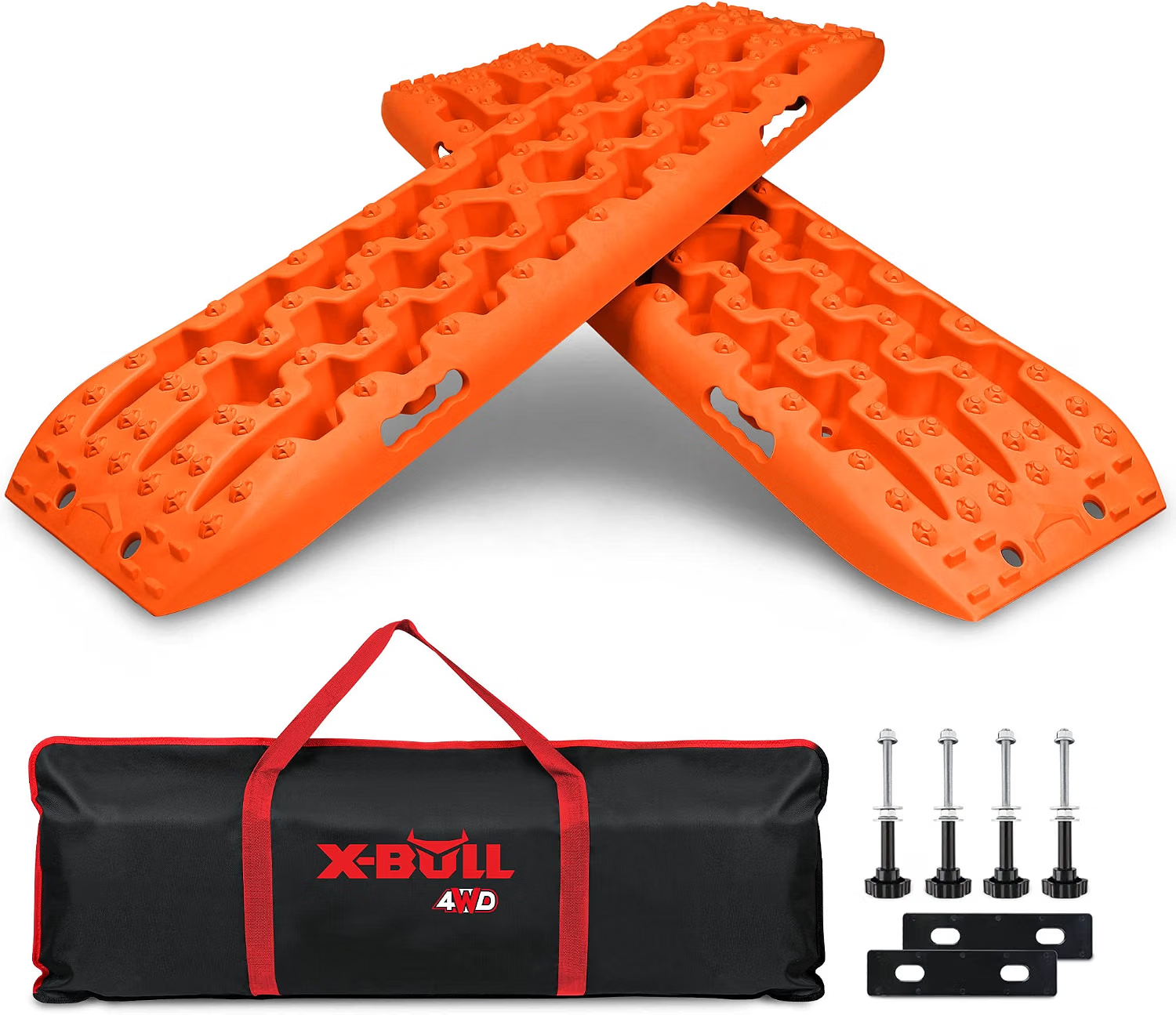
X-BULL's Gen 3.0 boards are a value-oriented full-size option. The manufacturer lists them at about 41.7 inches long, 12.2 inches wide, and 2.4 inches high, with a pair weighing roughly 11.2 pounds.
The current kit includes two boards, mounting hardware, and a carrying bag. X-BULL uses reinforced UV-stabilized nylon and rates the boards for up to 10 tons.
That combination makes them appealing for someone assembling a first recovery kit on a tighter budget. You get a usable full-size format plus accessories that often cost extra with premium systems.
Who it fits: beginners and occasional trail users who want a complete full-size recovery-board package without premium pricing.
7. BUNKER INDUST Recovery Boards
Best feature-packed value option
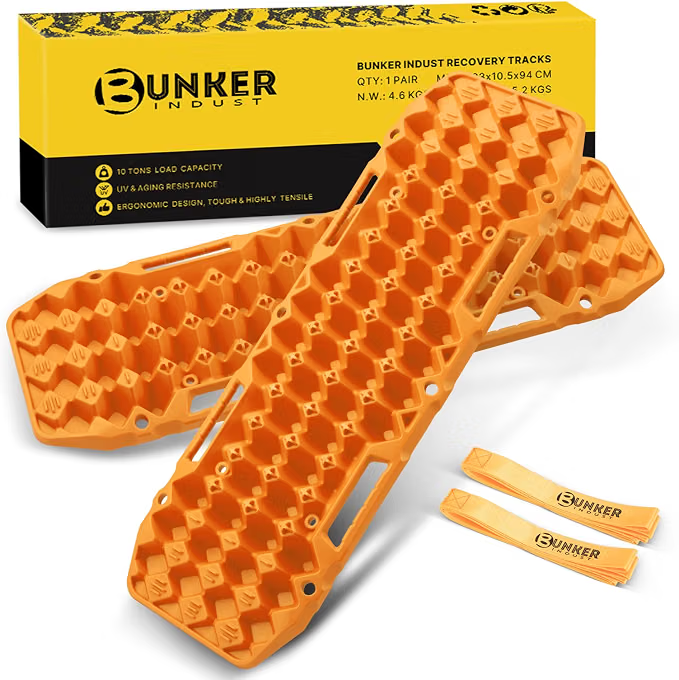
BUNKER INDUST offers several board families, but its current full-size Gen 7-style kits illustrate the brand's value proposition well: full-size boards, mounting equipment, straps, and a carry bag bundled together.
Manufacturer specifications for the Gen 7 platform list dimensions around 40.43 by 12.91 by 3.07 inches and a 10-ton maximum load rating. The boards use a contoured ramp and traction pattern intended for sand, mud, and snow.
The reason to consider BUNKER INDUST is not that it replaces a premium board for every user. It is that it packages the basic recovery-board ecosystem into a more approachable purchase.
Who it fits: value-conscious buyers who want boards plus storage and mounting accessories in one kit.
8. Rhino USA Off-Road Traction Boards
Best balanced kit for everyday overlanding
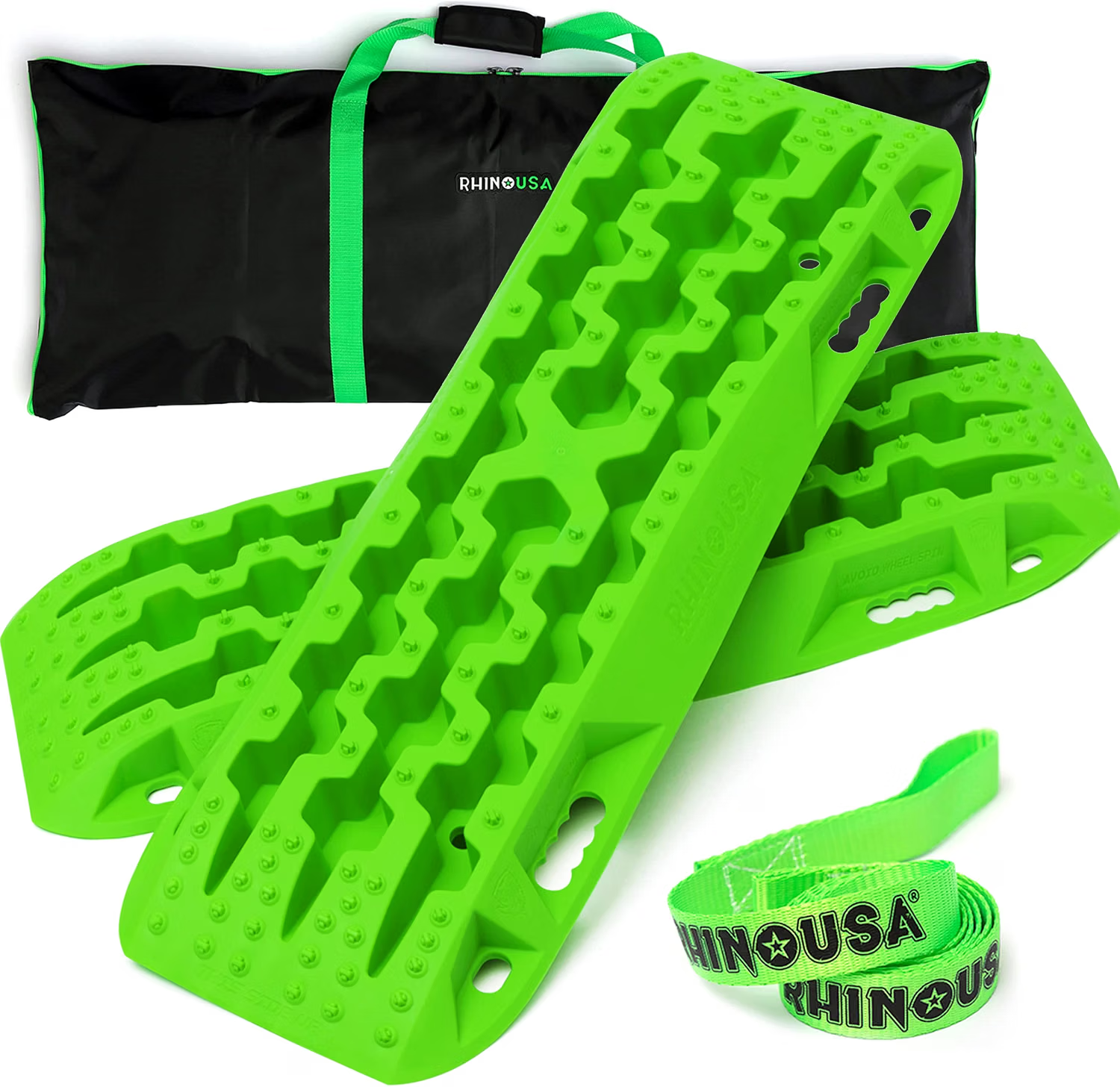
Rhino USA's traction boards are another approachable full-size option. Rhino lists each board at 42 inches long, 13 inches wide, and 2.5 inches high, with a weight of about 6 pounds per board.
The nylon-reinforced design is rated by Rhino for loads up to 10,000 pounds. The package includes leashes and a heavy-duty carry case, which is useful if the boards live inside the vehicle between trips.
Rhino's size sits in the same general full-size category as MAXTRAX and TRED Pro without becoming unusually bulky. That makes it a practical middle ground for recreational trail use and general vehicle preparedness.
Who it fits: truck and SUV owners who want a complete, easy-to-store pair for occasional overlanding and off-road use.
Recovery Boards by Terrain
Sand
Sand is where recovery boards are often at their best. Airing down increases the tire's footprint, while a board gives the tread a firmer surface to climb onto. Long boards and smooth throttle inputs are especially helpful because momentum matters once the tire begins moving.
If sand is your primary terrain, pair your recovery boards with a reliable compressor. Our portable overlanding air compressor guide explains how to choose a compressor for larger tires and repeated air-ups.
Mud
In mud, placement matters more because the board may disappear quickly beneath the tire. Clear thick material away from the tread, push the board as close to the tire as possible, and attach recovery leashes when available so you can find the boards after the vehicle exits.
Snow and ice
Recovery boards can be useful in snow because they create a textured surface under a tire that is otherwise spinning on packed snow or ice. Compact options like GoTreads are also attractive for winter emergency kits because they can remain inside a vehicle year-round without taking over the cargo area.
Rocks and ledges
Recovery boards can sometimes help smooth a small ledge or fill a shallow hole, but they should not be treated like dedicated bridging ladders unless the manufacturer explicitly supports that use. Point loading a plastic board across a large gap can damage it.
How to Use Recovery Boards Without Destroying Them
Stop spinning the tires. Continued wheel spin digs the vehicle deeper and can melt or tear traction teeth.
Clear sand, mud, snow, or loose dirt from the intended direction of travel.
Lower tire pressure when appropriate for the terrain and your tire setup.
Push the board tightly against the tire so the tread can grab the first traction elements.
Use low-range gearing when available and apply smooth, controlled throttle.
Once the tire begins climbing, maintain steady movement instead of suddenly flooring the accelerator.
After recovery, retrieve the boards, rinse away abrasive debris, and inspect them before the next trip.
Recovery Boards vs. Kinetic Rope vs. Winch
These tools solve different problems. Recovery boards are excellent for simple self-recovery when a vehicle has lost traction but is otherwise mobile. A kinetic rope requires a second properly equipped vehicle and safe rated recovery points. A winch can recover a vehicle when traction boards alone cannot create enough movement, but it requires proper rigging and a suitable anchor.
For many beginner overlanding builds, recovery boards are a logical first recovery purchase because they are mechanically simple and do not depend on another vehicle. As your trips become more remote or technical, a broader recovery system becomes more important.
Our Best Overlanding Gear in 2026 guide shows where recovery boards fit within a complete loadout.
Which Recovery Board Should You Choose?
There is no single board that makes sense for every rig. If you want the established premium platform, MAXTRAX MKII is the straightforward choice to consider. If you expect harder or more frequent recoveries, MAXTRAX XTREME and ARB TRED Pro move further into premium territory.
ActionTrax stands out for USA manufacturing and field repairability. GoTreads XL is the easiest recommendation for someone who has very little storage space. X-BULL and BUNKER INDUST are appealing when price and included accessories matter, while Rhino USA offers a balanced full-size kit with a carry case and leashes.
The All Guy recovery rule: The best board is the one you can reach quickly, know how to use, and actually carry every time you leave pavement.
Frequently Asked Questions
Do I need two or four recovery boards?
Two boards are enough for many recreational self-recovery situations and are the most practical starting point. Four provide more placement options when several tires are buried or when you need a longer path through soft terrain.
Can recovery boards damage tires?
Used correctly, recovery boards are designed to work with vehicle tires. The biggest avoidable problem is excessive wheel spin, which creates heat and can damage both the traction board and potentially the tire. Use controlled throttle.
Should I mount recovery boards outside my truck?
External mounting keeps muddy gear out of the cabin and makes the boards quick to access. Interior storage protects them from theft and constant weather exposure. The right answer depends on your rack system, available space, and how often you use them.
Are cheap recovery boards worth buying?
A lower-cost board can still be useful for occasional trail travel, but look at material, dimensions, included hardware, warranty support, and replacement cost rather than price alone. Premium boards tend to have stronger ecosystems for mounts and replacement accessories.
Do recovery boards replace a winch?
No. Recovery boards are a traction tool. They are extremely useful for straightforward self-recovery, but a vehicle that is high-centered, deeply buried, mechanically disabled, or positioned where it cannot drive out may need a winch or another recovery method.
Build the Rest of Your Overlanding Recovery Kit
Recovery boards work best as part of a system. Continue building your setup with our Best Overlanding Gear in 2026: 18 Essentials Worth Carrying, our Overlanding for Beginners: The Complete Gear and Setup Guide for 2026, and our Best Portable Air Compressors for Overlanding in 2026.
Next in this cluster, we will go deeper into complete overlanding recovery gear, tire deflators, ropes, shackles, and the tools that help you recover safely when traction boards are not enough.
This post may contain affiliate links. We may earn a commission when you purchase through links on this site at no additional cost to you.


