
This article contains affiliate links. We may earn a commission from qualifying purchases.
As an Amazon Associate I earn from qualifying purchases.
Getting stuck off pavement is not automatically an emergency. Being stuck without the right recovery system can turn it into one.
A good overlanding recovery kit is not a random bag of straps, shackles, and hardware. Each tool solves a different problem. Recovery boards help when the tires need traction. Kinetic ropes are designed for vehicle-to-vehicle recoveries. A winch gives you a controlled self-recovery option when another vehicle is not available. Soft shackles, rated recovery points, pulleys, and tree protectors make those systems safer and more useful.
That is the approach behind this guide. Rather than trying to name one universal best recovery product, we selected ten pieces of gear that cover the major recovery situations an overlander is likely to encounter.
We have not personally tested every product in this guide. Recommendations are based on current manufacturer specifications, product design, intended use, rated capacities, included equipment, and how each product fits into a complete recovery system.
The All Guy rule: recovery gear works as a system. The strongest rope or winch does not make an unrated attachment point safe.
As an Amazon Associate I earn from qualifying purchases. Some links below are affiliate links. Manufacturer-direct links are used where appropriate.
If you are building your first overlanding setup, start with our Best Overlanding Gear in 2026: 18 Essentials Worth Carrying and our Overlanding for Beginners guide. For traction-focused recovery, see our Best Recovery Boards for Overlanding in 2026. If you regularly air down on the trail, our Best Portable Air Compressors for Overlanding in 2026 covers the equipment needed to air back up before returning to pavement.
QUICK PICKS: BEST OVERLANDING RECOVERY GEAR IN 2026
A quick look at our 10 recovery gear picks. Keep reading for full details, comparisons, and buying advice.
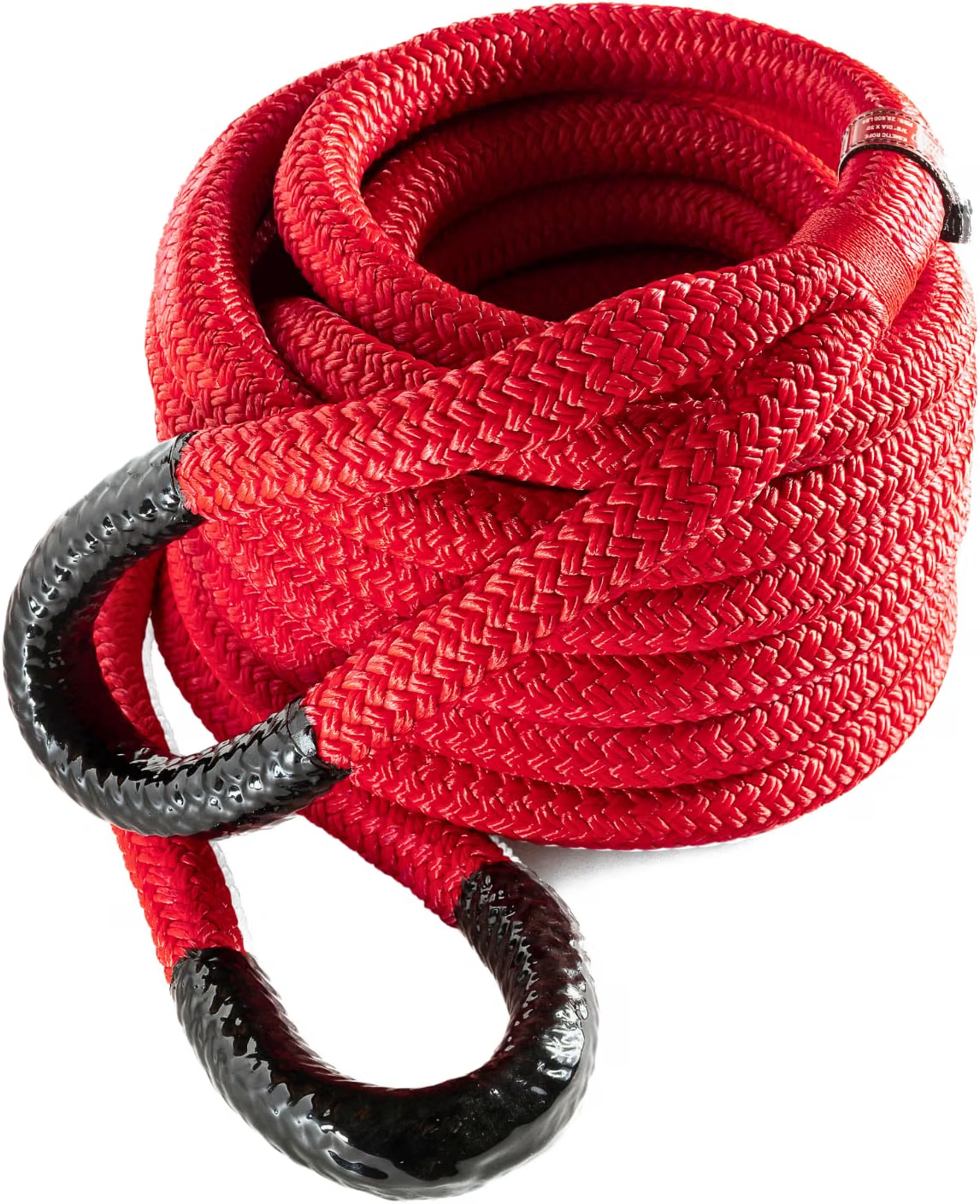
Yankum Ropes Python 7/8"
View on Amazon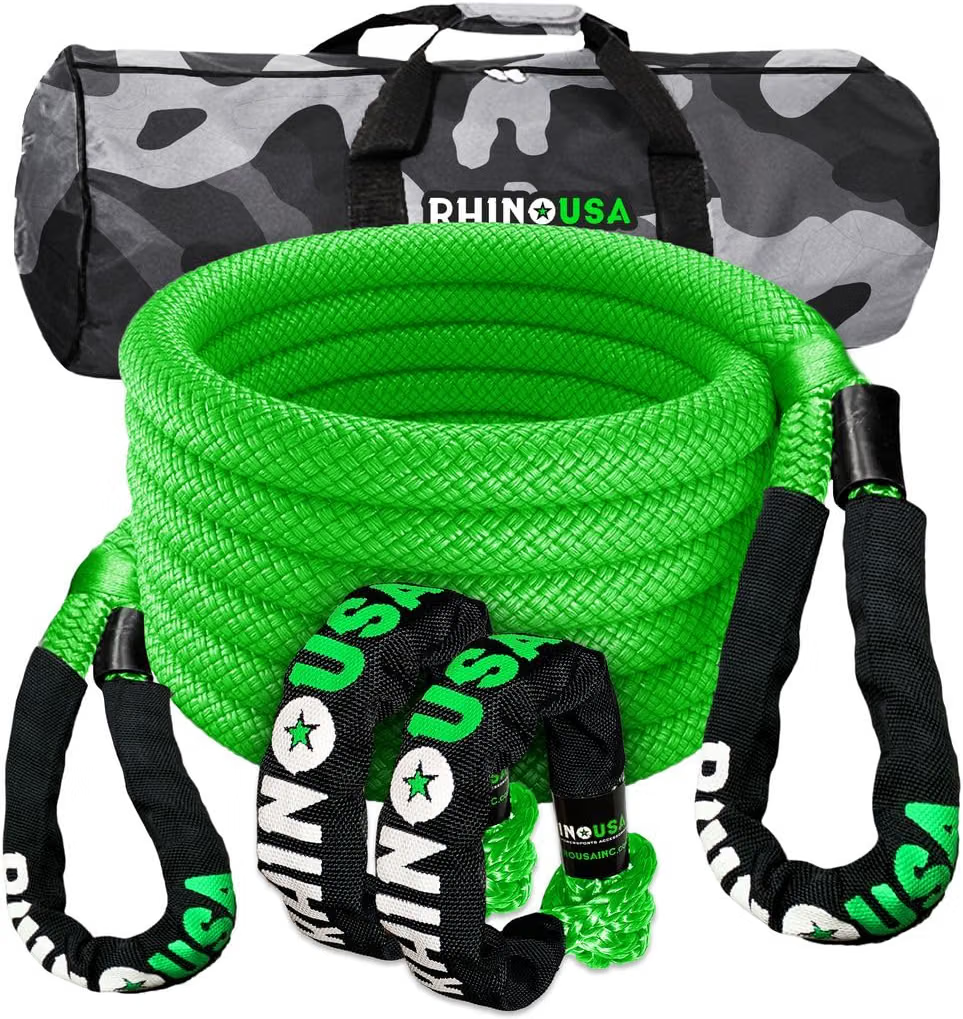
Rhino USA 7/8" x 30' Kinetic Recovery Kit
View on Amazon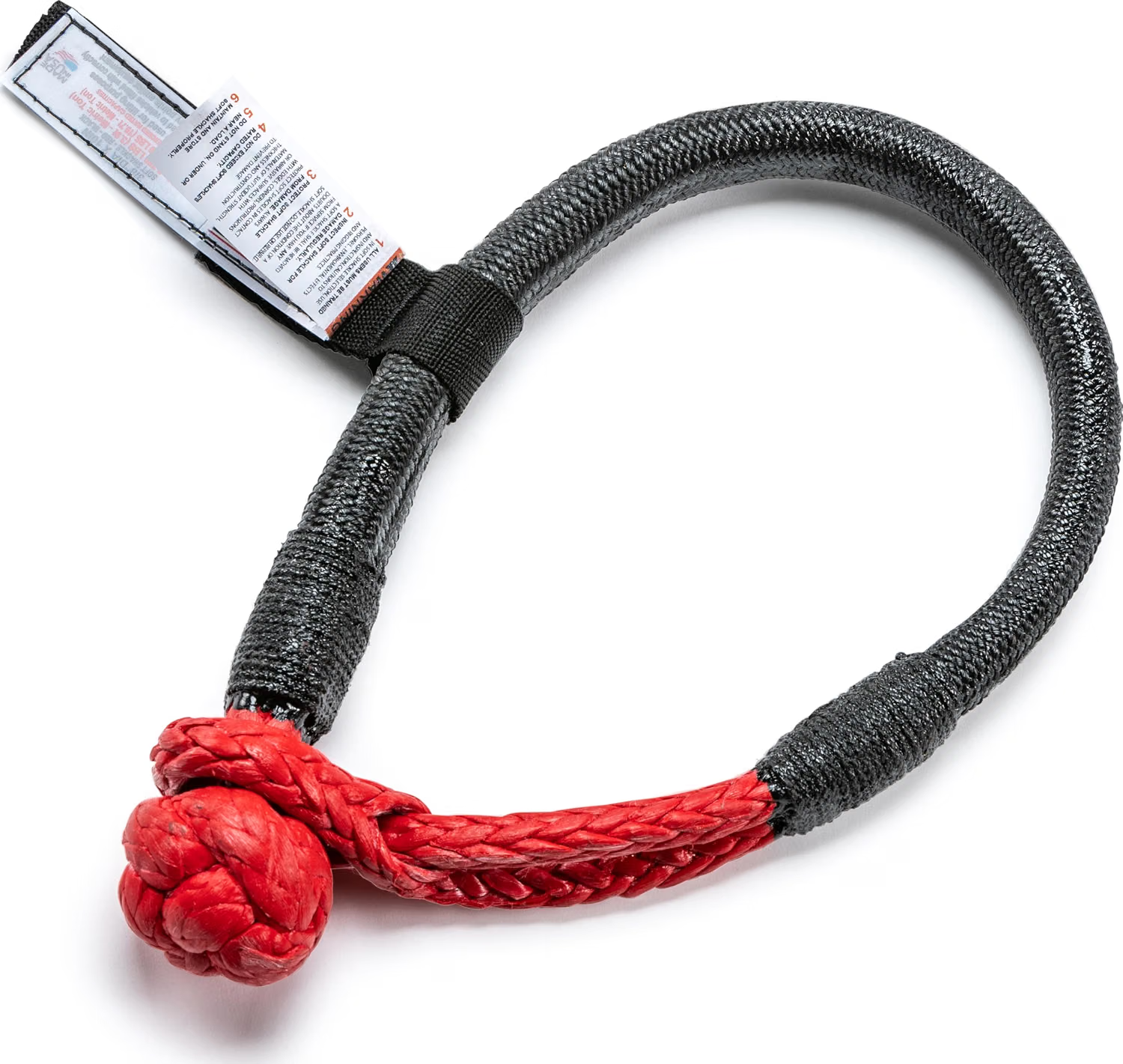
Factor 55 Extreme Duty Soft Shackle
View on Amazon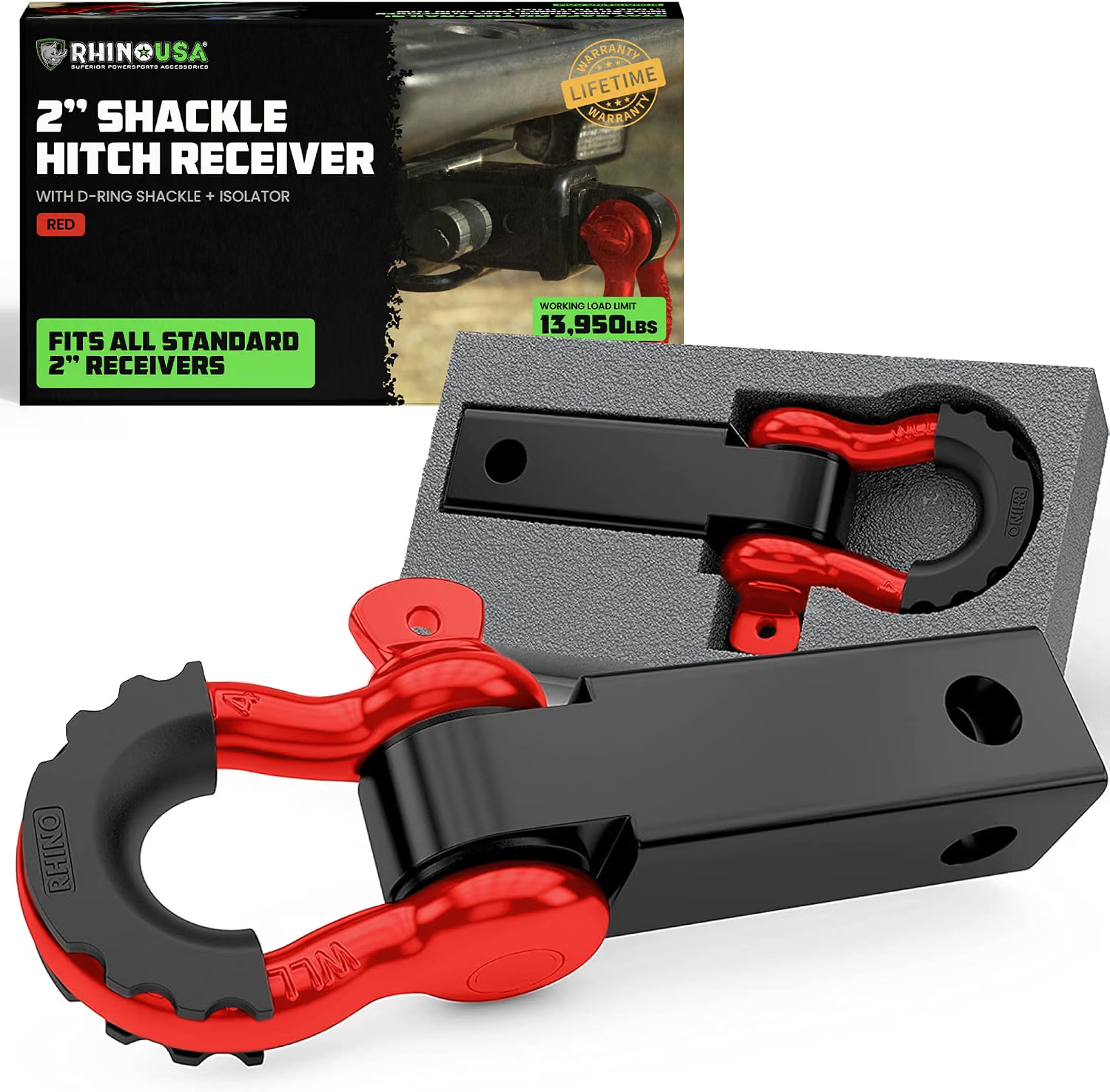
Rhino USA 2" Shackle Hitch Receiver
View on Amazon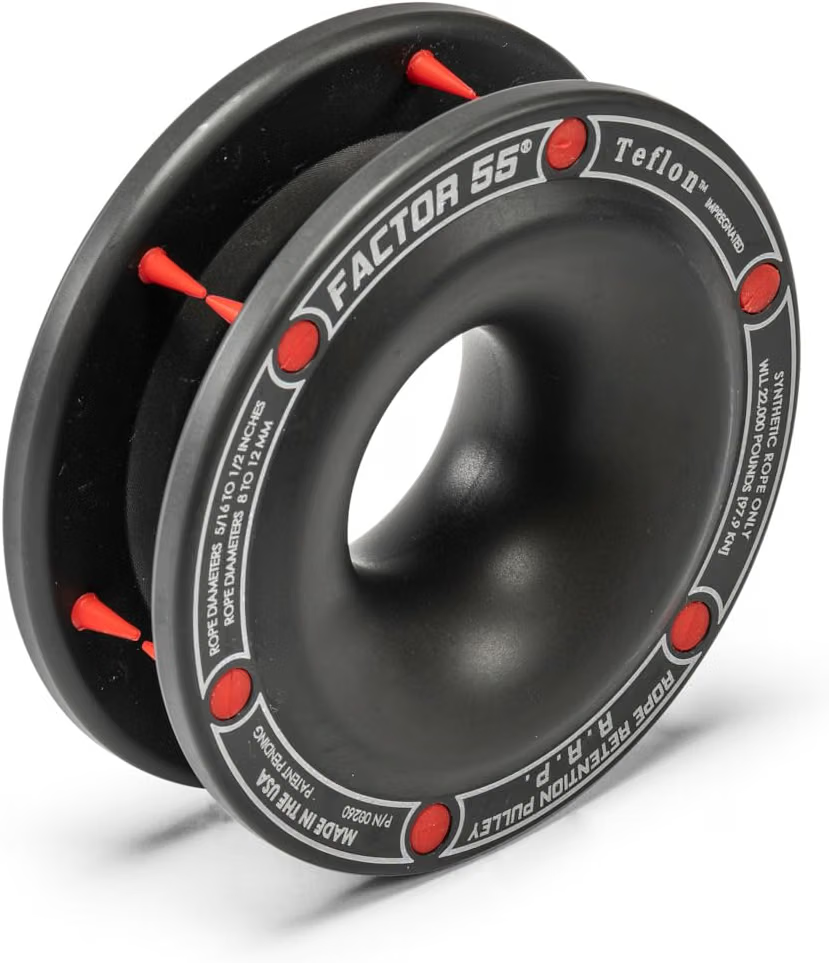
Factor 55 Rope Retention Pulley
View on Amazon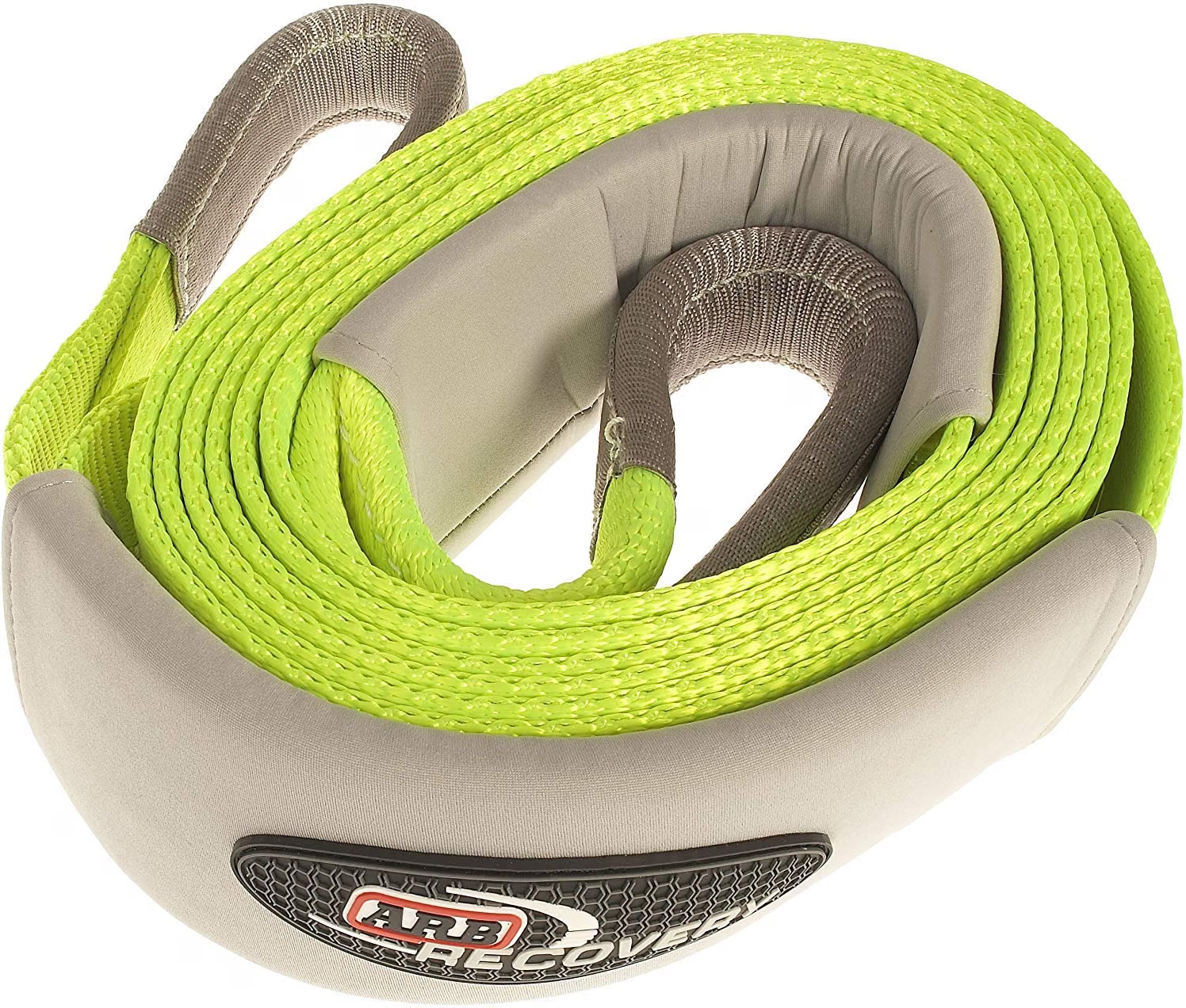
ARB Tree Trunk Protector
View on Amazon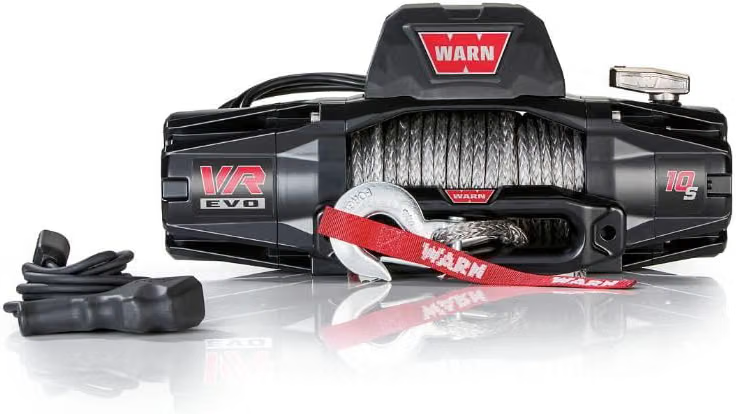
WARN VR EVO 10-S
View on Amazon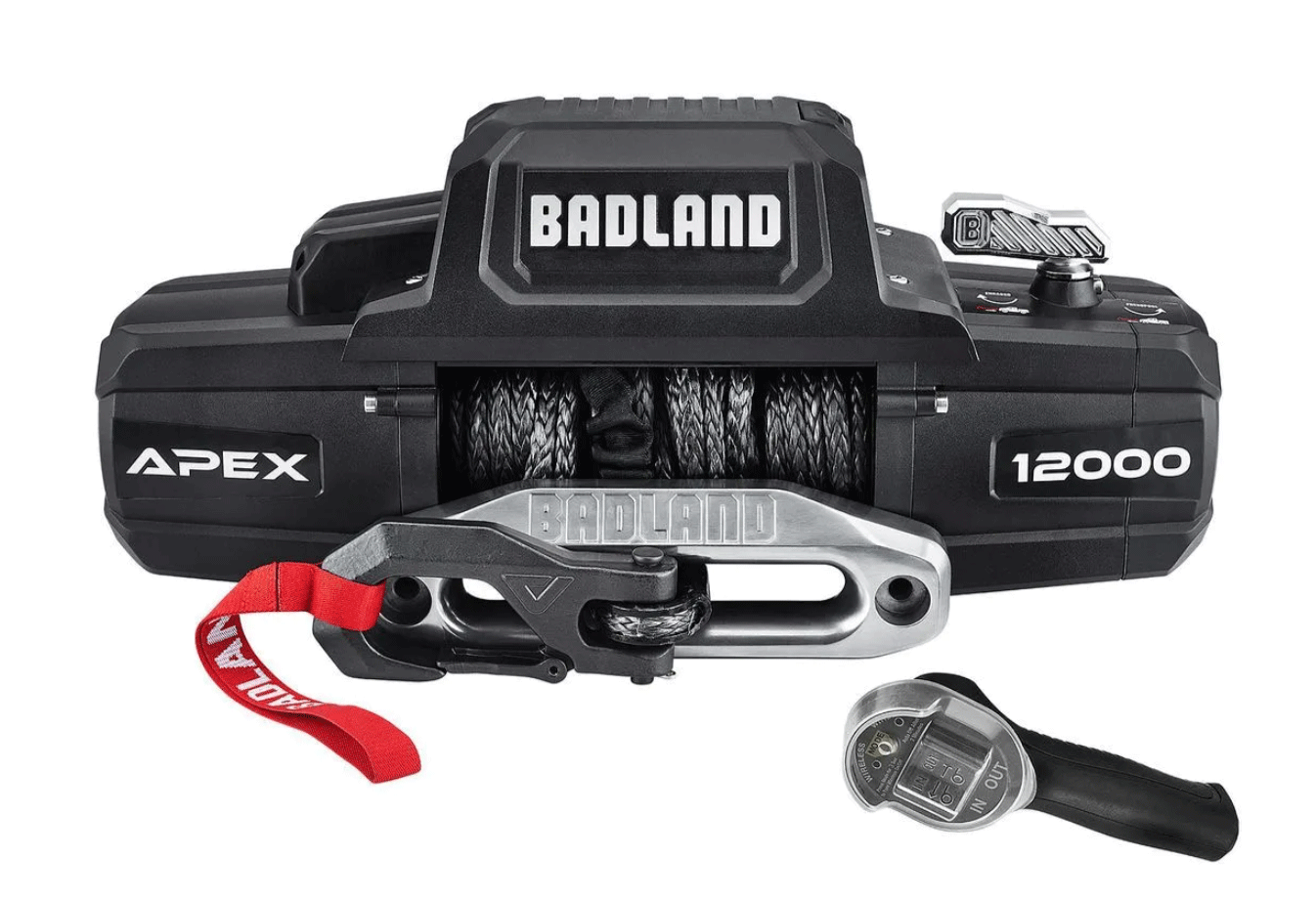
BADLAND APEX 12,000 lb. Winch
View at Harbor Freight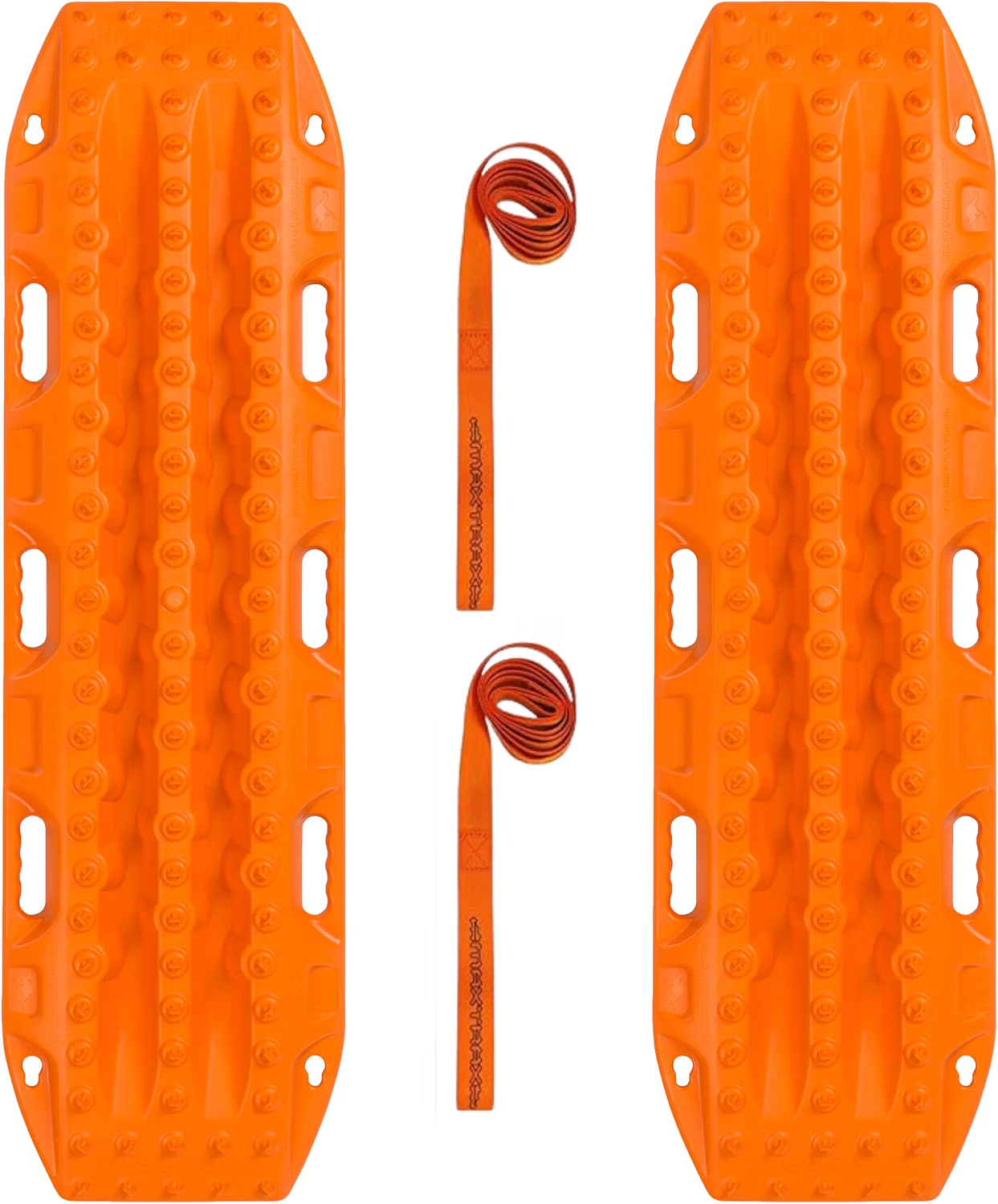
MAXTRAX MKII Recovery Boards
View on Amazon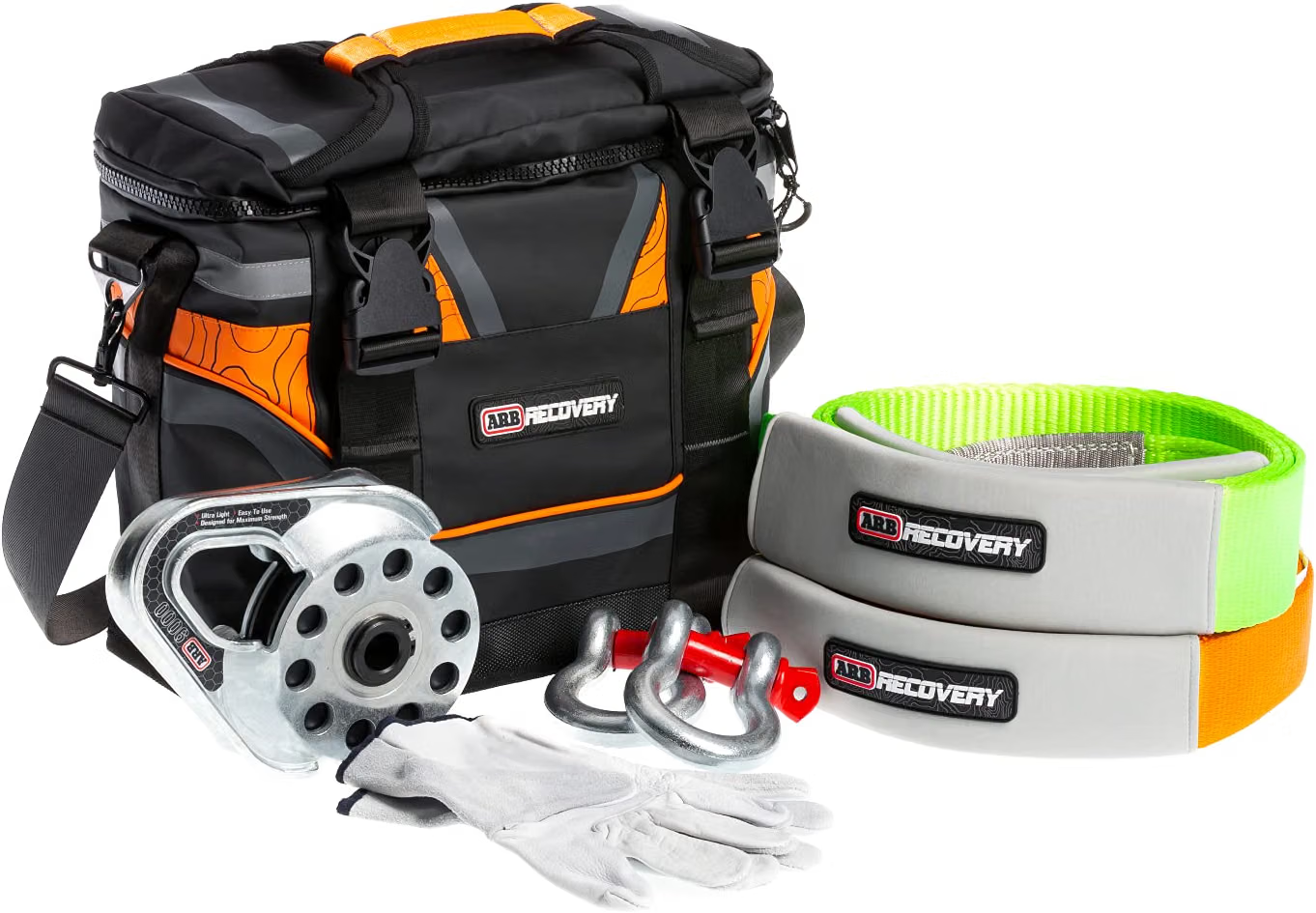
ARB Essentials Recovery Kit RK11A
View on AmazonQuick Comparison: Best Overlanding Recovery Gear in 2026
Product | Best fit | Why it belongs in a recovery kit |
|---|---|---|
Yankum Ropes Python 7/8" Kinetic Recovery Rope | Premium kinetic recovery | Dedicated double-braid nylon rope sized for common Jeep, half-ton truck, and large SUV recoveries |
Rhino USA 7/8" x 30' Kinetic Recovery Rope Kit | Complete kinetic setup | Rope, two soft shackles, and storage bag in one package |
Factor 55 Extreme Duty Soft Shackle | Lightweight recovery connection | High rated capacity without another heavy steel shackle |
Rhino USA 2" Shackle Hitch Receiver | Rear recovery point | Adds a purpose-built connection to a compatible 2-inch receiver |
Factor 55 Rope Retention Pulley | Winch redirects and mechanical advantage | Compact synthetic-rope pulley for more flexible winch rigging |
ARB Tree Trunk Protector | Tree anchor protection | Wide anchor strap for a suitable tree rather than wrapping winch rope around the trunk |
WARN VR EVO 10-S | 10,000-lb class self-recovery winch | Synthetic rope and an established truck/SUV recovery platform |
BADLAND APEX 12,000 lb. Synthetic Rope Winch | Higher-capacity value-oriented winch | 12,000-lb rated pull, synthetic rope, and wired/wireless control |
MAXTRAX MKII | Traction recovery | Fast first-line self-recovery in sand, mud, snow, and loose terrain |
ARB Essentials Recovery Kit RK11A | Packaged traditional recovery kit | Snatch strap, tree protector, snatch block, shackles, gloves, and organized storage |
Recovery Gear Works as a System
Traction recovery
Recovery boards are usually the simplest place to start. If the vehicle still has enough capability to drive itself out but the tires cannot find grip, creating a firm traction surface may be all that is needed. A shovel, careful tire-pressure adjustment, and recovery boards can solve many common sand, snow, and loose-terrain problems before a rope or winch ever comes out.
Kinetic recovery
A kinetic rope stretches under load and stores energy before transferring that energy into the stuck vehicle. This can create a smoother pull than using a static strap for a dynamic recovery, but the rope must be correctly matched to the recovery vehicle and used only with compatible rated recovery points and manufacturer-approved technique.
Winch recovery
A winch gives you a controlled pulling system that does not require a second vehicle. This can be especially valuable for solo travel, but the winch is only one part of the system. You may also need a suitable anchor, tree protector, soft shackle, pulley, properly rated recovery points, and training in safe rigging.
Rigging and connection hardware
The strongest rope or winch in the world does not make an unsafe attachment point safe. Recovery hardware should be rated for its intended use, and every component in the load path matters. Check the working load limits, minimum breaking strengths, condition, and compatibility of the entire system rather than focusing on one impressive number.
1. Yankum Ropes Python 7/8" Kinetic Recovery Rope
Best fit: Premium kinetic recovery for Jeeps, half-ton trucks, and large SUVs.
Yankum publishes a 28,600-pound minimum breaking strength for the 7/8-inch Python and recommends this size for recovery vehicles in roughly the 5,000-to-7,199-pound range. It uses double-braid nylon construction with a protective coating intended to resist water, UV exposure, staining, and abrasion.
The important point is that this is a recovery rope, not a conventional towing rope. Its stretch is what allows it to progressively store and release energy during a kinetic recovery.
Why consider it: This is a focused choice for someone who wants a dedicated kinetic rope rather than an all-in-one kit. Rope sizing matters, so follow Yankum's current vehicle-weight guidance rather than simply buying the biggest rope available.
2. Rhino USA 7/8" x 30' Kinetic Recovery Rope Kit
Best fit: A complete kinetic recovery package.
Rhino USA's 7/8-inch by 30-foot kit combines a kinetic rope, two 3/8-inch soft shackles, and a storage bag. Rhino publishes a 28,600-pound minimum break strength for the rope and 31,400-pound minimum break strength for the included soft shackles.
This makes the Rhino kit particularly useful for someone starting from scratch because the rope and connection hardware arrive together instead of being purchased separately.
Why consider it: Fewer individual pieces to source, plus a bag that keeps the core kinetic-recovery equipment organized. A complete rope kit still does not replace proper rated recovery points on both vehicles.
3. Factor 55 Extreme Duty Soft Shackle
Best fit: Lightweight connection hardware for compatible rated recovery equipment.
Factor 55 publishes a 43,500-pound minimum breaking strength and an 8,700-pound working load limit for the 3/8-inch by 20-inch Extreme Duty Soft Shackle. The synthetic construction keeps weight and bulk far below a comparable steel connection.
Soft shackles can work especially well when the attachment point is smooth and intended for synthetic rigging. Their low weight is useful in a recovery bag, but synthetic fibers still need protection from sharp edges, abrasion, heat, and contamination.
Why consider it: High strength with very little weight and bulk. Inspect synthetic shackles before use and follow the manufacturer's retirement guidance after visible damage or questionable loading.
4. Rhino USA 2" Shackle Hitch Receiver
Best fit: Adding a dedicated rear recovery connection to a compatible 2-inch receiver.
A purpose-built shackle hitch receiver can give a truck or SUV a much better rear recovery connection than improvising with a tow ball or another component that was never designed for recovery loading. Rhino USA's model is designed for a standard 2-inch receiver and includes a D-ring style shackle.
The important limitation is the entire vehicle-side system. The recovery receiver, hitch, mounting points, shackle, rope, and every other component must be suitable for the intended load. Verify the current product rating and the vehicle receiver rating before use.
Why consider it: It creates a purpose-built rear connection on compatible vehicles and helps eliminate one of the most dangerous shortcuts in vehicle recovery: using a hitch ball as an attachment point.
5. Factor 55 Rope Retention Pulley
Best fit: Synthetic winch-rope redirects and mechanical advantage.
Factor 55 designed the Rope Retention Pulley as a compact alternative to a traditional snatch block for synthetic winch rope. The standard version supports 5/16- to 1/2-inch synthetic rope, carries a published 22,000-pound working load limit, and weighs about 21 ounces.
A pulley can change line direction or be incorporated into more advanced winch rigging, but it also changes the forces acting on anchors and recovery points. This is gear to use with the manufacturer's instructions and proper recovery training, not something to improvise with in the field.
Why consider it: Compact and relatively light for travelers already using synthetic winch rope.
6. ARB Tree Trunk Protector
Best fit: Winching from a suitable tree anchor.
ARB's 10-foot Tree Trunk Protector is made from polyester and carries a published 26,000-pound breaking strength. Its wide strap spreads the load around an appropriate tree more effectively than wrapping winch cable or rope directly around the trunk.
This is one of those pieces of gear that may seem secondary until you need a natural anchor. If a suitable tree is the best anchor available, a proper tree strap protects both the tree and the recovery equipment.
Why consider it: Small, simple equipment that expands your winch-rigging options. Not every tree is a safe anchor, and local land-use rules, tree health, root stability, terrain, and load direction all matter.
7. WARN VR EVO 10-S
Best fit: 10,000-pound class self-recovery for many Jeep, SUV, and truck builds.
WARN lists the VR EVO 10-S at a 10,000-pound rated pull with 90 feet of 3/8-inch synthetic rope, IP68 construction, and wired/wireless control. That places it in a useful class for many common overlanding builds when properly matched to loaded vehicle weight and installed on compatible mounting hardware.
A winch is particularly valuable for solo travel because it does not depend on another vehicle being present. It also gives you a controlled pulling system that can be useful when traction boards are not enough.
Why consider it: Established truck and SUV recovery platform with synthetic rope. Before purchasing or using a WARN product, check WARN's current recalls and safety notifications for the exact model and remote system you own.
WARN recalls and safety notifications
8. BADLAND APEX 12,000 lb. Synthetic Rope Winch
Best fit: Higher-capacity synthetic-rope winching with a value-oriented price position.
Harbor Freight lists the BADLAND APEX at a 12,000-pound line-pull capacity with 80 feet of synthetic rope, wireless and wired control, and IP68/IP69K protection. That specification mix makes it interesting for truck owners who want more rated pulling capacity without automatically moving into the highest-priced winch category.
Why consider it: Strong published capacity, synthetic rope, remote options, and high ingress-protection ratings at a value-oriented position. A 12,000-pound rating does not mean every vehicle needs a 12,000-pound winch. Match the winch, mounting system, battery and electrical system, and rigging to the vehicle and expected recovery conditions.
9. MAXTRAX MKII Recovery Boards
Best fit: First-line traction recovery in sand, mud, snow, and loose terrain.
MAXTRAX lists each MKII board at approximately 45 inches long, 13 inches wide, and 7.5 pounds. The reinforced nylon design includes integrated handles and shovel ends.
For many stuck situations, recovery boards are the gear to try before setting up a rope or winch. If the vehicle still has enough traction potential to climb out once the tire has a firm surface, boards can keep the recovery simple and reduce the number of loaded components in the system.
We cover terrain, storage, premium and value options, and how many boards to carry in our Best Recovery Boards for Overlanding in 2026 guide.
10. ARB Essentials Recovery Kit RK11A
Best fit: Building a traditional recovery kit without buying every component separately.
ARB's RK11A bundles a 17,600-pound recovery strap, 19,800-pound snatch block, two 4.75-ton shackles, a tree protector, gloves, and a heavy-duty recovery bag. It gives a new overlander a cohesive group of traditional recovery components in one organized package.
The included snatch strap and steel shackles represent a different recovery approach from the kinetic-rope and soft-shackle systems earlier in this guide. Understand each component's intended use before combining systems.
Why consider it: A practical base kit for travelers who want conventional recovery hardware organized in one bag.
Kinetic Rope vs. Recovery Strap vs. Tow Strap
These terms are often used interchangeably online, but they should not be. A kinetic recovery rope is designed to stretch and store energy during a dynamic recovery. A recovery or snatch strap also incorporates stretch, but construction and stretch characteristics differ by product. A tow strap is generally intended for controlled towing or pulling and may have far less stretch.
Never assume a strap is appropriate for a kinetic recovery because it looks heavy-duty. Use recovery equipment according to the manufacturer's instructions and ratings.
Soft Shackles vs. Steel Shackles
Neither material automatically makes a recovery system safe. Soft shackles reduce weight and remove a heavy metal component from the load path, but synthetic fibers need smooth compatible attachment surfaces. Steel shackles tolerate different contact conditions but add weight and require the same attention to rating, condition, and proper loading.
The better question is whether the entire connection system is correctly rated and compatible.
Why Rated Recovery Points Matter
One of the most dangerous recovery mistakes is attaching a rope or strap to whatever metal component looks strong enough. Tow balls, shipping tie-downs, suspension parts, bumper brackets, and unrated factory loops should never be assumed to be appropriate recovery points.
Use vehicle-specific rated recovery points or other recovery connections explicitly designed and rated for the loads you intend to apply. Check the vehicle and recovery-equipment manuals when there is any uncertainty.
How to Think About Kinetic Rope Sizing
Bigger is not automatically better. Kinetic ropes are designed to stretch within a specific loading range. An oversized rope may not stretch as intended with a lighter recovery vehicle, while an undersized rope can be overloaded. Follow the rope manufacturer's current vehicle-weight guidance and account for the actual loaded vehicle rather than the brochure curb weight alone.
When a Recovery Pulley Makes Sense
A pulley can expand a winch system by helping redirect the line or support more advanced rigging arrangements. But changes in line direction and rigging geometry also change the forces on anchors and attachment points. If you are new to winching, learn the concepts in a reputable hands-on recovery course and follow the winch and pulley manufacturer instructions rather than improvising.
Build a Recovery Kit by Budget
Around $300: The basic self-recovery foundation
Prioritize recovery boards, a suitable shovel, gloves, tire-repair basics, and properly rated connection hardware. If you regularly travel with another capable vehicle, a correctly sized kinetic rope can become the next addition. The goal at this level is to handle common traction problems and avoid unsafe improvisation.
Around $600: Add a complete kinetic recovery system
Add a properly sized kinetic rope or recovery kit, soft shackles, and a purpose-built recovery connection such as a compatible hitch-receiver recovery point. This is a strong configuration for people who usually travel with another vehicle and want both traction recovery and vehicle-to-vehicle recovery capability.
Around $1,500 and beyond: Add self-winching capability
A properly installed winch changes the system because you no longer require a second vehicle for many recoveries. Budget for more than the winch itself. You may also need a mounting system, recovery pulley, tree protector, soft shackles, additional rated recovery points, electrical upgrades, and appropriate training.
Solo Travel vs. Group Travel
If you usually travel with a group, kinetic recovery equipment can be extremely useful because another recovery vehicle is likely to be available. Solo travelers should place more emphasis on traction boards and winching because those systems do not require another vehicle, although a winch still needs a suitable anchor and rigging plan.
The more remote the route, the more important redundancy becomes. Recovery gear should complement, not replace, route planning, communication equipment, tire repair capability, food, water, and emergency supplies.
Common Recovery Mistakes to Avoid
Using a tow ball or another unrated point as a recovery attachment.
Ignoring working load limits, minimum breaking strengths, and the rating of the weakest component in the system.
Using damaged synthetic rope or shackles with cuts, abrasion, heat damage, or questionable contamination.
Allowing spectators to stand near a loaded recovery line or inside the recovery area.
Adding more throttle or force instead of stopping and reassessing a recovery that is not working.
Mixing kinetic ropes, tow straps, winch lines, pulleys, shackles, and attachment points without understanding the intended use of each component.
Skipping pre-use inspection, gloves, communication, and a clear recovery plan.
Recovery Safety Comes Before the Gear
No buying guide can substitute for recovery training and the instructions supplied with your specific equipment and vehicle. Before applying load, inspect the recovery points, rope or strap, shackles, winch line, anchor, and every other component in the system. Clear spectators away from the recovery area and communicate the plan before anyone begins pulling or winching.
If you are new to off-road recovery, a reputable hands-on recovery course is one of the most useful upgrades you can make.
What Should You Buy First?
For most new overlanders, the first recovery purchase does not need to be a winch. Start with the problems you are most likely to encounter. Recovery boards and tire equipment handle a surprising number of situations. If you travel with other vehicles, add a properly sized kinetic recovery setup and suitable rated recovery points. If you routinely travel alone or on routes where traction recovery may not be enough, a winch becomes easier to justify.
That progression keeps the kit focused on capability rather than simply collecting gear.
Frequently Asked Questions
Do I need recovery boards if I already have a winch?
They solve different problems. Recovery boards can be faster and simpler when the tires only need additional traction, while a winch is useful when the vehicle cannot drive itself out or needs controlled pulling assistance.
How many recovery boards should I carry?
Two boards can handle many situations and are easier to store. Four provide more options when several tires need support or when building a longer traction path. See our dedicated recovery-board guide for a deeper comparison.
Are soft shackles safer than steel shackles?
Soft shackles eliminate a heavy steel connection from the rigging and are easier to pack, but they still require properly rated, smooth attachment points and protection from abrasion and sharp edges. Material alone does not make a recovery system safe.
Is a 10,000-pound winch enough for overlanding?
It depends on the fully loaded vehicle, recovery conditions, mounting system, and rigging. Use the winch manufacturer's sizing guidance for your actual vehicle rather than choosing only by vehicle class.
Can I use a regular tow strap for kinetic recovery?
Do not assume that you can. Kinetic recovery equipment is designed to stretch and manage energy differently from a conventional tow strap. Follow the manufacturer's intended use for each product.
Should a recovery kit include an air compressor?
An air compressor is not a pulling device, but tire pressure is part of off-road recovery and terrain management. Airing down can improve traction in appropriate conditions, and you need a reliable way to air back up before highway driving. See our portable air compressor guide.
Final Thoughts
The best overlanding recovery gear is not the biggest winch, strongest rope, or most expensive bag of hardware. It is a system built around your vehicle, terrain, travel style, and the recoveries you can realistically expect to perform.
A sensible progression is straightforward: start with traction recovery and tire management, add correctly sized vehicle-to-vehicle recovery gear when you travel with others, and add a winch and rigging equipment when your routes justify self-recovery capability.
Build the system deliberately, learn how each component works, inspect it regularly, and never let having more recovery gear convince you to take unnecessary risks.
Related Overlanding Guides
This post may contain affiliate links. We may earn a commission when you purchase through links on this site at no additional cost to you.


