This article contains affiliate links. We may earn a commission from qualifying purchases.
As an Amazon Associate I earn from qualifying purchases.
Smart light bulbs are one of the easiest ways to make a room feel smarter without opening a wall or replacing a switch. They can add color, tunable white light, schedules, scenes, voice control, and automation to fixtures you already own. The real buying decision in 2026 is less about whether a bulb can change color and more about brightness, protocol, ecosystem fit, fixture compatibility, and whether the rest of the household will actually use the smart features.
This guide compares seven current smart bulbs around brightness, color quality, Matter support, Thread or Wi-Fi connectivity, hub requirements, and everyday usability. We do not claim hands-on testing unless an article specifically says so.
As an Amazon Associate, The All Guy earns from qualifying purchases.
If you are building from scratch, start with Smart Home for Beginners: The Complete 2026 Guide, then see Best Smart Home Devices for Beginners in 2026 and the Smart Home Start Here hub for the wider cluster.
QUICK PICKS: BEST SMART LIGHT BULBS IN 2026
Seven smart bulbs covering premium ecosystems, Matter over Wi-Fi, Matter over Thread, Zigbee, bright color lighting, and budget-friendly setups.
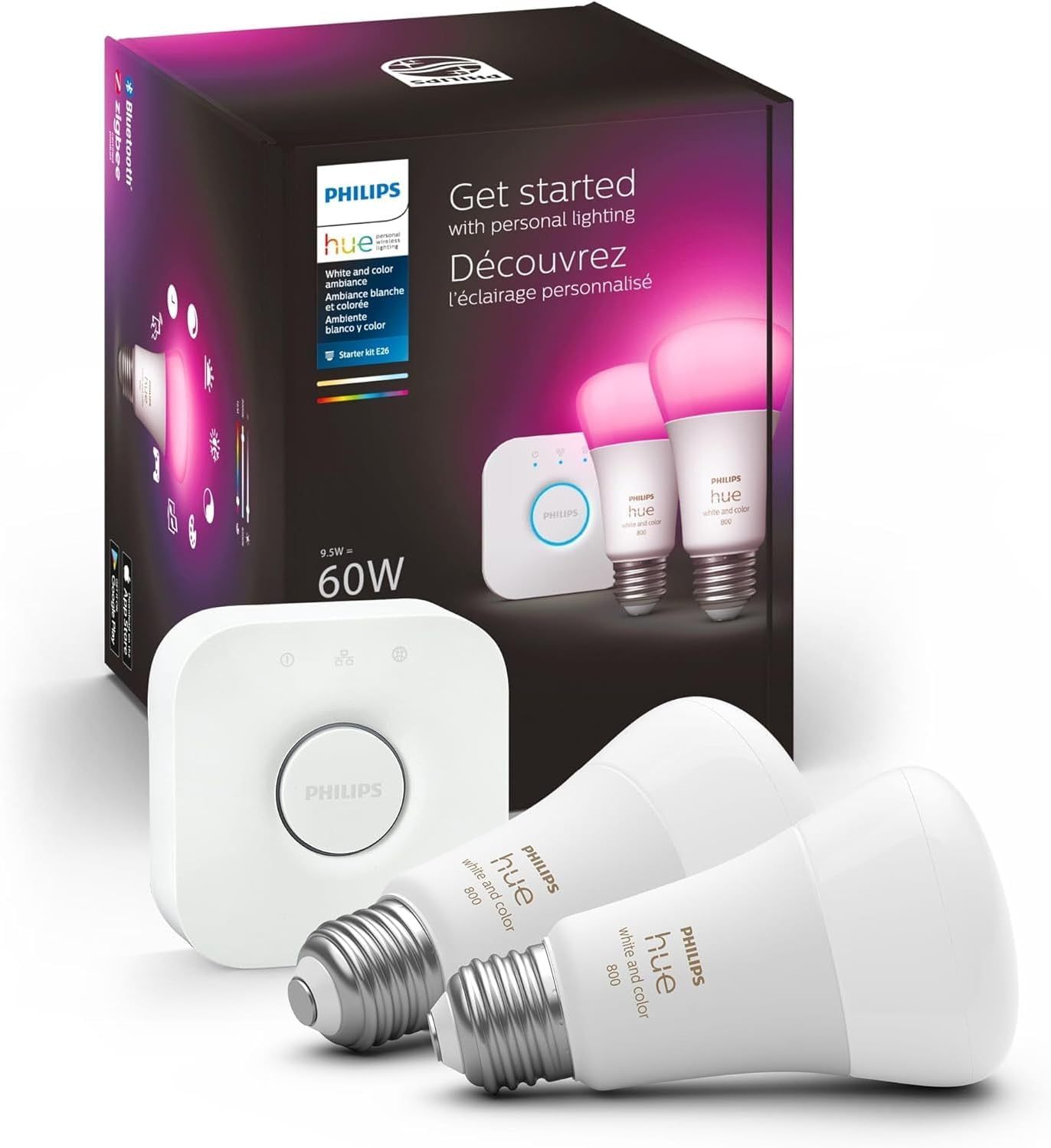
Philips Hue White and Color Ambiance A19
Check Price on Amazon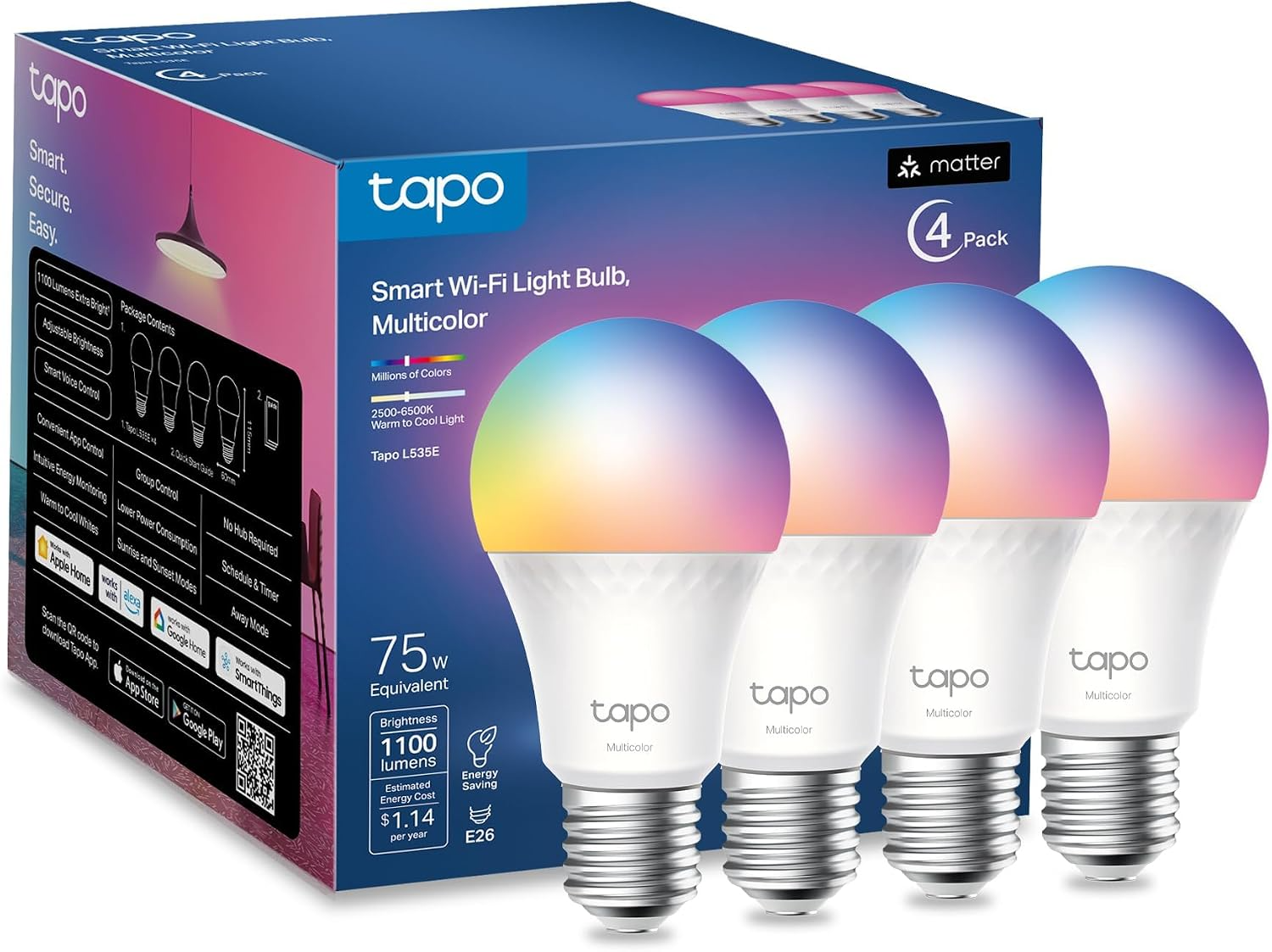
TP-Link Tapo L535E
Check Price on Amazon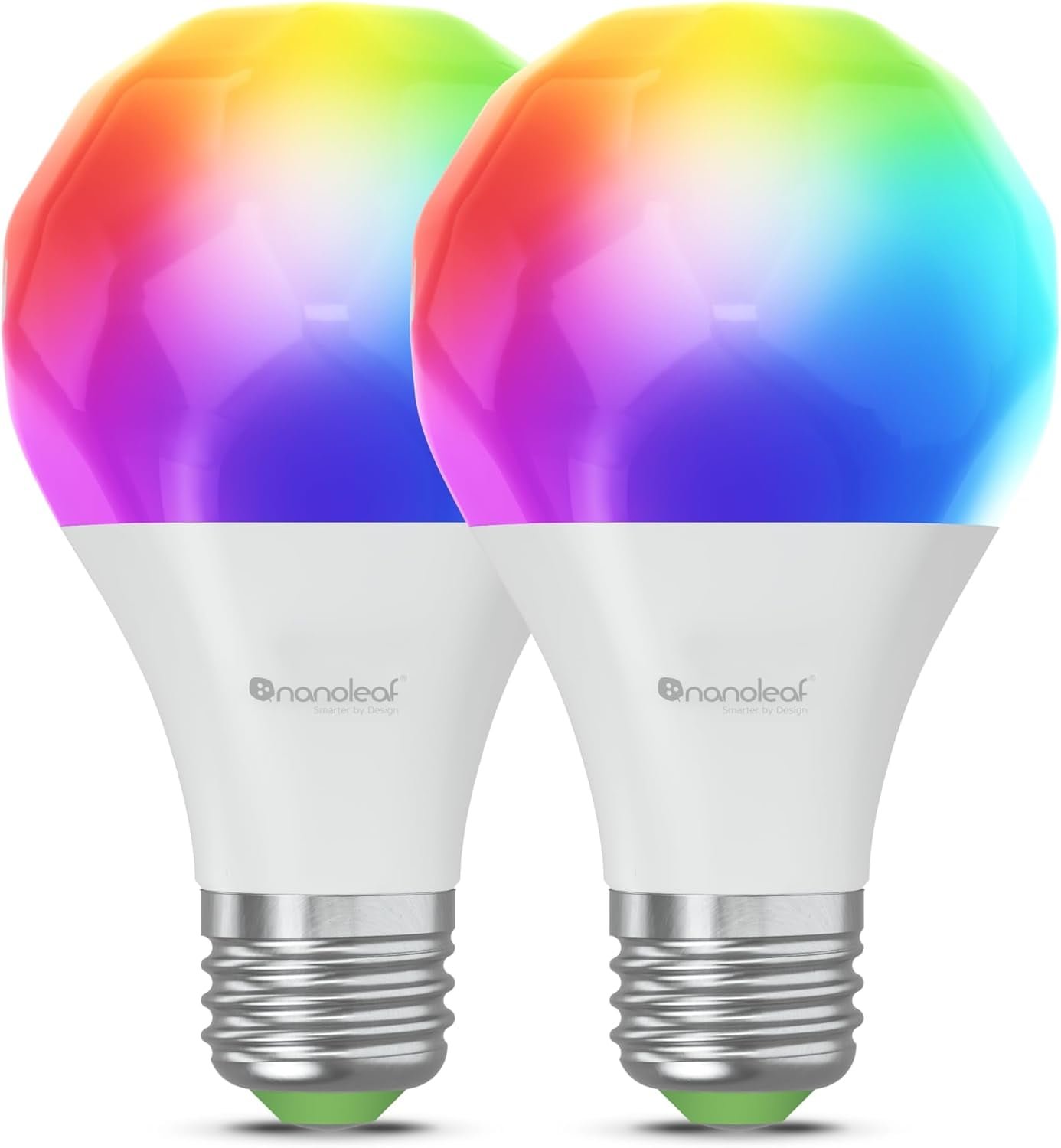
Nanoleaf Essentials Matter A19
Check Price on Amazon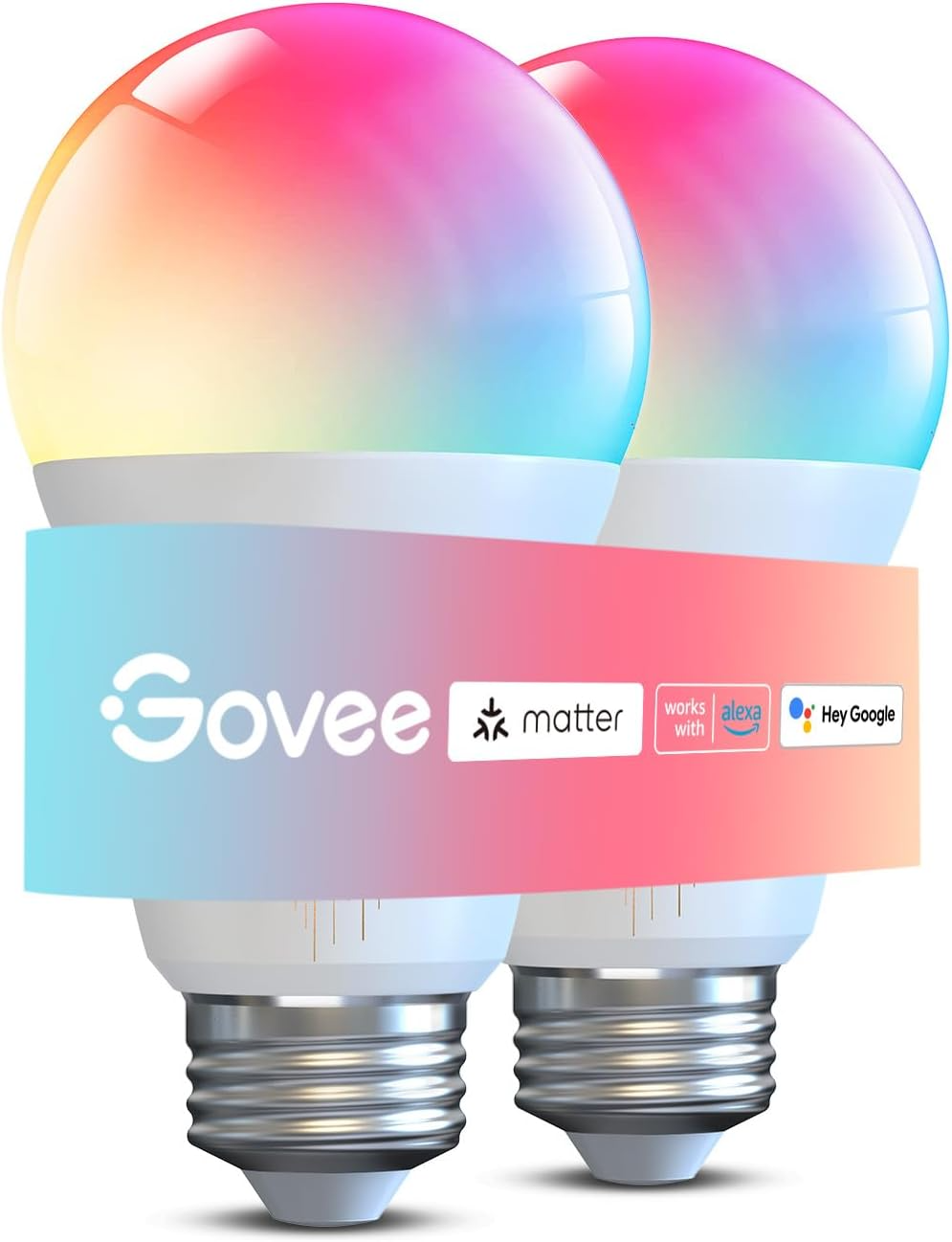
Govee A19 RGBWW H600A
Check Price on Amazon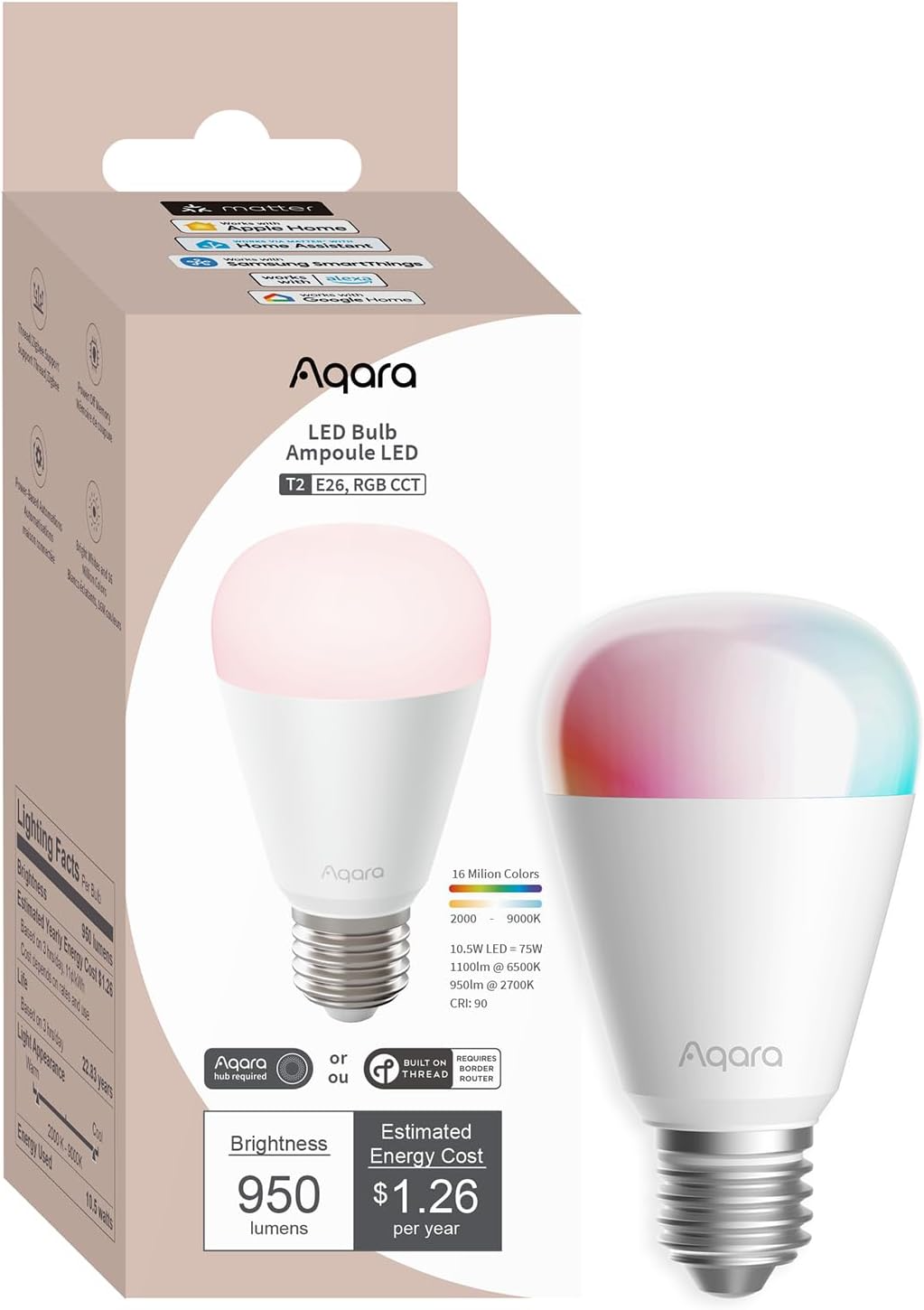
Aqara LED Bulb T2
Check Price on Amazon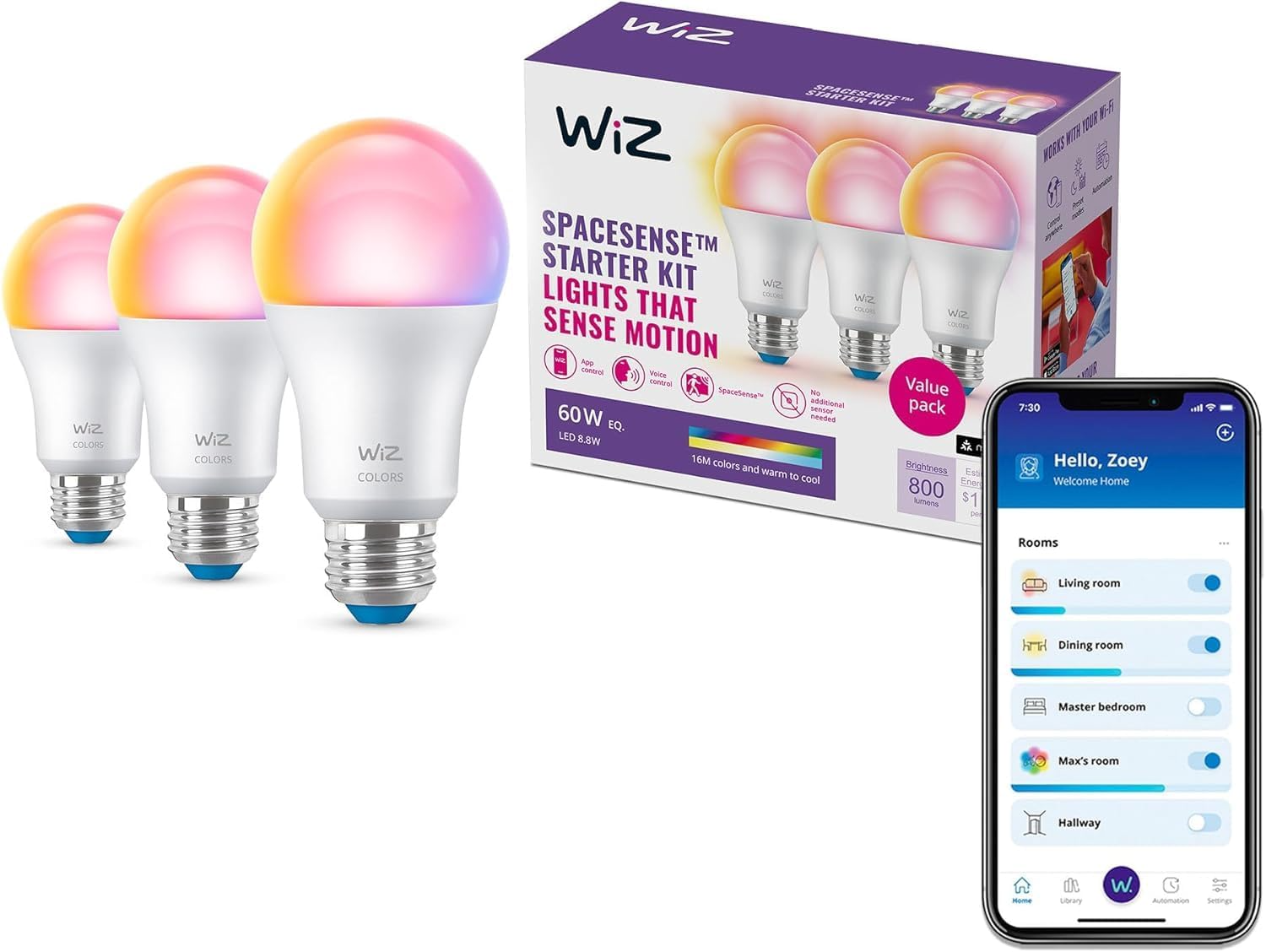
WiZ A19 Full Color
Check Price on Amazon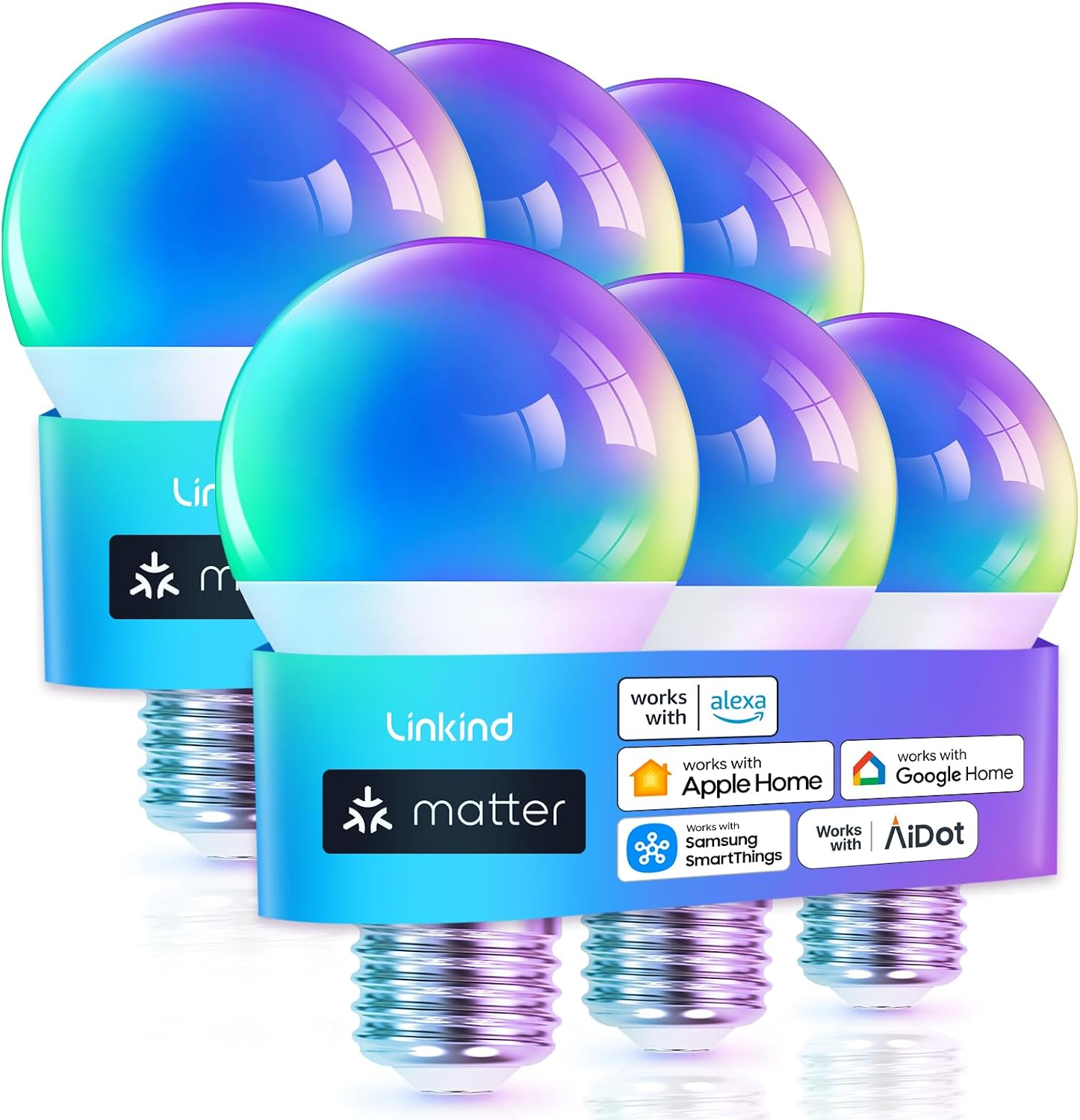
Linkind Matter A19
Check Price on AmazonAt a Glance: Which Smart Bulb Fits Your Home?
Philips Hue White and Color Ambiance A19 is the premium ecosystem pick for buyers who want polished scenes, accessories, and broad compatibility. TP-Link Tapo L535E is the bright Matter-over-Wi-Fi value choice. Nanoleaf Essentials Matter A19 is the Thread-focused option. Govee A19 RGBWW H600A stands out for high brightness and colorful app-driven scenes. Aqara LED Bulb T2 is the flexible dual-protocol pick for Thread or Zigbee homes. WiZ A19 Full Color is the simple no-hub Wi-Fi choice. Linkind Matter A19 is the budget Matter option for buyers who want broad ecosystem support without committing to a proprietary hub.
Ecosystem and Hub Requirements at a Glance
Philips Hue can run in a simpler Bluetooth setup, but the Hue Bridge is the best route for the full Hue ecosystem, advanced accessories, automations, and Matter integration across major platforms. Tapo L535E connects directly to 2.4 GHz Wi-Fi and does not require a proprietary Tapo hub; when you add it to a third-party Matter ecosystem, compatible Matter controller
Nanoleaf Essentials Matter A19 is designed around Matter over Thread for ecosystem control, so Apple Home, Google Home, Alexa, or SmartThings setups need compatible Matter-controller infrastructure and a Thread border router. Aqara LED Bulb T2 is the flexible one: Thread mode needs a Matter controller and Thread border router, while Zigbee mode requires a compatible Aqara Zigbee hub and unlocks Aqara-specific automations.
WiZ A19 Full Color connects directly to Wi-Fi and needs no dedicated WiZ hub for normal app and voice control; Matter use relies on a compatible third-party Matter platform. Govee H600A is a Wi-Fi/Bluetooth bulb with Matter-compatible versions and works most naturally through the Govee Home app plus supported Matter platforms. Linkind Matter A19 is positioned as a lower-cost Matter bulb for compatible Apple Home, Google Home, Alexa, and SmartThings environments rather than as a proprietary-hub lighting system.
Before You Buy: Check the Fixture, Socket, and Switch
Most smart bulbs are designed for standard E26 sockets, but shape, size, and enclosure matter. A bulb that fits a table lamp may not fit a narrow globe, recessed can, or fully enclosed fixture. Check the manufacturer's fixture guidance before buying, especially for ceiling fans, enclosed housings, and outdoor locations.
Smart bulbs also expect constant power. If someone turns the wall switch off, the bulb usually disappears from the app until power returns. That is why smart bulbs work best in lamps, fixtures with predictable switch behavior, or homes where smart buttons and scenes replace repeated use of the physical switch.
1. Philips Hue White and Color Ambiance A19 — Best Premium Smart Lighting Ecosystem
Philips Hue White and Color Ambiance A19 combines full-color lighting with the mature Hue ecosystem, while the Hue Bridge enables more advanced automations and larger lighting setups.
Philips Hue remains the premium smart-lighting choice because the value is larger than one bulb. The current White and Color Ambiance A19 lineup provides full-color lighting, tunable white, deep dimming, app and voice control, Bluetooth for simple setups, and Zigbee when paired with a Hue Bridge.
Hue also supports major platforms including Alexa, Google Home, Apple Home, SmartThings, and Matter through its ecosystem. The tradeoff is price. A single Hue bulb can cost more than multi-packs from value-focused competitors, so the premium makes the most sense when you plan to use Hue scenes, switches, sensors, or multiple rooms.
The All Guy take: Hue is expensive if you only need one color-changing bulb. It makes much more sense when you want a complete lighting system that everyone in the house can use consistently.
2. TP-Link Tapo L535E — Best Bright Matter Value
TP-Link Tapo L535E provides full-color smart lighting with Matter compatibility and direct Wi-Fi connectivity for a hub-free setup.
Tapo L535E is a 1,100-lumen A19 bulb with full color, tunable white from 2500K to 6500K, Matter support, and direct 2.4 GHz Wi-Fi connectivity. That combination makes it attractive for rooms where a standard 800-lumen smart bulb feels too dim.
It works with Alexa and Google Home and can join compatible Matter platforms. Tapo's broader lineup also gives buyers a natural path into plugs, switches, sensors, and cameras without changing apps.
The All Guy take: this is the bulb I would look at first when brightness and price matter more than building a premium lighting ecosystem. Matter keeps the door open to multiple control platforms.
3. Nanoleaf Essentials Matter A19 — Best Thread Smart Bulb
Nanoleaf Essentials Matter A19 uses Matter over Thread for smart-home connectivity and is best suited to homes with a compatible Thread border router.
Nanoleaf Essentials Matter A19 bulbs are designed around Matter over Thread rather than direct Wi-Fi for smart-home ecosystem control. They support millions of colors, tunable white light, schedules, scenes, and remote control when the required Matter controller and Thread border router are in place.
Thread can be appealing in homes already using newer Apple, Google, or other compatible infrastructure because the bulb participates in a low-power mesh rather than adding another Wi-Fi client. The downside is that the ecosystem setup is less intuitive if you do not already understand Matter and Thread.
The All Guy take: Nanoleaf makes the most sense when your smart home already has Thread infrastructure. Buying Thread bulbs before the network is ready creates unnecessary setup friction.
4. Govee A19 RGBWW H600A — Best for Bright Color and Scenes
Govee A19 RGBWW H600A adds customizable color and tunable white lighting for homes already using the Govee smart-lighting ecosystem.
Govee H600A is a bright A19 RGBWW smart bulb rated up to 1,200 lumens. It supports warm and cool whites, RGB color, app-based scenes, music modes, timers, and voice control. Current versions are also sold with Matter compatibility.
Govee's strength is its app-driven lighting ecosystem. If you already use Govee strips, lamps, or entertainment lighting, adding bulbs can make room scenes and grouped effects easier to manage.
The All Guy take: Govee is the fun pick. It is strongest when you actually use color scenes and already have other Govee lighting instead of treating the bulb as a simple white light.
5. Aqara LED Bulb T2 — Best Dual-Protocol Choice
Aqara LED Bulb T2 is designed for connected Aqara homes with flexible Thread or Zigbee integration depending on how the bulb is configured.
Aqara LED Bulb T2 is unusual because it supports both Thread and Zigbee operation. The E26/E27 version can produce up to 1,100 lumens, supports color and tunable white, and works across Aqara, Apple Home, Alexa, Google Home, SmartThings, Home Assistant, and Homey depending on how it is configured.
In Thread mode it can join compatible Matter ecosystems directly. In Zigbee mode it can use Aqara-specific features through an Aqara hub. That flexibility makes it particularly useful for households already invested in Aqara or for buyers who want a migration path between Zigbee and Matter-over-Thread.
The All Guy take: Aqara T2 is interesting because you are not locked into one radio strategy. That flexibility is valuable when the rest of the smart home is still evolving.
6. WiZ A19 Full Color — Best Simple No-Hub Wi-Fi Pick
WiZ A19 Full Color offers app-controlled color and tunable white lighting through a straightforward hub-free smart-lighting setup.
WiZ A19 Full Color bulbs connect directly to 2.4 GHz Wi-Fi, provide up to 800 lumens, support millions of colors, tunable white, schedules, app control, and voice control, and work with Matter through compatible third-party hubs.
The appeal is simplicity. There is no dedicated WiZ bridge required for normal operation, which makes these bulbs easy to add to apartments, guest rooms, or smaller smart-home setups.
The All Guy take: WiZ is a good fit when you want a familiar Wi-Fi bulb without another dedicated hub. The tradeoff is adding more Wi-Fi devices instead of building around Thread or Zigbee.
7. Linkind Matter A19 — Best Budget Matter Bulb
Linkind Matter A19 provides affordable Matter-compatible color lighting for buyers who want broad smart-home integration without entering a premium lighting ecosystem.
Linkind's Matter A19 lineup targets buyers who want low-cost Matter compatibility without a separate proprietary lighting hub. Current A19 models include full-color and tunable-white versions, with the 800-lumen models using a standard E26 base.
Matter support allows compatible versions to work with major ecosystems such as Apple Home, Google Home, Alexa, and SmartThings. That makes Linkind especially attractive when the priority is interoperability and price rather than a deep lighting ecosystem.
The All Guy take: Linkind is the practical budget option when you want Matter first and brand ecosystem second. It is worth considering for larger rooms where buying several premium bulbs would add up quickly.
Matter, Thread, Wi-Fi, Zigbee, or a Hub?
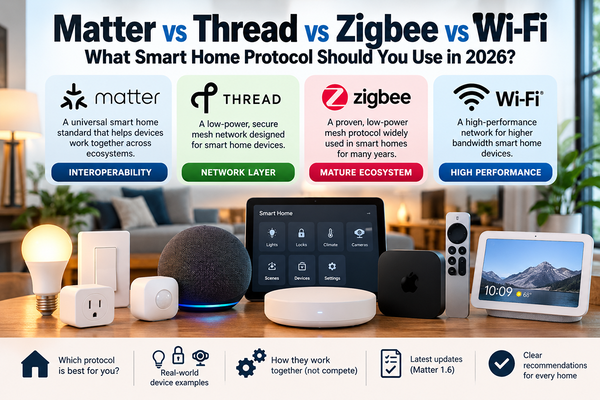
Matter is the interoperability layer It does not tell you how the bulb connects. Matter bulbs can communicate over Wi-Fi or Thread. Thread requires a compatible Thread border router. Zigbee generally requires a hub such as Hue Bridge or Aqara Hub. Direct Wi-Fi is easy to understand but can add more devices to your wireless network.
Choose the protocol that matches the smart-home infrastructure you already have. The best bulb on paper can become the most frustrating bulb in the house if it requires a new controller or another app nobody wants to use.
Brightness Matters More Than Color Count
Most color bulbs advertise millions of colors, but brightness usually matters more day to day. An 800-lumen bulb is roughly in the traditional 60-watt-equivalent range, while 1,100 to 1,200 lumens can work better in larger rooms or fixtures where one bulb has to do more of the work.
Also compare white-light quality. A bulb can make impressive saturated colors and still be disappointing as normal room lighting. Tunable white range, color rendering, and low-level dimming are often more important than the number of app scenes.
Should You Buy Smart Bulbs or Smart Switches?
Smart bulbs are best when you want color, tunable white, or individual lamp control. Smart switches are often better for rooms with several ordinary bulbs controlled from one wall switch. If family members constantly turn power off at the wall, a smart switch may create a more reliable experience than replacing every bulb.
For inexpensive automation beyond lighting, see Best Smart Plugs of 2026. You can also continue through our Best Smart Thermostats of 2026 and Best Outdoor Security Cameras of 2026 guides as you build out the rest of the smart home.
Bottom Line
Philips Hue is the premium ecosystem choice, Tapo L535E is the bright value pick, Nanoleaf Essentials is the Thread-focused option, Govee H600A is built for bright color scenes, Aqara T2 offers unusual protocol flexibility, WiZ keeps setup simple with direct Wi-Fi, and Linkind provides a lower-cost Matter path. Start with the fixture and ecosystem you already have, then choose the bulb whose brightness and control method fit the room.
This post may contain affiliate links. We may earn a commission when you purchase through links on this site at no additional cost to you.