This article contains affiliate links. We may earn a commission from qualifying purchases.
As an Amazon Associate I earn from qualifying purchases.
A smart home hub is no longer one specific kind of box. In 2026, the term can mean a Matter controller, a Thread border router, a Zigbee or Z-Wave radio hub, a local automation server, or a voice-assistant device that quietly performs several of those jobs at once.
That makes buying a hub more confusing than buying a smart bulb or plug. The best choice depends on which ecosystem you already use, whether you need Thread, whether you still own Zigbee or Z-Wave devices, how much local control you want, and whether you prefer simple routines or deeper automation.
This guide compares eight current smart-home hubs and controllers using manufacturer documentation and platform capabilities. We do not claim hands-on testing unless an article specifically says so. As an Amazon Associate, The All Guy earns from qualifying purchases.
If you are building the system from scratch, start with Smart Home for Beginners: The Complete 2026 Guide. For lighting, see Best Smart Light Bulbs of 2026 and Best Smart Light Switches of 2026.
QUICK PICKS: BEST SMART HOME HUBS IN 2026
Eight smart home hubs and controllers covering local-first automation, Matter, Thread, Zigbee, Z-Wave, Alexa, Apple Home, Google Home, SmartThings, and mixed-brand setups.
Home Assistant Green
Check Price on Amazon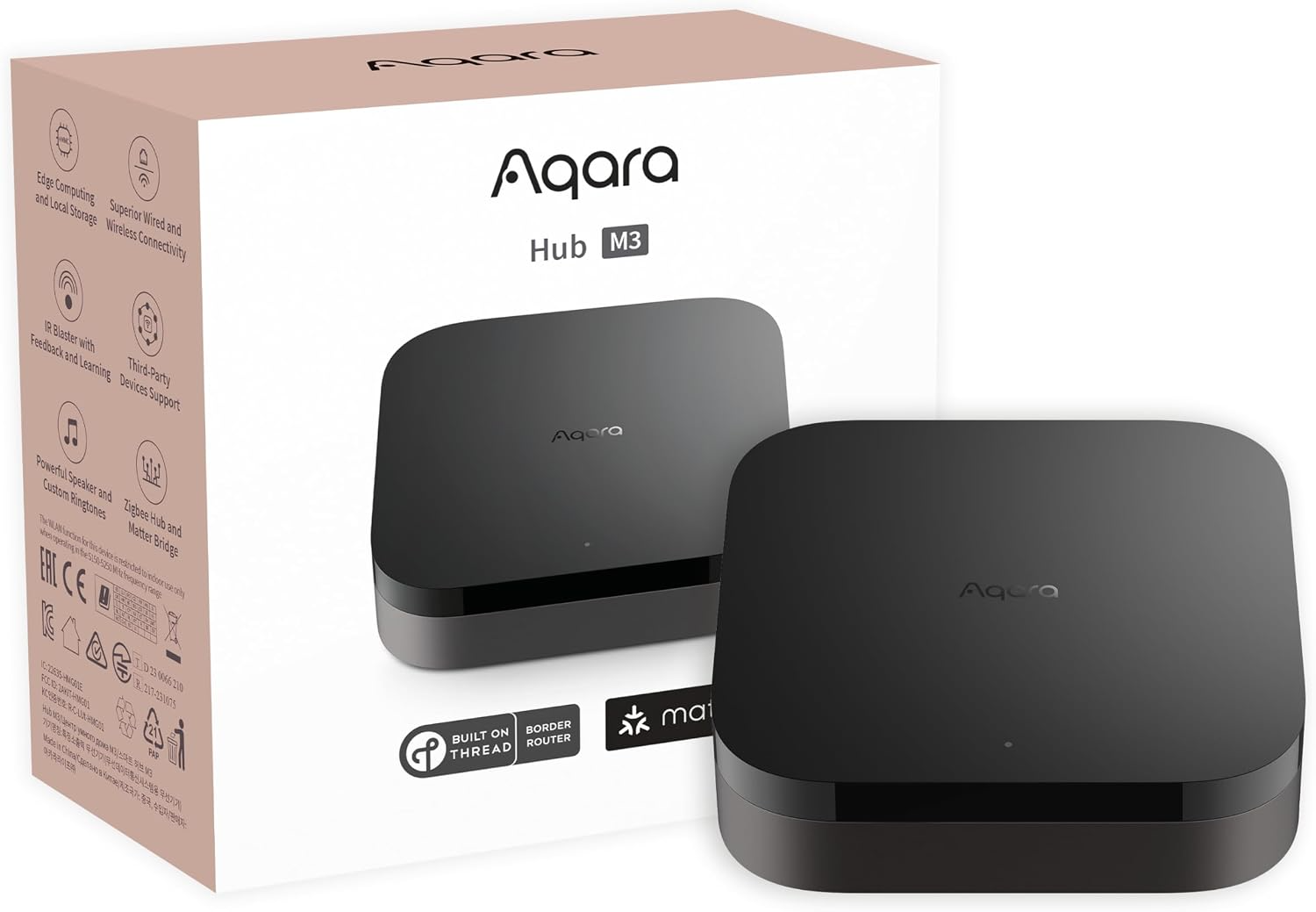
Aqara Hub M3
Check Price on Amazon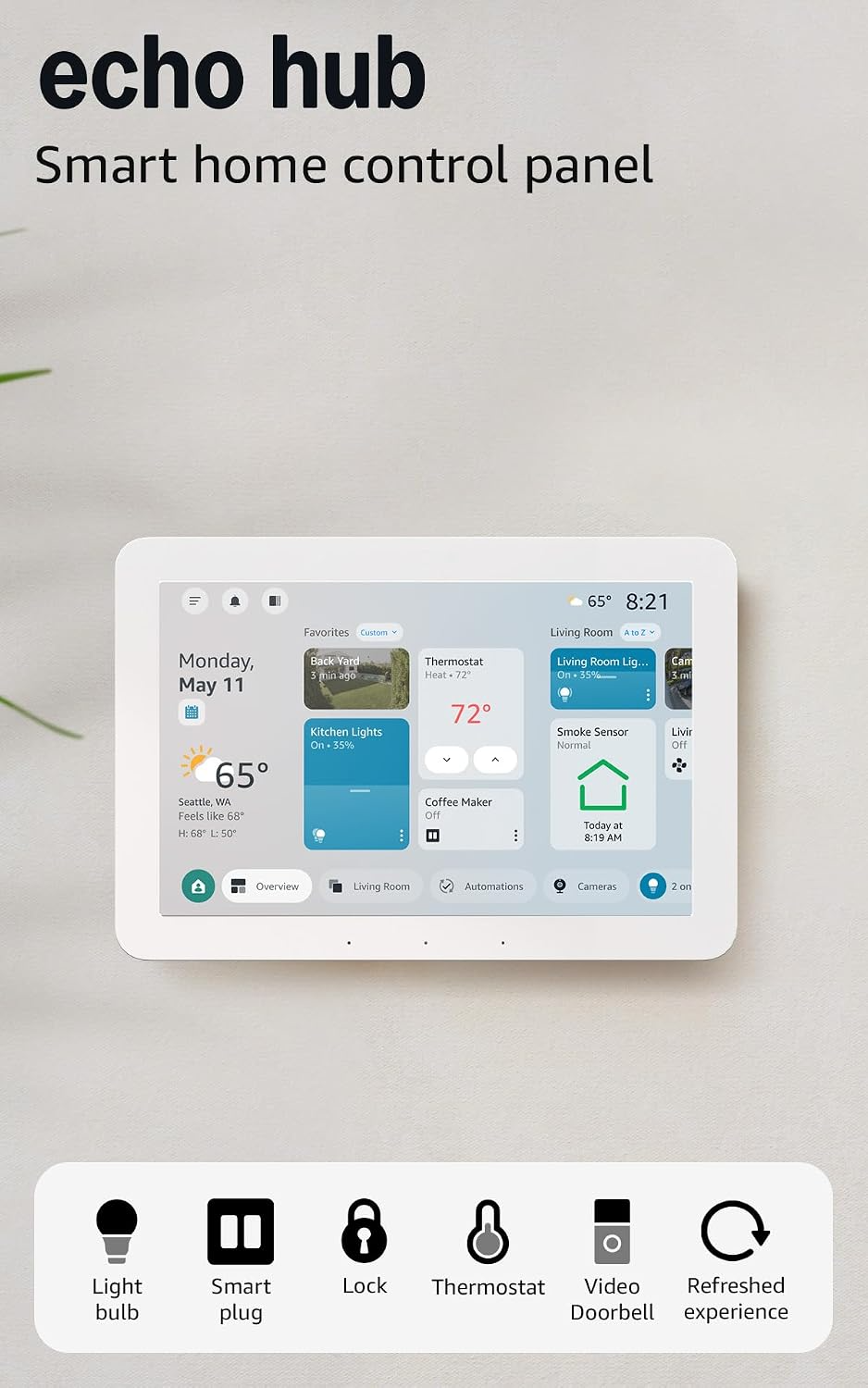
Amazon Echo Hub
Check Price on Amazon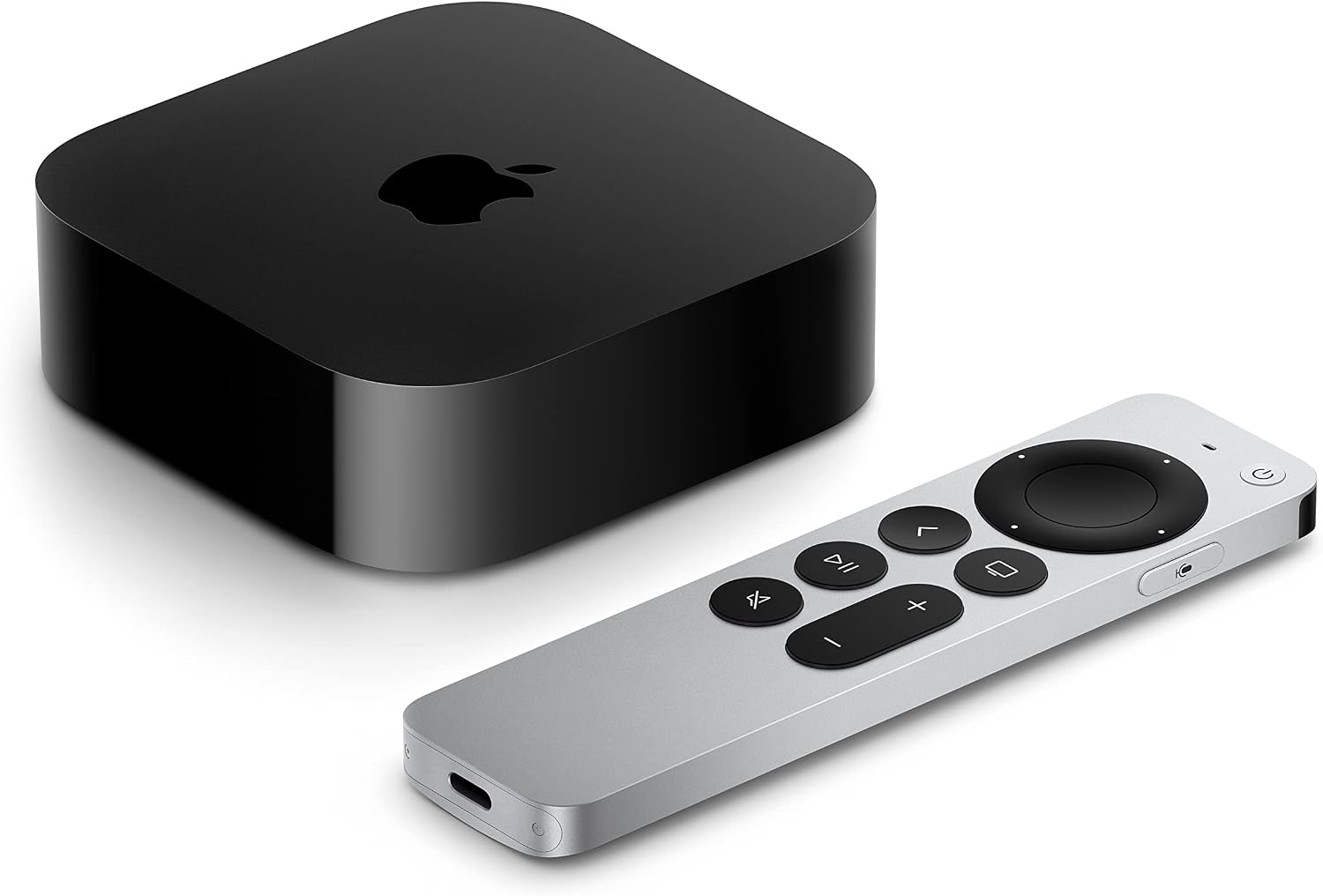
Apple TV 4K
Check Price on Amazon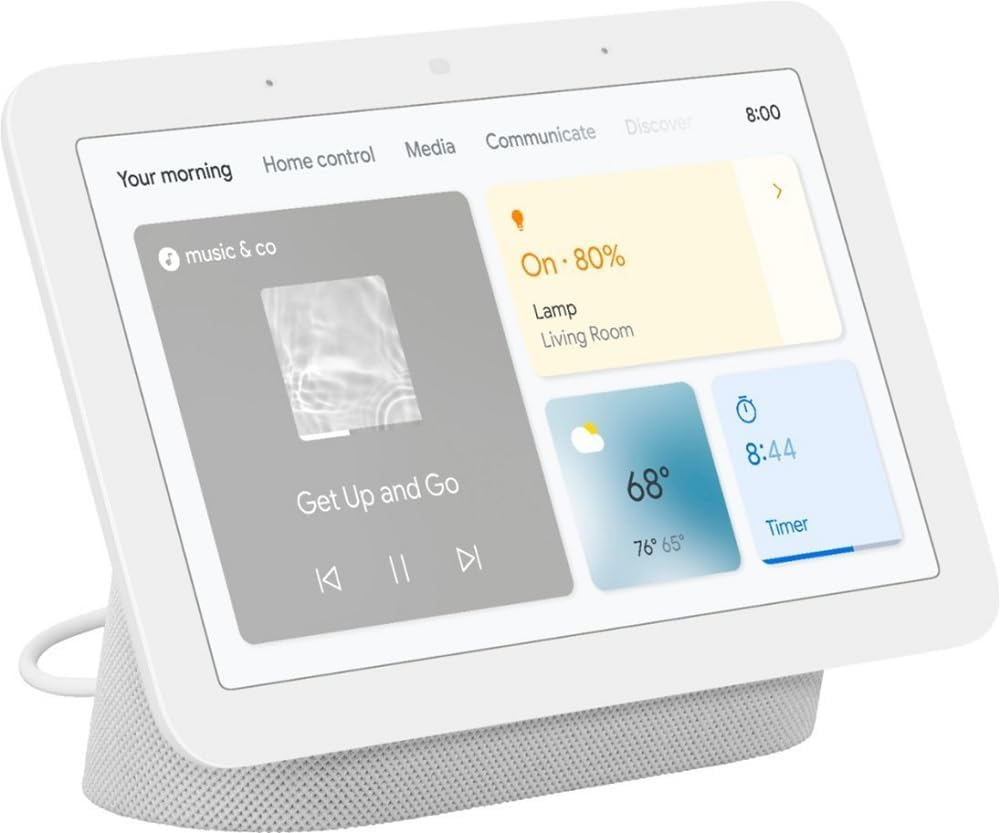
Google Nest Hub (2nd Gen)
Check Price on Amazon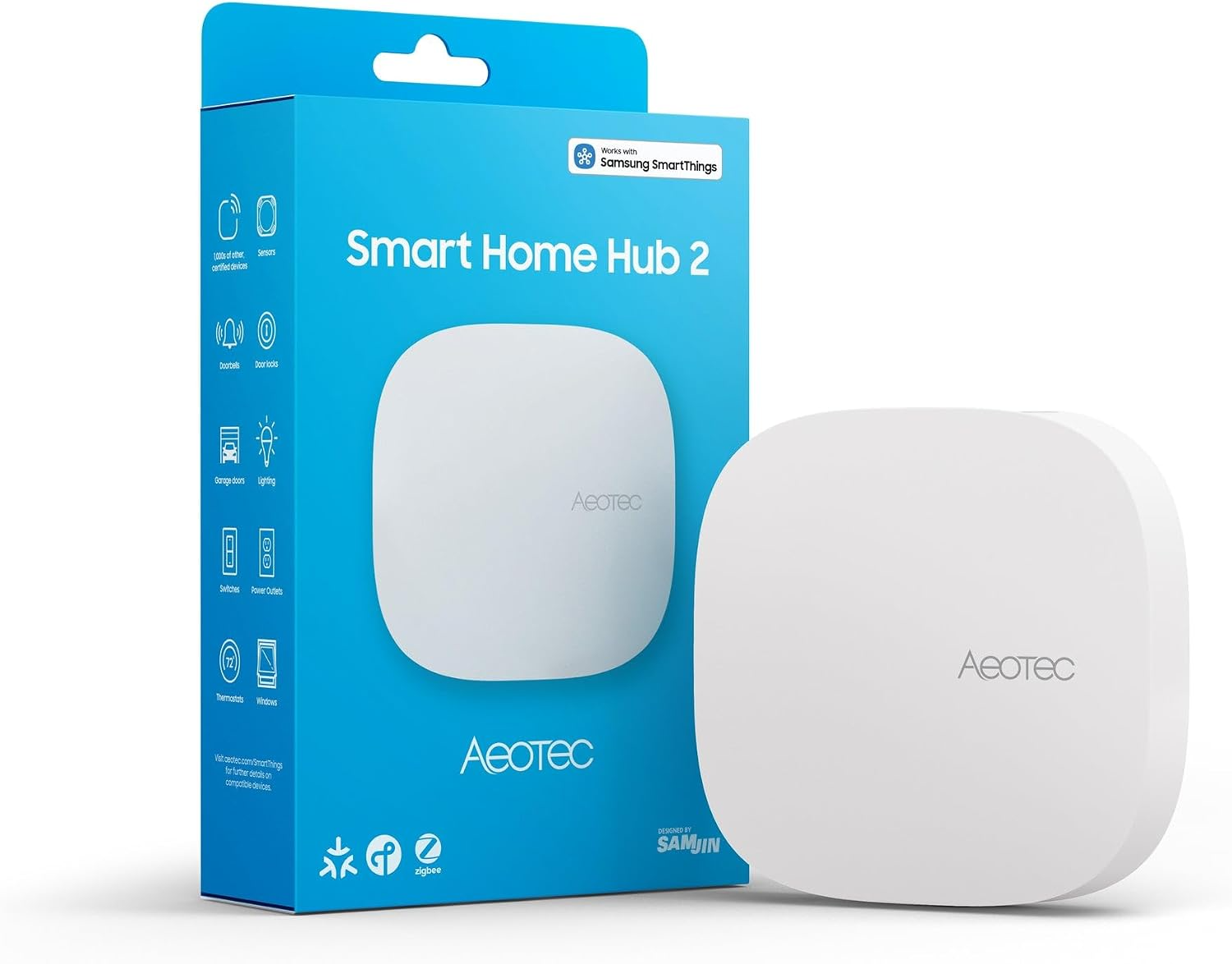
Aeotec Smart Home Hub 2
Check Price on Amazon
Hubitat Elevation C-8 Pro
Check Price on Amazon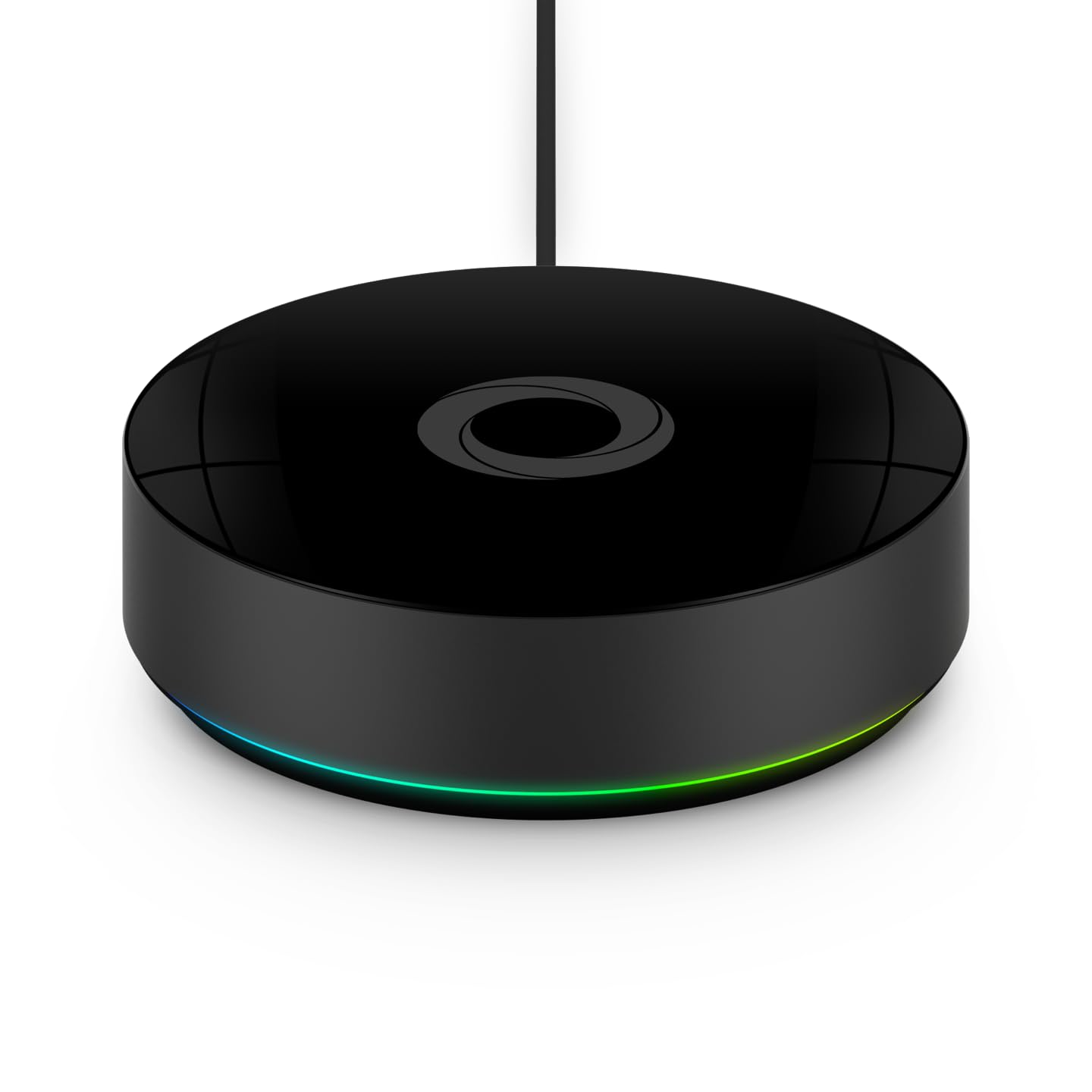
Homey Pro
Check Price on AmazonQuick Answer: Which Smart Home Hub Should You Buy?
Home Assistant Green is the strongest choice for buyers who want broad integrations and local-first control. Aqara Hub M3 is the cleanest multi-protocol choice for Aqara-heavy homes. Echo Hub is the easiest fit for Alexa households that want a dedicated wall dashboard. Apple TV 4K is the best Apple Home foundation when you also want a premium streaming box. Google Nest Hub (2nd gen) is a straightforward Google Home controller with a Thread border router. Aeotec Smart Home Hub 2 is the broad SmartThings choice for Matter and Zigbee. Hubitat Elevation C-8 Pro is the enthusiast option for local Zigbee, Z-Wave and advanced automations. Homey Pro is the strongest premium all-in-one option for households that want many radio technologies and brand ecosystems under one polished platform.
What a Smart Home Hub Actually Does in 2026
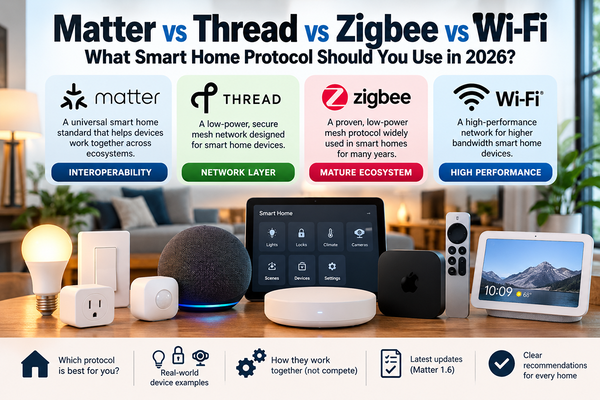
protocols and platforms Matter is an interoperability standard. Thread is a low-power IP networking protocol. Zigbee and Z-Wave are separate device networks. Apple Home, Alexa, Google Home, SmartThings, Home Assistant and Hubitat are control platforms. One physical device may support several of these roles, but not every hub supports every radio or protocol.
A Matter controller lets you commission and control Matter devices. A Thread border router connects a Thread mesh to the rest of your IP network. A Zigbee or Z-Wave hub has dedicated radios for those protocols. A Matter bridge exposes supported non-Matter devices into a Matter ecosystem. Those are different jobs, and marketing pages often use the word hub for all of them.
1. Home Assistant Green — Best Overall for Local-First Flexibility
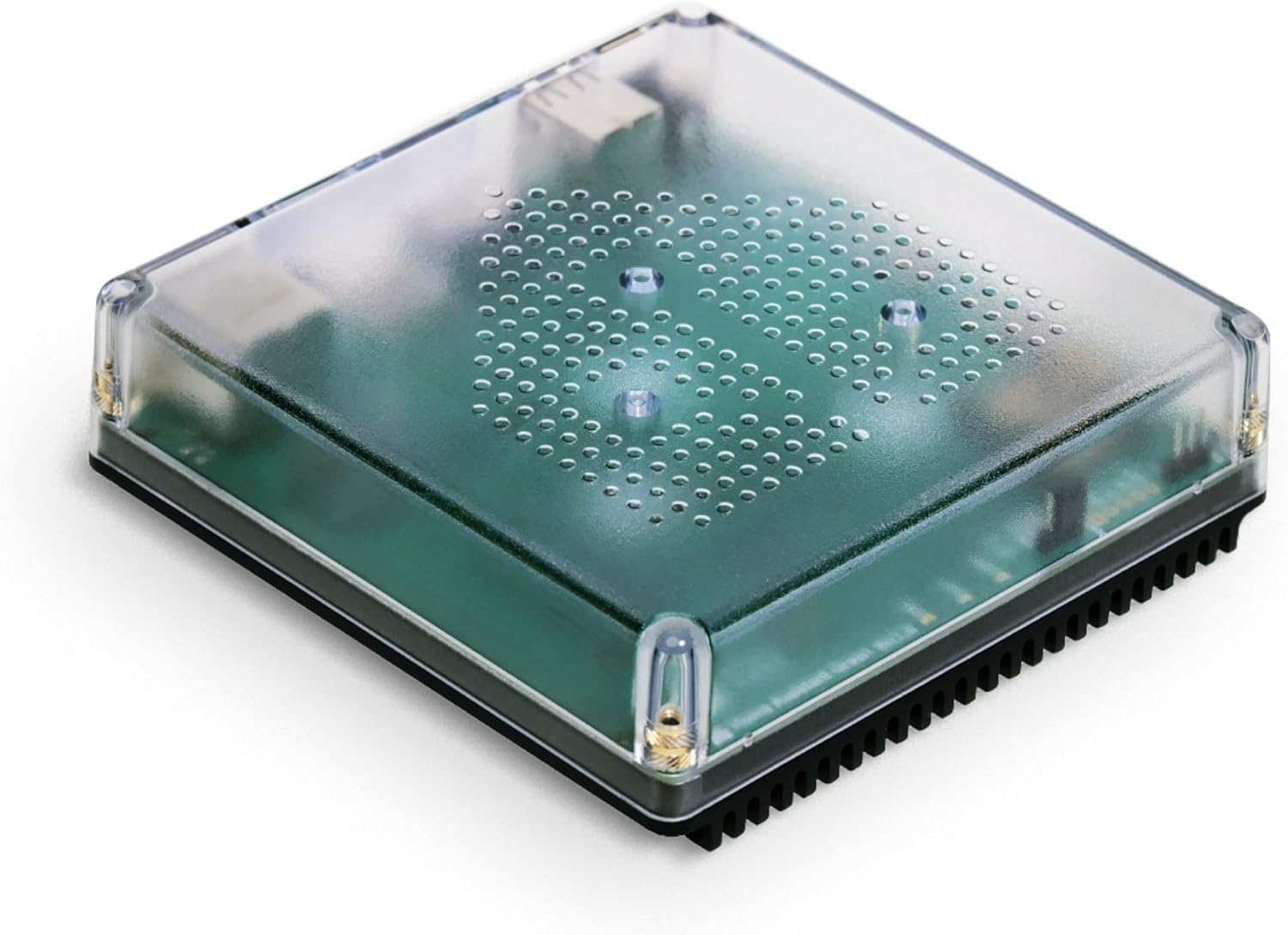
Home Assistant Green provides a simple entry point into Home Assistant with local-first automation, broad device integrations, and expandable support for Zigbee and Thread through compatible USB hardware.
Check Home Assistant Green on Amazon
Home Assistant Green is the easiest official hardware path into Home Assistant. It ships with Home Assistant installed, uses a 1.8 GHz quad-core ARM processor, 4 GB of RAM, 32 GB of eMMC storage, Gigabit Ethernet, and two USB 2.0 ports. Home Assistant emphasizes local control and supports more than 1,000 built-in integrations.
Green supports Matter over Wi-Fi and Ethernet through Home Assistant's Matter integration. For direct Zigbee or Thread radio support, you add compatible USB hardware such as Home Assistant Connect ZBT-2. That modular approach is powerful because you are not locked into one radio stack, but it also means Green is not an all-in-one Zigbee/Thread box out of the package.
The All Guy take: Home Assistant Green is the best long-term choice if you value local control, broad integrations and the ability to grow beyond one consumer ecosystem. It is easier than older DIY Home Assistant setups, but it still rewards people who are comfortable learning how their smart home works.
2. Aqara Hub M3 — Best Multi-Protocol Hub for Aqara Homes
Aqara Hub M3 combines Matter, Thread, Zigbee, Wi-Fi, Bluetooth, and local automation features in a compact hub designed especially for Aqara-focused smart homes.
Aqara Hub M3 combines Zigbee 3.0, Thread, Matter, dual-band Wi-Fi and Bluetooth in one compact hub. Aqara says the M3 can connect up to 127 Thread and Zigbee devices and can act as a Matter controller as well as a Matter bridge for supported Aqara Zigbee devices.
The M3 also includes local automation capabilities, 8 GB of local storage, Power over Ethernet support, USB-C power and a built-in infrared blaster. That makes it unusually versatile for a consumer-focused hub.
The All Guy take: Aqara M3 is the best fit when a large part of your smart home is already Aqara. Its Matter and Thread support make it more flexible than older single-protocol bridges, but it is still most compelling when Aqara Home is one of your primary platforms.
3. Amazon Echo Hub — Best Alexa Smart Home Dashboard
Amazon Echo Hub gives Alexa households a dedicated smart-home dashboard for controlling lights, locks, cameras, thermostats, routines, Matter devices, and compatible Zigbee accessories.
Check Amazon Echo Hub on Amazon
Echo Hub is built around Alexa and a dedicated smart-home control screen. Amazon lists Echo Hub among its Thread 1.3 border-router devices and among Echo products with built-in Zigbee smart-home hubs. Alexa also supports Matter commissioning and control through compatible Echo devices.
The reason to choose Echo Hub is not that it replaces every specialist hub. It is that it gives an Alexa household a permanent control panel for lights, locks, cameras, thermostats, routines and scenes while also handling several local smart-home protocols.
The All Guy take: Echo Hub is the cleanest choice for an Alexa-first household that wants an always-available wall dashboard. It is less attractive if your priority is deep local automation or cross-platform experimentation.
4. Apple TV 4K — Best Apple Home Hub
Apple TV 4K can serve as an Apple Home hub for automations and remote access, with supported models also providing Thread border router functionality for Matter-over-Thread devices.
Apple Home uses HomePod and Apple TV devices as home hubs for automations, remote access and connected-home features. For Thread-based accessories, Apple lists the Apple TV 4K 3rd generation Wi-Fi + Ethernet model and Apple TV 4K 2nd generation among Thread-enabled Apple home hubs.
Apple TV 4K is especially attractive because the smart-home hub role is bundled into a high-quality streaming box. In an Apple-heavy household, that reduces the number of dedicated devices you need while giving HomeKit and Matter accessories an always-on controller.
The All Guy take: If the household already lives in iPhone, Apple TV and HomeKit, the Apple TV 4K Wi-Fi + Ethernet model is an easy hub choice. Buy it for Apple Home plus streaming—not because it has Zigbee or Z-Wave radios, because it does not.
What’s Next for Apple Home?
Apple appears to be on the verge of a major smart-home refresh. Current reporting says Apple plans to unveil a new Apple TV 4K, a new HomePod mini, and an all-new smart home hub on October 13, 2026. Because those products are not official until Apple announces them, treat the following details as rumors rather than buying-guide facts.
The next Apple TV 4K is rumored to move to a much faster A-series chip with more memory, Siri AI support, Apple’s N1 networking chip, Wi-Fi 7, and continued Thread support. The more interesting smart-home product is the rumored Apple home hub: a roughly 6- to 7-inch square touchscreen device with a speaker base or wall-mount option, FaceTime capability, Home controls, widgets, and a new home-focused operating system. A refreshed HomePod mini is also expected, while reports say a new full-size HomePod may arrive later.
The buying implication is simple: Apple users who do not urgently need a hub may want to see what Apple announces before buying the current Apple TV 4K specifically for smart-home use. The existing Apple TV remains a capable Home hub today, but Apple’s expected 2026 hardware could materially change the best choice.
5. Google Nest Hub (2nd Gen) — Best Google Home Hub
Google Nest Hub 2nd gen combines a smart display with Google Home control, Matter support, and a built-in Thread border router for compatible connected-home devices.
Check Google Nest Hub on Amazon
Google Nest Hub (2nd gen) combines a 7-inch smart display with Google Home hub functionality, Matter support and a built-in Thread border router. Google also lists Nest Hub Max, Nest Wifi Pro and Google TV Streamer 4K among its Thread border-router devices.
The display is useful for device control, cameras, routines and household information, while the Thread radio gives Google Home a direct path to Matter-over-Thread devices. It is a simpler consumer experience than running a general automation platform.
The All Guy take: Nest Hub 2nd gen makes sense when Google Home is already the household control layer. It is easy to understand and gives you Matter plus Thread, but it does not replace a Zigbee or Z-Wave hub.
6. Aeotec Smart Home Hub 2 — Best SmartThings Hub
Aeotec Smart Home Hub 2 is designed for SmartThings users who want centralized control of Matter, Thread, Zigbee, and other compatible smart-home devices.
Check Aeotec Smart Home Hub 2 on Amazon
Aeotec Smart Home Hub 2 is the newer dedicated SmartThings hardware option. Aeotec lists Zigbee 3.0, Matter, Thread, Ethernet, Wi-Fi and Bluetooth support, along with local-first communication and local automations through the SmartThings platform.
One important tradeoff is protocol coverage. The older Aeotec Smart Home Hub supported Z-Wave, while the newer Hub 2 focuses on Zigbee, Matter and Thread. Buyers with an existing Z-Wave device collection should verify their migration path instead of assuming every SmartThings hub has the same radios.
The All Guy take: Smart Home Hub 2 is the best fit for buyers who want SmartThings as the primary platform and are building around newer Matter, Thread and Zigbee devices. Existing Z-Wave owners need to look more carefully at the older Aeotec hub or another platform.
7. Hubitat Elevation C-8 Pro — Best for Advanced Local Automation
Hubitat Elevation C-8 Pro emphasizes local processing and advanced automation with Zigbee, Z-Wave, Matter controller support, and powerful rule-based smart-home control.
Check Hubitat Elevation C-8 Pro on Amazon
Hubitat Elevation C-8 Pro focuses on local processing and enthusiast-level control. Hubitat lists a 2.0 GHz processor, 2 GB of RAM, Zigbee 3.0, an 800-series Z-Wave radio with Z-Wave Long Range support, Matter controller support, Wi-Fi, Ethernet and external antennas.
Hubitat can control Matter devices, but the standard C-8 Pro is not automatically a Thread border router. Matter-over-Thread devices normally need an existing Thread border router elsewhere on the network unless you use a Thread-capable Hubitat variant. That distinction matters because Matter support and Thread radio support are not the same thing.
The All Guy take: Hubitat is the pick for people who want powerful local Zigbee and Z-Wave automation without turning the entire project into a general-purpose Home Assistant system. It is more technical than Alexa, Apple Home or Google Home, but the tradeoff is control.
8. Homey Pro — Best All-in-One Multi-Protocol Hub
Homey Pro brings multiple smart-home technologies together in one hub, making it a strong choice for households that want to connect devices from several brands and ecosystems under one automation platform.
Homey Pro is designed for people who want one polished automation platform to connect products from many brands and radio technologies. Its appeal is less about committing to one ecosystem and more about consolidating devices that otherwise live in separate apps and bridges.
Compared with Home Assistant, Homey Pro takes a more appliance-like approach: the hardware and software are sold as one integrated product, while Homey’s Flow automation system gives users substantial control without requiring the same level of DIY administration. That makes it particularly attractive to households that want advanced automation but do not want to manage a general-purpose smart-home server.
The All Guy take: Homey Pro is the premium convenience pick. It costs more than basic consumer hubs, but it makes sense for a mixed-brand home where simplicity, broad compatibility and a polished automation interface matter more than minimizing upfront cost.
Matter Controller vs Thread Border Router vs Matter Bridge
These three terms are easy to mix up. A Matter controller manages Matter accessories in a Matter fabric. A Thread border router connects a Thread mesh to Ethernet or Wi-Fi. A Matter bridge exposes compatible devices from another protocol—such as Zigbee—into Matter.
A hub can perform one, two or all three jobs. Aqara M3, for example, can act as a Matter controller and bridge while also supporting Thread. Apple TV 4K can be an Apple Home hub and Thread border router but does not contain Zigbee or Z-Wave radios. Home Assistant Green can control Matter over the LAN but needs additional radio hardware if you want it to directly handle Zigbee or Thread.
Do You Still Need Zigbee or Z-Wave in 2026?
Matter has improved interoperability, but it has not erased the enormous installed base of Zigbee and Z-Wave devices. Sensors, switches, locks and specialty devices may continue working reliably for years, and replacing a stable network just to chase a newer logo is rarely a good use of money.
If you already own many Zigbee devices, prioritize a hub with a strong Zigbee radio or bridge strategy. If you own Z-Wave devices, your choices narrow further because many mainstream voice-assistant hubs do not include Z-Wave. Hubitat remains strong here, while SmartThings buyers need to distinguish the newer Aeotec Hub 2 from the older Z-Wave-capable Smart Home Hub.
Which Hub Is Best for Matter and Thread?
There is no single winner because Matter and Thread are only part of the system. Apple TV 4K, Nest Hub 2nd gen, Echo Hub and Aqara M3 all make sense when you want a consumer-friendly Matter-over-Thread foundation inside their respective ecosystems. Home Assistant and Hubitat are more flexible when you want deeper local control, but their Thread setup can depend on added hardware or another border router.
Which Hub Is Best Without the Cloud?
Home Assistant Green and Hubitat C-8 Pro are the strongest choices when local processing is the priority. Aqara M3 also pushes more automations locally than older cloud-heavy consumer hubs. That said, remote access, voice assistants and third-party integrations may still introduce cloud dependencies even when the core automation engine runs locally.
Which Hub Is Best for Beginners?
Beginners should usually choose the ecosystem they already use every day. Apple households should start with Apple Home. Alexa users should look at Echo Hub or another compatible Echo with hub features. Google users should start with Nest Hub 2nd gen or another Google Thread border router. SmartThings users should look at Aeotec. The simplest system is usually the one your household already understands.
Which Hub Is Best for Power Users?
Home Assistant Green is the better fit when you want maximum integration depth, dashboards, local data, custom logic and the ability to mix ecosystems. Hubitat is compelling when you specifically value local Zigbee and Z-Wave automation. Homey Pro occupies the middle ground for power users who want broad multi-brand automation without taking on as much system administration.
What We Would Buy
For a new local-first build, Home Assistant Green would be our starting point because the platform can grow with the house. For an Apple household, Apple TV 4K is the obvious current dual-purpose choice, although buyers should watch Apple’s expected October 2026 home announcements. For Google Home, Nest Hub 2nd gen remains a practical hub plus Thread border router. Alexa households get the most convenient dedicated dashboard from Echo Hub. Aqara users should strongly consider the M3, SmartThings users should look at Aeotec Hub 2, Zigbee/Z-Wave enthusiasts should compare Hubitat closely, and buyers who want a polished all-in-one multi-brand platform should put Homey Pro on the shortlist.
Bottom Line
The best smart home hub is not the one with the longest protocol list. It is the controller that matches your existing devices, your preferred ecosystem and the amount of maintenance you are willing to own. Start by deciding which platform should be the primary brain, then verify Matter, Thread, Zigbee and Z-Wave requirements before buying hardware.
Continue building the system with Best Smart Light Switches of 2026 and Best Smart Light Bulbs of 2026. You can also return to the Smart Home Start Here hub for the full buying path.
This post may contain affiliate links. We may earn a commission when you purchase through links on this site at no additional cost to you.