
This article contains affiliate links. If you buy through one of these links, The All Guy may earn a commission at no additional cost to you. This is a research-based review using current manufacturer specifications, independent test data, and published owner feedback, not a hands-on long-term test by The All Guy.
As an Amazon Associate I earn from qualifying purchases.
The Nokian Remedy WRG5 is a genuinely interesting all-weather tire because it is not trying to win every category the same way. Nokian leans into winter capability, durability, pothole resistance, and year-round usability, while still keeping dry-road behavior respectable.
That specialization creates a clear tradeoff. In Car and Driver's updated 2026 all-weather tire test, the Remedy WRG5 was strong in the dry and snow but finished fifth overall because its wet braking and wet handling lagged the leaders.
This is a research-based review, not a hands-on long-term test by The All Guy. Our assessment is based on current Nokian specifications, current warranty terms, independent testing, and published owner feedback on Nokian's own site.
If you are deciding between the Nokian and its main rivals, see our Michelin CrossClimate2 vs Nokian Remedy WRG5 comparison and Pirelli WeatherActive vs Nokian Remedy WRG5 comparison.
Nokian Remedy WRG5 Review: Quick Verdict
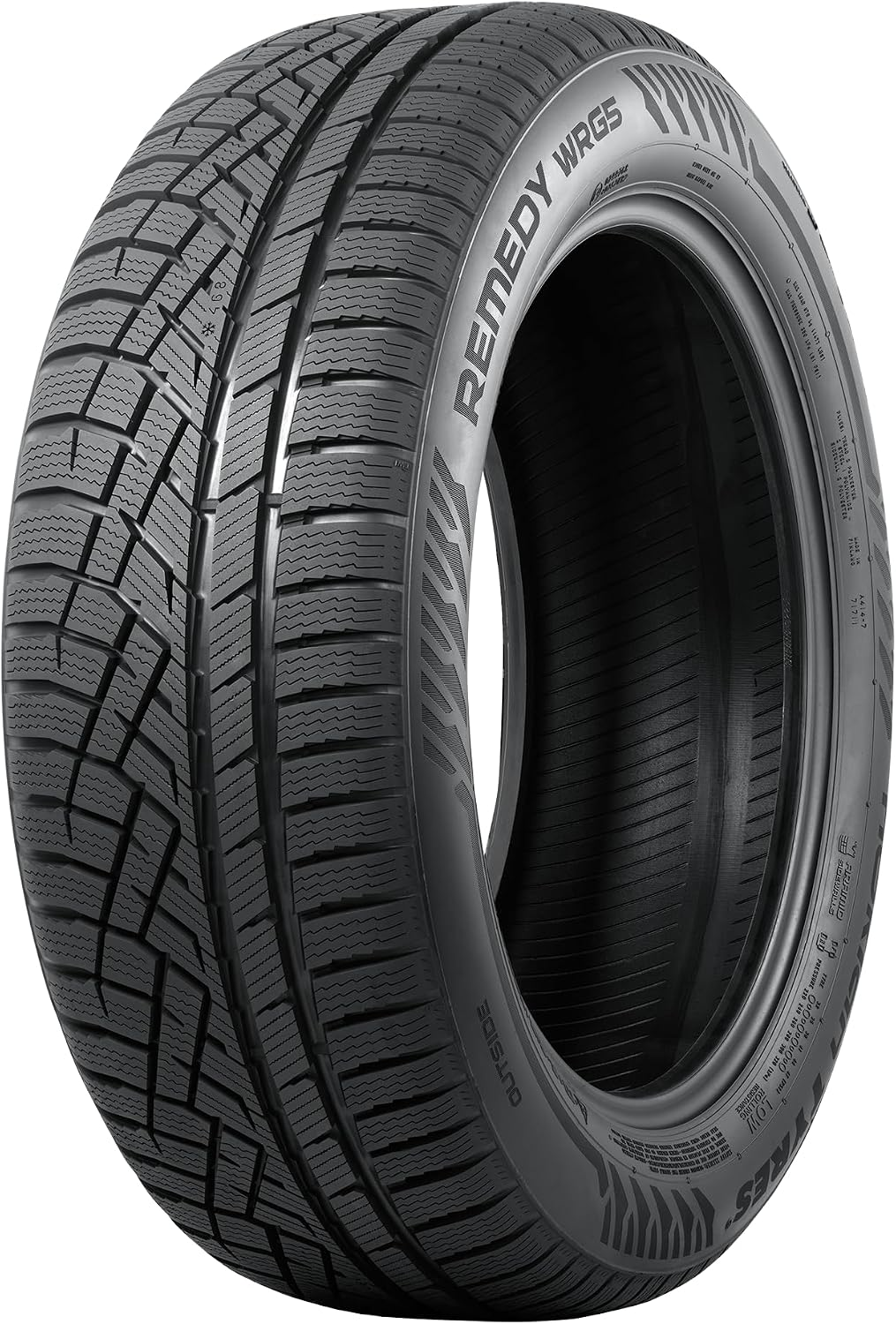
The Remedy WRG5 makes the most sense for drivers who deal with meaningful snow, rough pavement, potholes, and changing temperatures but still want one tire they can leave on all year.
Its strongest case is snow plus durability. The 3PMSF rating, winter-focused tread features, Aramid-reinforced construction, 60,000-mile treadwear warranty, and Nokian Pothole Protection program give it a more specialized ownership package than most all-weather rivals.
The main caution is wet performance. Independent testing showed a significant wet-braking deficit versus the Michelin CrossClimate2, so drivers in very rainy climates should weigh that result heavily.
Category | Our Take |
|---|---|
Dry handling | Very good |
Wet performance | Mixed; weakest area in independent testing |
Snow traction | Excellent for an all-weather tire |
Ice performance | Good for the category, but not a winter-tire replacement |
Ride comfort | Very good |
Road noise | Very good |
Durability | Excellent |
Warranty | Strong; 60,000 miles |
Best for | Snowy climates, rough roads, potholes, and year-round use |
Main drawback | Wet braking and wet handling trail the leaders |
Nokian Remedy WRG5 Specs
Specification | Details |
|---|---|
Category | All-weather |
Winter rating | Three-Peak Mountain Snowflake (3PMSF) |
Treadwear warranty | 60,000 miles / 100,000 km |
UTQG wear rating | 600 in Car and Driver's tested size |
Tested tread depth | 11/32 inch in Car and Driver's tested size |
70-mph cabin sound | 67 dBA in Car and Driver's tested size |
Construction focus | Aramid-reinforced durability |
Pothole program | Eligible under Nokian's current Pothole Protection terms |
EV compatibility | ELECTRIC FIT marked on current product line |
Production | North American production in Dayton, Tennessee |
What Nokian Designed the Remedy WRG5 to Do
Nokian positions the Remedy WRG5 as a true four-season tire for North American roads. The design combines a more open winter-capable tread with dry-road stability features and water-evacuation channels.
The tread is split conceptually into traction and handling zones. Snow Claw Blocks, Snow Boosters, and Dual Performance Siping target winter grip, while the Handling Zone and stability band are intended to keep steering response more predictable on clear roads.
Lightning Grooves and Venturi Grooves are designed to move water and slush away from the contact patch. That design intent is important, but independent wet testing shows that real-world performance versus competitors still needs to be considered rather than relying on tread features alone.
Snow Performance: One of the WRG5's Biggest Strengths
Snow is where the Remedy WRG5 earns its reputation. In Car and Driver's 2026 comparison, the Nokian was secure, easy to control, and competitive with the strongest tires in the group.
Its snow braking was only about four feet behind the best all-weather performer in the test. It also reached the highest peak speed around the snowcross course at 63 mph, although wheelspin on corner exit contributed to a slower overall lap.
That combination tells the story well: the WRG5 has real winter capability and strong available grip, but it is still an all-weather tire rather than a dedicated snow tire.
Dry Handling: Better Than You Might Expect
Winter-focused tires sometimes feel vague or soft on dry pavement, but the Remedy WRG5 performed well in the dry portion of Car and Driver's test.
The steering and chassis response were strong enough that the tire remained competitive with the rest of the all-weather field. For drivers who spend plenty of time on clear roads between winter storms, that matters.
This is one of the reasons the WRG5 works as a year-round tire rather than merely a mild-winter substitute.
Wet Braking and Rain: The Biggest Weakness
Wet performance is the most important reason to be cautious with the Remedy WRG5. In Car and Driver's 2026 testing, the Nokian had the weakest wet performance of the five all-weather tires tested.
Its 60-mph wet stopping distance was nearly 25 feet longer than the Michelin CrossClimate2, the best wet-braking performer in the group. Testers also noted oversteer during wet autocross and slalom work.
That does not mean every WRG5 driver will experience poor rain traction. Nokian's own customer reviews include positive reports in heavy rain and standing water. But those owner comments are anecdotal, while the controlled comparison shows a clear relative weakness against the strongest competitors.
If heavy rain is a dominant part of your driving environment, the Michelin CrossClimate2 or Pirelli Cinturato WeatherActive deserves serious consideration.
Ice Performance
The Remedy WRG5 carries the 3PMSF snow certification, but that symbol does not certify ice braking. Like other all-weather tires, it can offer better cold-weather behavior than a conventional all-season tire without matching a premium dedicated winter tire on polished ice.
Drivers who regularly face untreated ice, steep frozen roads, or prolonged severe winter conditions should still consider a dedicated winter setup.
Ride Comfort and Road Noise
The WRG5 measured 67 dBA at a 70-mph cruise in Car and Driver's tested size, placing it in a reasonable range for a winter-capable all-weather tire.
Nokian's published owner reviews also include repeated praise for ride quality, noise, and stability. Because those reviews appear on the manufacturer's site, they should be treated as owner anecdotes rather than independent test data, but the pattern is still useful context.
Durability and Aramid-Reinforced Construction
Durability is where the Remedy WRG5 separates itself from most competitors. Nokian reinforces the tire with Aramid fibers, a material chosen to improve resistance to cuts and impacts from road hazards.
For drivers in areas with freeze-thaw cycles, broken pavement, construction zones, and frequent potholes, that is more than a marketing detail. Sidewall damage is one of the most frustrating ways to lose an otherwise healthy tire.
The WRG5 is also part of Nokian's current Pothole Protection program, giving eligible buyers an additional layer of protection beyond normal treadwear coverage.
Nokian Pothole Protection: What It Actually Covers
Under Nokian's current U.S. Pothole Protection terms, eligible Aramid-equipped tires including the Remedy WRG5 can qualify for replacement if road-hazard damage makes the tire unrepairable.
The current program requires the tire to be within the coverage period and meet remaining-tread requirements. Nokian's consumer page currently states that qualifying tires must be less than one year from purchase and have more than 60 percent remaining tread, with additional exclusions and dealer verification applying.
That is a meaningful benefit, but buyers should still read the current terms before purchase because warranty rules can change and eligibility depends on the specific damage and documentation.
60,000-Mile Treadwear Warranty
Nokian lists a 60,000-mile / 100,000-km treadwear limited warranty for the Remedy WRG5. Car and Driver specifically called the WRG5's warranty the best in its 2026 comparison because the 60,000-mile coverage carried no age limit in the tested warranty structure.
Actual tread life will still depend on alignment, rotation schedule, tire pressure, road surface, vehicle weight, torque, and driving habits. EVs can be especially hard on tires because of their extra mass and immediate torque.
EV and Hybrid Use
Nokian marks current Remedy WRG5 tires with its ELECTRIC FIT designation, signaling that the tire line is designed to handle the weight, torque, and efficiency demands of electric and hybrid vehicles.
That does not mean every EV owner should automatically choose the WRG5, but the combination of reinforced construction, winter capability, and low-rolling-resistance focus makes it a credible option for heavier electrified vehicles in four-season climates.
Owner Feedback: What Drivers Like
Nokian's own product page currently shows very strong customer ratings, with owners highlighting winter grip, ride comfort, stability, and confidence in changing conditions.
Snow and cold-weather confidence are frequent positives.
Several owners praise ride comfort and low noise.
Some owners specifically report strong behavior in heavy rain and standing water.
EV and mountain-region drivers frequently mention stability and year-round convenience.
Durability and Aramid construction are recurring reasons buyers choose the tire.
Because these reviews are hosted by the manufacturer, they should be treated as supporting owner feedback rather than a substitute for independent testing. The independent wet-braking result remains the most important counterpoint.
Common Complaints and Limitations
Wet braking trails the strongest competitors by a meaningful margin in independent testing.
Wet handling can feel less settled than Michelin or Pirelli in controlled comparison testing.
It is not a substitute for a dedicated winter tire in severe ice or extreme winter conditions.
Premium all-weather pricing can be higher than basic all-season tires.
Directional or specialized tread behavior may make buyers more sensitive to alignment and rotation maintenance.
Nokian Remedy WRG5 vs Michelin CrossClimate2
For the Michelin side of the comparison, read our Michelin CrossClimate2 review.
The Michelin CrossClimate2 is the stronger choice for wet braking and mixed rainy conditions. In Car and Driver's 2026 test, the Michelin stopped nearly 25 feet shorter from 60 mph in the wet.
The Nokian counters with stronger durability positioning, Aramid reinforcement, pothole protection, and a winter-focused ownership package. Snow performance was also one of the Nokian's strongest areas.
For the full breakdown, read Michelin CrossClimate2 vs Nokian Remedy WRG5.
Nokian Remedy WRG5 vs Pirelli WeatherActive
The Pirelli Cinturato WeatherActive is the more balanced all-around tire. It finished first overall in Car and Driver's 2026 comparison and was especially strong in dry and wet conditions.
The Nokian is more specialized. Choose it when snow, rough roads, potholes, and durability matter more than having the strongest wet-road performance.
For the full breakdown, read Pirelli WeatherActive vs Nokian Remedy WRG5.
Who Should Buy the Nokian Remedy WRG5?
Drivers who regularly see snow but want to keep one tire installed year-round.
People who live in areas with potholes, broken pavement, and freeze-thaw road damage.
Mountain-region drivers who value winter confidence and strong dry-road behavior.
EV and hybrid owners who want a winter-capable tire built with heavier vehicles in mind.
Drivers who value a 60,000-mile warranty and Nokian's pothole-protection program.
Who Should Skip It?
Drivers in very rainy climates who prioritize shortest possible wet braking distances.
Anyone who regularly drives on severe ice and needs dedicated winter-tire performance.
Drivers who rarely see winter conditions and can use a conventional all-season tire.
Buyers shopping strictly for the lowest upfront price.
Is the Nokian Remedy WRG5 Worth It?
Yes, if your priorities line up with what the tire does best. The WRG5 offers real snow capability, strong dry-road behavior, reinforced durability, pothole protection, and a competitive treadwear warranty.
Its wet-braking weakness prevents it from being the universal recommendation in this category. That is why it finished behind better-balanced competitors in independent testing despite performing well in several other areas.
For a driver in a snowy, pothole-prone region, that tradeoff can still make sense. For a driver in a wet coastal climate, the Michelin CrossClimate2 or Pirelli WeatherActive may be the better fit.
Frequently Asked Questions
Is the Nokian Remedy WRG5 good in snow?
Yes. Snow is one of its strongest areas. It carries the 3PMSF certification and performed securely in Car and Driver's independent snow testing, with braking close to the best tire in the group.
Is the Remedy WRG5 good in rain?
Owner feedback includes positive rain experiences, but independent testing showed the WRG5 had the weakest wet performance in the tested five-tire group. That difference is important when comparing it with Michelin and Pirelli.
Does the Nokian Remedy WRG5 have pothole protection?
Yes, qualifying Remedy WRG5 tires are included in Nokian's Pothole Protection program. Current terms include time, tread-depth, proof-of-purchase, and dealer-inspection requirements.
How long is the Remedy WRG5 warranty?
Nokian lists a 60,000-mile / 100,000-km treadwear limited warranty for the Remedy WRG5.
Is the Remedy WRG5 good for EVs?
Yes. Nokian marks the current Remedy WRG5 line with its ELECTRIC FIT designation for hybrid and electric vehicle use.
Is the Remedy WRG5 better than the CrossClimate2?
It depends on priorities. Michelin is much stronger in wet braking, while Nokian offers a more winter- and durability-focused package with Aramid reinforcement and pothole protection.
Where to Buy the Nokian Remedy WRG5
Pricing varies by size, load index, speed rating, retailer, and promotion. Always verify the exact tire specification required for your vehicle before ordering.
Sources and Testing Basis
Manufacturer specifications and owner reviews: Nokian Remedy WRG5. Pothole Protection terms: Nokian Pothole Protection. Independent comparison: Car and Driver 2026 all-weather tire test.
Bottom Line
To see Nokian ranked against a wider mixed-weather field, read our best all-weather tires for snow and rain guide.
The Nokian Remedy WRG5 is one of the most compelling all-weather tires for drivers who prioritize snow, durability, rough-road protection, and year-round convenience.
Its Aramid-reinforced construction, pothole program, 60,000-mile warranty, strong dry behavior, and credible snow performance make it unusually well suited to harsh North American roads.
The tradeoff is wet performance. If heavy rain and wet braking dominate your driving, there are better-balanced choices. If snow and road durability matter more, the WRG5 deserves a serious look.
This article contains affiliate links. If you buy through one of these links, The All Guy may earn a commission at no additional cost to you. This is a research-based review using current manufacturer specifications, independent test data, and published owner feedback, not a hands-on long-term test by The All Guy.

