
This article contains affiliate links. If you buy through one of these links, The All Guy may earn a commission at no additional cost to you. This is a research-based review using current manufacturer specifications, independent test data, and published owner feedback, not a hands-on long-term test by The All Guy.
As an Amazon Associate I earn from qualifying purchases.
The Michelin CrossClimate2 remains one of the easiest all-weather tires to recommend in 2026. Its biggest strength is simple: when roads get wet, it delivers exceptional braking and grip without giving up the snow capability drivers expect from a 3PMSF-rated tire.
In Car and Driver's updated 2026 all-weather tire comparison, the CrossClimate2 finished second overall and swept every objective wet test. It also stayed strong in snow, creating one of the most balanced wet-and-winter combinations in the group.
The tradeoffs are real. The Michelin was less willing to rotate in dry autocross testing, felt firm over larger impacts, and could be louder on smooth pavement than some rivals. It was also the most expensive tire in that test snapshot.
This is a research-based review, not a hands-on long-term test by The All Guy. Our assessment is based on current Michelin specifications, independent testing, and published Michelin owner feedback.
If you are comparing the CrossClimate2 against its main rivals, see our Michelin CrossClimate2 vs Pirelli WeatherActive comparison and Michelin CrossClimate2 vs Nokian Remedy WRG5 comparison.
Michelin CrossClimate2 Review: Quick Verdict
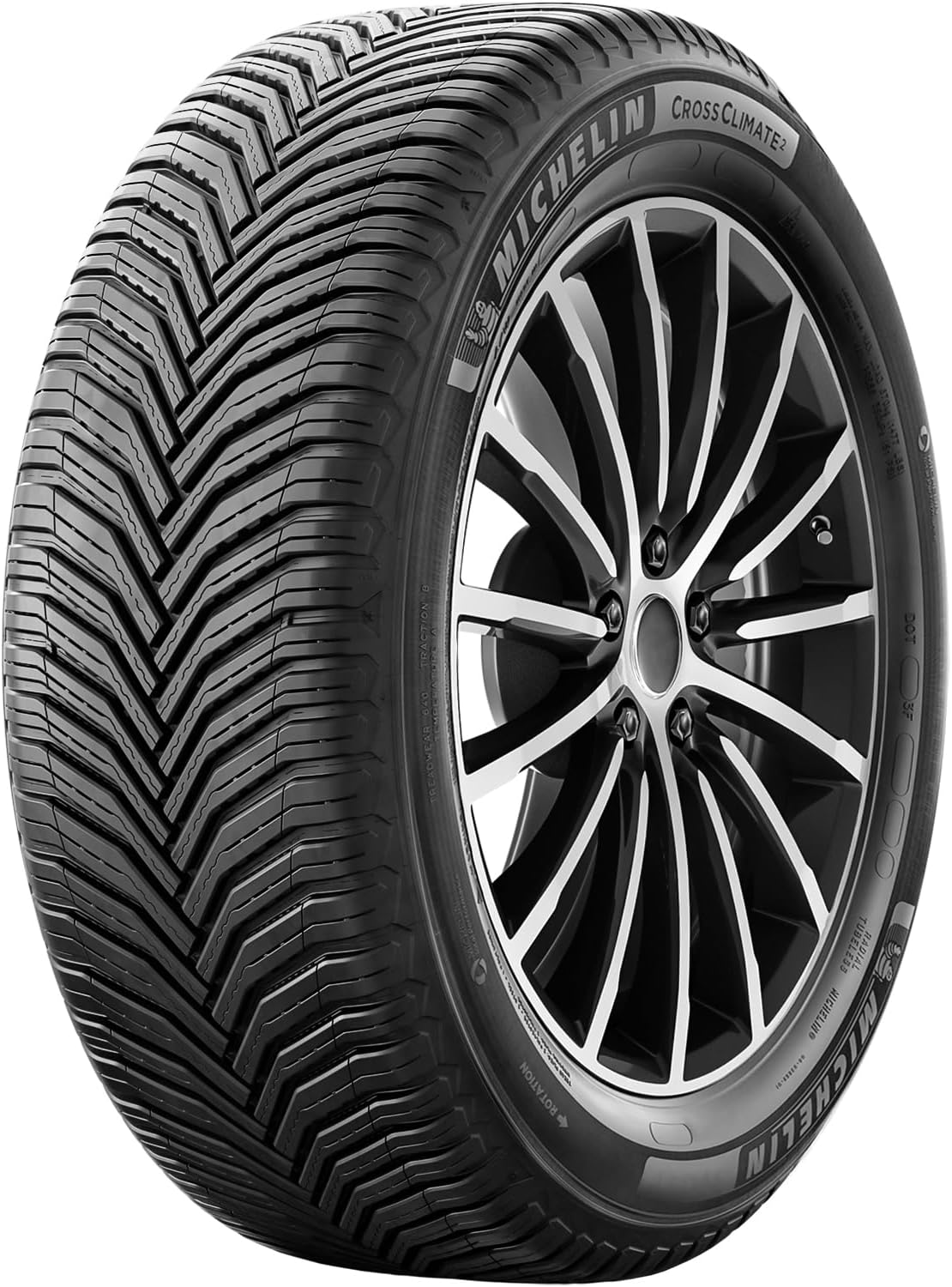
The CrossClimate2 is best for drivers who want maximum confidence in rain while still keeping credible snow performance and year-round convenience. It is especially compelling in climates where rain is frequent and winter weather is real but not severe enough to justify a dedicated winter setup.
Its wet performance is the headline. Car and Driver found the Michelin to be the top finisher in every wet test, including braking and handling. That wet advantage came without destroying snow performance, which is why the CrossClimate2 remains one of the most complete all-weather tires on the market.
The main drawbacks are a firmer ride, some road noise on smooth pavement, and a tendency toward understeer in hard dry cornering. Those are meaningful, but they do not erase the tire's safety-oriented strengths.
Category | Our Take |
|---|---|
Dry handling | Good, but understeer limits agility |
Wet braking | Excellent / class-leading in the 2026 test |
Wet handling | Excellent |
Snow traction | Excellent for an all-weather tire |
Ice performance | Good for the category, not a winter-tire substitute |
Ride comfort | Good, but firm over larger impacts |
Road noise | Mixed; measured well but can sound loud on smooth pavement |
Tread life | Strong; 60,000-mile warranty |
Best for | Rain-heavy mixed climates that also see snow |
Main drawback | Firm ride and less playful dry handling |
Michelin CrossClimate2 Specs
Specification | Details |
|---|---|
Category | All-season / all-weather-style 3PMSF tire |
Winter rating | Three-Peak Mountain Snowflake (3PMSF) |
Mileage warranty | 60,000 miles |
Warranty term | 6 years / 60,000 miles in Car and Driver's tested spec |
Tread depth | 10/32 inch in Car and Driver's tested size |
UTQG wear rating | 640 in Car and Driver's tested size |
70-mph cabin sound | 66 dBA in Car and Driver's tested size |
Tread pattern | Directional |
Current U.S. catalog | Broad passenger-car, SUV, CUV, and van fitment |
EV suitability | Michelin lists the tire as EV Ready |
What Michelin Designed the CrossClimate2 to Do
Michelin markets the CrossClimate2 as a tire that can stay on the vehicle through dry roads, rain, cold weather, and snow. The distinctive V-shaped directional tread is easy to recognize and is designed to combine water evacuation, braking stability, and winter traction.
Michelin also emphasizes performance when worn, not just when the tire is new. The company claims the CrossClimate2 is engineered to preserve useful wet and snow performance deeper into its tread life, while backing the tire with a 60,000-mile warranty and the Michelin Promise Plan.
The important point is not the marketing language by itself. Independent testing confirms that the tire's wet performance remains a genuine competitive advantage.
Wet Braking: The CrossClimate2's Biggest Strength
Wet braking is where the CrossClimate2 separates itself most clearly from the field. In Car and Driver's 2026 comparison, Michelin swept the objective wet tests and recorded the shortest wet stopping distance.
The difference was large enough to matter. The Nokian Remedy WRG5 took nearly 25 additional feet to stop from 60 mph in the same wet-braking comparison.
That is the kind of performance difference that should carry serious weight for drivers who spend a lot of time on rainy highways, wet interstates, or roads where sudden braking in poor weather is a realistic concern.
Wet Handling and Hydroplaning Confidence
The CrossClimate2 was also the most composed tire in the wet handling exercises. Car and Driver noted that its higher available wet grip reduced understeer around cones and made the tire easier to place and control.
Michelin's owner-review summary also consistently highlights wet traction as one of the tire's strongest traits. Because those reviews are hosted by the manufacturer, they are best used as supporting owner feedback rather than a substitute for controlled testing.
Snow Performance: Strong and Balanced
The Michelin is not merely a rain tire with a snow badge. It performed very well in Car and Driver's winter testing and won the 300-foot snow skidpad portion of the test.
Testers also described it as one of the most enjoyable tires to drive on the snow course, with strong longitudinal grip under braking and a confidence-inspiring balance between acceleration, cornering, and stopping.
That balance is particularly impressive because wet grip and snow grip can conflict at the compound-design level. The CrossClimate2 manages to deliver both without forcing drivers to accept an obvious weakness in either category.
Ice Performance
The CrossClimate2 carries the 3PMSF rating, but that certification addresses snow traction rather than glare-ice braking. Drivers who regularly face untreated ice, frozen mountain roads, or prolonged severe winter conditions should still consider a dedicated winter tire.
For occasional ice within an otherwise mixed winter climate, the CrossClimate2 offers useful cold-weather capability, but it should not be treated as equivalent to a purpose-built winter tire.
Dry Handling: Safe, but Not the Most Engaging
The Michelin's biggest dynamic weakness shows up when dry cornering gets aggressive. Car and Driver found that the CrossClimate2 tended to understeer and was difficult to rotate cleanly around the dry autocross course.
That does not make it unsafe or unpleasant for normal driving. The tire responded confidently to braking and acceleration inputs, and its transition from full acceleration to hard braking remained controlled.
But drivers who care most about steering precision and lively dry handling may prefer the Pirelli Cinturato WeatherActive, which was the strongest dry performer in the same test.
Ride Comfort and Road Noise
The CrossClimate2 measured 66 dBA at a 70-mph cruise in Car and Driver's tested size, which was numerically competitive. Subjectively, though, testers noted a firm reaction over larger impacts and more noticeable noise on smooth surfaces.
Michelin's owner-review summary paints a somewhat more favorable comfort picture, with many owners describing the tire as quiet and smooth. That difference is not unusual: cabin acoustics, vehicle suspension, road texture, wheel size, and tire pressure can all change how a tire sounds and feels.
The safe takeaway is that the CrossClimate2 is not a harsh tire overall, but ride quality is not its strongest advantage against the most comfort-focused competitors.
Tread Life and 60,000-Mile Warranty
Michelin backs the CrossClimate2 with a 60,000-mile treadwear warranty, and the current Michelin Promise Plan also includes a 60-day satisfaction guarantee and roadside assistance under the plan's terms.
Michelin's own review summary includes many owners reporting high mileage and repeat purchases, including some reports above 80,000 miles. Those are individual owner experiences rather than guaranteed outcomes, but they support the tire's reputation for longevity.
Actual tread life depends heavily on alignment, rotation schedule, tire pressure, vehicle weight, torque, road surface, climate, and driving style.
Fuel Economy and Rolling Resistance
Some Michelin owner reviews mention a small fuel-economy decrease after switching to CrossClimate2 tires. Michelin's own review summary specifically notes occasional reports of roughly 2 to 3 mpg changes.
That is not a controlled efficiency test and should not be treated as a universal expectation. Tire size, previous tire model, pressure, temperature, and vehicle type can all influence fuel economy.
For buyers who prioritize wet and snow grip, a small efficiency tradeoff may be acceptable, but EV and high-mileage drivers should still monitor consumption after installation.
Owner Feedback: What Drivers Like
Michelin's current product page shows strong owner satisfaction and a large review base. The recurring themes in Michelin's own review summary line up closely with the tire's independent-test strengths.
Wet traction is one of the most frequently praised attributes.
Snow traction and cold-weather confidence receive strong owner feedback.
Many owners describe the ride as quiet and smooth on their vehicles.
Longevity and repeat-purchase intent are common positives.
Drivers frequently value the ability to keep one tire installed year-round.
Because these reviews are hosted by Michelin, they should be treated as supporting owner feedback rather than independent evidence. The controlled Car and Driver test remains more useful for direct competitor comparisons.
Common Complaints and Limitations
Dry handling can feel less agile than the Pirelli WeatherActive because the Michelin tends to understeer when pushed.
Ride quality can feel firm over larger impacts.
Road noise can be noticeable on smooth pavement depending on the vehicle and road surface.
The CrossClimate2 carried the highest price in Car and Driver's five-tire 2026 test snapshot.
Some owners report modest fuel-economy losses after switching to the tire.
It still cannot match a dedicated winter tire on severe ice or deep-snow extremes.
Michelin CrossClimate2 vs Pirelli WeatherActive
This is the closest all-around matchup in the current tire cluster. The Michelin clearly wins wet braking and wet-road confidence, while the Pirelli has the stronger dry-handling feel and finished first overall in Car and Driver's test.
Choose Michelin if rain and wet stopping performance are your top priorities. Choose Pirelli if you want the more agile dry-road tire while still keeping strong wet and snow performance.
For the full breakdown, read Michelin CrossClimate2 vs Pirelli WeatherActive.
Michelin CrossClimate2 vs Nokian Remedy WRG5
The Michelin is the stronger choice for wet roads by a large margin. The Nokian counters with Aramid-reinforced construction, pothole-protection eligibility, and a more durability-focused ownership package.
Both are strong in snow, but their personalities are different: Michelin is the better wet-and-winter balance, while Nokian is the rough-road and winter-specialist choice.
For the full breakdown, read Michelin CrossClimate2 vs Nokian Remedy WRG5.
Who Should Buy the Michelin CrossClimate2?
Drivers in rainy climates who want the strongest wet braking in this comparison group.
People who see regular winter weather but do not want to swap between seasonal tire sets.
Commuters who prioritize braking confidence over aggressive dry-road handling.
Drivers who want strong snow performance without moving to a dedicated winter tire.
Owners who value a 60,000-mile warranty and a large established owner-review base.
Who Should Skip It?
Drivers who prioritize the sharpest possible dry handling and steering feel.
Buyers who want the softest ride over broken pavement.
Drivers in severe winter regions who routinely face deep snow and untreated ice.
Shoppers whose top priority is the lowest upfront tire price.
Is the Michelin CrossClimate2 Worth It?
Yes, especially for drivers who value wet-road safety. The CrossClimate2 costs more than some rivals, but the premium buys a combination of wet braking, snow capability, tread life, and broad year-round usability that remains difficult to match.
It is not the most exciting dry-handling tire and it is not the softest-riding option. But those weaknesses are easier to accept when the tire delivers such a strong safety margin in rain and remains genuinely capable in snow.
For a driver who wants one tire for rain, cold, occasional snow, highway commuting, and everyday use, the CrossClimate2 remains one of the best all-weather choices in 2026.
Frequently Asked Questions
Is the Michelin CrossClimate2 good in rain?
Yes. Wet performance is its strongest area. It finished first in every objective wet category in Car and Driver's 2026 all-weather tire comparison.
Is the CrossClimate2 good in snow?
Yes. It carries the 3PMSF certification, performed strongly in independent snow testing, and won the snow skidpad portion of Car and Driver's comparison.
Is the CrossClimate2 noisy?
It measured 66 dBA at a 70-mph cruise in Car and Driver's test, but testers still described it as loud on some smooth surfaces. Owner feedback varies by vehicle and road surface.
How long do Michelin CrossClimate2 tires last?
Michelin backs the tire with a 60,000-mile treadwear warranty. Real-world mileage depends on alignment, rotations, pressure, vehicle weight, road conditions, and driving style.
Is the CrossClimate2 better than the Pirelli WeatherActive?
Michelin is better for wet braking, while Pirelli is stronger in dry handling and finished first overall in Car and Driver's 2026 test. The better tire depends on which conditions matter most to you.
Is the CrossClimate2 a winter tire?
No. It is a year-round tire with 3PMSF winter certification. It is suitable for snow and cold-weather driving, but dedicated winter tires still offer more performance in severe winter conditions.
Where to Buy the Michelin CrossClimate2
Pricing varies by size, load index, speed rating, retailer, and promotion. Always verify the exact tire specification required for your vehicle before ordering.
Sources and Testing Basis
Manufacturer specifications and owner-review summary: Michelin CrossClimate2. Independent comparison: Car and Driver 2026 all-weather tire test.
Bottom Line
To see Michelin ranked against a wider mixed-weather field, read our best all-weather tires for snow and rain guide.
The Michelin CrossClimate2 remains one of the best all-weather tires for drivers who want exceptional wet braking without giving up credible snow performance.
Its biggest strengths are wet grip, snow balance, longevity, and year-round confidence. Its main weaknesses are firmer ride quality, less agile dry handling, and premium pricing.
For rain-heavy mixed climates, especially where winter weather still matters, the CrossClimate2 is one of the strongest one-tire solutions available in 2026.
This article contains affiliate links. If you buy through one of these links, The All Guy may earn a commission at no additional cost to you. This is a research-based review using current manufacturer specifications, independent test data, and published owner feedback, not a hands-on long-term test by The All Guy.

