
This article contains affiliate links. We may earn a commission from qualifying purchases.
As an Amazon Associate I earn from qualifying purchases.
A tire-pressure warning light is easy to dismiss until you are miles from a gas station, the temperature has dropped, or your car is packed for a road trip. A portable tire inflator is one of the more useful additions to a vehicle emergency kit—but the wrong one can be frustrating. Some run from their own rechargeable battery; others need a working vehicle battery, a 12-volt outlet, or tool batteries that aren't included with the purchase.
For this 2026 comparison, we selected four portable tire inflators for cars, crossovers and family SUVs: Fanttik X8 APEX, VIAIR 88P, AstroAI L7, and DEWALT DCC020IB. They address four distinct needs instead of pretending there is a single best pump for every driver. We compared manufacturer documents, supported tire sizes, power supplies, duty-cycle limitations, pressure controls, and practical ownership tradeoffs. We have not personally timed or tested these exact four units head-to-head. Wherever a manufacturer supplies an inflation-time or battery-life claim, it is labeled as the maker's claim, not our test result.
Quick answer: Pick the Fanttik X8 APEX if you want a capable cordless top-off pump for ordinary passenger tires. Look at the VIAIR 88P if you need a battery-clamp compressor for larger SUV tires and can work around its power and duty-cycle requirements. The AstroAI L7 is a smaller rechargeable alternative, particularly for keeping a pressure-maintenance tool in a modest trunk. The DEWALT DCC020IB makes the most sense for drivers who already use DEWALT 20V batteries or value a 12V vehicle-power backup.
As an Amazon Associate, The All Guy earns from qualifying purchases. The product links below are affiliate links. Comparisons are based on specifications and published sources, not undisclosed hands-on testing.
Four Portable Tire Inflators at a Glance
Model | Power source | Published maximum pressure | Best for | What to watch |
|---|---|---|---|---|
Fanttik X8 APEX | Built-in rechargeable battery | 150 PSI | Cordless car tire top-offs | Battery needs charging; check supported tire size |
VIAIR 88P | 12V vehicle battery clamps | 120 PSI | Larger SUV tires and extended hose reach | Not cordless; 25-minute stated duty cycle at 30 PSI |
AstroAI L7 | Built-in rechargeable battery | 150 PSI | Compact everyday backup | Smaller device; battery/runtime limits on bigger tires |
DEWALT DCC020IB | DEWALT 20V battery, 12V DC, or optional AC adapter | Refer to model operating limits | Garage and mixed power-source use | Tool-only listing: battery, charger and AC adapter sold separately |
A higher maximum PSI does not automatically mean a compressor inflates a car tire faster. Airflow delivered at operating pressure, tire volume, pump cooling requirements, voltage and starting pressure are the more useful comparisons. For independent real-world measurements, consult Car and Driver's 2026 portable inflator testing and GearJunkie's 2026 review, while noting their exact tested models may differ from these four.
Quick Picks: Four Good Fits for Different Drivers
QUICK PICKS: PORTABLE TIRE INFLATORS FOR CARS & SUVs
Four purpose-built choices for everyday tire top-offs, larger SUV tires, small cargo spaces, and garage versatility. Compare tire compatibility, power supply, and duty-cycle needs before buying.
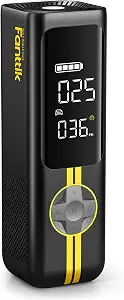
Fanttik X8 APEX
Check on Amazon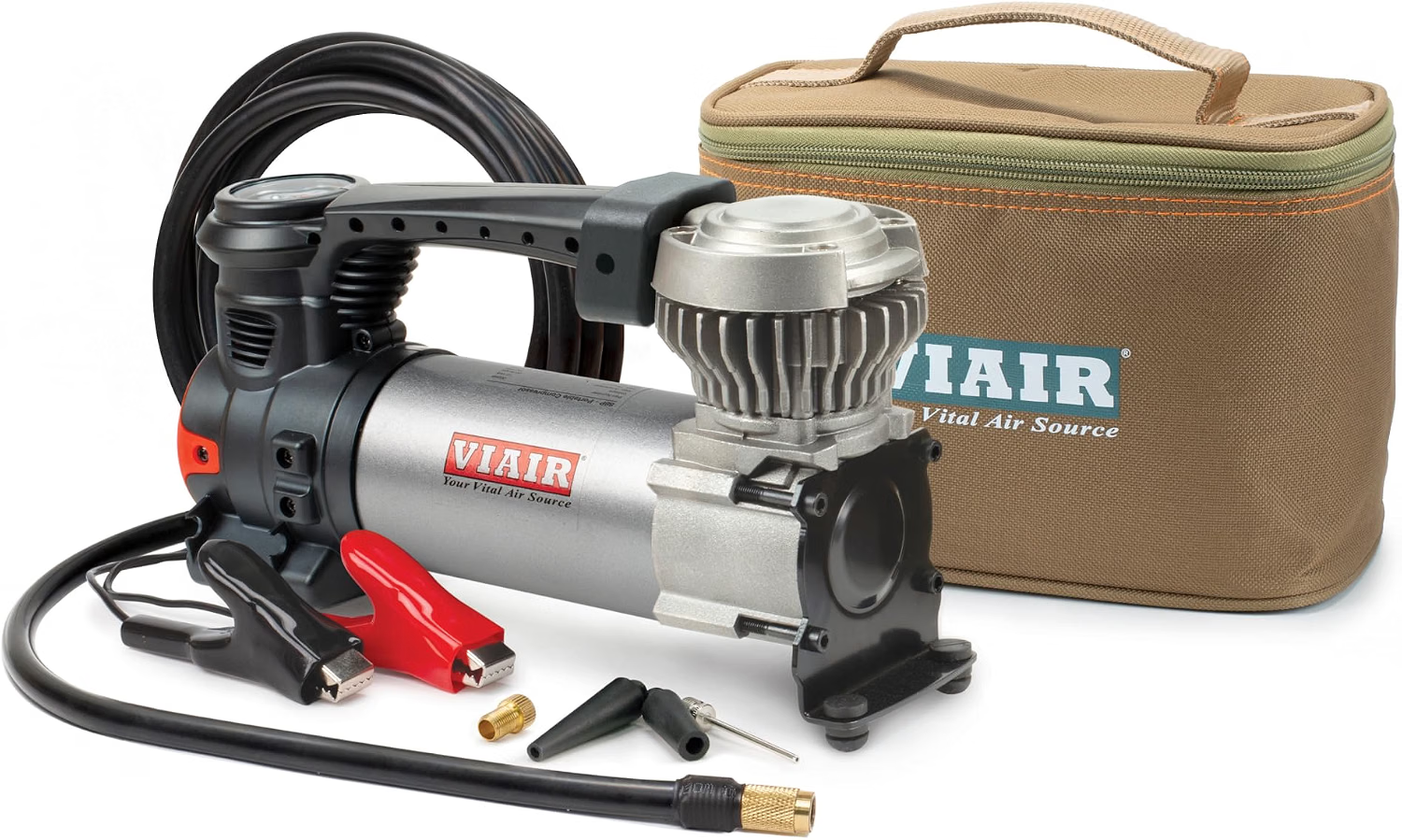
VIAIR 88P
Check on Amazon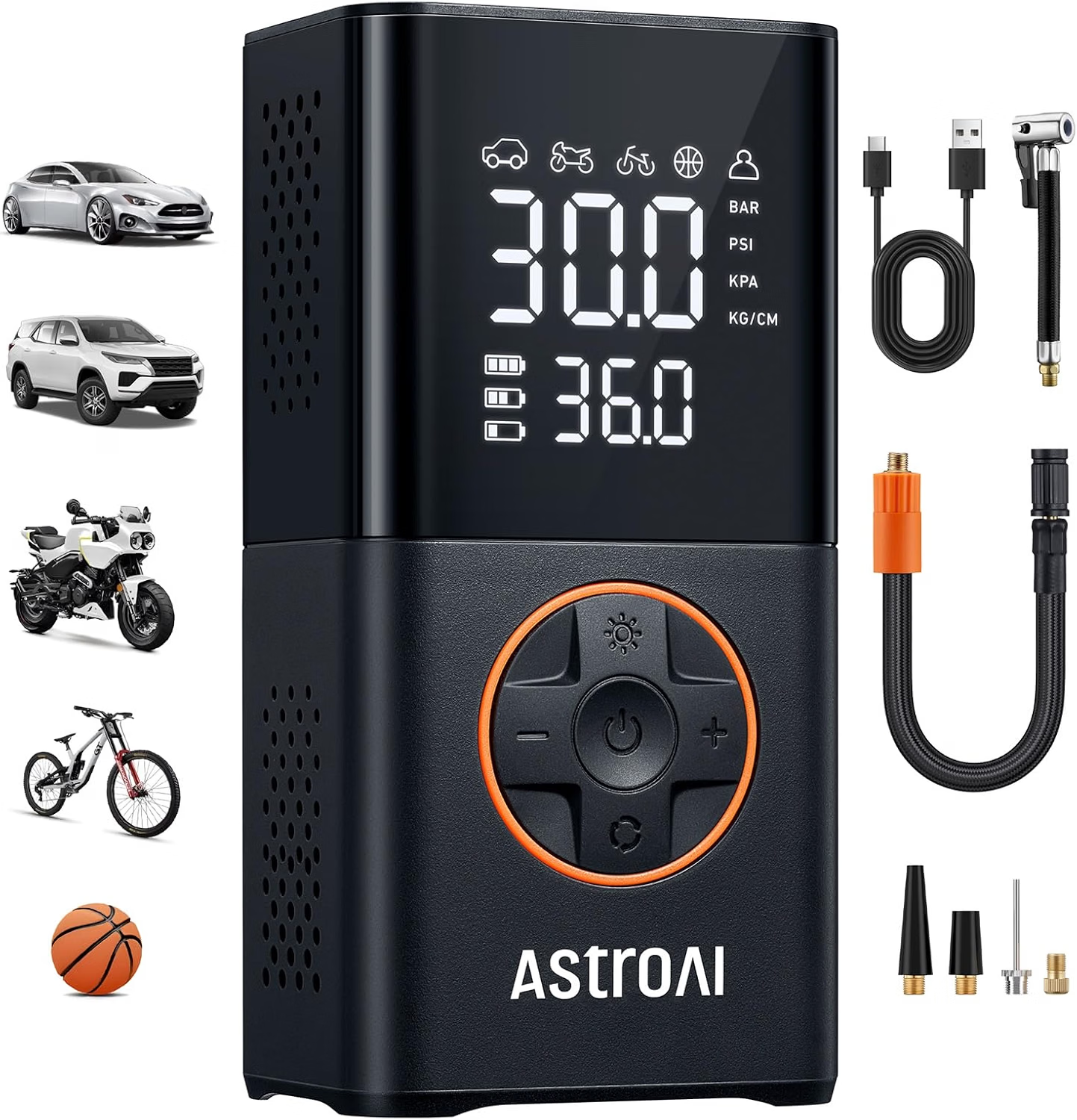
AstroAI L7
Check on Amazon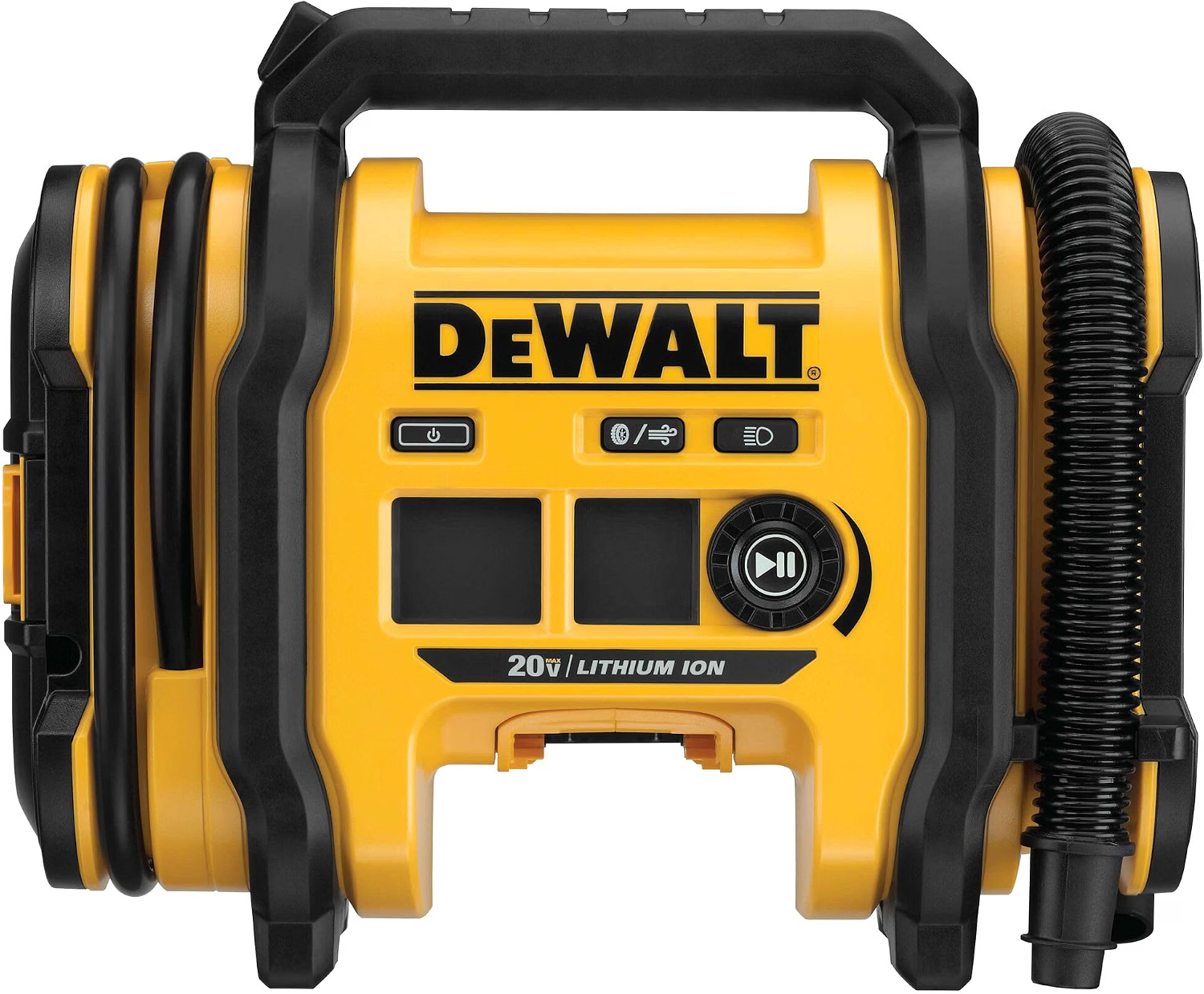
DEWALT DCC020IB
Check on AmazonThese picks serve different use cases. Every purchase button goes to the specific Amazon product ASIN, and you should verify the selected variant, included accessories and current availability before checkout. We have deliberately avoided publishing unstable prices or claiming independent inflation-time rankings.
1. Fanttik X8 APEX: Best All-Around Cordless Option
Why it stands out: The Fanttik X8 APEX is a handheld, rechargeable inflator with a digital display, preset modes and automatic stop. Fanttik lists a 150 PSI maximum, a 28.8Wh-class internal battery, and a recommended tire diameter up to about 26.3 inches for the model. It is aimed at routine car, motorcycle and bicycle inflation rather than large-volume off-road tire work.
Fanttik advertises rapid small pressure top-offs. Its example shows inflation of a 215/55 R17 tire from 28 to 33 PSI in about 56 seconds, and the company lists up to 40 minutes of operation under stated conditions. Those are manufacturer figures, not guaranteed results for your tire. A full refill from zero pressure and a small top-off are dramatically different tasks.
Best fit: Drivers who want a cordless pump they can pull out of a center console or cargo pocket without first locating a power outlet. Preset-and-stop operation is especially helpful if you are checking tire pressure during seasonal temperature changes. If you regularly service four stock-size passenger tires, the rechargeable design can make maintenance more convenient.
Tradeoffs: Battery care becomes part of the emergency plan. Fanttik says the X8 APEX uses its internal battery and does not inflate while connected to a charging cable; recharging a discharged pump in the car isn't the same as powering it directly from the car. Check the official tire-size limit, storage-temperature instructions, charging state and hose reach before relying on it for a larger SUV. If your vehicle uses oversized tires, consider a higher-volume battery-clamp compressor instead.
2. VIAIR 88P: Best 12V Battery-Clamp Compressor for Larger Tires
Why it stands out: The VIAIR Every Vehicle Carry 88P uses 12-volt battery clamps and a dedicated air hose rather than a cordless battery. VIAIR lists a 120 PSI maximum working pressure, a 25-minute duty cycle at 30 PSI, and a recommended tire diameter up to 33 inches. It includes a pressure gauge and a carrying setup intended for roadside or light off-road use.
The important distinction is its 20-amp maximum electrical draw and direct battery-clamp connection. It is not a cigarette-lighter inflator, and you should not attempt to plug it into an ordinary 12V accessory socket using an improvised adapter. VIAIR instructs users to attach the clamps as directed and operate it according to the manual. A battery-clamp design can be useful for longer pumping work, but it still needs a functioning compatible vehicle electrical system.
Best fit: Family SUVs, some crossovers, drivers with bigger stock-size tires, and people who prefer a conventional compressor over keeping another rechargeable gadget charged. It is a particularly useful comparison against small cordless inflators when you are servicing tires that require more air volume.
Tradeoffs: You need physical access to the battery, correct cable routing, and a safe place for the compressor. The duty cycle means the unit may need to stop and cool; do not run it continuously beyond the model's stated operating limits. VIAIR's gauge is an analog design, so check the pressure with a trusted independent gauge if accuracy matters. A pressure rating of 120 PSI does not mean vehicle tires should be filled anywhere near 120 PSI—always use the vehicle placard.
For repeated off-road tire air-ups, our separate Best Portable Air Compressors for Overlanding in 2026 focuses on higher-airflow compressors, multi-tire systems and demanding trail use. Do not confuse those applications with a typical commuter's compact emergency pump.
3. AstroAI L7: Best Compact Rechargeable Backup
Why it stands out: The AstroAI L7 is a small rechargeable inflator with a digital pressure display, an automatic shutoff function and a 150 PSI advertised maximum. AstroAI's own materials describe it as a compact option for cars, bicycles, motorcycles and other small inflation jobs.
The main reason to consider it is storage convenience. A pump you keep charged and can find immediately is more useful than a large compressor you left at home. The L7's preset controls also remove some guesswork when topping up passenger tires, although you should still confirm the reading using a separate quality gauge.
AstroAI's product materials describe an example of multiple small top-offs on 195/65 R15 tires, from roughly 30 to 36 PSI, on a charge. This should not be interpreted as eight complete fills from flat or a guarantee for a heavier SUV. Tire size, temperature and battery state affect runtime.
Best fit: Sedans, smaller crossovers, motorcycles, apartment or city drivers with limited storage, and anyone who wants a compact tire-pressure backup without maintaining a larger battery-clamp compressor.
Tradeoffs: The smaller rechargeable platform is not the strongest choice for repeatedly filling large SUV or pickup tires from low pressure. Check how many tires you expect to service and whether you can recharge the unit before a trip. It also isn't a tire-repair tool: if pressure drops again after inflation, have the tire inspected promptly.
4. DEWALT DCC020IB: Best for Home Garage and Tool-Battery Users
Why it stands out: DEWALT's DCC020IB 20V MAX inflator supports three power-source options: a compatible DEWALT 20V MAX battery, a 12V DC vehicle connection, or 110V AC using a separately purchased adapter. That flexibility is its defining feature, and it is one reason this model may be more practical for homeowners than a tiny rechargeable pump.
It also combines high-pressure tire inflation with a different low-pressure inflation/deflation function for suitable inflatables, has an LED work light and supports automatic high-pressure shutoff. Follow the specific manual for connection and operating limits.
Critical purchase detail: The model number in your Amazon link is DCC020IB, the tool-only version. DEWALT specifies that the 20V battery, charger and AC power adapter are sold separately. If you don't own compatible DEWALT batteries and don't want to rely on the included 12V vehicle connection, your actual purchase cost will be higher than the bare-tool price.
Best fit: Households with DEWALT 20V MAX tools, drivers who want one device that works in the garage and car, or owners who prefer the backup of an external 12V source when a cordless battery is depleted.
Tradeoffs: It is more bulky than compact handheld pumps and has more accessories to manage. Confirm that your vehicle's 12V connection meets the power requirements, and don't mistake the optional AC capability for an included wall adapter. This can be a versatile tool, but a simple cordless inflator may be easier to store for a small car.
Which Inflator Should You Choose? Four Everyday Situations
Situation | First model to compare | Why |
|---|---|---|
Daily commute with standard car tires | Fanttik X8 APEX | Rechargeable, preset pressure and easy storage |
SUV or frequent higher-volume tire top-offs | VIAIR 88P | Battery-clamp compressor with 33-inch stated tire support |
Small trunk or occasional tire checks | AstroAI L7 | Compact cordless backup |
Family garage with DEWALT tools | DEWALT DCC020IB | 20V battery ecosystem plus 12V vehicle-power option |
These are starting points—not an instruction to ignore your tire size, inflation requirements or actual vehicle power setup. A passenger vehicle with unusually large aftermarket tires may need an entirely different category of compressor.
Cordless vs. Battery Clamps vs. 12V Outlet: Which Power Source Wins?
There is no universal winner. The power source affects both convenience and whether the pump is likely to function during an emergency.
Cordless battery inflators: convenient, but must be maintained
The Fanttik X8 APEX and AstroAI L7 carry their own battery. You can use them with the vehicle switched off, and you don't have to route a cable under the hood. That is excellent for routine seasonal top-offs and low-pressure alerts. The tradeoff is that battery capacity decreases during use and over time; extreme temperatures can also affect performance. Check charging indicators before leaving for a long trip.
Don't confuse USB charging with live USB-powered inflation. Some cordless pumps cannot operate while charging. The Fanttik X8 APEX, for example, is designed to pump from its internal battery, so you cannot count on a simple USB cable to rescue it when it is fully depleted.
Battery-clamp compressors: more setup, appropriate for certain bigger tires
The VIAIR 88P uses the vehicle battery as its source, requiring correct clamps and a suitable electrical system. That avoids maintaining a second inflator battery but means the unit is not usable in the same way when the vehicle's own 12V system is compromised. Keep all cables away from hot engine components, fans, belts and moving parts.
Tool-battery and mixed-input inflators: versatility with extra accessories
The DEWALT DCC020IB can use a 20V MAX battery or 12V DC vehicle power, with optional AC operation. If you already have DEWALT batteries, it can fit naturally into your tool setup. If not, buying batteries and chargers just for occasional tire top-offs may not be the best value. Look at the whole kit price, not only the listing.
Five Specs That Matter More Than Maximum PSI
1. Tire size and volume
The volume of air in a large SUV or pickup tire can be much greater than in a small sedan tire. A pump may be rated for 150 PSI but still deliver air slowly when filling a larger tire. Check the model's maximum recommended tire diameter and suitability for your specific vehicle.
2. Inflation speed measured under comparable conditions
A manufacturer's "one-minute" claim may refer to a five-PSI top-off on one specific tire, not a full refill from flat. To compare real inflation times, you need the same tire size, starting PSI, target PSI and electrical supply. Without comparable testing, there is no credible way to declare one of these four the fastest overall.
3. Duty cycle and cooling
The duty cycle tells you how long a compressor can operate at specified conditions before it needs rest. VIAIR explicitly publishes a duty cycle for the 88P. Other portable inflators may have internal thermal protection. Respect the manufacturer instructions, especially when repeatedly topping up four tires on a hot or cold day.
4. Hose and power-cable reach
Check the distance from the source of power to all four tire valves. For a cordless pump, the important distance is often how it can be placed beside the wheel. For a battery-clamp pump, make sure its cable and air hose can reach the rear tires without being routed unsafely. The DEWALT also needs proper access to its chosen power input.
5. Gauge accuracy and automatic stop
Preset shutoff is helpful, but it is not a substitute for periodically checking tire pressure against a trusted gauge. A mechanical gauge, digital readout or displayed maximum PSI does not automatically establish accuracy. Manufacturer accuracy claims should be treated as manufacturer data unless independently verified.
The Correct Tire Pressure Is on Your Door Placard
This is more important than the pump's maximum PSI. Use the vehicle manufacturer's recommended cold tire pressure, generally found on the label on the driver's door jamb or in the owner's manual. The PSI molded on the tire sidewall is generally the tire's maximum rating, not your car's target inflation pressure.
NHTSA recommends checking tires when cold—normally after the vehicle has been parked for at least three hours. If you must add air to a warm tire on the road, follow the applicable manufacturer instructions and recheck the pressure when cold. NHTSA tire safety guidance.
What if the tire-pressure warning keeps returning?
Inflation may restore pressure temporarily, but a repeated warning can indicate a puncture, bead or valve issue, weather-related pressure changes, or a problem with the tire-pressure monitoring system. A portable inflator cannot repair a puncture, sidewall damage or a tire that is unsafe to drive on. If the tire is visibly damaged, losing air rapidly or has been driven severely underinflated, stop safely and have it inspected by a qualified tire professional.
How to Use a Portable Tire Inflator Safely
Move to a safe location. Park away from traffic, activate hazard lights where appropriate, and avoid using a pump on an exposed highway shoulder if you can call roadside assistance instead.
Find the correct target pressure. Consult the driver's-door label or owner's manual, rather than guessing from the tire sidewall.
Inspect the tire. Do not attempt to repair structural damage with an inflator. If the tire is severely deflated or damaged, seek qualified help.
Check the pump's power source. Charge a cordless device, correctly connect battery clamps, or use only an approved vehicle DC connection. For the VIAIR 88P, read the battery-clamp instructions.
Attach the hose carefully. Seat the valve connection, keep hoses from hot components or traffic, and avoid damaging the valve stem.
Inflate within the equipment's duty cycle. Watch pressure, heat and any error indicators. Do not leave a pump operating where people can trip over it.
Check pressure again. After inflation, verify the result and reinstall the valve cap. Recheck again when tires are cold, and address any persistent air loss.
These are general steps. Always prioritize your tire, vehicle and compressor manuals.
Do You Need a Tire Inflator If You Already Have a Jump Starter?
Yes, the two tools solve different problems. A jump starter provides electrical starting assistance for a compatible vehicle battery. A tire inflator puts air into an otherwise serviceable tire. They are complementary, not substitutes.
Our Best Portable Jump Starters for Cars & SUVs (2026) compares portable battery boosters from NOCO, Clore, TOPDON, GOOLOO and WOLFBOX. The Winter Emergency Car Kit Checklist shows where both products fit alongside visibility equipment, first aid, warm layers and communications.
If you travel unpaved roads and regularly air down off-road tires, the better companion resource is our Best Portable Air Compressors for Overlanding. Those higher-capacity systems are designed around a different workload than an everyday car tire top-off.
Portable Tire Inflator FAQ
Is a 150 PSI tire inflator better than a 120 PSI one?
Not necessarily. The vehicle's target tire pressure is normally far below either published maximum. Airflow at working pressure, tire size, power supply and duty cycle matter more for practical inflation speed. The 120 PSI VIAIR 88P may suit a larger SUV tire better than a tiny 150 PSI cordless pump depending on the job.
Can a cordless tire inflator fill a completely flat tire?
Some may inflate a fully deflated but otherwise safe tire, but results depend on tire volume and battery charge. If a tire is flat because of a puncture, bead damage or sidewall problem, adding air may not make it safe. Never assume pumping a visibly damaged tire back to pressure makes it roadworthy.
What PSI should I inflate my car tires to?
Use the recommended cold inflation pressure on the vehicle's tire-information placard or in the owner's manual, not the maximum PSI printed on the tire. Check when the tires are cold for accurate readings. NHTSA reference.
Does the DEWALT DCC020IB include a battery?
The DCC020IB is sold as a bare tool. DEWALT specifies that its 20V MAX battery, charger and AC adapter are separate purchases. The unit also supports a vehicle 12V DC input according to the product manual.
Does the VIAIR 88P plug into a cigarette lighter?
No. The 88P model discussed here uses 12V battery clamps, and VIAIR lists up to a 20-amp electrical draw. Do not use an improvised adapter or assume an ordinary 12V accessory outlet is rated to supply it.
Which tire inflator is best for an SUV?
For many SUVs with stock tires, compare the VIAIR 88P's battery-clamp design and stated tire size against a cordless model such as the Fanttik X8 APEX. The right answer depends on the actual tire diameter, how much air you need to add, the power available and whether you prioritize convenience or repeated inflation.
How often should I check my tire inflator?
Check that it powers on, that the hose and fittings are undamaged, and that batteries are charged before long trips. Periodically verify a digital display with a quality separate gauge. Follow the maker's storage and charging instructions for temperature-sensitive batteries.
Final Verdict: Pick the Right Power Source, Not the Highest PSI
The Fanttik X8 APEX is the practical first comparison for most drivers who want a cordless, automatic top-off tool for standard passenger tires. The AstroAI L7 is a smaller rechargeable alternative for limited storage. Choose the VIAIR 88P when you need a conventional clamp-powered compressor with more tire-size headroom and accept the setup and duty cycle. The DEWALT DCC020IB is the most flexible power-source choice if you already have compatible tool batteries or want one inflator for garage and vehicle use.
Before ordering, check the vehicle's tire dimensions, available power source, included accessories, hose reach and real intended workload. A reliable, maintained inflator that suits your car is more valuable than an impressive-looking PSI figure.
Keep your pump with a tire gauge, working jump starter, warning equipment and other practical supplies from our Winter Emergency Car Kit Checklist. For larger off-road tire demands, continue to our overlanding compressor comparison.
Research sources: Fanttik X8 APEX, VIAIR 88P, AstroAI L7, DEWALT DCC020IB, NHTSA Tire Safety, Car and Driver tested comparison. All model-specific performance values identified as maker claims are sourced from published specifications.
This post may contain affiliate links. We may earn a commission when you purchase through links on this site at no additional cost to you.


