
This article contains affiliate links. We may earn a commission from qualifying purchases.
As an Amazon Associate I earn from qualifying purchases.
A dead battery can ruin a routine commute just as easily as a remote road trip. A portable jump starter gives you a way to start many 12-volt vehicles without waiting for a second car, but shopping for one is surprisingly confusing. Different brands advertise 1,000, 2,000, or even 4,000 "peak amps," yet those numbers do not tell you everything about whether a unit will actually help when your battery is cold or nearly discharged.
This guide compares five jump starters for everyday cars, crossovers and SUVs, with a separate section on larger pickup trucks and diesel engines. We evaluated the published engine-size ratings, battery compatibility, connection and clamp design, charging methods, safety protections, portability and manufacturer documentation. We also reviewed independent testing for context. We did not conduct our own starting or cold-weather tests, so these are research-based buying recommendations, not hands-on test results.
Quick answer: For an ordinary gasoline car or small SUV, the compact NOCO GB40 is a sensible starting point if its published engine rating fits your vehicle. Drivers who value longer clamps should investigate the Clore Jump-N-Carry JNC325. For USB-C fast charging and more engine-size headroom, the NOCO Boost X GBX55 is worth comparing. The TOPDON JumpSurge2000, GOOLOO GP4000 and WOLFBOX MegaVolt16 offer alternative specifications but should be chosen with the same compatibility and safety scrutiny as the premium brands.
As an Amazon Associate, The All Guy earns from qualifying purchases. The Amazon links we already have are tracked affiliate links; other links presently lead to manufacturers for product information. Pricing and availability can change.
At a Glance: Six Jump Starters Compared
Model | Published starting figure | Manufacturer engine rating | Best fit | Important tradeoff |
|---|---|---|---|---|
NOCO Boost Plus GB40 | 1,000A peak | Up to 6.0L gas / 3.0L diesel | Compact car and crossover kit | Older charging approach; less diesel headroom |
Clore Jump-N-Carry JNC325 | 450 start-assist amps; differently stated metric | Up to 8.0L gas / 6.0L diesel | Access to difficult battery terminals | Larger and less pocketable |
NOCO Boost X GBX55 | 1,750A peak | Up to 7.5L gas / 5.0L diesel | USB-C convenience and family SUVs | Higher cost than smaller packs |
TOPDON JumpSurge2000 (ASIN B09GLPBKXR) | 2,000A class (listing; verify model) | Up to 8.0L gas / 6.0L diesel | Alternative midrange option | ASIN naming has varied; Pro is separately rated at 2,500A |
GOOLOO GP4000 | 4,000A peak | All gas / up to 10.0L diesel, according to maker | Large claimed engine coverage and power-bank versatility | Peak numbers alone don't prove cold-start performance |
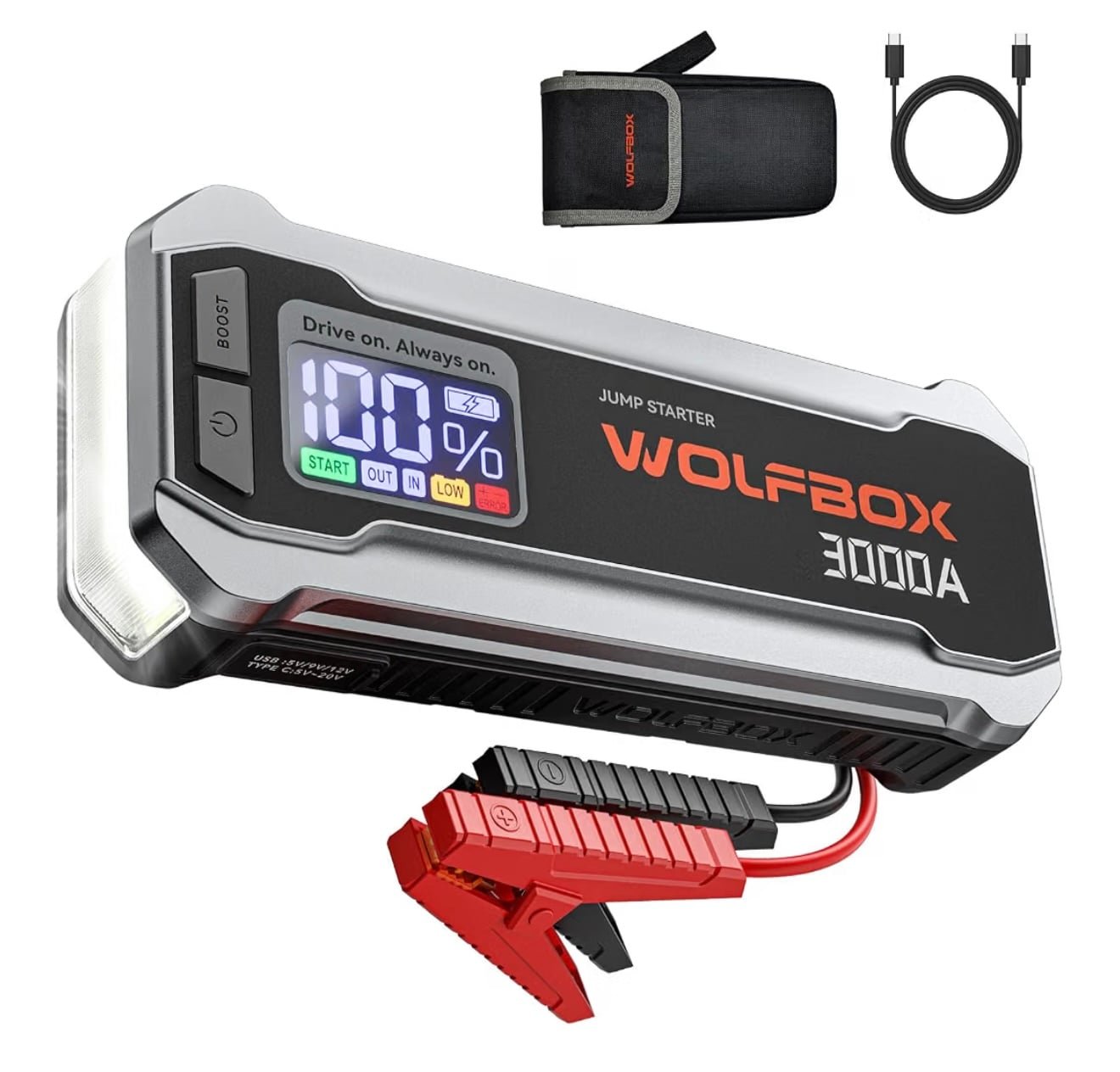
WOLFBOX MegaVolt16 | 3,000A peak | Up to 8.0L gas / 6.0L diesel (maker claim) | 65W USB-C and display | No built-in air compressor; not independently tested |
These are manufacturer ratings, not a controlled head-to-head test. In particular, Clore publishes "start assist amps," a different labeling convention from the peak-amp numbers used by other brands. Do not conclude that a 4,000A listing delivers four times the practical starting performance of a 1,000A unit. For context, Car and Driver's independent 2026 testing emphasized clamp reach and actual starting behavior, while AAA's jump-start guidance emphasizes safety and battery compatibility.
Quick Picks: The Best Fit for Each Driver
QUICK PICKS: PORTABLE JUMP STARTERS FOR CARS & SUVs
Five distinct shopping priorities: compact storage, long clamp leads, USB-C convenience, a midrange 2000A-class option, and wider manufacturer-rated engine coverage. Also compare the sixth model, WOLFBOX MegaVolt16, in the detailed review below.
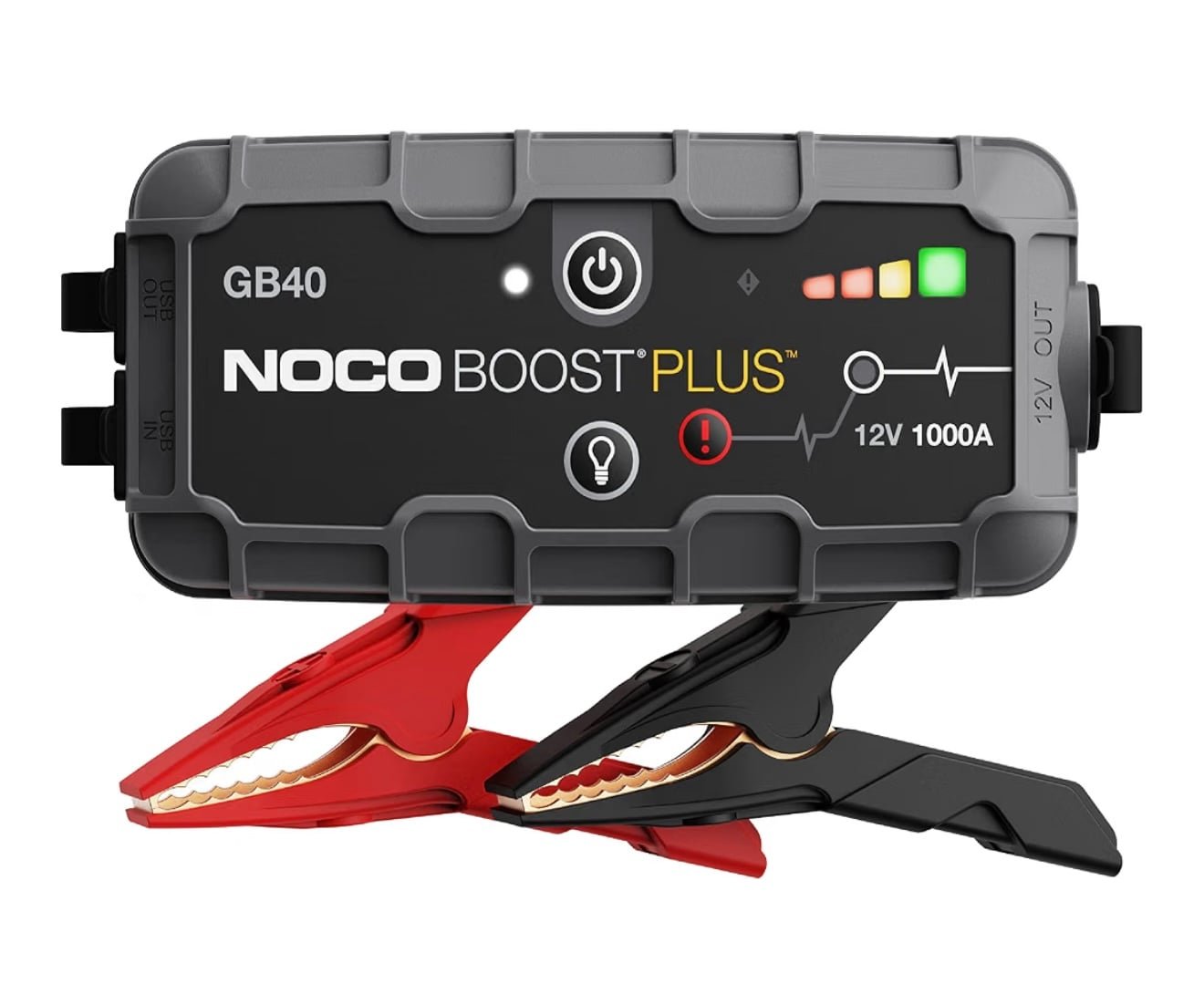
NOCO Boost Plus GB40
Check on Amazon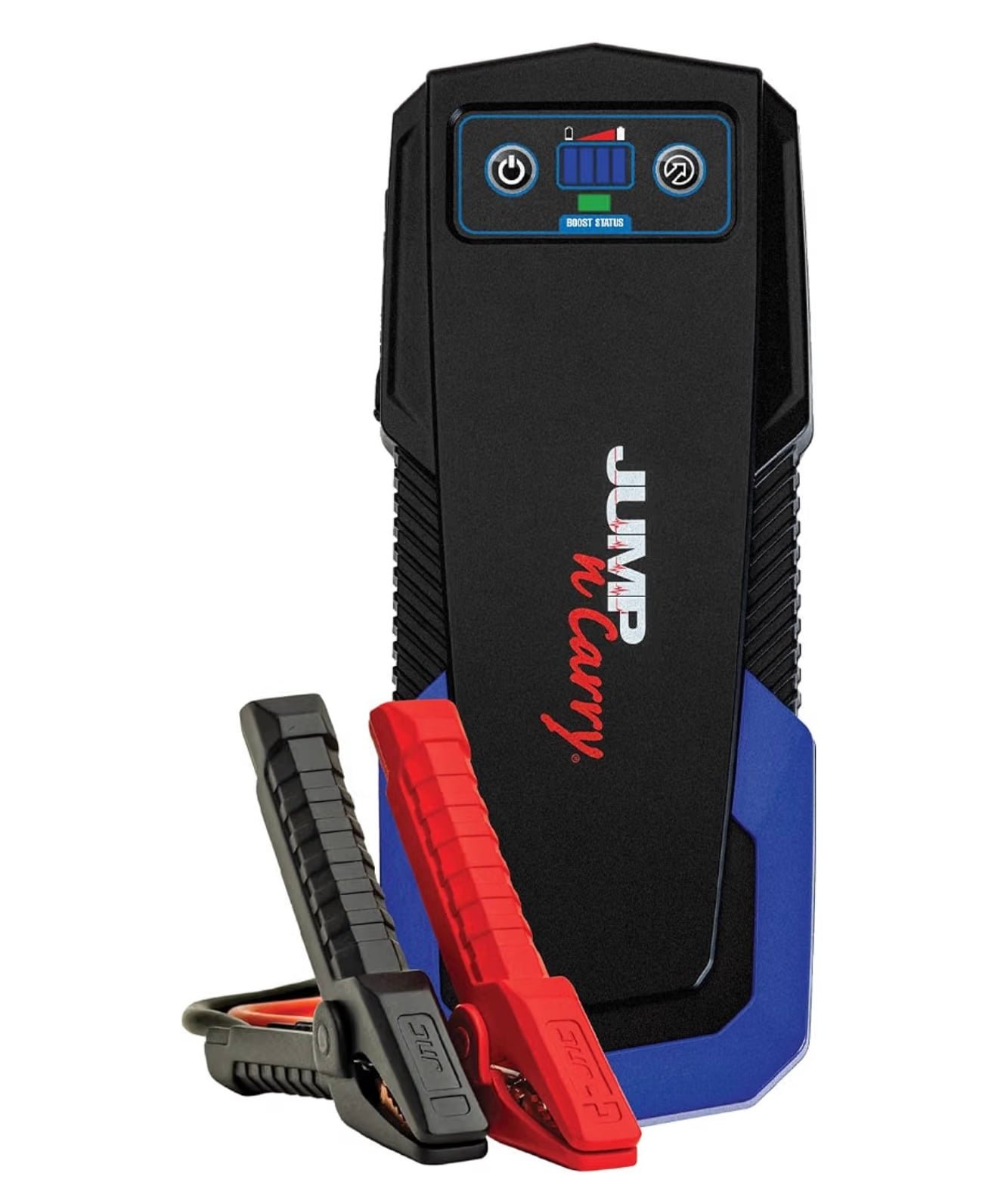
Clore Jump-N-Carry JNC325
Check on Amazon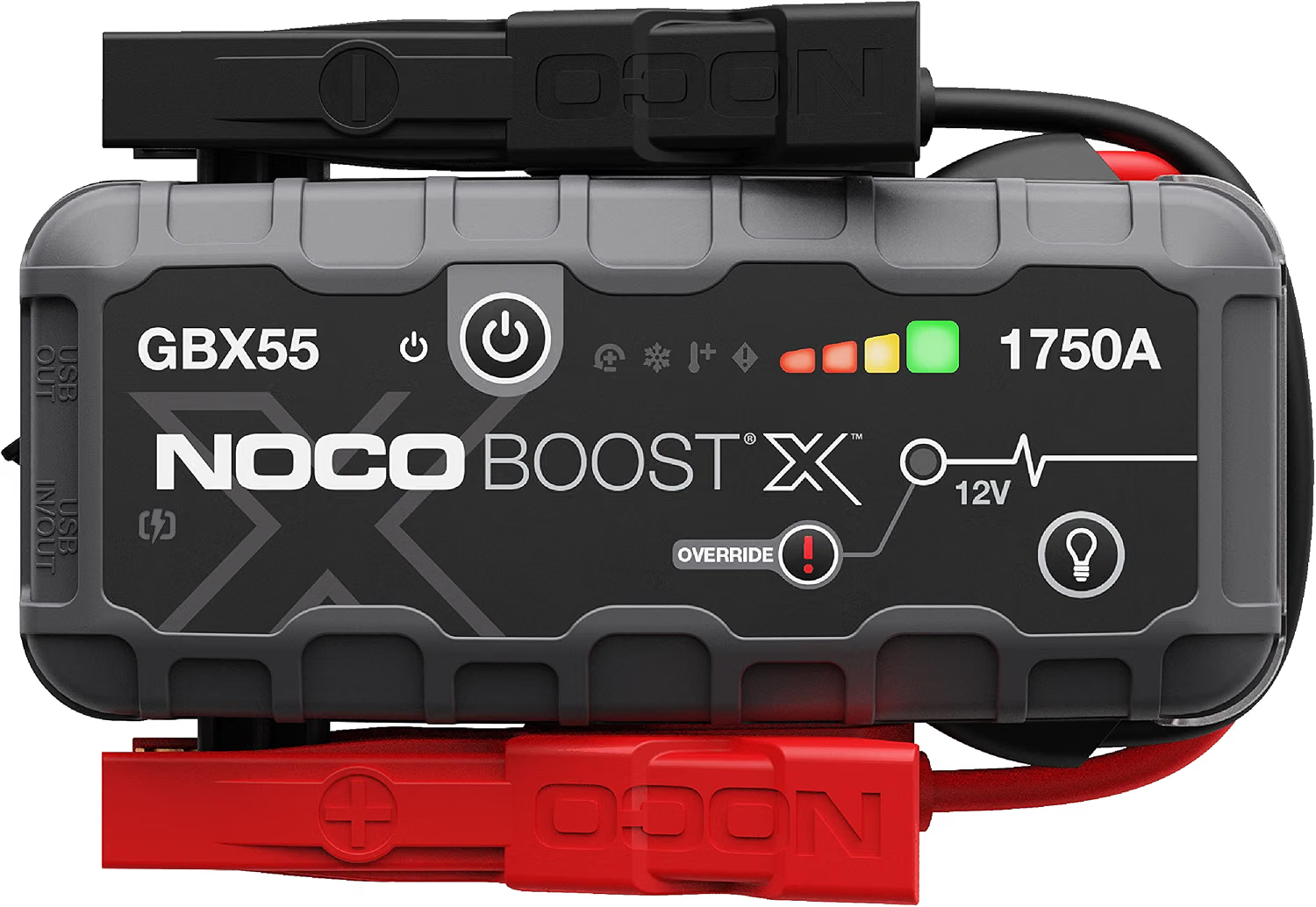
NOCO Boost X GBX55
Check on Amazon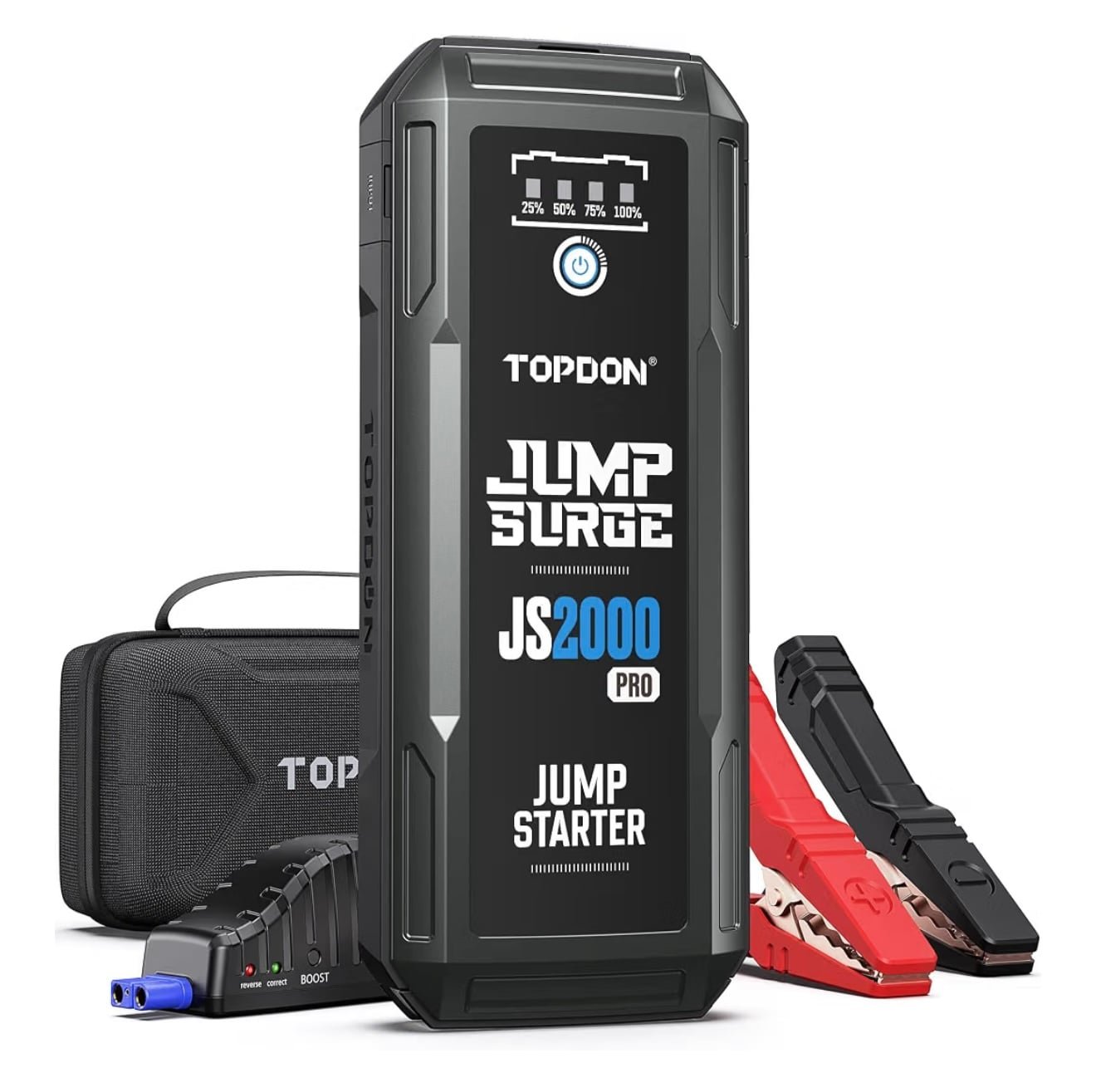
TOPDON JumpSurge2000
Check on Amazon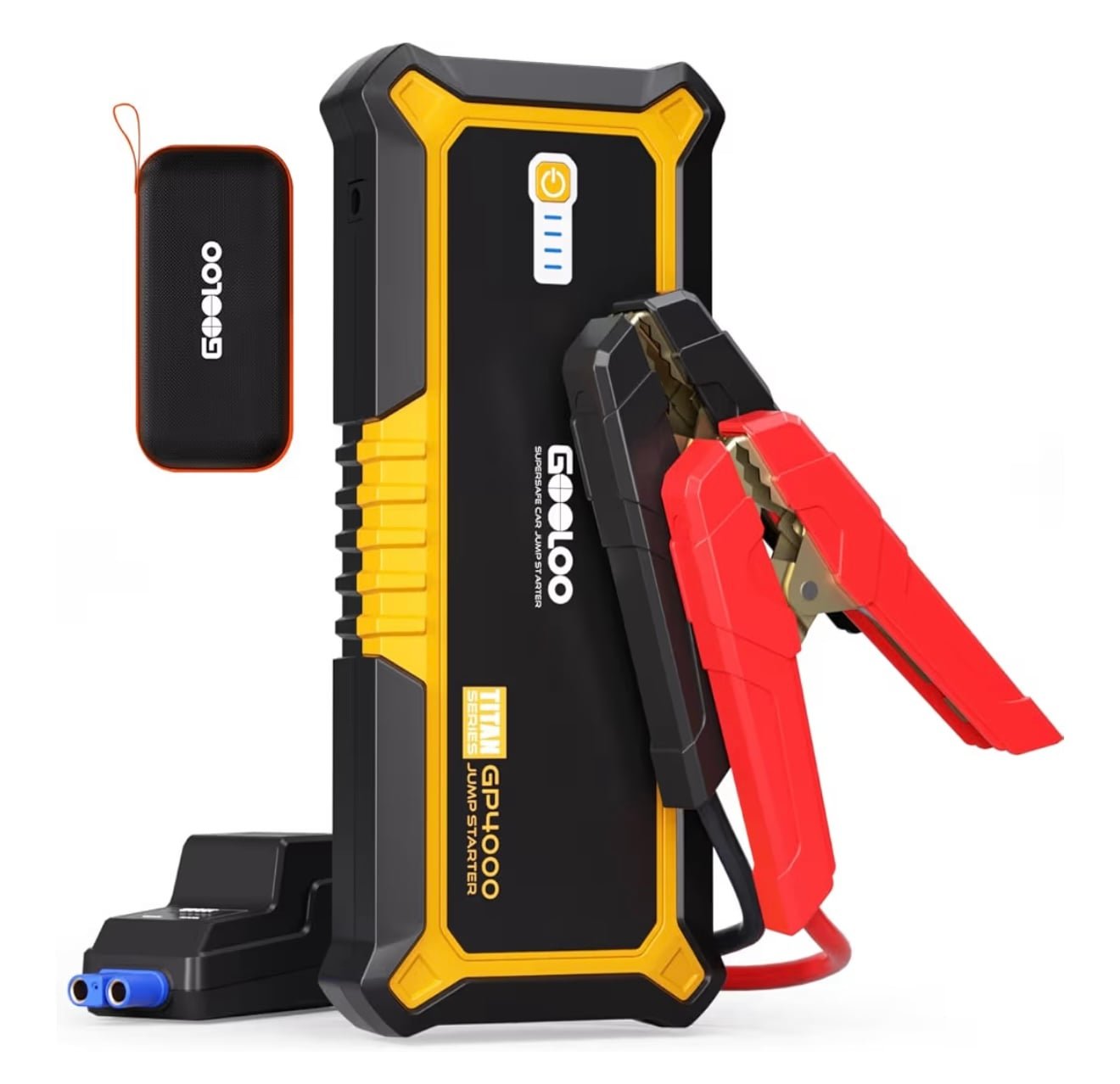
GOOLOO GP4000
Check on AmazonThe right model is the one that fits the electrical system, engine, and typical places you drive. These are not interchangeable with chargers, maintainers, 24-volt commercial jump packs, or emergency power stations. Start with the five categories below, then read the tradeoffs before buying.
1. NOCO Boost Plus GB40: Best Compact Everyday Choice
Why it made the list: NOCO rates the GB40 at 1,000 peak amps, with gasoline engine compatibility up to 6.0 liters and diesel engines up to 3.0 liters. It is a recognizable, compact jump pack that makes practical sense for many sedans, small SUVs and gasoline crossovers. It does not require a donor vehicle, and the included clamp system offers safety features such as reverse-polarity protection and spark-proof connections when used as directed. See the manufacturer's GB40 product page.
Where it works: It is a reasonable choice when your vehicle's engine is comfortably inside the manufacturer's rating and you value a compact pack that can live in a secure car emergency-kit compartment. Keep its battery charged and inspect the cables before seasonal trips. For a vehicle with a large diesel engine, a greater-capacity model may make more sense.
Where we'd hesitate: Its traditional USB charging and smaller engine rating are the limitations to watch. Newer Boost X models support faster USB-C charging. Some low-voltage batteries may need an override procedure, which bypasses some normal checks; that is not something to improvise in poor conditions. Consult the NOCO manual and your vehicle's jump-start points.
The All Guy already features the GB40 in our Winter Emergency Car Kit Checklist, where it sits alongside tire inflation, warning triangles, warm layers and other roadside gear.
2. Clore Jump-N-Carry JNC325: Best for Clamp Reach and Accessible Connections
Why it made the list: The Clore JNC325 is a lithium jump starter engineered around practical connections. Clore documents 24-inch, 6-AWG output leads, a 450 start-assist amp rating, and stated support for up to 8.0L gasoline and 6.0L diesel engines. Those details matter if your battery is tucked into a difficult engine bay or the proper ground point is far from the positive jump terminal. See Clore's official JNC325 specifications.
This is a case where quoting the largest advertised peak number would miss the buying decision. A longer lead can make it easier to place the power pack safely instead of balancing it over an awkward engine component. Automotive publications have also rated the JNC325 highly after conducting tests, but that is their testing, not ours. Car and Driver's testing overview.
Where it works: Families operating different vehicles, people with difficult battery access, and drivers who would rather have robust clamps than the smallest possible device. A well-designed jump pack that you can safely connect may be more useful than a higher-numbered one with very short leads.
Where we'd hesitate: The JNC325 is not as compact as the smallest lithium packs. It also uses a different starting-power metric, so don't compare its 450 start-assist amps directly to another brand's 2,000-amp peak marketing label. Review its charging accessories and storage requirements before leaving it unused for months.
3. NOCO Boost X GBX55: Best for Fast USB-C Charging and Family SUVs
Why it made the list: The GBX55 is part of NOCO's newer Boost X series. NOCO rates it for 1,750A peak, 7.5L gasoline and 5.0L diesel engines, giving it more manufacturer-rated headroom than the GB40. Its USB-C power-delivery capability is a practical benefit if you already keep USB-C charging equipment in your vehicle. Review the NOCO GBX55 product information.
For some drivers, the most important feature is not peak current; it is whether they actually maintain the pack. A jump starter sitting uncharged in a car is not reliable. Faster charging makes it easier to top up a device before a trip, although you still need to follow the correct power-source and temperature instructions.
Where it works: Multi-vehicle families, drivers who want one 12-volt jump pack for cars and many gas SUVs, or owners who value faster charging. It is worth considering when your car's engine is comfortably within the published rating and you want additional headroom.
Where we'd hesitate: It generally costs more than compact entry options, and a physically larger pack is not always worth carrying in a small glovebox. It still cannot repair a failing starter motor or a mechanically damaged battery. Avoid treating a deeply discharged battery as automatically safe to boost.
4. TOPDON JumpSurge2000: Best Alternative Midrange Value Candidate
Why it made the list: The Amazon listing supplied for this comparison (ASIN B09GLPBKXR) has been documented as a TOPDON JumpSurge2000-class device with a 2,000A peak claim and manufacturer-rated coverage up to 8.0L gasoline / 6.0L diesel. Retailers have used varying 'JS2000Pro' descriptions for the ASIN, while TOPDON's separately documented JumpSurge2000Pro is rated at 2,500A. We are presenting the supplied listing conservatively as the 2,000A JumpSurge2000-class option. Check the exact model printed on the product before purchase. Compare the official JumpSurge2000 documentation and JumpSurge2000Pro specifications.
Where it works: Drivers comparing multiple 12-volt starters who want a broad manufacturer-rated engine range without automatically moving to a larger premium unit. Its features are sensible for routine commuting and general roadside preparedness if you can verify the exact model on the retailer listing.
Where we'd hesitate: TOPDON's JumpSurge2000 and JumpSurge2000Pro are different product designations and their published peak ratings are not the same. The Amazon ASIN B09GLPBKXR has appeared under inconsistent titles. Verify the exact SKU, stated peak current, warranty, clamps and charge accessories against the product you actually receive. Do not assume that the supplied Amazon listing is the newer 2,500A Pro model.
5. GOOLOO GP4000: Best High-Output Claim to Compare Carefully
Why it made the list: GOOLOO markets its GP4000 with 4,000 peak amps and says it can start all gasoline engines and diesel engines up to 10.0 liters, using a 12-volt system. It also offers power-bank functions. The stated engine coverage is broad, but that does not mean it has been proven to start every listed engine in every temperature or battery condition. Source: GOOLOO GP4000 manufacturer details.
Where it works: A shopper who wants a larger published engine range and is comparing the cost of a multipurpose jump starter against NOCO and Clore alternatives. Look closely at clamp design, included carrying case, charging requirements, and the retailer's specific return policy.
Where we'd hesitate: High advertised peak amperage can dominate product titles, but starting performance depends on the battery state, temperature, how long output can be sustained, cable and clamp resistance, and protection circuitry. A four-digit peak number is not a promise of guaranteed winter starting. Confirm that the model and battery chemistry match your vehicle and that you can safely maintain it.
6. WOLFBOX MegaVolt16 3000A: Best 65W USB-C Alternative
Why it made the list:WOLFBOX MegaVolt16 manufacturer page
Where it works:
Where we'd hesitate:
What About Larger Pickup Trucks and Diesel Engines?
If your vehicle is a full-size pickup, a heavily equipped overlanding rig, or a large diesel, take a more conservative approach than simply copying a sedan recommendation. Start with the engine's displacement and battery system, then consider cable reach, pack storage and the likelihood of repeated starting attempts.
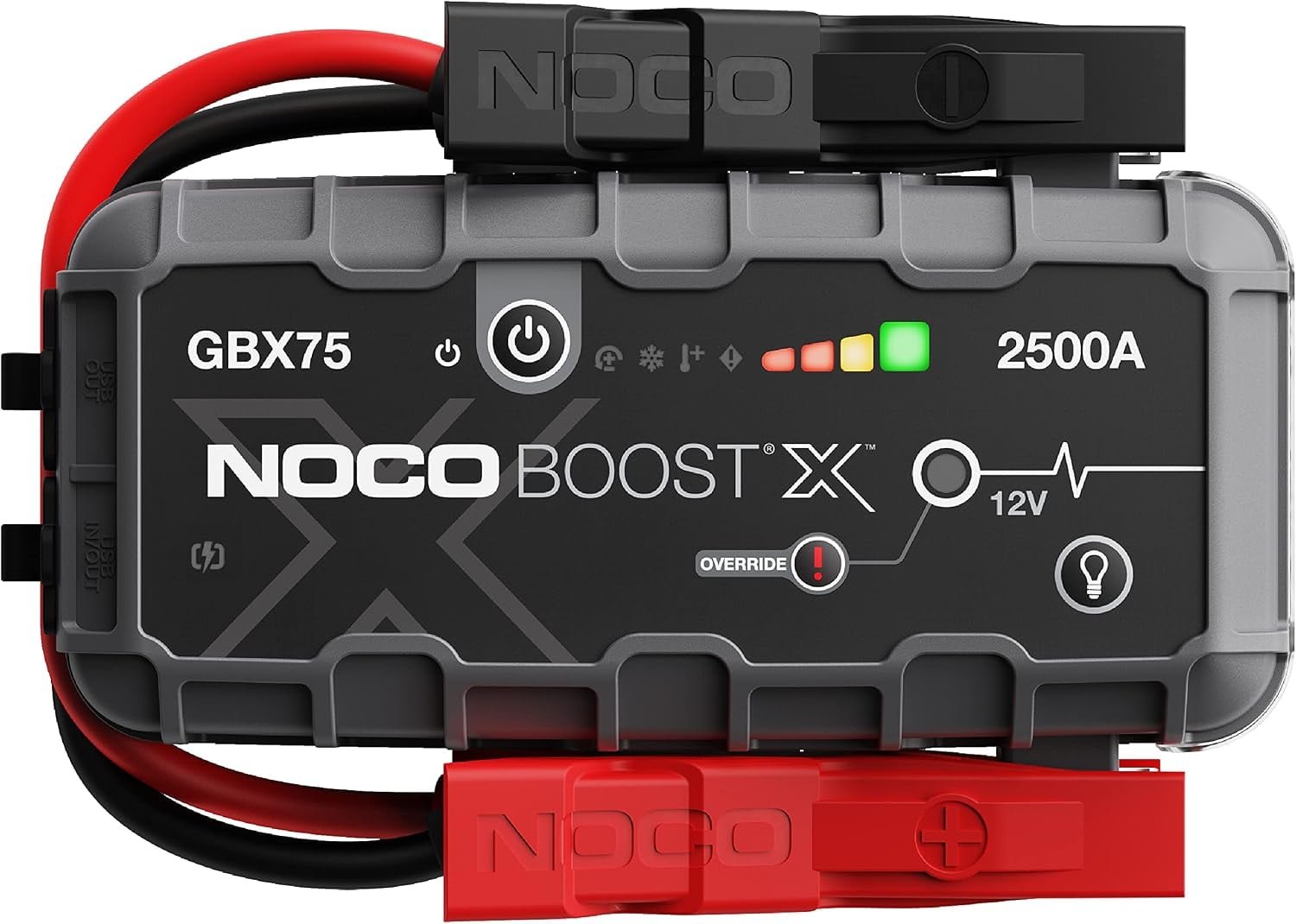
The NOCO Boost X GBX75 is an example of a higher-output 12-volt pack. NOCO rates it at 2,500 peak amps and up to 8.5L gasoline. Its product specifications list a diesel range up to 6.5L, while some NOCO support comparison tables show 6.0L; check NOCO's current specifications and your exact application before purchase. NOCO GBX75 specs.
For owners shopping for heavy-duty diesel or professional AGM alternatives, see our existing Best Portable Jump Starters for Trucks and Overlanding in 2026. That eight-model guide goes deeper on high-output lithium packs, traditional jump boxes and more demanding truck use. We should not pretend a compact car guide replaces it.
What Actually Matters When Buying a Jump Starter?
12-volt compatibility comes before everything else
Most conventional passenger cars use a 12-volt starting system, but there are important exceptions and special connection procedures. A model designed for 12V lead-acid starting batteries must not be assumed suitable for a 24V commercial truck, a high-voltage EV traction pack, or an unsupported lithium vehicle battery. Read the battery labeling and the vehicle's owner's manual.
Modern hybrids and EVs can still have low-voltage battery issues, but the procedure may differ dramatically from gasoline vehicles. Do not assume that a battery's visible location is the correct jump point; manufacturers frequently specify remote terminals or procedures. The AAA jump-start guidance explains why vehicle instructions and safe connections matter.
Peak amps vs. start assist vs. cold cranking amps
The word "amps" appears everywhere in product descriptions, but labels do not always describe equivalent measurements. Peak amps usually mean a short-duration maximum under a maker's specified conditions. Cold cranking amps (CCA) is a standardized rating used for starter batteries. Start-assist amps are a manufacturer-used description of current supplied during a boost.
You generally cannot compare all three as if they were directly interchangeable. Engine-size ratings help narrow the field, but actual performance also depends on charge state, vehicle battery condition, temperature, clamp placement and repeated-start limitations. Strong third-party testing that measures real starting performance is more useful than a giant peak figure alone.
Cable length and clamp quality
A short cable may be sufficient in one engine bay and frustrating in another. Measure the distance from your vehicle's designated positive terminal to its appropriate ground point if you can do so safely. Consider whether the jump pack can sit on a stable surface without touching moving parts or extreme heat. Also examine clamp grip, connection indicators and how the cable plugs into the unit.
Clore's 24-inch leads are a measurable strength in this category. But even longer cables are not a reason to ignore proper routing, voltage and manufacturer instructions.
USB-C, charge retention and storage temperature
Treat a jump starter as a battery that requires maintenance—not a magical item that can sit forgotten in the trunk indefinitely. Lithium batteries are affected by temperature, age, usage and storage conditions. Check the maker's storage-temperature range, charging interval and instructions for a pack that has been exposed to extreme cold.
Fast USB-C charging is useful if it makes you more likely to maintain the pack. A device with a large engine rating that has not been recharged for a year is a poor emergency plan. Check its indicator monthly during winter and before remote drives.
Safety protections and manual override
Look for published safeguards such as polarity protection, short-circuit protection, thermal protection and clear status indicators. They matter because you may be using the pack in bad weather or poor light. Some jump starters include an override or "boost" mode for deeply discharged batteries that the normal electronics cannot detect.
Manual override is not a beginner convenience feature. It can bypass safety checks. Use it only in accordance with the model's instructions, only with an appropriate battery, and never to try to revive a cracked, leaking, swollen, frozen or otherwise damaged battery. Seek roadside assistance or a professional battery assessment if in doubt.
Which One Should You Buy? Three Real-World Scenarios
Your situation | First model to compare | What to verify first |
|---|---|---|
Sedan or compact gas crossover, local commute | NOCO GB40 | Engine displacement and supported 12V battery type |
Family SUV or multiple gas vehicles | NOCO GBX55 | USB-C charging needs and engine headroom |
Vehicle with hard-to-reach battery connection | Clore JNC325 | Clamp reach and correct jump points |
Comparing lower-priced 2,000A-class packs | TOPDON JumpSurge2000 | Exact model number, warranty, current listing |
Looking at the broadest claimed engine rating | GOOLOO GP4000 | Manufacturer claims, supported battery, actual intended vehicle |
Larger pickup or diesel | NOCO GBX75 and truck-specific guide | Engine/battery specs and likely winter conditions |
Looking for fast USB-C charging plus a digital screen | WOLFBOX MegaVolt16 | Confirm you want the jump-only model, not MegaVolt16 Air |
Our take: For most drivers, a correctly sized GB40 or GBX55 may be more practical than a giant booster because they're easier to store and maintain. The Clore JNC325 becomes compelling when cable reach is a recurring problem. For GOOLOO and TOPDON, compare real availability, warranty, connectors and independent testing—not just their advertised amperage.
How to Use a Portable Jump Starter Safely
These are general principles. Always follow the instructions for your specific vehicle and jump starter, which take priority over any article.
Park and assess: Secure the vehicle, turn off accessories and look for leaks, damage, swelling, frost or other battery hazards. If it looks unsafe, stop and call for help.
Verify compatibility: Confirm that the pack supports the vehicle's battery voltage and type. Identify the designated positive and negative connection points from the owner's manual.
Connect as instructed: Follow your jump starter's instructions for connecting its clamps and enabling output. Keep clamps from touching each other or moving engine components.
Attempt a short start: Follow the manufacturer's allowed crank duration and rest period. Do not perform endless starts; repeated cranking can overheat cables or equipment.
Disconnect safely: When the engine starts, follow the instructions for switching off or disconnecting the pack. Do not let moving belts or fans catch the cables.
Investigate the failure: A successful jump does not repair a weak battery, bad alternator or electrical problem. Have the cause evaluated if the failure repeats.
Never attempt to jump a frozen or damaged battery. When in doubt, use professional roadside assistance. AAA's battery-jump safety instructions are a useful general reference, but vehicle-specific and device-specific instructions remain essential.
Jump Starter vs. Battery Charger vs. Power Station
A portable jump starter delivers a burst of current for starting a supported vehicle. A battery charger or maintainer is intended to recharge or maintain a battery over a longer period. A portable power station may run appliances and USB devices but often lacks the required jump-start cables and control electronics.
Do not buy a high-capacity camping power station assuming that an AC outlet can safely be used to jump a vehicle. Conversely, don't expect the USB port on a little jump starter to supply a refrigerator for days. Each tool has a different job.
For a complete vehicle kit, pair your jump starter with a reliable tire inflator, warning markers, warm layers, water, and the free printable from our winter emergency car kit checklist.
Cold-Weather Maintenance Checklist
Winter creates two separate challenges: a vehicle battery has a harder time delivering current when very cold, and a jump starter that has been stored or used outside its rated temperature range may deliver less useful power. AAA's cold-weather battery guidance is a reminder that winter preparation should start with battery condition, not accessories.
Confirm that the vehicle battery and charging system are in good condition before the coldest weeks.
Keep the jump pack charged according to its manufacturer's schedule and indications.
Inspect clamps, cable insulation, USB ports, and charging cables.
Store the pack only within its published temperature and moisture limits; do not charge a lithium pack when its instructions prohibit charging below freezing.
Practice locating the vehicle's correct jump points in daylight.
Keep the jump pack secured so it cannot become a projectile in a crash.
Recheck the kit before extended trips and after any time you use it.
If you need to travel through snowstorms or remote areas, your winter gear plan needs more than a battery booster. Our complete 25-item winter car emergency checklist includes communications, visibility, shelter, food, and steps for responding to a roadside breakdown.
Frequently Asked Questions
Is a 1,000-amp jump starter enough for a car?
It can be, depending on the specific model and vehicle. The NOCO GB40, for example, is rated by NOCO for 12-volt gasoline engines up to 6.0L and diesel engines up to 3.0L. Compare your exact engine and battery type against the manufacturer rating; the amperage figure alone is not the answer.
Are jump starters safe for modern cars?
A compatible, properly used jump starter can be appropriate for many modern vehicles. Safety depends on using the correct battery type and manufacturer-designated jump points, following the connection sequence, and avoiding damaged or frozen batteries. Hybrid and electric-vehicle procedures may differ. Refer to the vehicle manual first.
Can a portable jump starter charge a dead battery?
Most lithium jump packs are designed to provide starting assistance, not to recharge a depleted lead-acid battery fully. After a successful start, determine why the battery discharged and use an appropriate charger, alternator diagnosis or replacement when needed.
Will a jump starter work when it's freezing outside?
Some will, within their published operating limits and when adequately charged, but cold affects batteries and output. Do not assume a jump starter left in extreme cold for months will perform as advertised. Read its temperature range and instructions before a winter drive.
Should I choose 2,000A or 4,000A?
Choose based on verified engine compatibility, battery type, connection design, sustained performance evidence, safety features and price. Peak-amp ratings between manufacturers are not an apples-to-apples performance standard. A higher advertised figure does not guarantee better real-world starts.
Is it safe to use manual override for a completely dead battery?
An override may allow output when normal electronics cannot detect the vehicle battery, but it can bypass protections. Use it only if your model's manual specifically permits the situation and you understand the procedure. Do not boost a frozen, leaking or damaged battery.
What size jump starter do I need for a V8 truck?
Start with your truck's engine displacement, gasoline or diesel fuel type, and battery system, then compare the manufacturer's ratings. A GB40 is not the automatic choice for a big diesel. See our truck-specific jump starter buying guide for higher-output options.
Final Verdict
For most everyday cars and crossovers, the NOCO GB40 is a sensible compact option if its published engine and battery ratings fit. The Clore JNC325 is worth the space when access to jump terminals is awkward, and the NOCO GBX55 is a strong candidate when fast USB-C charging and extra engine-size headroom are priorities. TOPDON's JumpSurge2000, GOOLOO's GP4000, and WOLFBOX's MegaVolt16 are alternative choices with broad published specifications, but real value depends on pricing, support, and the exact product you receive.
Before buying, answer three questions: Does this unit match my electrical system? Can I connect it safely in my vehicle? Will I keep it charged? Those factors matter more than the most dramatic number on the box. If your primary concern is a full-size pickup or diesel, continue to our existing Best Portable Jump Starters for Trucks and Overlanding (2026).
Key research references: NOCO GB40; NOCO GBX55; Clore JNC325; TOPDON JumpSurge2000; GOOLOO GP4000; AAA jump-start safety; Car and Driver jump-starter tests.
This post may contain affiliate links. We may earn a commission when you purchase through links on this site at no additional cost to you.


