
This article contains affiliate links. We may earn a commission from qualifying purchases.
As an Amazon Associate I earn from qualifying purchases.
A two-week emergency food supply is less about expensive survival buckets and more about whether your family can eat when power, water, road access, or grocery deliveries are interrupted. The smartest starting point is an ordinary shelf-stable pantry: enough calories, food your family will eat, a separate no-cook reserve, and a workable water and cooking plan.
This guide provides a realistic fourteen-day shopping list for a four-person household, a seven-day menu to repeat, water calculations, food storage and safety rules, and four practical equipment examples. The example quantities and calorie totals are estimates based on typical products, not a medically individualized nutrition plan or a verified store checkout.
Affiliate disclosure: As an Amazon Associate, The All Guy earns from qualifying purchases. Some products linked in this guide use Amazon affiliate links.
How Much Food and Water Does a Family of Four Need for 14 Days?
The American Red Cross recommends storing two weeks of food and water for home emergencies. A commonly used water-planning baseline is one gallon per person per day for drinking and sanitation, though hotter climates, health conditions, pets, and cooking can push the requirement higher.
For four people over fourteen days: 4 × 14 × 1 = 56 gallons of water. That is a baseline, not a guarantee that 56 gallons covers every household's food preparation, cleaning, and individual needs.
Food needs vary more than the water arithmetic. As an illustrative budgeting model—not a universal dietary recommendation—four people averaging 2,000 calories per day over fourteen days would require 112,000 calories total (4 × 14 × 2,000). Children, active teenagers, adults, and people with specific health needs may require different amounts.
Official starting points: American Red Cross survival kit guidance and Ready.gov food preparedness advice.
The Complete 2-Week Emergency Food Shopping List
These are common supermarket ingredients, not a prescription to eat exactly the same quantities. For a real purchase, use calorie totals on the specific labels, check allergies and dietary restrictions, and adjust the quantities to your family's calculated needs. The estimate below totals about 119,200 calories, providing a modest planning buffer over our example 112,000-calorie figure.
Shelf-stable food | Illustrative quantity | Estimated total calories |
|---|---|---|
Rolled or instant oats | 3 containers × 42 oz | 13,500 |
White rice | 8 lb | 13,000 |
Dry pasta | 6 lb | 9,900 |
Canned beans | 20 cans × 15 oz | 6,000 |
Ready-to-eat chili or stew | 16 cans × 15 oz | 6,400 |
Canned chicken or another suitable protein | 16 cans × 12.5 oz | 4,000 |
Peanut butter or a safe alternative | 3 jars × 40 oz | 20,000 |
Nuts and seeds, or allergy-safe alternative | 3 bags × 16 oz | 8,100 |
Crackers or crispbread | 6 boxes × 12 oz | 9,000 |
Shelf-stable milk or alternative | 16 cartons × 1 quart | 6,400 |
Canned fruit | 16 cans × 15 oz | 4,000 |
Canned vegetables | 20 cans × 15 oz | 2,500 |
Granola or protein bars | 48 bars | 8,200 |
Dried fruit | 3 bags × 16 oz | 4,400 |
Shelf-stable cooking oil | 16 fluid oz | 3,800 |
Estimated combined food energy | Varies by brand | 119,200 |
These figures are rounded examples; some products differ substantially by recipe or drained weight. The presence of sufficient calories does not mean a diet is automatically nutritionally balanced. Add foods appropriate for protein, fiber, vitamins, food allergies, cultural preferences, and any medical dietary restrictions.
Choose what the family already eats. An entire wall of unfamiliar freeze-dried dinners is wasted money if nobody will finish them. A pantry that turns over through everyday cooking can also reduce spoilage and replacement costs.
A 7-Day Meal Plan to Repeat for Two Weeks
The following is a meal-pattern example using the grocery list. Serve sufficient portions for each individual and add snacks where needed; it has not been individually calculated to equal 2,000 calories a day per person. Some meals require clean water and a safe way to cook.
Day | Breakfast | Lunch | Dinner |
|---|---|---|---|
1 | Oatmeal, shelf-stable milk, dried fruit | Peanut butter, crackers, canned fruit | Chili over rice; vegetables |
2 | Oatmeal with peanut butter | Beans, crackers, dried fruit | Chicken pasta and vegetables |
3 | Oatmeal and canned fruit | Peanut butter, crackers, nuts | Rice and beans with vegetables |
4 | Oatmeal, milk, nuts | Chicken and crackers, fruit | Chicken and rice bowls |
5 | Oatmeal with dried fruit | Beans and crackers | Chili over pasta |
6 | Oatmeal with peanut butter | Peanut butter, crackers, nuts | Chicken, beans, and rice |
7 | Oatmeal, milk, canned fruit | Beans, crackers, dried fruit | Chicken pasta with vegetables |
For days eight through fourteen, repeat days one through seven, checking food quantities as you go. Consider mixing in other shelf-stable ingredients—broth, suitable seasonings, sauces, cereal, and canned fish—if they match dietary needs and storage plans. This keeps the plan more practical than relying on identical meals for every emergency.
First Build a Three-Day No-Cook Reserve
A fourteen-day pantry based on rice, pasta, and oats can fail quickly if there is no water or safe place to cook. Before adding more dry food, put aside a few days of food that can be eaten safely without a working stove or refrigeration.
Ready-to-eat canned chili, beans, meat, or fish where the label permits consumption without heating.
Peanut butter or another shelf-stable spread with crackers.
Nuts, dried fruit, fruit cups, and bars suitable for everyone in the household.
Canned vegetables and fruit that can be eaten directly.
Shelf-stable milk in manageable containers; after opening, follow package refrigeration and handling instructions.
A manual can opener, eating utensils, hygiene supplies, and trash bags.
Calculate real no-cook calories by reading package labels. Do not claim a few cans and granola bars will automatically feed four people for three days. After opening perishable shelf-stable products, eat them promptly if refrigeration is not available.
Practical add-on: OXO Soft-Handled Can Opener
This is a simple, useful purchase: it works without electricity and makes canned food accessible when an electric can opener is useless. Keep it in the same tote as your ready-to-eat foods.
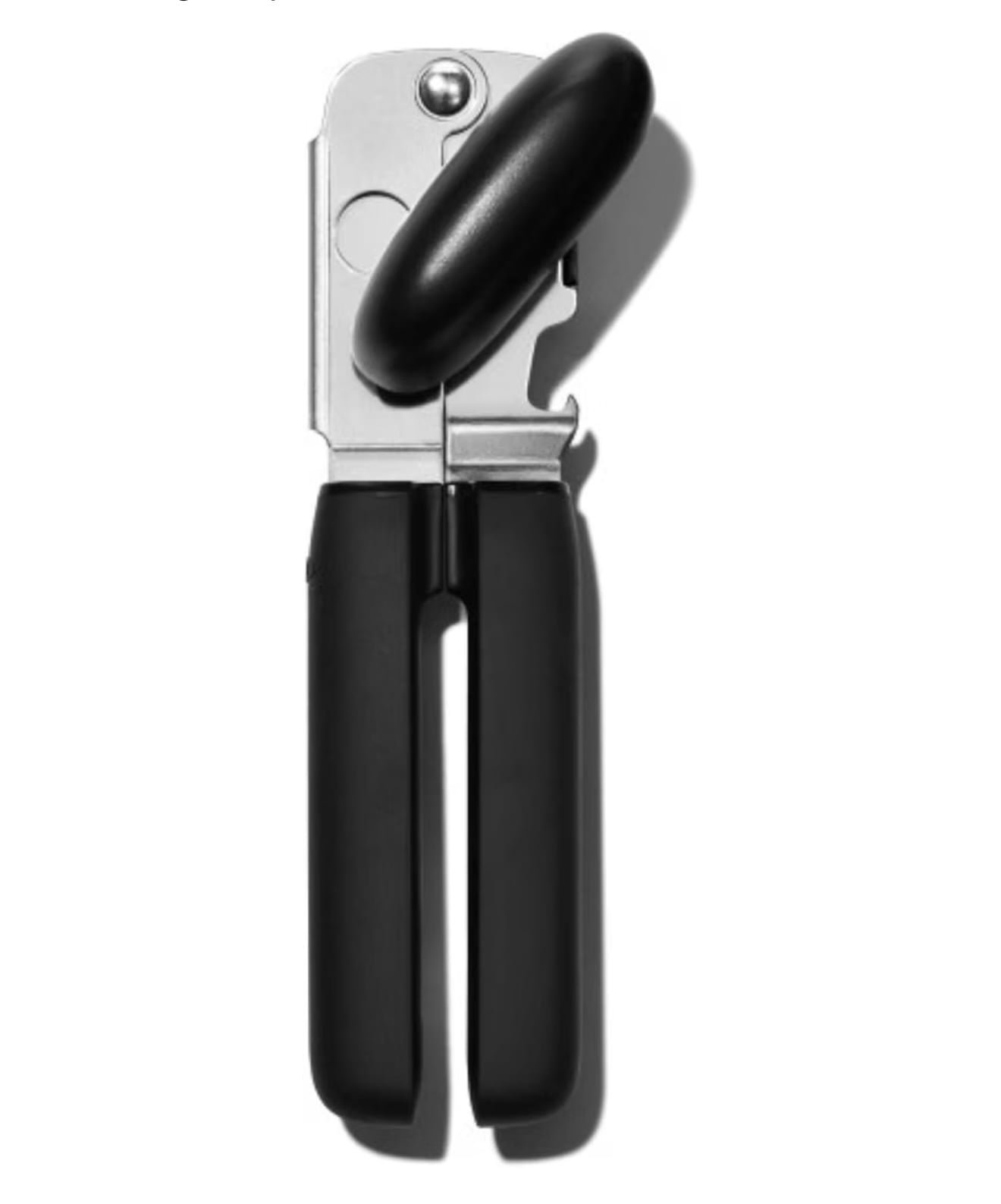
An ordinary manual can opener is a low-cost backup for accessing canned food when electricity is unavailable. Keep it near your no-cook food reserve.
How Much Drinking Water Should You Actually Store?
A family of four aiming for fourteen days has a 56-gallon baseline at one gallon per person per day. That does not remove the need to plan for additional cooking water, extra needs in heat, hygiene, pets, infant feeding, or medical equipment. For food that needs boiling, measure the actual water required by your own recipes.
Eight seven-gallon containers provide 56 gallons of storage capacity. But one full seven-gallon container weighs roughly 58 pounds of water before the weight of the jug, so accessibility, handling, and a safe storage location matter. Several smaller containers may make more sense than a few huge ones.
Follow water-storage cleaning, filling, labeling, and rotation directions from the manufacturer and local health authorities. A camping water filter cannot automatically make contaminated floodwater or water exposed to fuels and chemicals safe.
Practical add-on: Reliance Aqua-Tainer Seven-Gallon Water Container
A portable rigid container helps organize home emergency water storage. It is one piece of the overall supply, not enough on its own for a family of four.
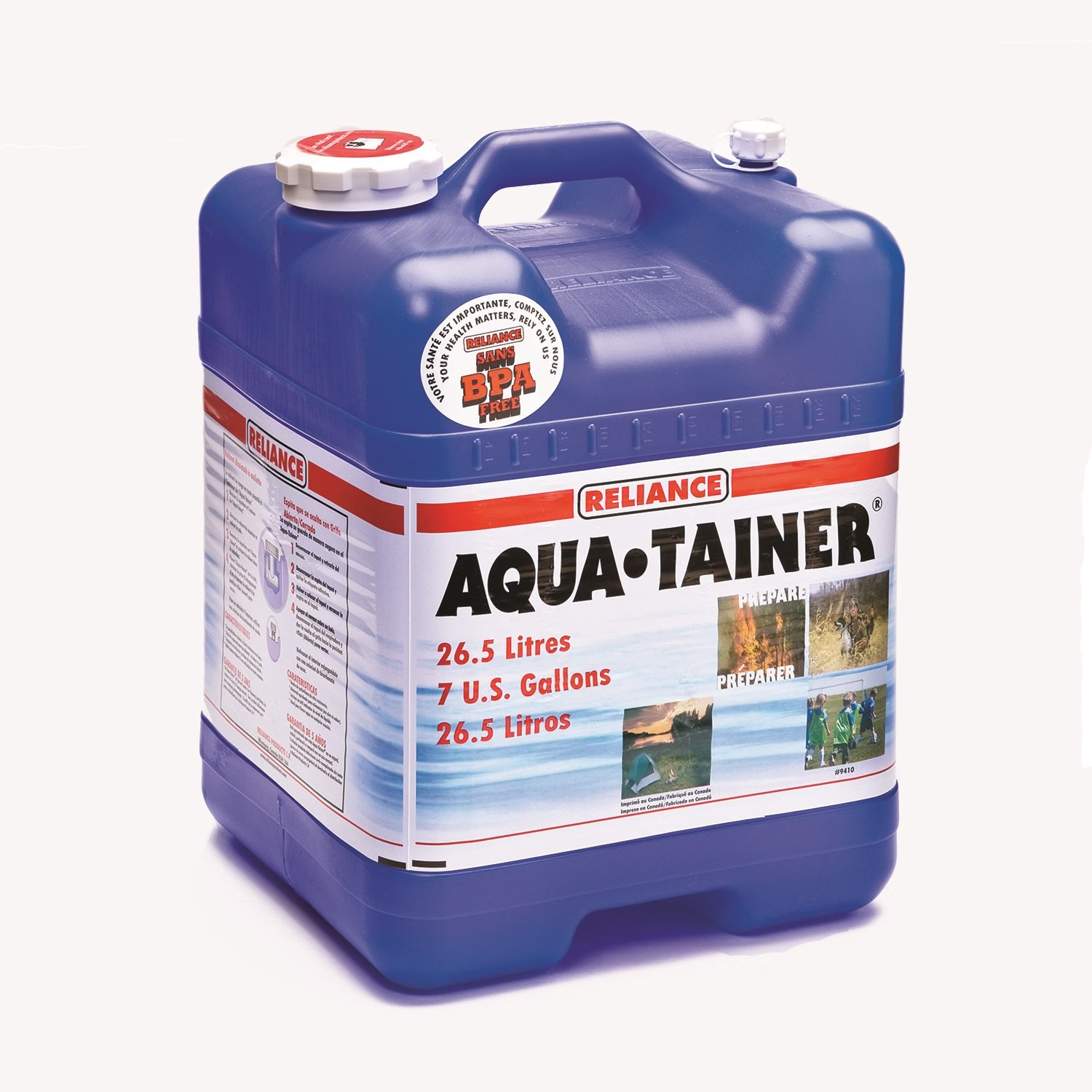
The seven-gallon Aqua-Tainer can be one component of a larger water-storage plan. A full container is heavy, and a family of four needs multiple containers for a fourteen-day supply.
Are Emergency Food Buckets Worth Buying?
Commercial emergency-food kits may simplify shopping, but 'servings' and 'days' on a label are not the same as nutritionally complete days of food for your family. Compare total calories, protein, package weight, required water, allergens, cooking needs, and actual cost per person-day.
The linked Augason Farms item is labeled as a 45-day kit for one person, with 281 servings and about 1,218 calories per day. Multiplying 1,218 × 45 gives approximately 54,810 total calories. Compare that with the illustrative 112,000-calorie target for four people over two weeks: the bucket alone supplies less than half that amount. The exact package label and its food mix control the real total.
It may be a useful supplement, but it is not a complete two-week food supply for a family of four at the planning intake used in this guide. Also check how much safe water it needs and whether cooking is required; not every freeze-dried food can be eaten without preparation.
Optional product: Augason Farms 45-Day Emergency Food Supply (One Person)
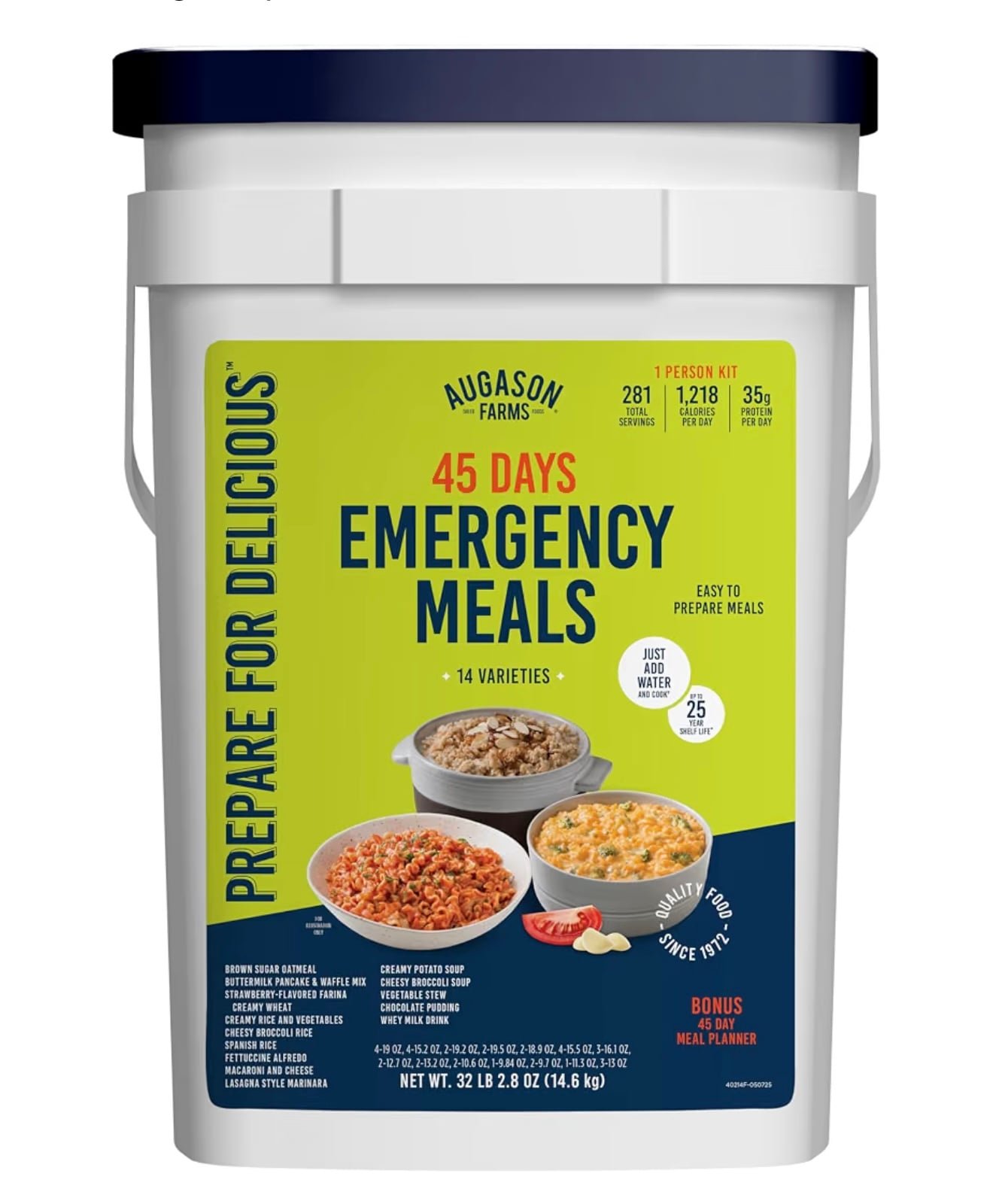
The pictured Augason Farms bucket advertises 281 servings and approximately 1,218 calories per day for one person for 45 days. Check actual package instructions, water requirements, and whether its calories fit your family's needs.
Grocery-Store Food vs. Freeze-Dried Meals
Factor | Ordinary grocery food | Premade emergency meals |
|---|---|---|
Everyday rotation | Easy if household eats the same foods | May be harder if contents are unfamiliar |
No-cook options | Canned food, spreads, crackers, and fruit can be useful | Many products require water and cooking |
Calories per package | Determined from familiar nutrition labels | Read total calories, not only servings |
Variety and dietary fit | Customizable by ingredient and brand | Limited by fixed kit recipes |
Storage life | Varies by the food and packaging | Varies by the exact kit and storage instructions |
A mixed approach often works best: enough ordinary groceries to cover most meals, a genuinely adequate no-cook reserve, and specialty meals only where they solve a specific problem. The most expensive bucket is not necessarily the most dependable meal plan.
How Much Should a Two-Week Food Supply Cost?
Prices change by store, location, sale, and household food preference, so avoid treating an unsourced dollar figure as a real shopping quote. The right budget is the sum of each item in your grocery list, plus any water containers, alternative cooking gear, and other gaps.
Price the exact quantities at a local supermarket, warehouse store, or preferred delivery service.
Check the amount of food you already have before buying duplicates.
Compare dollars per 1,000 usable calories, but also consider protein and other nutrition needs.
Add containers, food-safe water storage, fuel, and storage space to the true project cost.
Build the supply gradually with groceries you rotate into normal meals.
Where Should You Store Two Weeks of Food?
Choose a cool, dry, reasonably temperature-stable space free from pests and flooding risk. Many garages experience temperature extremes that reduce food quality. Group items by use, label the bins, and keep the no-cook section easy to reach.
Use a first-in, first-out system: eat older products regularly and replace them with new ones. Inspect packages and canned foods for damage, swelling, leakage, serious rust, and other warning signs. Never taste questionable food to decide whether it is safe.
For suitable dry staples such as appropriately dry white rice and wheat, an oxygen-barrier method may be useful. Our separate guide explains the limitations and food-safety precautions for oxygen absorbers and Mylar bags. Do not use oxygen absorbers to make moist foods room-temperature shelf-stable.
Cooking During a Power Outage: Safety Before Convenience
A portable propane stove is an option only when you have a suitable safe outdoor location and the right fuel. Never use propane camping stoves, charcoal grills, generators, or other fuel-burning outdoor equipment inside a home, garage, tent, or enclosed structure. Carbon monoxide can cause severe illness or death.
Follow the actual stove's manufacturer instructions for ventilation, clearances, safe placement, fuel storage, and fire safety. If flooding, heavy wind, smoke, or other conditions make outdoor cooking unsafe, your no-cook supply must carry the household until conditions improve.
Optional outdoor cooking equipment: Coleman Even-Temp 3-Burner Stove
The linked Coleman is a three-burner model—not the two-burner stove originally considered. Its additional burner may help with family meal preparation when outdoor cooking is appropriate. Fuel, compatible cookware, and safe use requirements are separate considerations.
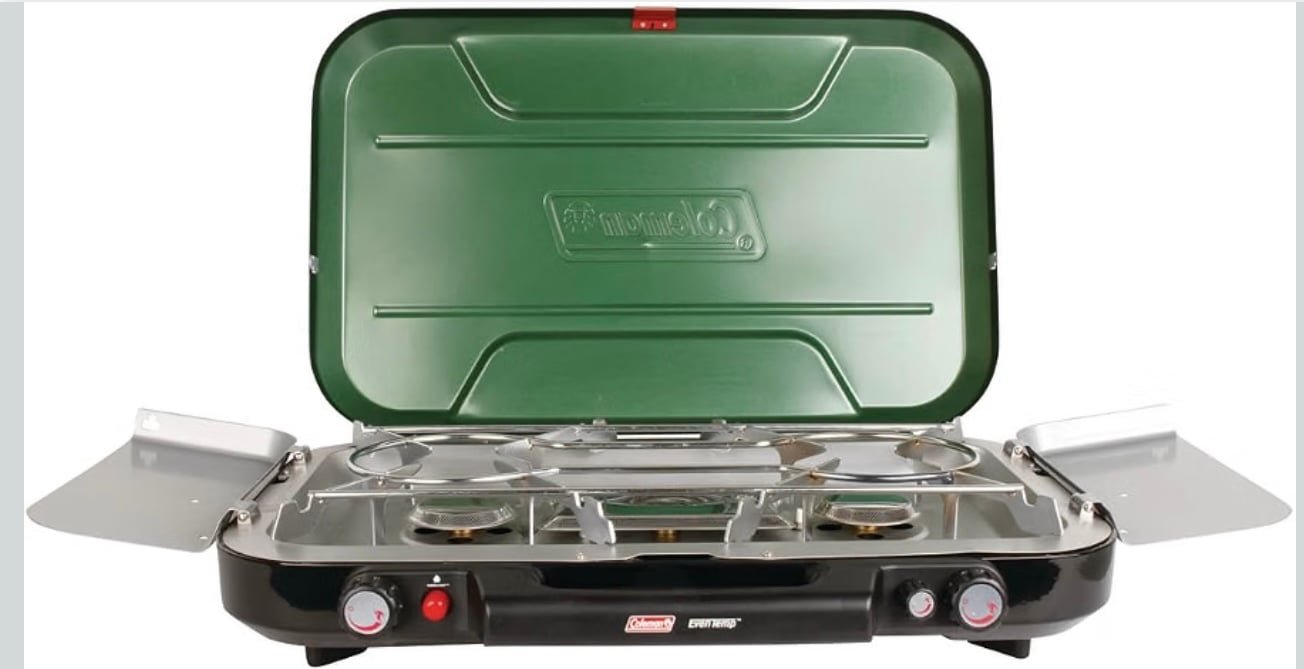
A three-burner camping stove is an outdoor-only option for preparing rice, pasta, and other hot meals when electricity is unavailable. Never use fuel-burning stoves indoors or in an attached garage.
What Happens to Your Refrigerator and Freezer?
During a power outage, do not assume perishable food is safe indefinitely. CDC guidance says that an unopened refrigerator generally holds a safe temperature for about four hours, while a full freezer may hold for about 48 hours and a half-full freezer for about 24 hours if kept closed. Actual appliance temperatures, food temperatures, and time determine safety.
Use appliance thermometers where practical and check current public-health guidance before deciding whether to keep refrigerated or thawed food. When in doubt about potentially unsafe perishable food, throw it out instead of relying on smell or appearance.
Reference: CDC: Keep Food Safe After an Emergency.
Adjust Your Food Plan for the People and Pets in Your Household
Children and teens: estimate age-appropriate meals and calories rather than treating all four people as identical adults.
Allergies and restricted diets: replace peanut butter, dairy, or other unsuitable foods with safe alternatives of comparable nutritional value.
Medical needs: plan for any prescribed dietary restrictions, safe storage of medicines, and electricity-dependent medical equipment.
Infants: account for safe formula preparation, infant foods, and additional clean water.
Pets: calculate food and water separately from the baseline human amounts.
Mobility and access: use shelf placement and containers that the household can actually open and carry.
Printable-Ready Checklist: Make This Your First Shopping Trip
Calculate your household's actual food energy and dietary needs for fourteen days.
Set aside a minimum water-storage baseline, then add for cooking, climate, pets, and medical needs.
Review the fifteen grocery categories in the table above and enter exact product quantities and label calories.
Assemble a minimum three-day no-cook reserve with enough food for everyone.
Buy a manual can opener if you lack one; test it before storing it.
Decide whether you can safely cook outdoors; otherwise prioritize more no-cook foods.
Label and rotate the pantry and set a recurring inventory reminder.
Practice a day using only stored food and your emergency cooking or no-cook plan.
Frequently Asked Questions
How much food should a family of four store for two weeks?
A model of 2,000 calories a day per person works out to 112,000 calories total, but that is an example rather than a universal requirement. Adjust for the actual people involved, ensure nutritional variety, and count total package calories.
How much water is needed for four people for fourteen days?
Using one gallon per person per day gives a baseline of 56 gallons. Increase it for extra cooking water, medical needs, heat, pets, and other specific demands.
Can our family live on one emergency food bucket?
Not necessarily. Read the total calories, protein, servings, recommended intake, and water and cooking requirements. The Augason Farms one-person 45-day product discussed above does not on its own meet our illustrative four-person, fourteen-day energy target.
Should we buy dry or canned beans?
Both have a place. Dry beans pack efficiently but need safe water, fuel, and cooking time. Canned beans are already cooked and offer better no-cook flexibility where their labels permit consumption without heating.
What if we have no way to boil water?
Prioritize your ready-to-eat reserve and safely stored drinking water. Do not depend on dry rice, pasta, or freeze-dried meals without an adequate, safe preparation method.
How often should I check the emergency food pantry?
Review it at least a couple of times a year and after any major household change. Follow each product's storage guidance and rotate foods through your regular meals.
Make a Family Food Plan That Survives Real Conditions
The real goal is not a dramatic shelf of matching buckets. It is an inventory you can locate, food you can safely prepare, enough water, and a plan that accounts for every household member. Start with familiar groceries and a realistic no-cook reserve. Add specialized gear only where it solves a genuine gap.
Next, read our 72-Hour Emergency Kit Checklist, learn how to store dry food using oxygen absorbers and Mylar bags, and explore Emergency Food & Cooking in our Prepping hub.
Editorial Sources
American Red Cross Emergency Survival Kit Supplies; Ready.gov Food Planning; CDC Food Safety After an Emergency; CDC Carbon Monoxide Poisoning Prevention.
This post may contain affiliate links. We may earn a commission when you purchase through links on this site at no additional cost to you.


