
This article contains affiliate links. We may earn a commission from qualifying purchases.
As an Amazon Associate I earn from qualifying purchases.
Filling a few buckets with rice or beans can feel like a smart way to start an emergency pantry. But durable food storage is not about pouring dry ingredients into plastic and hoping they last twenty years. The biggest decisions are which foods are appropriate, whether the packaging really blocks oxygen, how much air remains, and whether you can produce a reliable heat seal.
This original guide walks through a practical method for properly dried pantry staples using food-grade foil-laminate Mylar bags, appropriately sized oxygen absorbers, and protective buckets. You'll learn the equipment, a repeatable step-by-step process, what to avoid, and six real product examples. We have not independently tested the linked products; confirm current specifications and package contents before ordering.
Affiliate disclosure: As an Amazon Associate, The All Guy earns from qualifying purchases. Some product links in this article are affiliate links.
First, the Food-Safety Rule You Cannot Skip
Oxygen absorbers are for appropriate low-moisture, shelf-stable food—not a shortcut for preserving moist or freshly cooked food. Utah State University Extension explains that reduced-oxygen packaging can create a botulism hazard when foods contain too much moisture. Its guidance calls for products that are dry, about 10% moisture or less, when packed airtight with oxygen absorbers.
Do not use this home dry-storage method for homemade jerky, wet foods, partially dried produce, cooked rice, leftover meals, or other foods whose moisture and storage safety have not been established. A food feeling dry to the touch does not prove it meets the moisture requirement. When uncertain, follow tested food-specific preservation advice instead.
See Utah State University Extension's food storage advice and its guidance on packaging foods.
What Is an Oxygen Absorber—and What Doesn't It Do?
A food-storage oxygen absorber is a sealed packet that usually contains iron-based material. Its contents react with available oxygen in an enclosed package. By reducing oxygen, a correctly used packet can slow oxidation and help limit oxygen-dependent insect activity in suitable dry foods.
The capacity label, such as 500cc or 2500cc, refers to the volume of oxygen the packet is designed to absorb—not the volume of the bag it belongs in. The food occupies most of the bag, while a variable amount of air remains between pieces of food and in the headspace.
It can reduce oxygen in a sealed, sufficiently dry food package.
It does not remove moisture, kill every microorganism, sterilize food, or make unsafe food safe.
It does not prevent all fat-related quality changes or guarantee a decades-long shelf life.
It does not make a leaky bag airtight. The packaging barrier and seal are essential.
The packet itself is not edible; keep it intact and discard it when opening the food.
Mylar Bags, Oxygen Absorbers, and Buckets: Different Jobs
Component | Its role | Common misunderstanding |
|---|---|---|
Foil-laminate Mylar bag | A heat-sealable barrier that limits oxygen, moisture, and light transfer | Not all shiny or zipper bags have equal barrier performance |
Oxygen absorber | Removes oxygen remaining inside an appropriately sealed package | Does not dry or sterilize the contents |
Protective bucket | Keeps the inner pouch upright and shields it from crushing, pests, and accidental damage | Ordinary bucket plastic is not a substitute for an oxygen-barrier liner |
Heat sealer | Creates the continuous seal at the top of the foil pouch | Zippers by themselves are not a reliable long-term oxygen barrier |
For many households, one-gallon packages are easier to rotate and open in normal cooking. Large five-gallon liners may cost less per pound of stored food, but opening one means the entire batch needs a new use or repackaging plan.
Product: One-gallon Mylar bags
The Wallaby one-gallon bags offer a way to divide a larger quantity of dry staples into smaller sealed units. Check the exact package's material thickness, seam quality, heat-seal instructions, and whether absorbers or labels are already included.
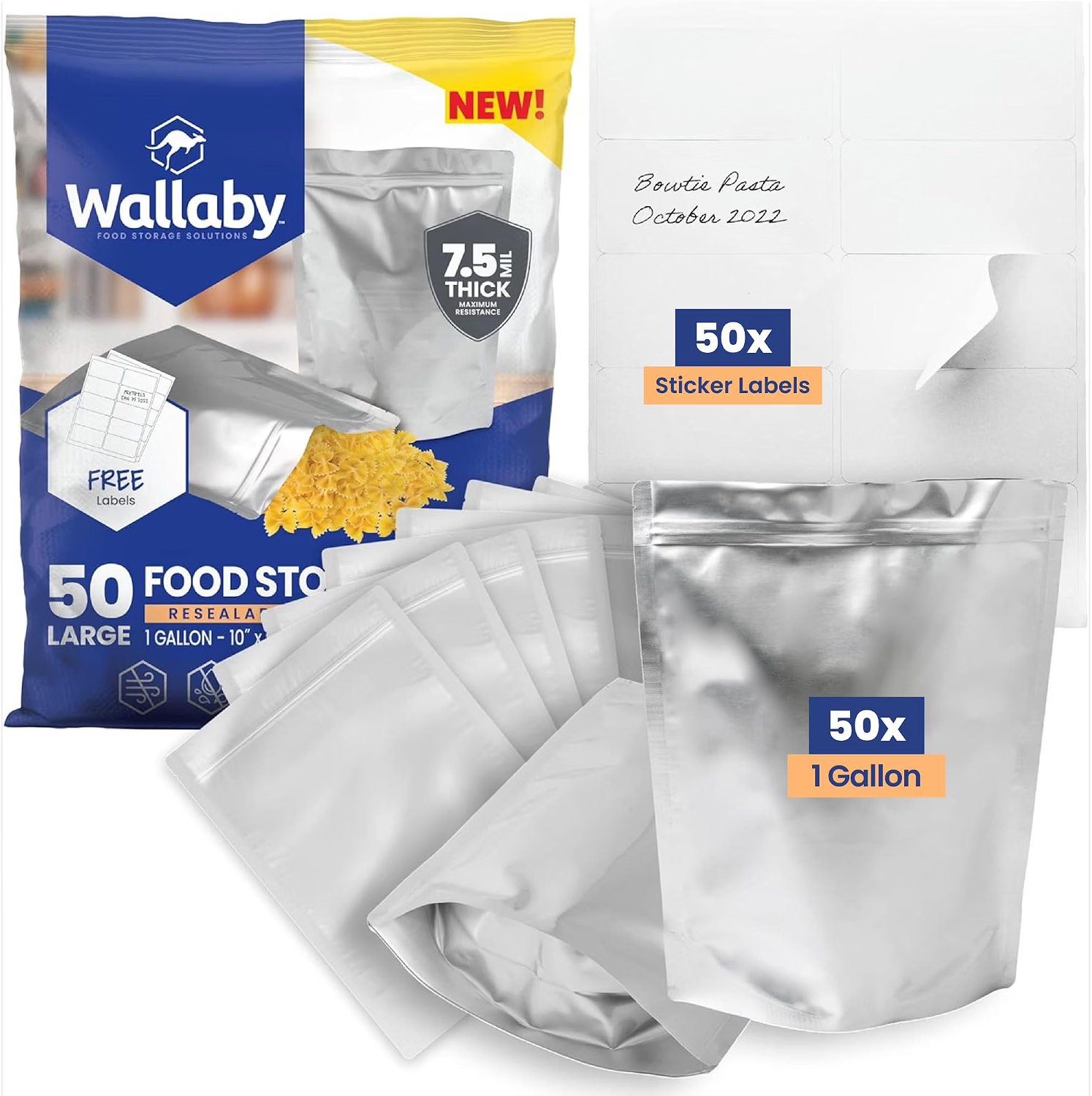
Smaller Mylar packages can make pantry rotation and batch sealing more convenient.
Product: Five-gallon Mylar liners
The selected five-gallon liner product is intended for larger containers. Buyers should verify width, foil-barrier construction, included oxygen absorbers, and the heat-sealing method. Some marketplace packs bundle 2500cc absorbers, so don't assume another full box is necessary.
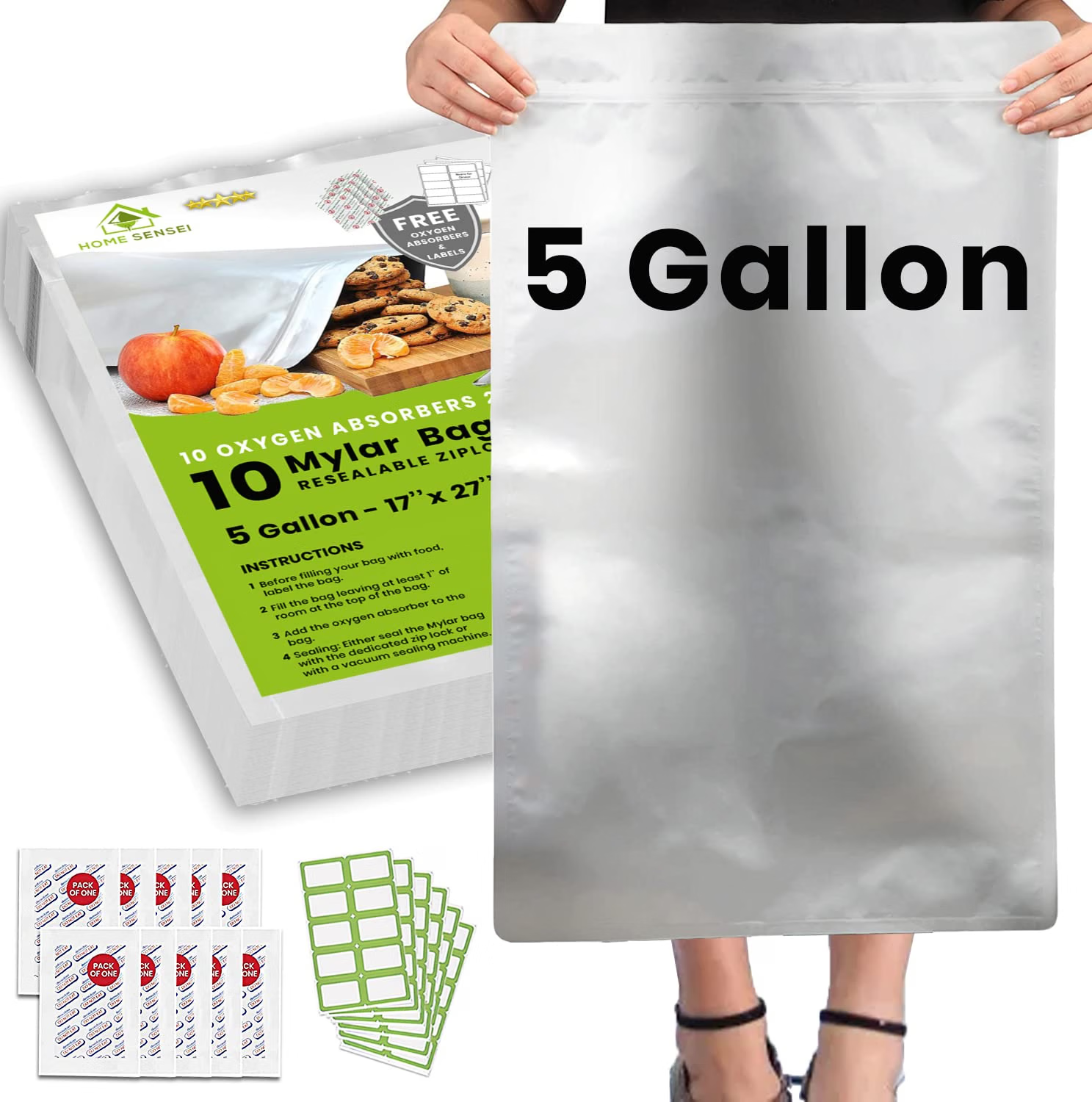
Five-gallon liners help create an oxygen barrier for bulk rice, wheat, and other suitable dry foods; check included absorbers before purchasing extras.
Product: Five-gallon storage buckets
A rigid bucket with a close-fitting lid protects the inner sealed pouch from rough handling and gives each batch a labeled location. If placing unwrapped food in direct contact with plastic, verify that the exact container is certified or otherwise specified as suitable for food contact; a product name alone isn't proof.
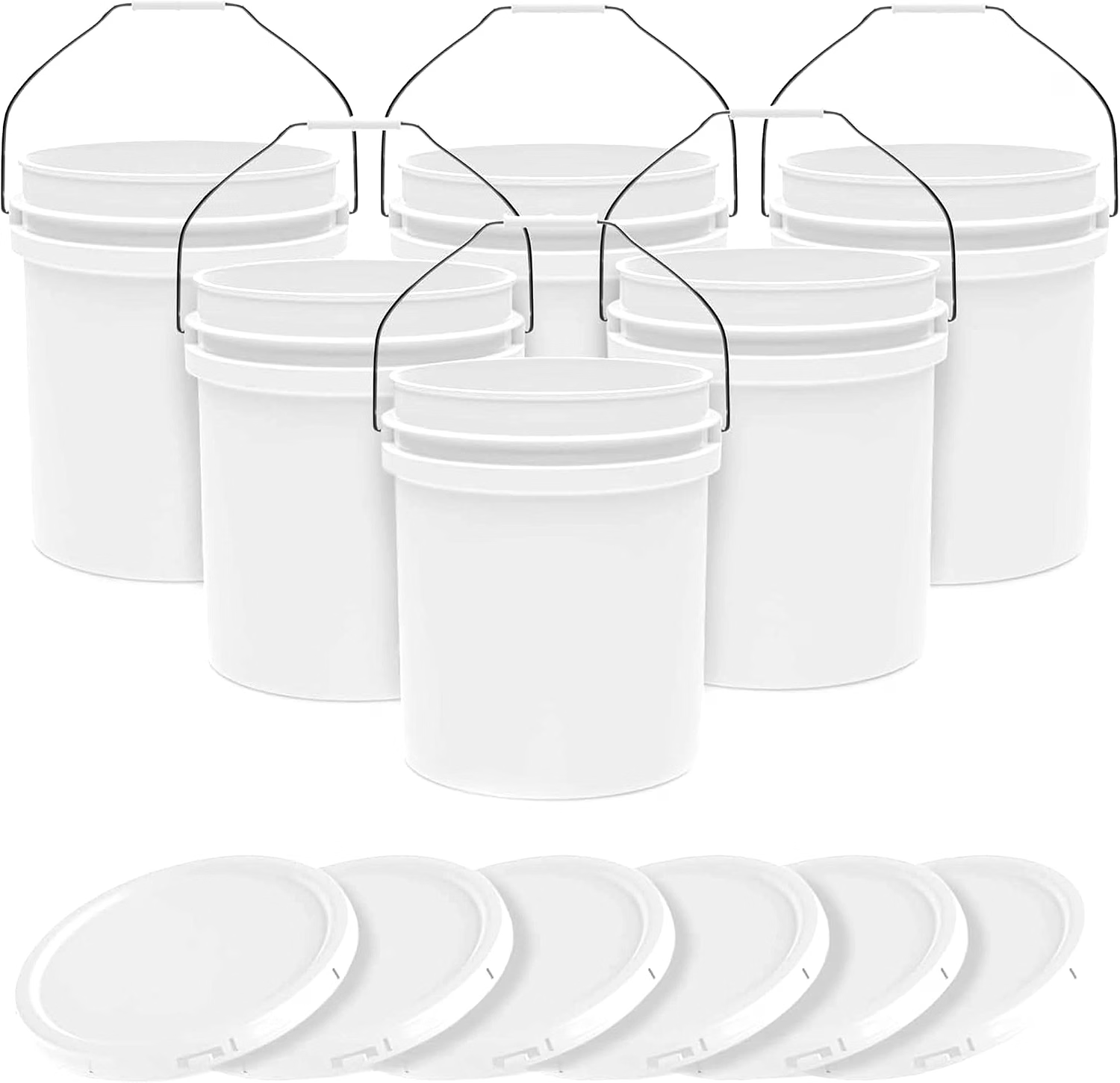
A protective bucket helps organize and protect sealed liners; verify food-contact suitability if storing food directly inside.
What Foods Work Best for This Method?
Focus on commercially dried staples whose moisture content and oil levels are appropriate for reduced-oxygen, room-temperature storage. More natural fat generally means greater potential for off-flavors or rancidity over time, even when you remove oxygen.
Food | General suitability | What to check |
|---|---|---|
White rice | Common low-fat long-storage staple | Dryness, intact packaging, cool storage, and household cooking needs |
Wheat berries | Often preferred to whole-wheat flour for bulk storage | Proper dryness and ability to grind or cook them later |
Dried beans and lentils | Practical protein and carbohydrate staples | Dryness and the fact that older beans may take longer to soften |
Plain dry pasta | Potentially suitable if truly dry and low fat | Shapes trap more air; verify ingredients and oxygen absorber capacity |
Rolled oats | Can be stored dry, though oil content limits some quality expectations | Dryness, date, and realistic rotation plan |
Brown rice, nuts, and seeds | Less suitable for multi-decade room-temperature storage | Natural oils shorten expected quality life |
Granulated sugar | Stores well when protected from moisture | Oxygen absorbers are not required and can make sugar harden |
Do not extrapolate from white rice to all grains, or from commercial freeze-dried foods to homemade dried produce. Different foods have different moisture, oil, and safety considerations. Utah State University Extension's food-storage packaging reference is a useful guide when selecting foods.
What Size Oxygen Absorber Do You Need?
Oxygen absorber sizing depends on oxygen trapped in the food and headspace, the package dimensions, and the manufacturer's specifications. Air is not all oxygen: roughly one-fifth is oxygen and the rest is mostly nitrogen, so an oxygen absorber won't make every finished Mylar bag look vacuum-packed.
Packing situation | Common shopping size | Important caution |
|---|---|---|
Smaller packets or jars | Small-capacity packets chosen for the actual package | Check the manufacturer's recommendation rather than guessing |
Approximately one-gallon pouch | 500cc is a commonly marketed option | Not a universal requirement; bulky food traps more air than dense grains |
Approximately five-gallon liner | 2500cc is a commonly marketed option | Confirm included packets, available air volume, and maker's guidance |
A manufacturer may recommend different sizes for dense rice compared with loosely packed pasta. Do not mistake these shopping categories for a validated chart for every food. The absorber cannot fix a leaking seal or unsafe moisture level.
Product: Wallaby 500cc oxygen absorbers
These packets are a potential fit for smaller Mylar projects. Opening only the quantity needed for a batch helps protect unused packets from air exposure. Confirm individual packaging, production date, included indicator guidance, and the maker's sizing instructions.
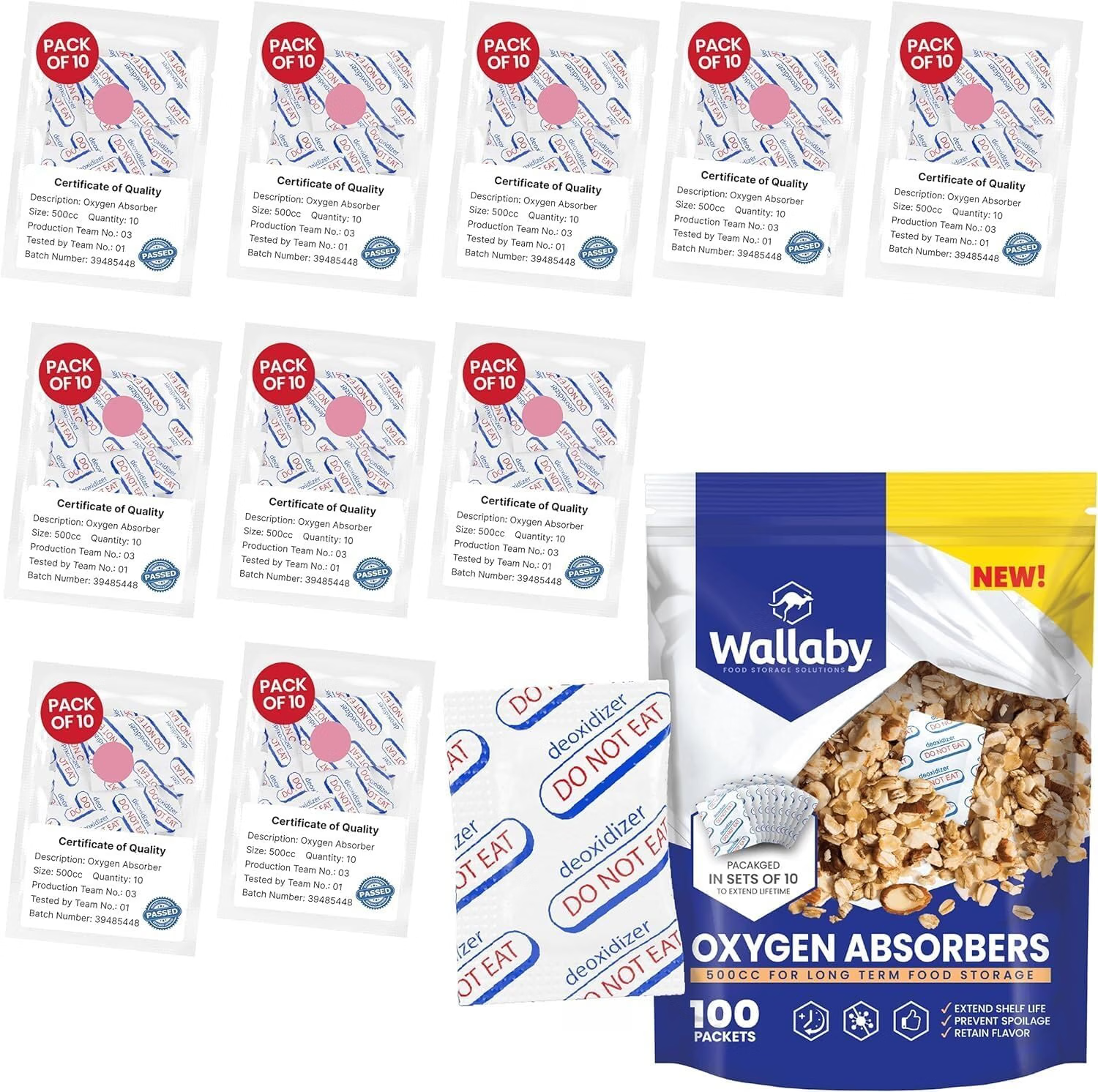
500cc absorber packets are one option for smaller dry-food storage packages; match capacity to the headspace and manufacturer instructions.
Product: Wallaby 2500cc oxygen absorbers
Larger-capacity packets are marketed for bulk food-storage packages. Before buying, check whether the selected five-gallon Mylar bag bundle already includes its own absorbers; duplicates may add cost without adding meaningful value.
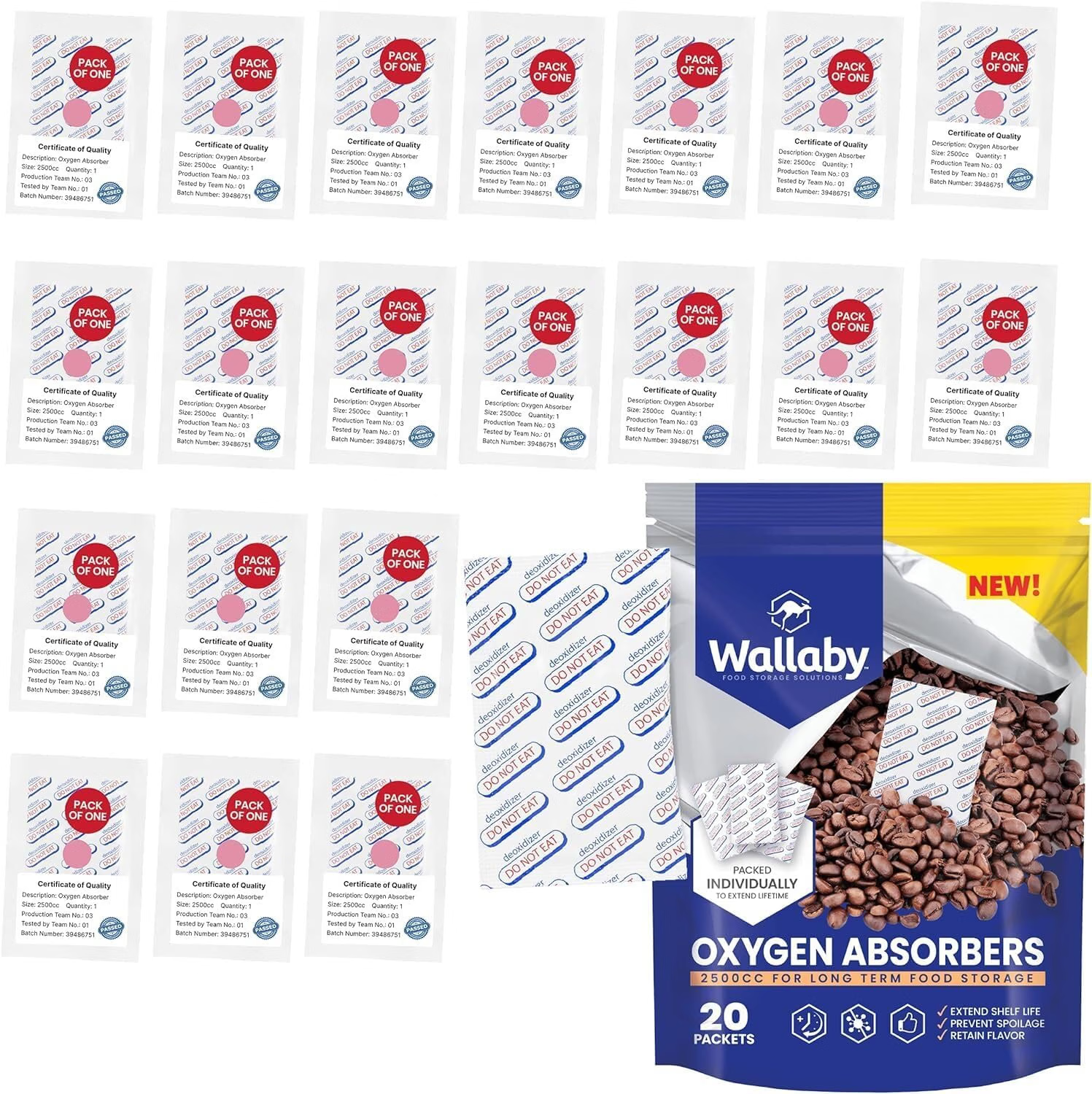
Higher-capacity oxygen absorbers may suit large dry-food pouches, but required capacity depends on contents and trapped air.
How to Pack Dry Food in Mylar Bags: A Repeatable 8-Step Process
Step 1: Pick a food that is truly suitable
For your first practice batch, choose commercially dried, low-fat white rice or another dry staple with documented suitability for oxygen-reduced storage. Avoid damp, oily, homemade, or uncertain foods. Check packaging dates, quality, and any allergen needs.
Step 2: Set up a clean, dry work area
Gather bags, food, preselected oxygen absorbers, the proper sealer, a marker, and storage containers. Clean and dry the workspace. Make sure no rice grains, powder, or food dust remain where the bag needs to seal.
Step 3: Choose a manageable package size
Place a one-gallon bag on the work surface or put a five-gallon liner inside its protective bucket so it stays upright. Test your sealer with the bag before filling it. You don't want to discover that the opening is too wide after the oxygen absorbers are exposed.
Step 4: Fill the bag and leave enough room for sealing
Fill with suitable dry food while leaving sufficient clean material above the fill line for an uninterrupted heat seal. Avoid sharp objects and excessive stretching of the pouch seams. More food is not always better if it prevents a reliable closure.
Step 5: Open and add the correct oxygen absorber
Follow the packet maker's instructions and work efficiently after opening. Put an appropriately sized intact packet into the dry food package and reseal unused absorbers promptly in a suitable oxygen-tight container or pouch. Don't leave all packets exposed during a long packing session.
Step 6: Heat-seal the bag correctly
Follow the Mylar bag manufacturer's instructions for heating temperature, pressure, contact time, and cooling. Make a complete, clean seal across the opening. Some bags have zipper closures for later everyday use, but the zipper is not a substitute for the original heat seal.
Step 7: Inspect for leaks and damage
After the seal cools, look for wrinkles, gaps, particles trapped in the seam, pinholes, and punctures. It may tighten as oxygen is removed; it may also stay somewhat puffy because nitrogen remains. A smooth-looking bag is not proof that it is safe, and a bag that isn't vacuum-tight isn't automatically a failure. If the seal is suspect, correct the problem using fresh absorbers as appropriate.
Step 8: Label and store in a cool, dry location
Mark the food, quantity, packaging date, and any batch details. Place the sealed pouch inside its protective bucket without damaging the corners, secure the lid, and store away from heat, moisture, sunlight, and pests. Keep records so you rotate and use what you store.
Will a 12-Inch Impulse Sealer Work for Five-Gallon Mylar Bags?
Not necessarily. The selected marketplace impulse sealer is advertised as a 12-inch model, while the selected five-gallon liner family is commonly listed with a wider mouth around 17 inches. A 12-inch heat bar cannot produce one uninterrupted full-width seal across a 17-inch opening in one pass. Do not advertise this particular pairing as a plug-and-play bulk-storage solution.
A properly rated larger heat sealer, or an alternative heat-sealing method expressly approved by the Mylar manufacturer, is the safer recommendation for a wide liner. Overlapping seal attempts require the bag manufacturer's instructions and should not be treated as a guaranteed airtight substitute. Always test the actual bag's sealing requirements before storing food.
Product: Impulse heat sealer for smaller packages
This 12-inch sealing-machine option may suit compatible one-gallon bags that fit its full heat bar, provided it reaches the pouch's required temperature and creates a strong seal. Check both the material compatibility and the equipment's effective sealing width before ordering.
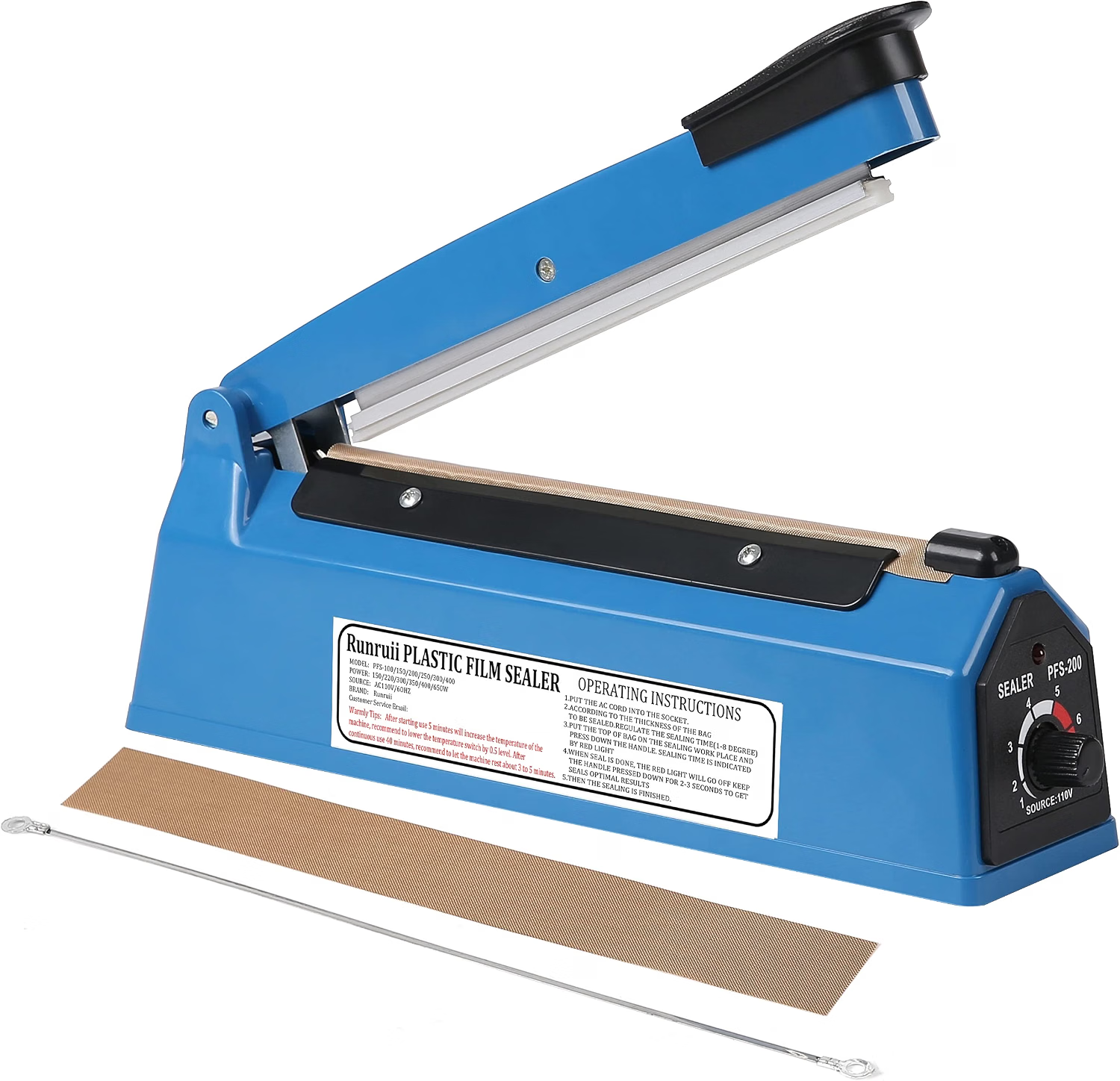
Check bag material and seal width carefully: a 12-inch sealer cannot create one uninterrupted full-width seal on a 17-inch five-gallon liner.
How Long Can Stored Food Last? Avoid the 30-Year Guarantee
The shelf life of dry staples depends on food type, moisture, fat content, temperature, oxygen exposure, packaging integrity, and storage conditions. There is no honest single expiry date for every food packaged in Mylar. Correct packaging can preserve quality longer, but it does not automatically turn an ingredient into a safe thirty-year supply.
White rice and whole wheat are often chosen for long-term pantry planning; foods with natural oils may have shorter practical quality lives. Beans may remain usable but become difficult to cook after prolonged storage. Label and rotate according to reliable food-specific guidance, inspecting packages before use.
Troubleshooting Problems Before They Become Emergencies
Problem | Likely issue to investigate | Better response |
|---|---|---|
Pouch leaks air when squeezed | Incomplete heat seal or puncture | Inspect the seal and pouch; repack safely with a fresh packet if needed |
Bag looks slightly inflated | Nitrogen remains after oxygen absorption | Do not use appearance alone as your seal-quality test |
Oxygen absorber packet was left exposed | Possible exhausted capacity | Follow manufacturer discard and replacement guidance |
Food clumps or seems damp | Moisture intrusion or unsuitable food | Do not assume it is safe to eat; discard if spoilage or contamination is suspected |
Bucket gets very warm in summer | Poor long-term storage environment | Move to a cooler, dry location when possible |
Five-gallon bag is wider than sealer | Seal bar is too short for full-width seal | Choose a correctly sized, compatible heat-sealing method |
Five Cost-Saving Decisions That Matter More Than Buying Every Gadget
Start with one modest batch of rice or other suitable dry food to learn the procedure.
Use one-gallon bags for food you open often; use bulk liners only for amounts your family will realistically consume.
Check whether the Mylar bag bundles already include oxygen absorbers and labels.
Choose a sealer that actually fits the width and material of the bag before buying a full box of liners.
Spend on proper food, water for preparation, a cooking plan, and safe storage space before buying specialty accessories.
Frequently Asked Questions
Can I place oxygen absorber packets directly in dry rice?
When the food is appropriately dry and the pouch is designed for food storage, a food-compatible absorber is generally placed intact inside the package. Never open or eat the packet itself, and follow the product and food-specific storage instructions.
Do Mylar bags need to be vacuum-sealed?
No. Oxygen absorbers remove oxygen, not all gases in the pouch. A complete heat seal and a suitable oxygen-barrier bag are more important than achieving a fully vacuum-packed appearance.
Can I use oxygen absorbers for flour?
Only with food-specific guidance confirming that the flour is suitable for the proposed storage method. Moisture, fat content, and quality life vary. Whole-wheat flour in particular has more natural oil and usually is a weaker candidate for very long storage than intact wheat berries.
Should I put oxygen absorbers in granulated sugar?
Usually no. Dry granulated sugar primarily needs moisture protection; oxygen removal is unnecessary and can cause hardening. Refer to a reputable food-storage guide for packaging that specific ingredient.
Will oxygen absorbers preserve homemade dehydrated meat?
Do not assume so. Homemade jerky or other meat can have residual moisture and requires tested processing and storage methods. Reduced oxygen at room temperature can increase food-safety risks. Use validated food-specific preservation instructions instead.
Can I use the same absorber in another bag?
Do not rely on previously exposed or used absorbers having their original capacity. Choose fresh packets from packaging stored as instructed by the maker.
Do I really need a bucket if I'm using Mylar?
A properly sealed, durable foil pouch is the primary oxygen barrier. Buckets add protection and organization, particularly for bulk heavy foods or storage areas where the bags could be punctured.
Can I seal a 17-inch Mylar liner with a 12-inch impulse sealer?
Not in one continuous pass. Choose a compatible wider sealing device or a manufacturer-approved alternative rather than assuming overlapping seals will meet the packaging requirement.
Build Your Emergency Pantry With Confidence
A good emergency pantry is not a photo of sealed buckets. It is food your household can safely store, identify, cook, and eat when ordinary shopping isn't possible. Start with dry staples that fit this method, verify absorber sizing, check bag and heat-sealer compatibility, and label the results. Practice with a small batch before scaling up.
Explore our Long-Term Food Storage topic, Emergency Food & Cooking resources, and 72-Hour Emergency Kit Checklist. Visit the Prepping hub for related preparedness guides.
Independent Safety and Storage References
Utah State University Extension — How Can I Get the Most Out of My Food Storage?
Utah State University Extension — Packaging Foods
Be Ready Utah — Food Emergency Preparedness
Utah State University Extension — Food Storage for Emergencies
Read the original guidance from Utah State University Extension, USU food packaging information, and Be Ready Utah's food page. Product images and affiliate links illustrate relevant equipment; they are not certifications of food-safety performance.
This post may contain affiliate links. We may earn a commission when you purchase through links on this site at no additional cost to you.


