
This article contains affiliate links. We may earn a commission from qualifying purchases.
As an Amazon Associate I earn from qualifying purchases.
A water outage is one of those emergencies that sounds manageable until somebody needs to cook dinner, brush their teeth, wash a cut, or make a baby bottle. You might have food, flashlights, and a first-aid kit ready, but without safe water, that food may be difficult to prepare and basic hygiene becomes harder. Emergency water storage for a family of four does not need to involve an expensive underground tank. It does need a real number, clean containers, a place to keep them, and a plan for getting the water out.
The short answer: The CDC recommends at least one gallon of water per person per day, with a minimum three-day supply and a two-week supply if possible. That works out to 12 gallons for three days, 28 gallons for seven days, or 56 gallons for fourteen days for four people. This is a baseline for drinking, cooking, and some hygiene—not a promise that 56 gallons will cover showers, flushing, pets, hot weather, or every medical need. CDC emergency water guidance.
This guide walks through exactly how to size a household supply, choose between portable jugs and larger tanks, set up a realistic 56-gallon plan, sanitize and rotate your containers, and avoid the mistakes that make emergency water storage less useful. Product recommendations are based on published specifications and intended use; we have not personally lab-tested these products.
How Much Emergency Water Does a Family of Four Need?
Start with the simple formula: people × days × 1 gallon = minimum planning gallons. It is easy to remember and makes it possible to scale a kit without guesswork. The CDC specifically advises at least three days of water and trying for two weeks when storage space allows. That guidance includes common household uses such as drinking, cooking, and brushing teeth.
Time without reliable water | Water per person | Baseline for four people | A workable container example |
|---|---|---|---|
3 days | 3 gallons | 12 gallons | Two 7-gallon jugs = 14 gallons |
7 days | 7 gallons | 28 gallons | Four 7-gallon jugs = 28 gallons |
14 days | 14 gallons | 56 gallons | Eight 7-gallon jugs = 56 gallons |
30 days | 30 gallons | 120 gallons | Multiple tanks or a larger fixed system |
This isn't a rigid personal hydration prescription. Children, active adults, pregnant people, people who are sick, and residents in hot climates may need more. Pets have their own needs too. If your backup foods are mostly dry rice, beans, powdered milk, or dehydrated meals, you'll also consume water preparing them. Before you buy containers, calculate those extra demands instead of treating the one-gallon rule as an unlimited allowance.
The difference between a minimum and a comfortable reserve
A minimum reserve keeps you from starting at zero. A comfortable reserve gives you margin when the water company cannot tell you when repairs will end, stores sell out of bottled water, or your family makes a mistake using water. We would rather see a dependable 56-gallon baseline with a realistic refill strategy than an impressive-looking tank nobody has cleaned or knows how to dispense from.
One gallon equals about 8.34 pounds of water. That means 56 gallons weighs roughly 467 pounds before the containers. This is why capacity is only half the decision. The location, ability to move filled containers, floor load, and access after an earthquake or flood matter just as much. Put heavy reserves on an appropriate ground-level surface, not casually on an upstairs shelf.
QUICK PICKS: BEST EMERGENCY WATER STORAGE CONTAINERS
Four storage formats for a family-of-four emergency plan: affordable portable jugs, modular stackable bricks, easy-to-move five-gallon cans, and high-capacity bulk storage. Recommendations are based on use cases and published specifications.
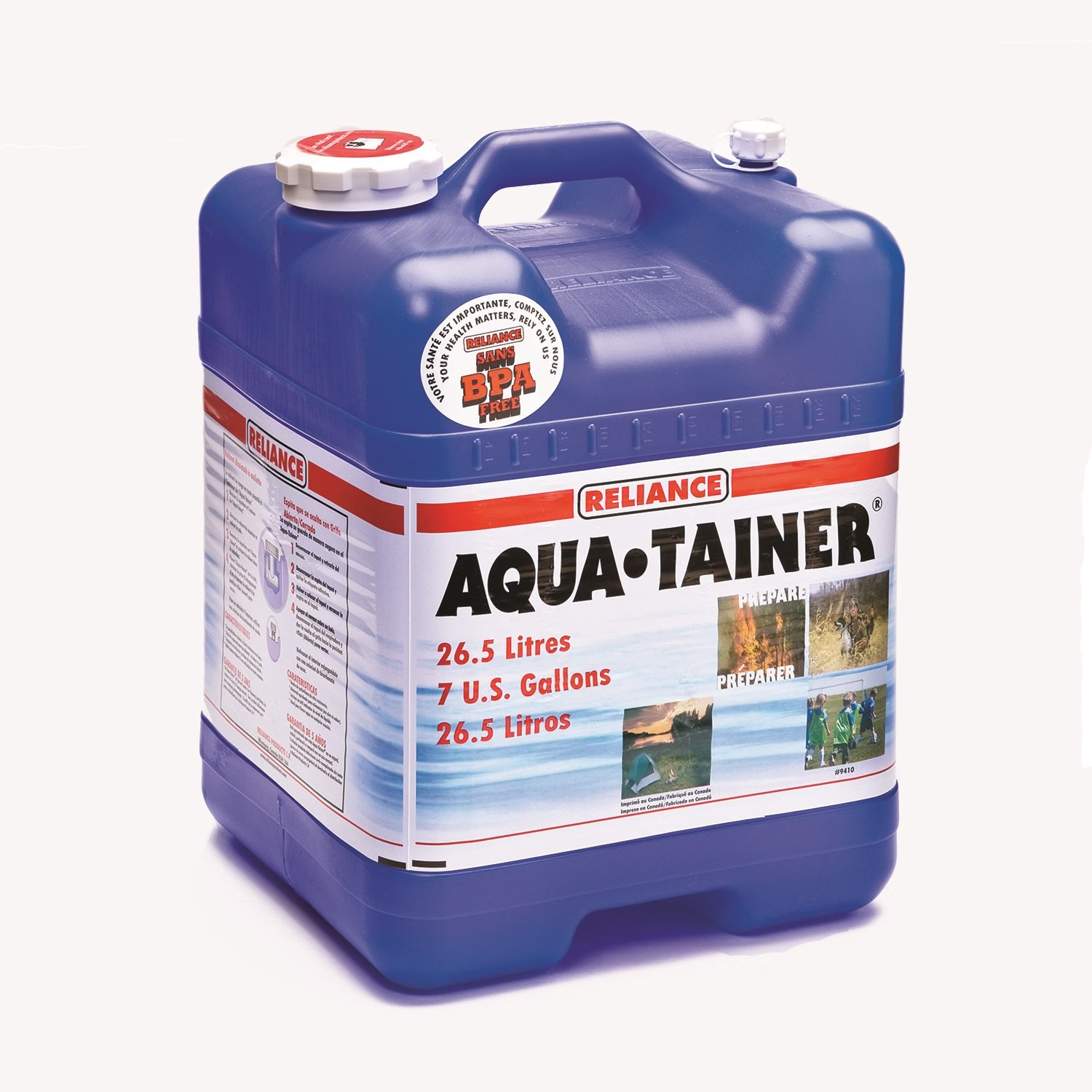
Reliance Aqua-Tainer 7 Gallon
Check Price on Amazon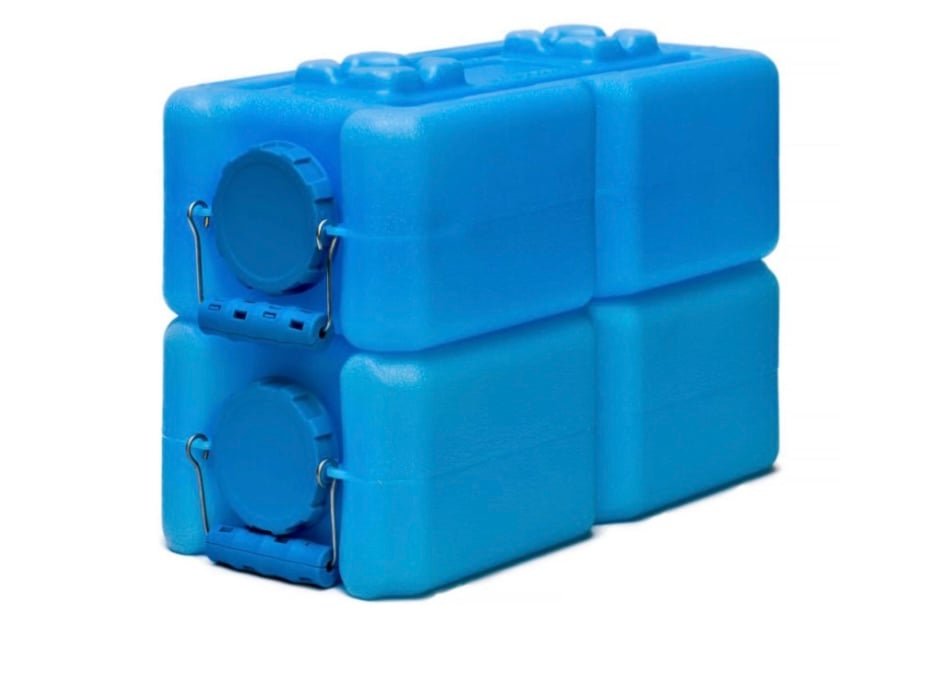
WaterBrick Standard Blue 3.5 Gallon (2-Pack)
Shop WaterBrick 2-Pack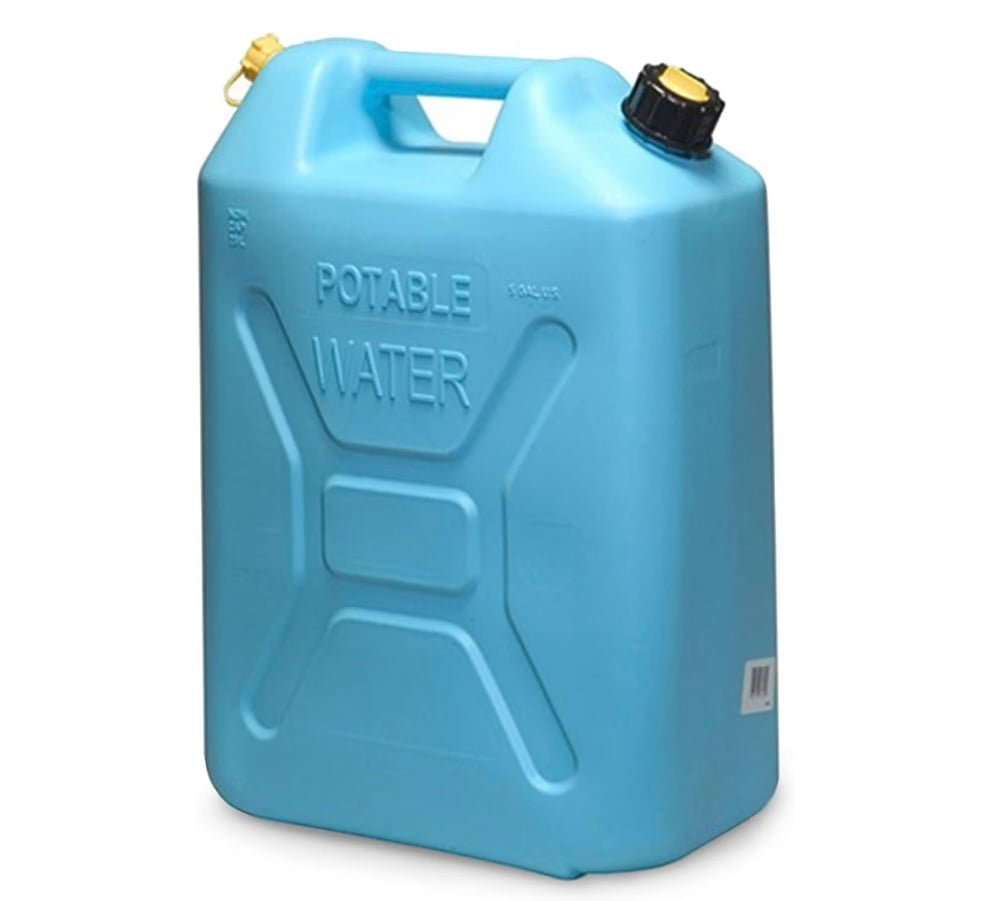
Scepter Water Can
Check Scepter Water Can on Amazon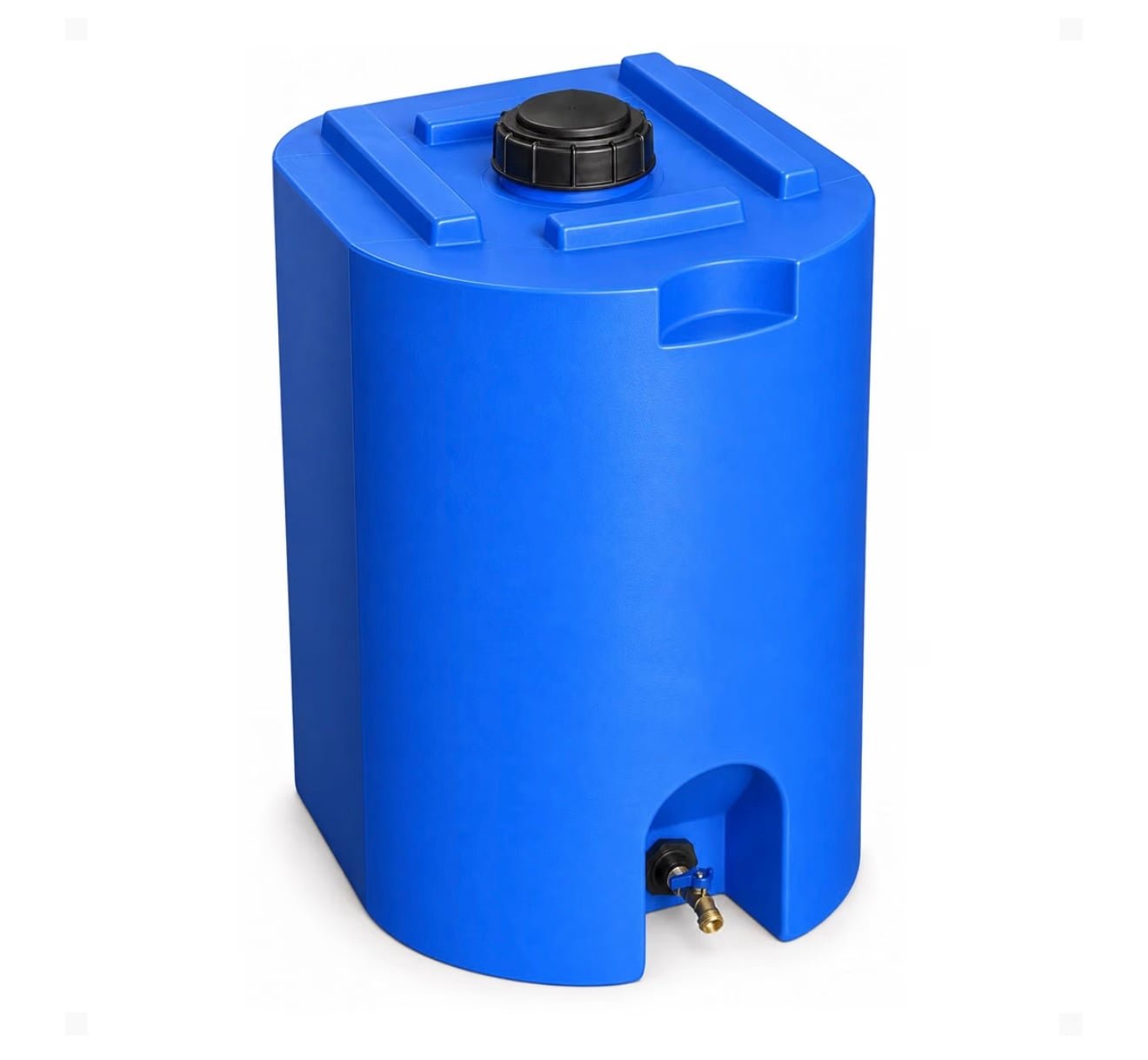
WaterPrepared 55-Gallon Tank
Check WaterPrepared Tank on AmazonThe best container is not automatically the biggest. Portable jugs are easy to move and divide between rooms. Stackable modules use tight storage space efficiently. Large barrels are attractive for volume but demand a permanent, reachable location and a clean way to dispense water.
We have four distinct options below. These are use-case recommendations based on product specifications, not personal durability tests. Product availability and prices can change.
Best Emergency Water Storage Containers Compared
Container | Nominal capacity | Containers to exceed 56 usable gallons | Best use | Main compromise |
|---|---|---|---|---|
Reliance Aqua-Tainer | 7 gallons | 8 | Affordable portable home storage | Heavy when full; do not stack full |
WaterBrick standard | 3.5 gallons | 17 (allows for usable-fill difference) | Modular storage in closets | More caps and individual containers |
Scepter water can | 5 gallons | 12 = 60 gallons | Portable handling and camping | More floor space per gallon |
WaterPrepared barrel | 55 gallons | 1 barrel plus another 1+ gallons | Stationary bulk reserve | Very heavy; pump/access planning |
1. Reliance Aqua-Tainer 7-Gallon: Best straightforward starting point
If we were building a family reserve in stages, a few food-safe seven-gallon jugs would be a practical place to begin. The Aqua-Tainer includes a molded handle, a removable spigot assembly, and a vent cap for dispensing. The format is familiar from camping, which is useful: equipment you already know how to use is more likely to work smoothly in an outage.
What it gets right: Seven gallons is a meaningful amount of water per purchase; the rectangular footprint is easy to organize; and the spigot makes it possible to fill a pitcher without repeatedly lifting the jug. What to consider: A full jug contains about 58 pounds of water, plus the jug itself. You should fill it where it will live rather than expecting every family member to carry it far. Reliance states that Aqua-Tainers can be stacked when empty, not when full. Reliance product guidance.
A complete 56-gallon plan would use eight. For an easier first purchase, begin with two for 14 gallons, then expand to four and eventually eight. Check seals and dispensing caps before an emergency, and store the replacement caps together.
2. WaterBrick 3.5-Gallon: Best for modular storage
WaterBricks are designed as relatively small, interlocking storage units. The manufacturer's standard model is rated for 3.5 gallons and measures about 9 by 18 by 6 inches, making it easier to divide a supply between closets and designated storage locations. However, the WaterBrick owner's manual advises allowing for about 2.67% usable-volume loss when filling. Seventeen units hold 59.5 nominal gallons, or roughly 57.9 gallons after that allowance; sixteen may be just under the 56-gallon target. For a full two-week supply using only WaterBricks, plan for at least seventeen, then verify the amount actually filled.
The benefit is individual handling. Each container is far easier to reposition than a full 55-gallon drum, and the smaller units let you access only what you need. The tradeoff is cost per gallon, extra lids to inspect, and the need to purchase a compatible spigot or transfer water carefully. The maker advises that ordinary users should not exceed four feet in stacking height. Follow its stacking and seal instructions, and verify usable fill capacity rather than assuming the container's marketing volume is exact. WaterBrick specifications and owner's manual.
3. Scepter 5-Gallon Water Can: Best for grab-and-move flexibility
A five-gallon water can offers a middle ground between the 3.5-gallon brick and larger seven-gallon jug. The Scepter five-gallon model sold for camping and emergencies uses a rigid polyethylene container with a pouring spout. With twelve full cans, you have 60 nominal gallons, providing four gallons beyond the 56-gallon baseline.
The appeal is simple handling and portability, especially when you want a few filled containers for a vehicle, workshop, or separate part of the house. The drawback is that you need more individual containers and a planned storage area. Five gallons of water weighs about 42 pounds before the container. Inspect the cap, spout, and intended potable-water use before purchase; do not confuse drinking-water cans with visually similar fuel cans. Scepter retail specifications.
4. WaterPrepared 55-Gallon Tank: Best for a stationary bulk reserve
For a garage, utility room, or suitable ground-floor storage location, a purpose-made 55-gallon drinking-water tank can consolidate most of the two-week supply in one place. WaterPrepared offers a 55-gallon tank intended for water storage. A single 55-gallon tank is one gallon short of the 56-gallon baseline, so pair it with bottled drinking water or another container, and preferably more margin than that. WaterPrepared 55-gallon tank listing.
The appeal is fewer individual containers. The concern is access and weight: 55 gallons alone weighs approximately 459 pounds. Once positioned and filled, it is effectively stationary. You also need to plan dispensing, a compatible pump or spigot, leak containment, and seasonal cleaning before the water is needed. Check the tank's drinking-water suitability and manufacturer instructions. A rain barrel is not automatically a drinking-water barrel.
Our Recommended 56-Gallon-Plus Setup for a Family of Four
Rather than putting every gallon in one barrel, we like a mixed setup that leaves useful water available if part of the house is inaccessible or a container develops a leak. Below is an example—not the only correct combination.
Storage element | Quantity | Water |
|---|---|---|
Reliance 7-gallon portable jugs | 4 | 28 gallons |
WaterBrick 3.5-gallon containers | 7 | 24.5 nominal gallons |
Two additional small 3.5-gallon containers | 2 | 7 nominal gallons |
Total | 13 containers | 59.5 gallons nominal (~58.7 adjusted) |
This gives you 28 gallons in seven-gallon jugs and 31.5 nominal gallons in nine smaller WaterBricks. Applying WaterBrick's 2.67% volume allowance, the combined plan is roughly 58.7 usable gallons, leaving a modest buffer above 56. Check your actual filled quantities; there is nothing magic about this ratio. Eight seven-gallon jugs also reach 56 nominal gallons and might cost less. Keeping some commercially bottled water makes immediate drinking easier if a spigot breaks.
Another option is seven seven-gallon jugs (49 gallons) plus one or more smaller containers to reach 56. Do not buy an expensive modular system just because it looks organized. Measure your available floor or shelf space, compare the actual installed cost per usable gallon, and choose what you can safely handle.
Make room for real household needs
Run the math again if someone needs extra drinking water, there is a pet, temperatures are high, or the food plan relies on cooking with water. Put a separate line on your inventory sheet for pets and specialty needs. If you store powdered formula, follow current public-health and product instructions on safe preparation; water handling is especially important for infants and vulnerable household members.
Our two-week emergency food supply guide shows how water demand increases when your pantry depends on rice, pasta, and dehydrated ingredients. It is better to coordinate both inventories than to finish two separate checklists that do not agree.
How to Choose a Safe Water Storage Container
For potable water, the CDC recommends containers approved for food contact and suitable for storing drinking water. Look for a secure opening, a cleanable interior, manufacturer confirmation of drinking-water use, and a way to dispense without dipping unwashed hands into the container. Opaque containers help reduce light exposure, but they do not replace cleaning and safe water filling.
Never repurpose a container that previously held bleach, pesticides, fuel, cleaners, or other toxic chemicals, even if you believe you have rinsed it completely. Those containers are not worth the risk. Likewise, do not assume a used industrial tote or garden rain barrel is safe for drinking water without documented food-contact suitability and known history.
Check the lid gasket and spigot before investing in eight identical containers. A bad seal can leak slowly or allow contamination. Fill and test one container before buying an entire system, especially if it will sit for months. If the container needs a separate wrench, pump, stand, or spigot, count that accessory in the true price.
Portable versus stationary storage
Portability matters in a home evacuation; stationary capacity matters in a long outage. A 55-gallon barrel and a small backpack hydration bottle serve completely different purposes. The barrel may protect a household that can remain at home, but it cannot follow your family into a vehicle. Keep a portable supply accessible as part of your 72-hour emergency kit checklist.
Don't store your entire water supply where one broken pipe, flood, chemical spill, or collapsed storage rack could destroy it. On the other hand, don't distribute containers so widely that you forget their dates or cannot inspect them. A centralized inventory with water stored in two sensible locations is often a useful compromise.
How to Clean and Fill Emergency Water Containers
Start with water that is already safe to drink. Unopened commercial bottled water is the CDC's preferred emergency source. For self-filled storage, use a clean food-grade container and follow the manufacturer instructions. Do not assume that a water filter or an attractive container turns contaminated source water into safe drinking water.
The CDC provides a straightforward cleaning and sanitizing process for containers being filled at home:
Wash the container with soap, and rinse thoroughly with water.
Make a sanitizing solution using one teaspoon of unscented household chlorine bleach containing 5%–9% sodium hypochlorite in one quart (four cups) of water. This is for sanitizing the empty container—not a recipe for dosing drinking water.
Pour the solution into the container, close it tightly, and shake so it contacts all interior surfaces.
Wait at least 30 seconds, pour out the sanitizer, and allow the container to air-dry.
Fill with clean, safe water, close the lid tightly, and label it DRINKING WATER with the filling date.
The same rules apply to removable spigots, caps, and any transfer equipment: keep them clean. Avoid touching inside surfaces after sanitation. These steps are paraphrased from the CDC's container-cleaning instructions. If the container manufacturer gives additional care instructions, follow them as well.
Should you add bleach to stored tap water?
Do not confuse three different tasks: sanitizing an empty container, storing already-potable water, and disinfecting water that may contain disease-causing germs. They are not interchangeable. Properly treated municipal drinking water stored in a clean container may not need additional treatment. Extra bleach is not automatically an improvement and incorrect dosing can create problems. If the source water is unsafe, consult the EPA's emergency water disinfection guidance, the product label, and local health advisories.
If a public water system issues a boil-water or do-not-drink advisory, follow the exact advisory. For chemical contamination, boiling and common disinfection methods do not remove heavy metals, salts, fuels, and many other chemicals. Use an approved alternative source instead of attempting to make suspect water safe by guesswork.
Where to Store 56 Gallons Without Ruining Your Space
Most families cannot dedicate an entire room to water, and they should not need to. Think in terms of a low, stable footprint, a consistent inspection routine, and a storage location that remains accessible during an emergency. A utility closet or temperature-controlled ground-floor area can be more useful than an attic shelf. Large tanks demand extra attention to floor load and containment.
The CDC advises keeping stored water cool, ideally 50°F–70°F, out of direct sunlight, and away from gasoline, pesticides, and similar substances. Excess heat can accelerate container deterioration, and freezing can damage containers or fittings. Avoid leaving an entire year-round water reserve in a hot garage if you have a cooler alternative.
For seven-gallon Aqua-Tainers, remember Reliance's specific prohibition on stacking them full. For WaterBricks, follow the maker's cross-stacking directions and height limit. A container that is theoretically stackable is not permission to pile it above the safe handling height for your household. Keep heavy equipment and loose tools from falling onto the storage area.
A simple layout
Place the most frequently used emergency containers near a stable, waist-level dispensing surface while keeping their filled weight supported safely. Store the bulk of the supply low, where people can reach it without lifting a 60-pound load from overhead. Keep a small clean pitcher or food-safe dispensing hose alongside the storage kit.
If you choose a barrel, decide how to get water out before filling it. A sealed barrel is not convenient if your only plan is to tip it over. Purchase compatible dispensing equipment, test it with potable water, and protect the outlet from dirt between uses.
How Often Should You Rotate Emergency Water?
For water you fill yourself, the CDC says to replace it every six months. For commercially bottled water, follow the date on the package and the manufacturer's storage instructions. Keep a simple calendar or label system; the goal is a routine, not an annual scramble to remember which container was filled when.
There is one important product-specific exception here: Reliance says the water in its containers should generally be changed at least every 90 days, depending on local water quality. Follow the stricter manufacturer instruction for that product rather than automatically applying six months to every jug. Reliance FAQ.
A workable rotation practice is to check the storage area monthly for leaks and damaged lids, review dates quarterly, and refill when the applicable manufacturer or public-health guidance requires it. While rotating, sanitize as directed, inspect seals, and test whether the dispensing spout is still usable. If water smells strange, a container looks compromised, or contamination is possible, don't rely on taste or appearance alone to decide it's safe.
Check | Suggested routine | What to look for |
|---|---|---|
Visual inspection | Monthly | Leaks, sun damage, cap condition |
Dates and inventory | Every 3 months | Replacement deadlines and missing gallons |
Reliance container water | Follow 90-day manufacturer advice | Empty, clean, refill as instructed |
Other self-filled storage | Follow CDC six-month guidance or stricter maker rules | Replace water and relabel |
Factory-sealed bottled water | Check printed dates | Packaging, storage damage and expiry |
Emergency Water Filters Versus Stored Drinking Water
A common preparedness mistake is buying a camping filter and deciding that water storage is no longer necessary. Filters can be useful, but they are backup treatment tools, not stored water. They require a source to filter, and different products remove different classes of contaminants.
A hollow-fiber backcountry filter may address many bacteria and protozoa, but not necessarily viruses, chemicals, or dissolved contaminants. Carbon can improve taste or reduce some chemicals depending on the tested design, but it does not guarantee safety from every threat. Always evaluate independent certification and the exact product's claims instead of assuming a popular outdoor brand makes any source potable.
For biological contamination, the EPA recommends boiling water at a rolling boil for at least one minute, or three minutes at elevations above 5,000 feet, when boiling is appropriate and official guidance allows it. Boiling kills many pathogens but does not remove heavy metals or many chemicals. If authorities warn against drinking water because of toxic contamination, bottled or otherwise verified safe water is the priority. EPA emergency disinfection instructions.
Think of your protection as three layers: safe stored drinking water first, a verified way to replenish it second, and an appropriate treatment method for supported sources third. None of those layers should be invented during the outage. Keep batteries, fuel, replacement filter elements, and necessary manufacturer instructions available if your system relies on them.
Five Mistakes That Undermine an Emergency Water Plan
Counting containers instead of gallons. A shelf full of empty or half-filled jugs is not a two-week reserve. Write down actual filled capacity.
Ignoring weight. Seven-gallon jugs are heavy and full barrels cannot be moved safely by hand. Plan placement before filling.
Using the wrong containers. A fuel can, chemical drum, or unverified rain barrel is not a shortcut to potable storage.
Forgetting the spigot and rotation schedule. A sealed tank you cannot dispense from is only partially useful. Old, poorly maintained water adds risk.
Assuming filtration removes everything. Pathogens and chemical contaminants are different problems; follow local advisories and the relevant product's validated capabilities.
A One-Weekend Family Water Storage Checklist
You can make meaningful progress without buying an entire 56-gallon system at once. Start by calculating a minimum, measuring a suitable storage area, and confirming which household members can lift or dispense from the containers.
Friday: Count household members and pets, calculate the three-day and fourteen-day gallon targets, and check your emergency food plan for water-intensive meals.
Saturday morning: Choose food-safe containers, inspect caps and gaskets, and secure a cool, stable storage area. Make sure a full container will actually fit in its designated position.
Saturday afternoon: Sanitize and fill your initial containers using public-health and manufacturer instructions. Label each with the date and quantity.
Sunday: Practice dispensing a gallon into a clean pitcher, make a simple inventory sheet, and set calendar reminders for inspections and replacement.
Next month: Add another container or case of commercial bottled water until you reach the target, then build a margin for pets, heat, cooking, or individual needs.
That last step is what turns preparation from shopping into readiness. The supplies are useful only if you can reach them, account for their condition, and use them without contaminating the rest.
Emergency Water Storage FAQ
Is 56 gallons really enough for four people for two weeks?
It is the basic one-gallon-per-person-per-day planning amount: four people times fourteen days equals 56 gallons. It is not a universal guarantee. Hot weather, pregnancy, illness, pets, and additional sanitation or cooking can require a higher reserve. Treat 56 gallons as a starting floor, not a maximum.
Can I store tap water in a seven-gallon jug?
Yes, when your tap water is known to be safe to drink and the container is approved for potable-water use, thoroughly cleaned and sanitized, and securely closed. Follow the source-water advisories in your area and the manufacturer's care instructions. Label the fill date and keep the container cool and shaded.
Can I stack full Aqua-Tainers?
No. Reliance explicitly says the Aqua-Tainer is stackable only when empty. Use a ground-level layout, a separate rack designed for the load, or a product specifically approved for stacking while filled. Do not copy the stacking setup of a different container model.
Does stored water expire after six months?
The CDC recommends replacing self-filled emergency water every six months. This is a proactive storage-maintenance guideline, not a claim that all water becomes dangerous on the following day. Some manufacturers specify shorter intervals; Reliance advises at least every 90 days. Factory-sealed water follows its labeled dating and storage instructions.
Can I use a 55-gallon rain barrel for drinking?
Do not assume so. Rain barrels may collect roof debris, animal waste, and other contaminants and may not be manufactured or previously used for potable-water storage. Choose a container documented as suitable for drinking water, fill it from a safe source, and follow official guidance about treatment.
Is a water filter enough instead of storing bottled water?
No. A filter requires a source of water and may not remove viruses or chemical contaminants, depending on its design. A stored emergency supply provides immediate access when taps are dry, source water is inaccessible, or an advisory restricts treatment options.
How much will 56 gallons weigh?
The water itself weighs about 467 pounds. Add the weight of containers, racks, or a storage tank. Spread the reserve appropriately on a safe structural surface and don't put large amounts of water on elevated shelving without verifying the load capacity.
Final Verdict: Start with Water You Can Actually Use
For most families starting from scratch, an initial pair of food-grade, seven-gallon portable jugs is a sensible first step; add more containers or factory-sealed water until the four-person two-week target reaches at least 56 gallons. If closet space is the real bottleneck, WaterBricks offer more modular storage. If you have a suitable permanent location, a 55-gallon drinking-water tank can hold nearly the whole baseline—but pair it with portable reserves and a dispensing plan.
Don't let the perfect purchase delay a functional minimum. A clean 12-to-14-gallon three-day supply that is filled, dated, reachable, and maintained is immediately more useful than a theoretical 100-gallon system still sitting in your shopping cart. Expand it deliberately to a fourteen-day reserve, then review your home's 72-hour emergency kit and long-term dry food storage plan so the whole preparedness system works together.
Primary safety references: CDC: Create an Emergency Water Supply; EPA: Emergency Disinfection of Drinking Water; Reliance Outdoors: Container FAQs; WaterBrick: Product Specifications.
This post may contain affiliate links. We may earn a commission when you purchase through links on this site at no additional cost to you.


