
This article contains affiliate links. We may earn a commission from qualifying purchases.
As an Amazon Associate I earn from qualifying purchases.
Portable solar panels can turn an overlanding power station into a practical off-grid charging system. Set up camp, position the panels in the sun, and restore some of the energy used by a 12V fridge, camp lights, phones, cameras and other electronics. But not all panels are interchangeable, and the largest panel is not automatically the best one for your truck.
Overlanding adds challenges that a backyard solar setup does not face: changing campsites, dusty trails, narrow storage spaces, shade from trees and unpredictable weather. A lighter folding panel can be worth more than an extra 100 watts on paper if you actually deploy it every day. Conversely, a heavy-duty suitcase may be the better choice for a long stay at a base camp.
This guide compares eight portable solar options ranging from 100W to 400W. Our recommendations are based on published specifications, electrical compatibility, portability and practical use cases, not a claim of hands-on testing of all eight products. We distinguish renewed and direct-manufacturer listings from new Amazon products and note model differences where relevant.
Affiliate disclosure: As an Amazon Associate I earn from qualifying purchases. The All Guy may earn commissions from eligible affiliate links at no extra cost to you. Some links go directly to manufacturers and are not Amazon affiliate links.
Quick picks: Which portable solar panel should you buy?
For most overlanders with a compatible portable power station, start with a 200–220W foldable panel. It provides a useful balance of daily harvest and packability. A 100W panel is reasonable for light loads and supplemental charging; a 400W panel is more attractive if you camp stationary for several days or need to recover a larger battery.
Panel | Best for | Rated watts | Approx. weight | Open-circuit voltage (Voc) |
|---|---|---|---|---|
EcoFlow NextGen 220W Bifacial Portable Solar Panel | Best overall for compatible power stations | 220W | 15.4 lb | 21.5V |
Anker SOLIX PS200 Bifacial 200W | Best for compatible higher-voltage Anker setups | 200W | Verify variant | 57.6V nominal |
Jackery SolarSaga 100X (Renewed) | Best compact Jackery value option | 100W | Verify listing | Verify model label |
BLUETTI PV200 | Best conventional 200W foldable | 200W | 16.1 lb | 26.1V |
Renogy 200W Suitcase with Voyager 20A Controller | Best for compatible auxiliary batteries | 200W | 34.4 lb (kit manual) | Check panel label |
ALLPOWERS 100W Foldable Solar Panel | Best budget candidate | 100W | Verify listing | Verify model label |
EcoFlow 400W Lightweight Portable Solar Panel | Best high-output option to watch | 400W | 22.5 lb | 39.3V |
Goal Zero Boulder 200 Briefcase | Best heavy-duty rigid suitcase | 200W | 42 lb | 21.8V |
Rated output is measured under controlled test conditions. Weight and specifications are manufacturer figures for the indicated variants, where they could be confirmed. Verify the actual model, maximum voltage, supplied connector and warranty on the listing and nameplate before ordering. The 200W Renogy kit includes a charge controller; it is not the 220W lightweight suitcase.
How we selected these panels
We prioritized usable solar output relative to size and weight, ease of setup, viable ways to connect to the intended battery system, and weather-resistance claims that are meaningful for a ground-deployed camping panel. We also considered product availability and how much extra equipment a buyer may need. We did not assign invented field-test scores or treat advertising efficiency percentages as daily energy output.
Before picking a panel, use our overlanding solar sizing calculator to estimate your starting wattage. If your battery capacity is not established, use the portable power station sizing guide and calculator first.
1. EcoFlow NextGen 220W Bifacial Portable Solar Panel
Best overall for compatible power stations · 220W rated output
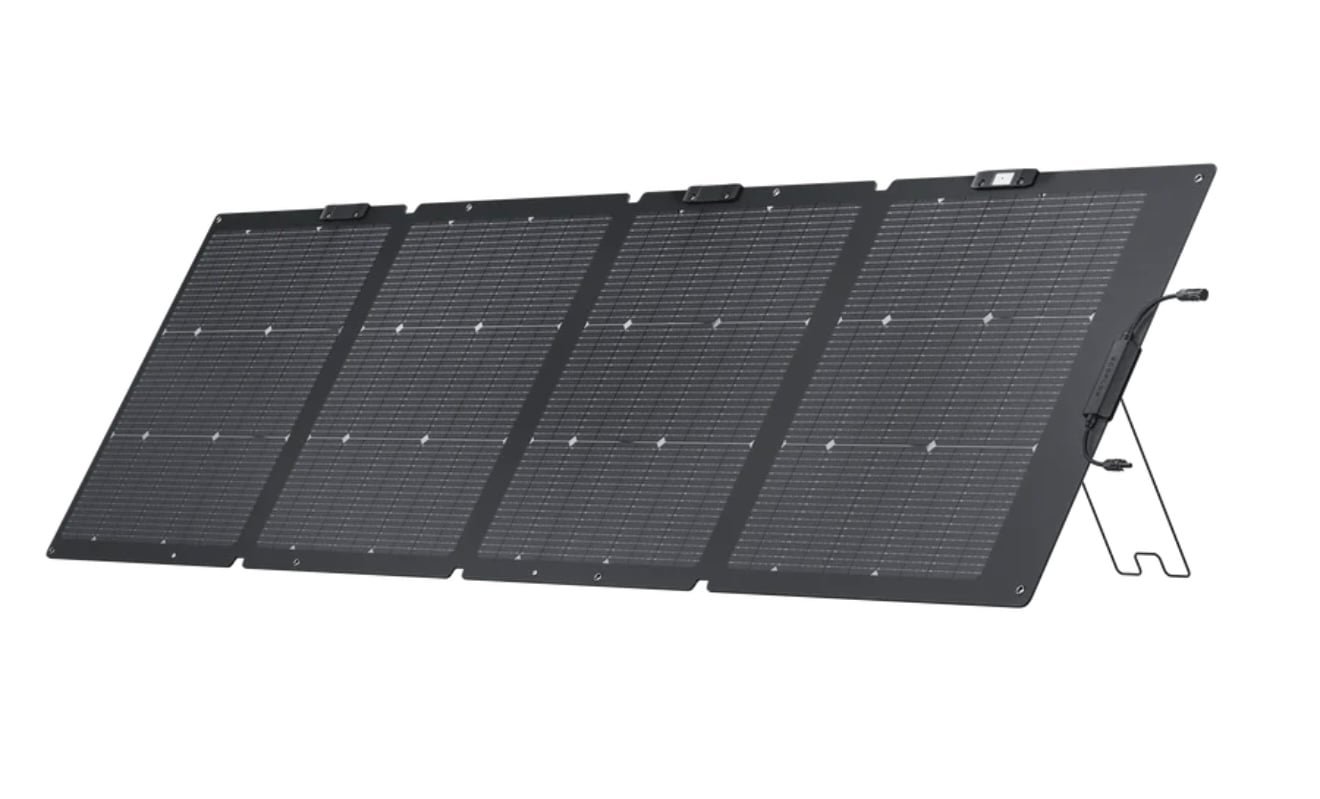
The NextGen 220W Bifacial is our overall research-based pick for a compatible setup because it does several useful things at once: it has a manageable 15.4-pound folded design, an adjustable 30–60° stand and an integrated angle guide. EcoFlow specifies 220W on the front and 175W on the rear under their respective test conditions. Do not add those numbers together and expect 395W in the field.
The rear-facing cells can capture reflected light when the panel is positioned with enough space beneath it. Snow, pale ground and other bright surfaces may increase the gain; dark soil, shade or a blocked rear surface may reduce it substantially. The panel's published operating voltage is 18.4V, with 21.5V open circuit and 11.9A front-side operating current. It includes an XT60i charging cable, but check the station's approved solar interface.
For many truck and SUV campers, this is the kind of panel that can be deployed quickly without giving up an entire cargo bay. It still needs an adequate sunny footprint, and wind, limited daylight and station input limits can reduce output.
Specifications: EcoFlow published 220W specifications.
Pros
Balanced wattage and weight for stationary camps
Bifacial design and adjustable integrated stand
IP68-rated panel; angle guide helps positioning
Trade-offs
Extra rear-side harvest depends on reflected light
Requires a compatible solar input and cable
Direct manufacturer link rather than an Amazon listing
2. Anker SOLIX PS200 Bifacial 200W
Best for compatible higher-voltage Anker setups · 200W rated output
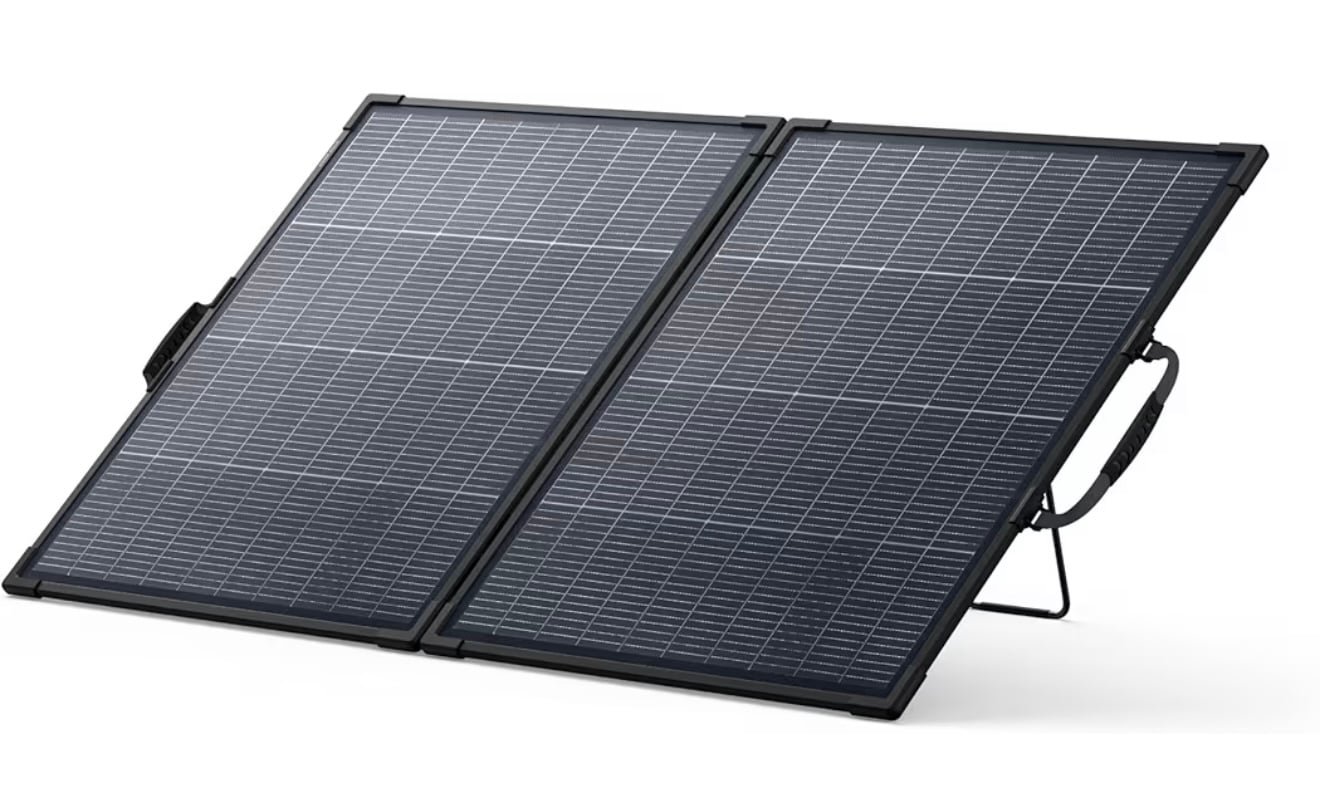
The newer Anker SOLIX PS200 Bifacial is a distinct panel from earlier PS200 and 531 models. Its bifacial 200W design is intended for portable camping and RV charging, with a manufacturer-listed IP68 rating. It is a compelling option where the connected station is explicitly compatible with its relatively high output voltage.
The most important buying detail is electrical rather than cosmetic: Anker lists an open-circuit voltage of 57.6V and an operating voltage around 48V. That is much higher than many conventional 100–220W panels. Some smaller power stations have solar input limits below this. Even a station with a nominal 60V upper limit needs careful consideration because cold weather can raise open-circuit voltage. Verify the exact panel tolerance and cold-weather voltage against the actual station manual; do not assume any Anker-branded station accepts it.
If your station is designed for this panel, the foldable form factor and high operating voltage make it worth comparing. If it is not, a lower-voltage panel is the right purchase regardless of brand loyalty.
Specifications: Anker SOLIX PS200 Bifacial support specifications.
Pros
200W rated bifacial design
IP68-rated panel
Potential fit for compatible higher-voltage stations
Trade-offs
High open-circuit voltage rules out some stations
Do not confuse with older 200W PS200/531 versions
Confirm cold-weather headroom and included connectors
3. Jackery SolarSaga 100X (Renewed)
Best compact Jackery value option · 100W rated output
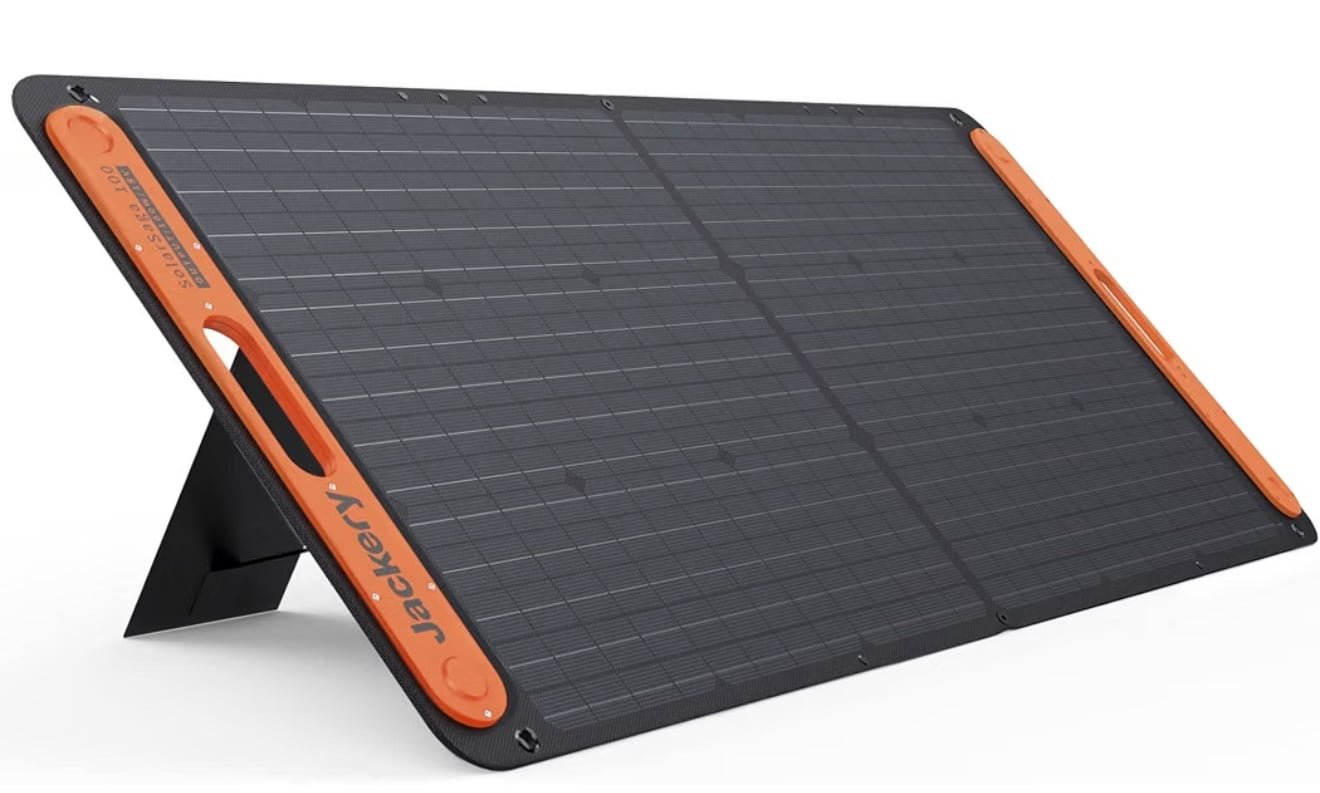
The SolarSaga 100W family is a practical choice when compact storage and simple deployment matter more than maximum output. The linked Amazon listing is specifically the SolarSaga 100X sold as Amazon Renewed. It should not be represented as a brand-new current-generation SolarSaga 100W or as the newer 100 Air. Verify the condition, warranty, included cable and return terms on the actual listing.
A 100W panel can be useful for short trips, a small station and topping off electronics, especially when the vehicle can recharge the battery while moving. If you depend on solar alone to replace a refrigerator's daily power draw, however, a single 100W panel may leave you with too little reserve on cloudy days.
Jackery has several SolarSaga 100W variants with different connectors, protection ratings and specifications. Match the model on the nameplate to your Explorer's input requirements and do not rely on the name SolarSaga alone. Buy new if you prefer predictable manufacturer warranty coverage.
Specifications: Jackery support: model identification.
Pros
Small, easy-to-stow output class
Useful for lighter daily loads and supplemental charging
Renewed listing may offer savings
Trade-offs
Renewed rather than new; condition and warranty vary
100W is limited for prolonged fridge use
Confirm exact model and connector before ordering
4. BLUETTI PV200
Best conventional 200W foldable · 200W rated output
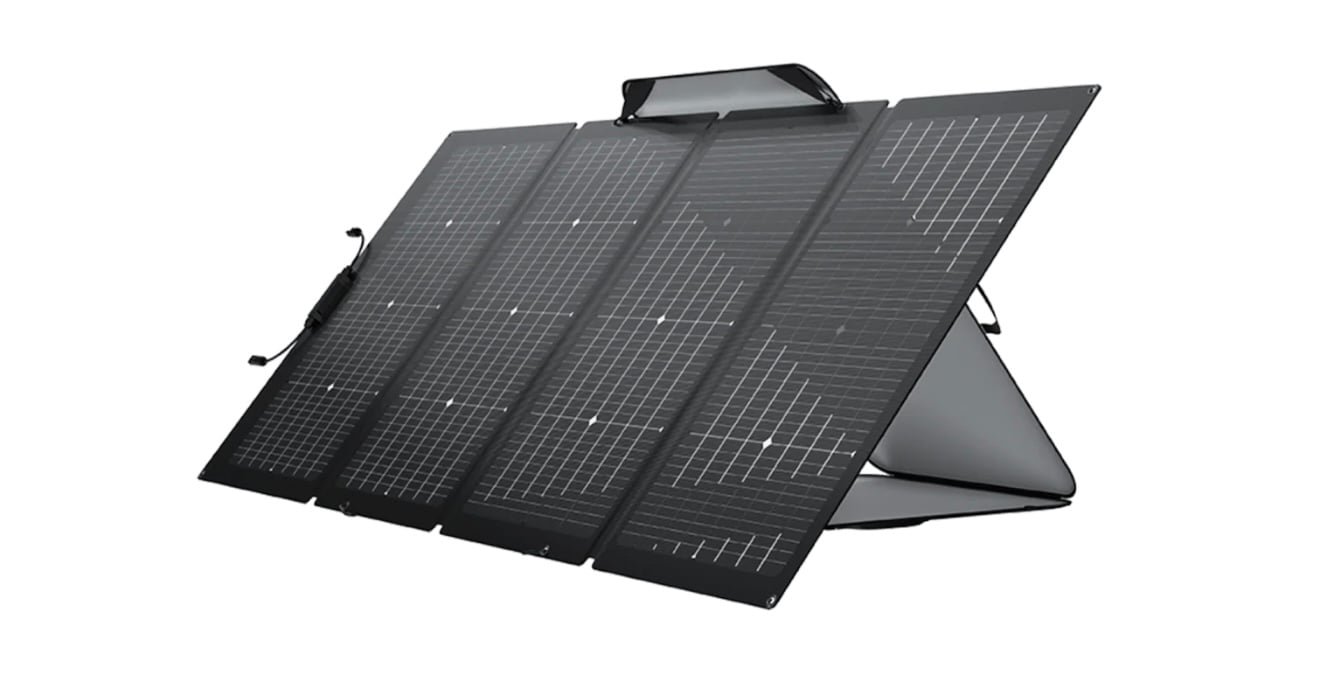
The BLUETTI PV200 is a conventional foldable 200W panel with an ETFE surface, a standard MC4 connector and published electrical specifications that make compatibility research straightforward. It weighs about 16.1 pounds. BLUETTI lists 26.1V open-circuit voltage, 20.5V operating voltage and 9.7A operating current.
The PV200 is a reasonable match for many smaller and midsize power stations when the receiving input accepts its voltage and current. However, the specific BLUETTI model matters: some higher-voltage stations require more than one panel to reach the minimum solar input voltage. A single PV200 is not automatically compatible with every BLUETTI product just because the name matches.
The PV200 is marketed with a splash-resistant junction box. Treat that as incidental weather protection rather than permission to leave the panel in heavy rainfall, standing water or wet connectors. The direct link supplied for this guide is a BLUETTI product page; confirm current purchase options and availability.
Specifications: BLUETTI PV200 specifications.
Pros
Well-documented voltage and current
MC4 connectors make appropriate adapter options possible
Useful 200W class without rigid glass weight
Trade-offs
Keep protected from sustained rain and water exposure
Some higher-voltage stations need a different array
Direct manufacturer listing may not show retail stock
View Product Details at BLUETTI
5. Renogy 200W Suitcase with Voyager 20A Controller
Best for compatible auxiliary batteries · 200W rated output
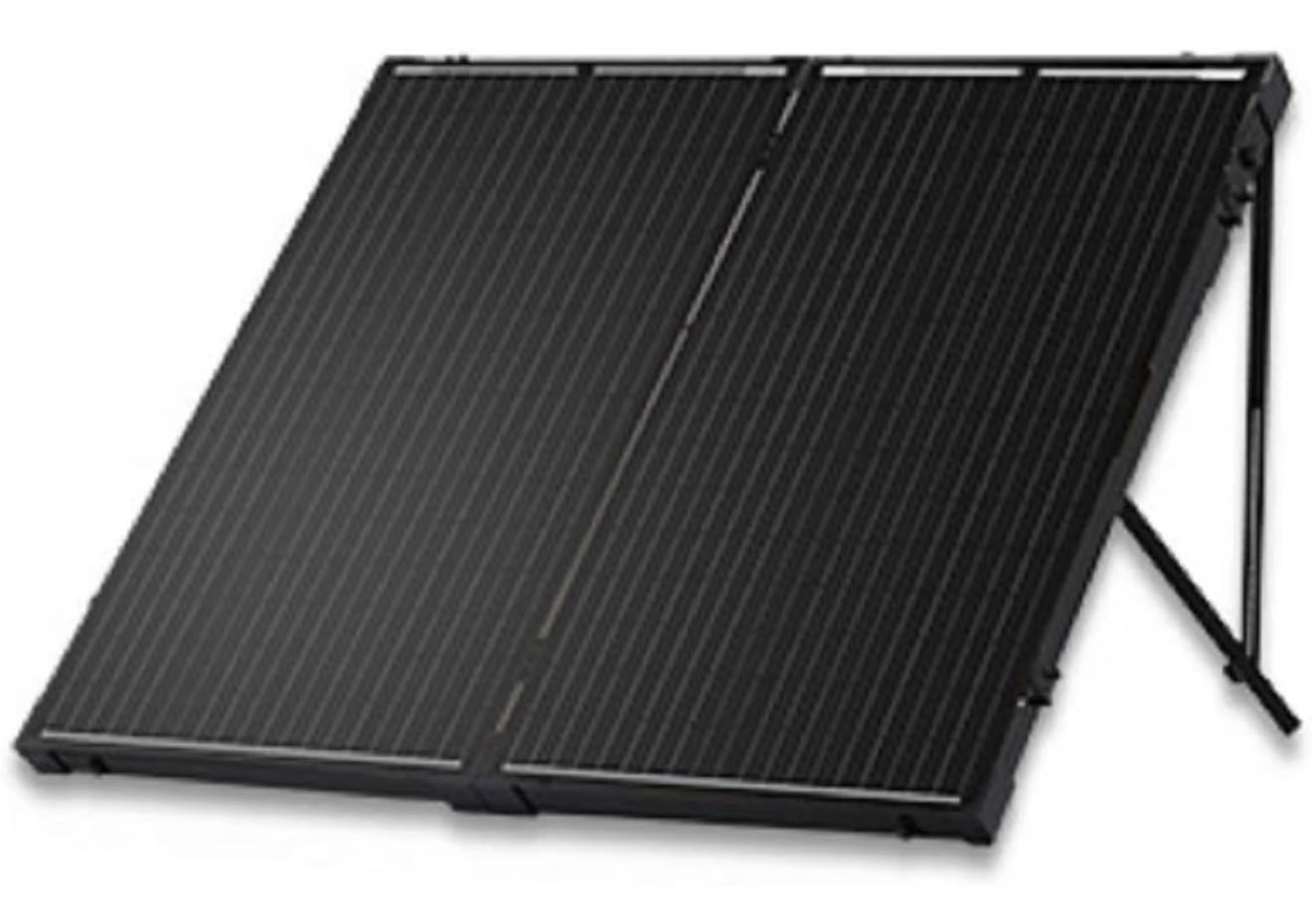
This is a different type of option from the lightweight folding panels above. The linked Renogy listing is the 200W, 12V monocrystalline suitcase with a Voyager 20A PWM charge controller, not the 220W lightweight Renogy suitcase. The two rigid 100W panels fold together for travel, and the controller is intended to manage charging of a compatible auxiliary battery system.
The kit manual lists the 200W assembly at about 34.4 pounds, appreciably heavier than fabric-backed folding panels of similar wattage. That extra weight is a trade-off when moving camp frequently, but a sturdy suitcase may be attractive to travelers with a trailer, a dedicated battery setup or longer stationary stays.
Do not feed the controller's regulated battery output into a power station's solar input as though it were raw panel output. If you intend to use the panel with a power station instead of a standalone battery, only use an approved unregulated panel connection or bypass arrangement described by the manufacturers and check voltage, current and connector polarity. Never improvise wiring.
Specifications: Renogy 200W suitcase FAQ and controller details.
Pros
Built-in Voyager 20A controller for compatible battery systems
Rigid folding suitcase format
Useful for auxiliary battery and trailer setups
Trade-offs
Heavier than lightweight portable 200W products
PWM controller is not necessary for stations with built-in solar charge control
Different product from the 220W lightweight suitcase
6. ALLPOWERS 100W Foldable Solar Panel
Best budget candidate · 100W rated output
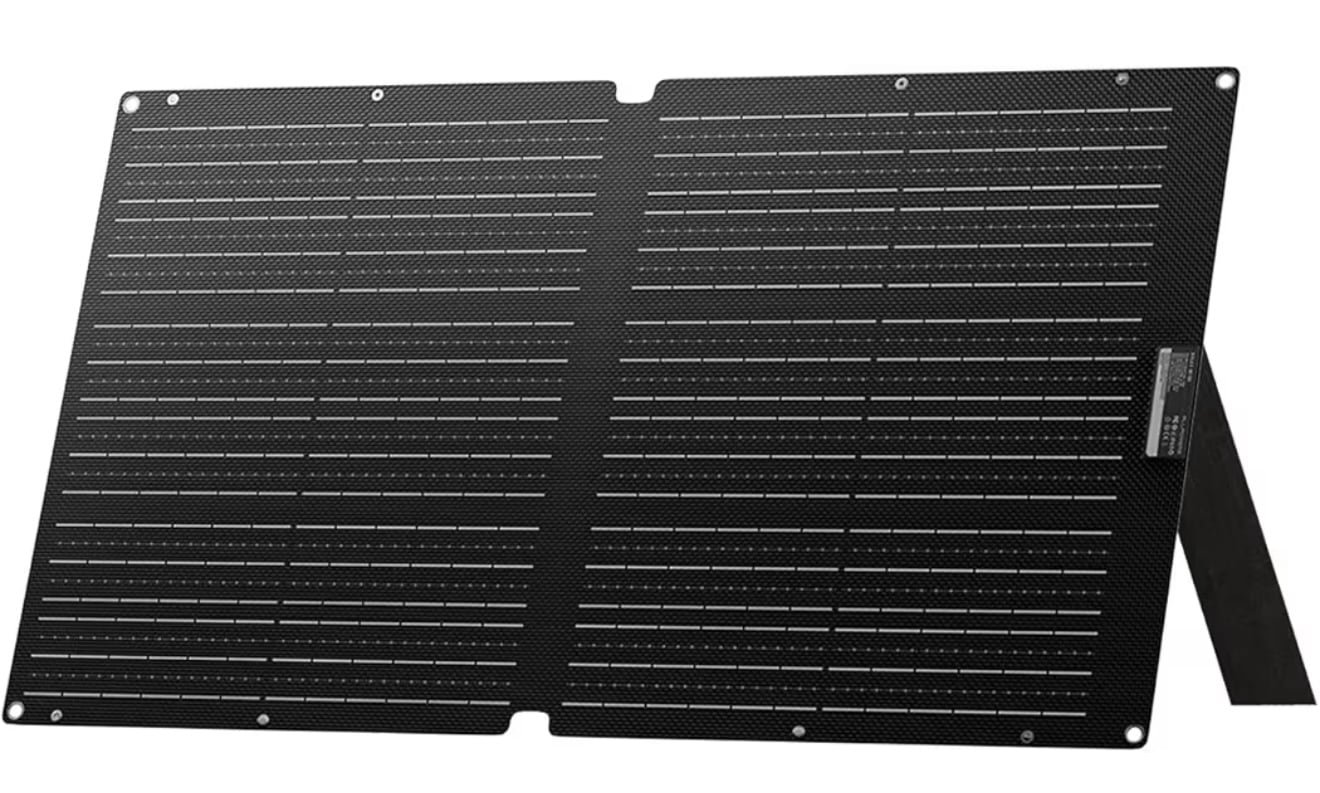
The ALLPOWERS 100W foldable is our budget candidate for an economical solar setup. It is an appealing category for campers who want to top off a smaller station or experiment with portable solar before spending more on a premium system.
Be careful when selecting this listing: ALLPOWERS has sold variants under SP027 and SE100 naming, and retailer titles have changed. The linked ASIN is associated with the 100W folding panel family. Because electrical and weather-resistance specifications differ between versions, we do not assign a single voltage, IP rating or exact weight here. Confirm the nameplate, model number and supplied cable against the intended power station before buying.
The main limitation is not the brand; it is the wattage. If you need to restore 500–700Wh every day, a lone 100W panel will rarely be enough without another charging source. It is a good budget option only when your needs and actual listing price support that decision.
Specifications: ALLPOWERS solar panel lineup.
Pros
Entry-level 100W output class
Portable folding format
Useful for smaller loads or supplemental recharge
Trade-offs
Exact SP027/SE100 variant needs confirmation
Limited daily harvest compared with 200W or 400W
Check weather rating, voltage and cables on the exact listing
7. EcoFlow 400W Lightweight Portable Solar Panel
Best high-output option to watch · 400W rated output
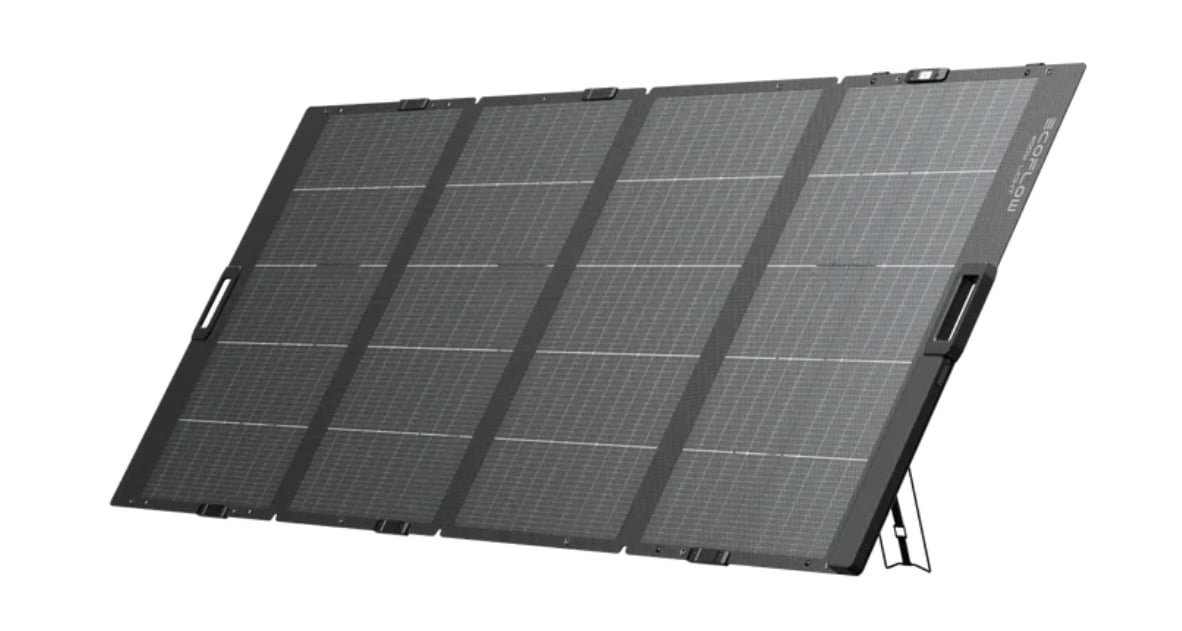
The EcoFlow 400W Lightweight model is an interesting high-output choice for a larger power station and multi-day base camp. Unlike the older EcoFlow 400W panel, this newer version weighs approximately 22.5 pounds according to EcoFlow's published specifications, with bifacial cells, integrated XT60 cable and an adjustable three-position stand. It has a published 39.3V open-circuit voltage and 34.5V operating voltage.
The extra capacity makes sense for a refrigerator, electronics and larger daily loads when you have the space and sunlight to deploy it. It does not automatically make sense for small stations that cap solar charging at 100–200W or have voltage limits below its panel specification. The unfolded footprint also requires more clear ground, and large panels can act like sails in strong wind.
At the November 2026 research check, EcoFlow's US product page showed sold-out/preorder status with late-December shipment indicated. Treat this as an option to watch rather than one you should rely on for an imminent departure. Check availability directly, and never mount this portable folding model permanently on a moving vehicle unless the manufacturer expressly approves that use.
Specifications: EcoFlow 400W Lightweight specifications (manufacturer's AU page).
Pros
400W rated output with a lighter design than older EcoFlow 400W panels
Integrated XT60 cable and adjustable stand
IP68-rated panel
Trade-offs
US availability was limited at research time
Larger footprint and higher cost than many 200W panels
Confirm voltage, current and solar input ceiling
8. Goal Zero Boulder 200 Briefcase
Best heavy-duty rigid suitcase · 200W rated output
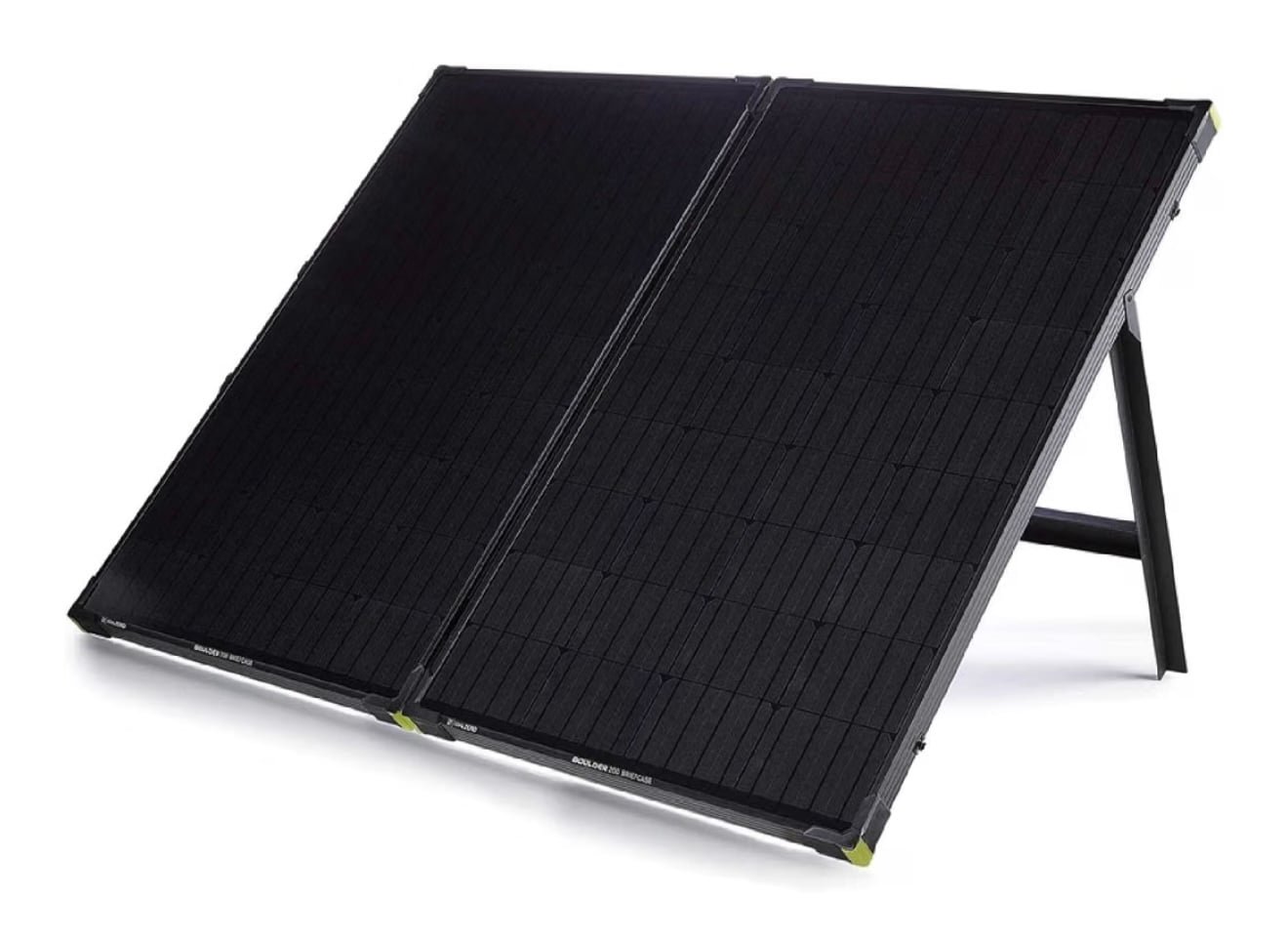
The Goal Zero Boulder 200 Briefcase is the panel for campers who prioritize robust physical construction over light weight. It consists of hinged tempered-glass panels in a rigid frame, with a built-in kickstand and carry bag. Goal Zero specifies 200W, 21.8V open-circuit voltage, 18.1V operating voltage and a High Power Port connection.
At about 42 pounds, it weighs more than two typical 200W fabric-backed panels. Its folded dimensions are about 40 by 26.75 by 3.5 inches. That is fine for a dedicated cargo space or a trailer base camp, but it is a serious consideration for an SUV that needs to carry people, recovery gear, water and camping supplies.
For a compatible Goal Zero Yeti, the High Power Port can be convenient. Check the Yeti model's actual charging port, maximum input current and voltage, including whichever adapter is required. Never connect a plug simply because it fits. Secure this rigid panel for travel so it cannot shift in a hard stop.
Specifications: Goal Zero Boulder 200 specifications.
Pros
Tempered glass and substantial frame
200W output in a durable suitcase design
Integrated kickstand and carrying bag
Trade-offs
42-pound weight and sizable folded footprint
High Power Port may require an approved adapter
Less appealing for frequent camp moves or minimal cargo
100W vs. 200W vs. 400W: how much does solar actually produce?
The panel's nameplate watts are not equivalent to a daily watt-hour budget. A useful preliminary estimate multiplies panel watts by peak sun hours and a conservative real-world derating factor. For illustration, using four peak sun hours and 70% of nameplate output accounts for some ordinary losses. Your actual conditions can be substantially better or worse.
Rated solar capacity | Illustrative daily harvest | Typical role |
|---|---|---|
100W | 280Wh | Light loads, supplemental recharge |
200W | 560Wh | Fridge plus modest electronics, depending on use |
220W | 616Wh | Moderate stationary camping |
400W | 1,120Wh | Larger daily loads and battery recovery |
The numbers above are planning examples, not guaranteed production. Forest shade, clouds, high panel temperatures, poor alignment, cable loss and charge-controller limits reduce harvest. A station that can accept only 100W of solar input will not recover the full energy implied by a 400W nameplate. Use measured consumption and the solar sizing calculator to evaluate your trip.
How to check solar panel compatibility with a power station
Do not choose solely by connector or wattage. Find the solar-input specification in your exact power station manual, then compare it with the panel nameplate and the planned configuration.
Voltage: make sure the array's maximum cold-weather open-circuit voltage is safely within the station limit and its operating voltage meets the required range.
Current: compare short-circuit current and operating current with the station's allowed input and the manufacturer's rules for connecting arrays.
Power: the station may limit accepted watts; do not exceed permitted array specifications just because it clips power.
Connector and polarity: use the approved cable or adapter, verify polarity and do not assume similar-looking barrel plugs are interchangeable.
Charge controller: most portable stations already have one. A standalone battery may need its own correctly configured controller. Do not connect regulated output or bypass equipment except as approved.
Series connections add voltage; parallel connections add current. Mixing mismatched modules can create inefficient or unsafe configurations, and cold air can increase open-circuit voltage. If you cannot verify an array from the manuals, stop and consult the manufacturers or a qualified installer. For more context, compare our portable power station buyer's guide.
Portable vs. permanently mounted solar
A portable panel is easy to pack away and can be carried into sunlight while your vehicle stays in shade, provided a suitable cable reaches the station. It is also easy to reposition when the sun moves. The downside is that you must deploy, monitor, secure and store it each time you move. Wind, theft and rough ground are real considerations.
A properly installed fixed panel may provide useful charging while driving or when the rig is unattended, but it follows vehicle orientation and shade. Roof mounting consumes valuable space and requires hardware designed for road vibration, cable management and a compatible charge controller. A ground-deployed fabric-backed panel is not a substitute for a road-rated fixed installation.
Field setup tips that make a real difference
Park the vehicle where you need shade, then place the solar panel in clear sun when possible.
Avoid partial shade from branches, rooftop tents, awnings and nearby vehicles. Even a small shadow can reduce panel output.
Angle the panel toward the sun and recheck it during the day instead of expecting the same output from dawn to sunset.
Secure panels using manufacturer-approved methods, and fold them away when strong winds or severe weather approach.
Use appropriate extension cables, keep connectors clean and dry, and avoid trip hazards.
Keep the power station shaded, ventilated and dry according to its manual; a panel's weather rating does not apply to the battery station.
Watch the actual input watts and energy recovered during a trip to refine future sizing.
Frequently asked questions
Can a 100W solar panel run a 12V fridge?
A portable panel normally replenishes a battery that runs the fridge; it does not guarantee continuous direct power. A 100W panel can offset some consumption in favorable conditions, but many fridge setups need greater solar capacity or another charging method. Measure the fridge's daily watt-hours and account for warm temperatures, repeated opening and poor sunlight. See our best 12V fridges for overlanding guide.
Is a 200W panel enough for overlanding?
It is a sensible starting point for many modest setups. Whether it is enough depends on consumption, sunlight, weather, battery reserve and the charging limitations of the station. A station that is regularly charged from the vehicle while driving has more flexibility than a solar-only setup.
Are bifacial solar panels worth buying?
They can be useful when their rear surface sees reflected light, especially on pale surfaces. In a shaded forest or when the back lies against a dark surface, the advantage can be small. Compare conventional front-side wattage, weight and compatibility before paying for a bifacial panel.
Can I use any brand of solar panel on my power station?
Some combinations work with appropriately rated adapters, but there is no universal guarantee. Confirm maximum voltage under cold conditions, acceptable current and power, minimum operating voltage, connector type and polarity using the specific manuals. Manufacturer brand alone is not proof of compatibility.
Can a solar panel be left out in the rain?
Follow its exact weather rating and manual. Some panels are rated IP68 while others are splash-resistant. Protect electrical connectors, power stations and any controllers separately, avoid submersion or exposure not authorized by the maker, and pack away equipment before dangerous weather.
What is the best portable solar panel for an overlanding vehicle?
For a compatible mid-size station, the EcoFlow NextGen 220W Bifacial is our general-purpose pick based on its combination of output, portable design and adjustability. Anker's bifacial PS200 makes sense for a station that supports its higher voltage; BLUETTI's PV200 is a conventional 200W option. Choose the panel that matches your measured energy budget and station, rather than the highest wattage or best-looking marketing claims.
The All Guy verdict
Buy for the way you camp. A 100W panel makes sense when portability matters and your loads are modest. A 200–220W panel is a more flexible starting point for many rigs, while 400W can be worth the additional investment and storage space if you spend substantial time parked in sunny areas. The Renogy controller-equipped suitcase and the heavier Goal Zero Boulder 200 are distinct alternatives for auxiliary-battery or rugged base-camp setups.
A reliable overlanding power system is more than a panel. Start with your battery sizing calculator, calculate expected harvest with the solar power sizing calculator, and select equipment that fits your real electrical requirements. For the rest of your rig, read our beginner overlanding guide and our essential overlanding gear guide.
This post may contain affiliate links. We may earn a commission when you purchase through links on this site at no additional cost to you.


