
This article contains affiliate links. We may earn a commission from qualifying purchases.
As an Amazon Associate I earn from qualifying purchases.
A portable power station can make an overlanding rig dramatically more comfortable, but the battery is only as useful as your ability to recharge it. Spend a few days running a 12V refrigerator, charging phones, powering lights and using cameras, and you will quickly learn whether your power system can keep up. A dedicated alternator charger can turn travel time into meaningful charging time without depending entirely on sunlight.
Unlike the low-power 12V accessory cable supplied with many stations, a purpose-built DC-to-DC alternator charger uses a dedicated electrical connection to the vehicle's charging system. It converts available vehicle power into a controlled charging input for a compatible station. The goal is not to extract the most possible electricity from your truck at all costs. It is to replenish the energy your camp actually uses while preserving the vehicle's starting and electrical systems.
We compared six dedicated chargers for portable power stations based on manufacturer specifications, charging paths, compatibility, available features and practical overlanding use cases. These are research-based recommendations, not claims that The All Guy has personally bench-tested every charger. Maximum ratings are not guaranteed charging speeds. This article is about portable power stations, not conventional DC-to-DC chargers intended solely for permanently installed house batteries.
Affiliate disclosure: As an Amazon Associate I earn from qualifying purchases. The All Guy may earn a commission when you purchase through our affiliate links, at no extra cost to you.
Quick comparison: Best alternator chargers for overlanding
Charger | Best for | Manufacturer-rated maximum | Compatibility considerations |
|---|---|---|---|
BLUETTI Charger 2 | Best overall for solar-ready rigs | 800W vehicle input; up to 1,200W combined output | BLUETTI and compatible third-party stations |
EcoFlow 800W Alternator Charger | Best for compatible EcoFlow DELTA owners | 800W maximum output in supported configurations | Supported EcoFlow DELTA models via XT150; select XT60 configurations at reduced power |
BLUETTI Charger 1 (560W) | Best value for compatible mixed-brand setups | 560W maximum output | BLUETTI and compatible third-party stations |
Anker SOLIX Alternator Charger (800W) | Best for compatible Anker SOLIX owners | 800W maximum in forward charging | Selected SOLIX C1000, C1000 Gen 2, C2000 Gen 2 and F3000 models; verify exact connection |
Jackery 600W DC-DC Alternator Charger | Best for compatible Jackery owners | 600W maximum; 400W on several popular units | Supported Jackery DC8020 input models |
EcoFlow 500W Alternator Charger | Best for smaller setups and XT60 charging | 500W maximum; 360W in specified 24V output mode | Select RIVER, DELTA and third-party stations depending on cable and settings |
Our first choice for an expanding, solar-ready system is the BLUETTI Charger 2. For a simpler mixed-brand setup, consider the Charger 1. If you already own a compatible EcoFlow, Anker or Jackery station, the dedicated option from that brand may make more sense than our overall pick. Compare actual accepted charging power, not just the name on the product.
How we selected the six chargers
We looked at the rated vehicle contribution separately from combined-source output, the types of power stations a charger is intended to serve, the electrical connection needed to achieve its rated power, and functions such as automatic charging controls or supported reverse charging. We also considered whether the added complexity is justified by the way an overlander travels. We did not rank products on unverified Amazon prices or assign artificial hands-on test scores.
Not every overlander needs the highest-rated charger. If you drive only twenty minutes a day, solar may do more for you than an expensive alternator charger. If you move between camps for hours every day, charging from the vehicle can become a major part of your power budget. Read our three-method guide to charging a power station while driving if you are still deciding between an ordinary car outlet, an approved vehicle AC outlet and a dedicated charger.
The six best alternator chargers for portable power stations
1. BLUETTI Charger 2 — Best overall for solar-ready rigs
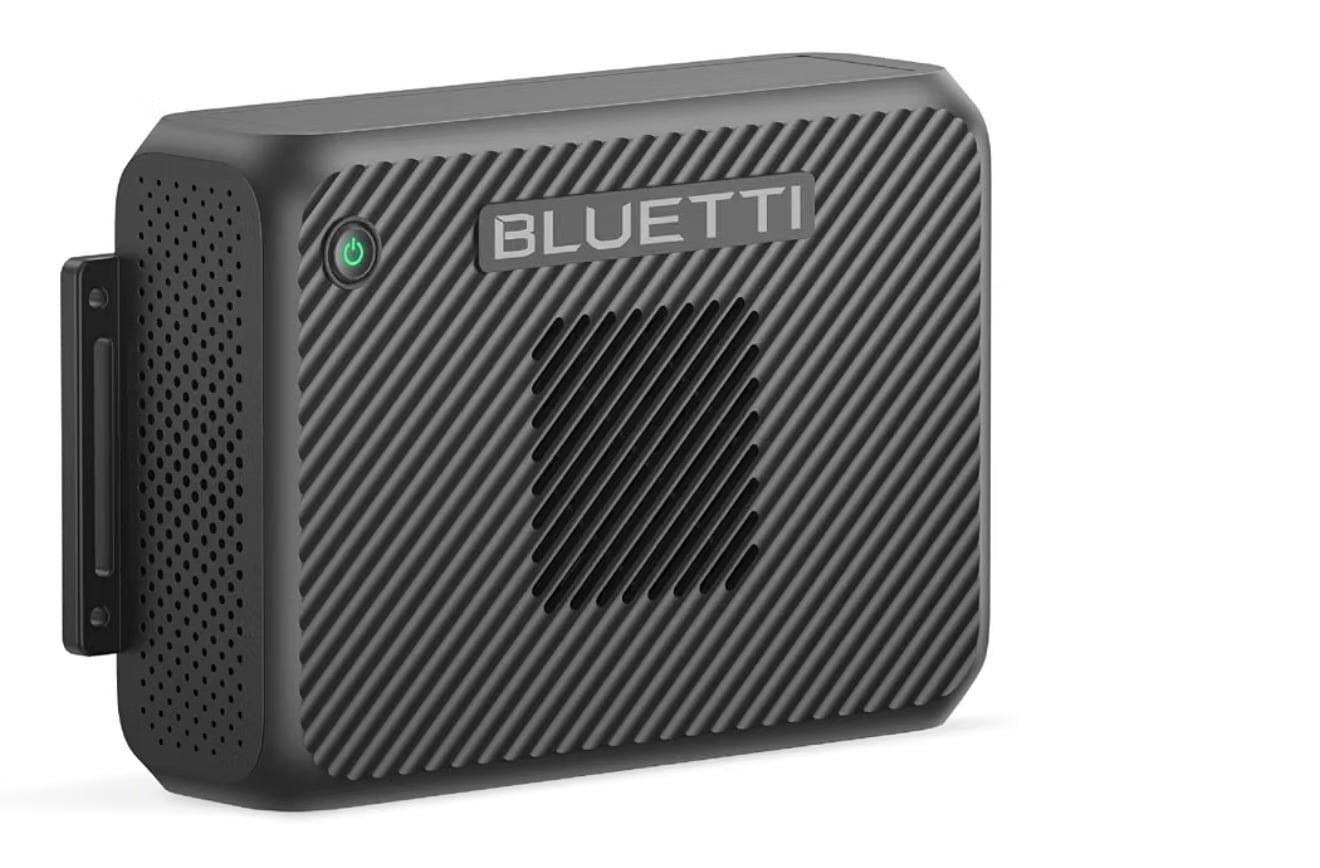
Rated power: 800W vehicle input; up to 1,200W combined output. Best fit: BLUETTI and compatible third-party stations.
The Charger 2 earns our overall pick for overlanders who plan to combine driving and solar charging. Its vehicle input is rated for up to 800W and its dedicated photovoltaic input for up to 600W. The charging output to a compatible power station can reach 1,200W when adequate energy is available from the supported sources. That is a combined output ceiling, not the amount you can expect from the alternator by itself.
That distinction matters on the trail. A roof-mounted solar array may supplement driving power, and at a sunny campsite you can use the solar input according to the manufacturer's operating instructions. The system can also accommodate certain auxiliary battery arrangements. It is particularly interesting for owners who intend to expand their rig rather than buy a one-purpose charger now and replace it later.
The adjustable output and supported solar-input connectors make this a candidate for stations outside the BLUETTI ecosystem as well. But a compatible connector does not guarantee compatibility. Check the manufacturer's chart and your station's DC voltage range, current limit and maximum wattage. The station may impose a substantially lower ceiling than the Charger 2. Its additional functions also mean more configuration decisions and a more involved installation.
What we like
Separate solar and vehicle inputs
Adjustable charging output and broad model compatibility
Expansion options for supported systems
What to consider
1,200W requires adequate combined input; not alternator-only
More wiring and setup complexity than a basic charger
Paying for solar integration may be unnecessary if you never use it
Technical reference: manufacturer specifications and compatibility guidance. Check the specific listing and latest installation documentation before purchase.
2. EcoFlow 800W Alternator Charger — Best for compatible EcoFlow DELTA owners
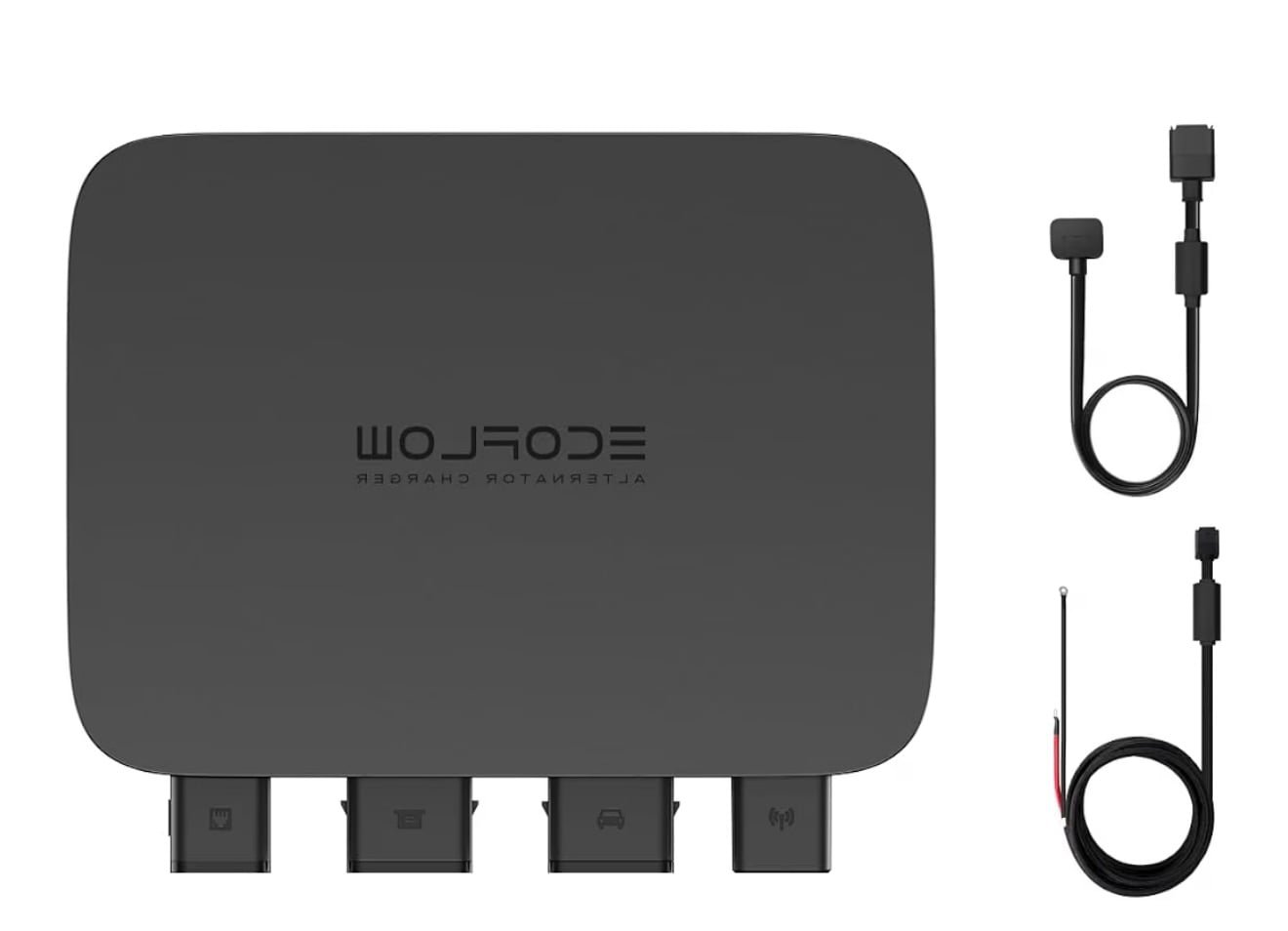
Rated power: 800W maximum output in supported configurations. Best fit: Supported EcoFlow DELTA models via XT150; select XT60 configurations at reduced power.
The EcoFlow 800W is a strong choice if you already own a supported DELTA power station and want to stay within EcoFlow's charging ecosystem. In an approved high-power configuration, it can restore a meaningful amount of energy during a relatively short drive. Its headline rating is especially attractive for a 1–2kWh station used to run a fridge and other campsite equipment.
EcoFlow supports additional battery-maintenance and reverse-charging functions in compatible configurations. These may be useful when the vehicle is parked and the power station has energy available, but check the manual for the required cable, supported station and operating mode. Do not assume every unit or adapter supports these functions.
Here is the important buying decision: EcoFlow specifies a 500W maximum when either its 800W or 500W charger uses the XT60 connection, with a lower limit in some voltage modes. The higher-rated 800W model is most compelling when your actual supported connection can exploit its greater output. If you are buying to use only a restricted solar-input connection, the cheaper model may be the more sensible purchase. Some DELTA models need a specific adapter or have lower port limits.
What we like
High maximum charging power with compatible connections
Integrated EcoFlow control and supported reverse charging
Useful for frequent drives with larger stations
What to consider
Full output is connection- and model-dependent
XT60 configuration has a lower charging ceiling
Vehicle must have sufficient electrical capacity
Technical reference: manufacturer specifications and compatibility guidance. Check the specific listing and latest installation documentation before purchase.
3. BLUETTI Charger 1 (560W) — Best value for compatible mixed-brand setups
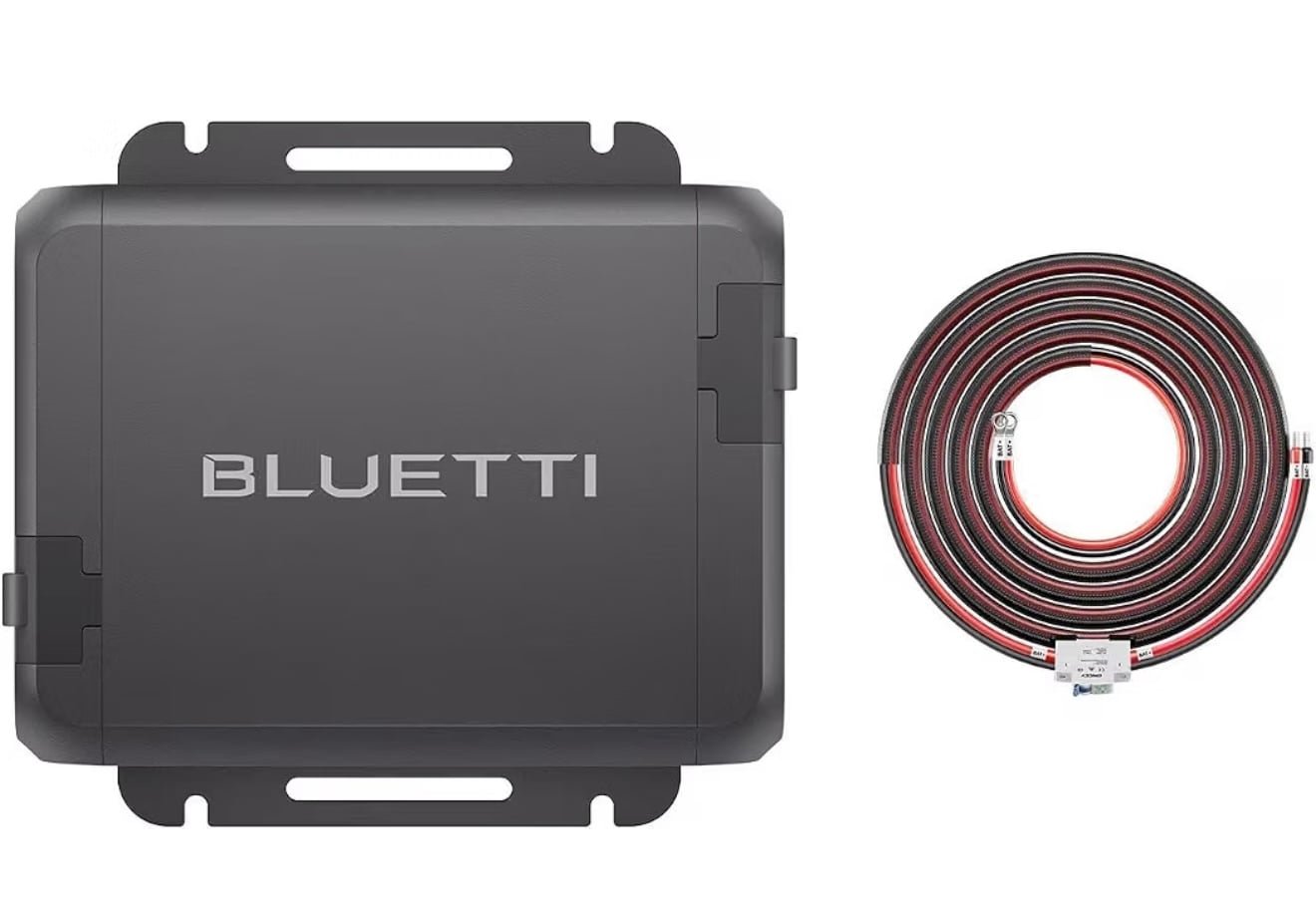
Rated power: 560W maximum output. Best fit: BLUETTI and compatible third-party stations.
The Charger 1 is our value-oriented choice for a simple drive-to-charge system. BLUETTI rates it at up to 560W and provides adjustable output voltage, monitoring through its app, active cooling and automatic charging controls. Its appeal is not a record-setting wattage figure; it is a useful amount of charging power without the extra features of a more complicated dual-input system.
Consider a rig that uses about 450Wh per day and drives for two hours between camps. If the vehicle and station support a sustained 300W input, that trip delivers roughly 600Wh before storage losses and concurrent loads. That could cover a substantial share of the daily budget. There is little point in spending more for an 800W or 1,200W system if your station cannot accept that power or you do not need it.
BLUETTI lists broad compatibility, including many non-BLUETTI models, but you must configure the output for the receiving station and use the correct cable or approved adapter. Unlike Charger 2, this is primarily a vehicle charging solution rather than an integrated solar and alternator charging hub. If a separate solar input is important, compare how the two sources would connect before buying.
What we like
Good balance of charging power and system complexity
Adjustable voltage for supported third-party stations
App monitoring and automatic charging controls
What to consider
No integrated second solar input like Charger 2
Requires correct output settings and cabling
May be capped well below 560W by the power station
Technical reference: manufacturer specifications and compatibility guidance. Check the specific listing and latest installation documentation before purchase.
4. Anker SOLIX Alternator Charger (800W) — Best for compatible Anker SOLIX owners
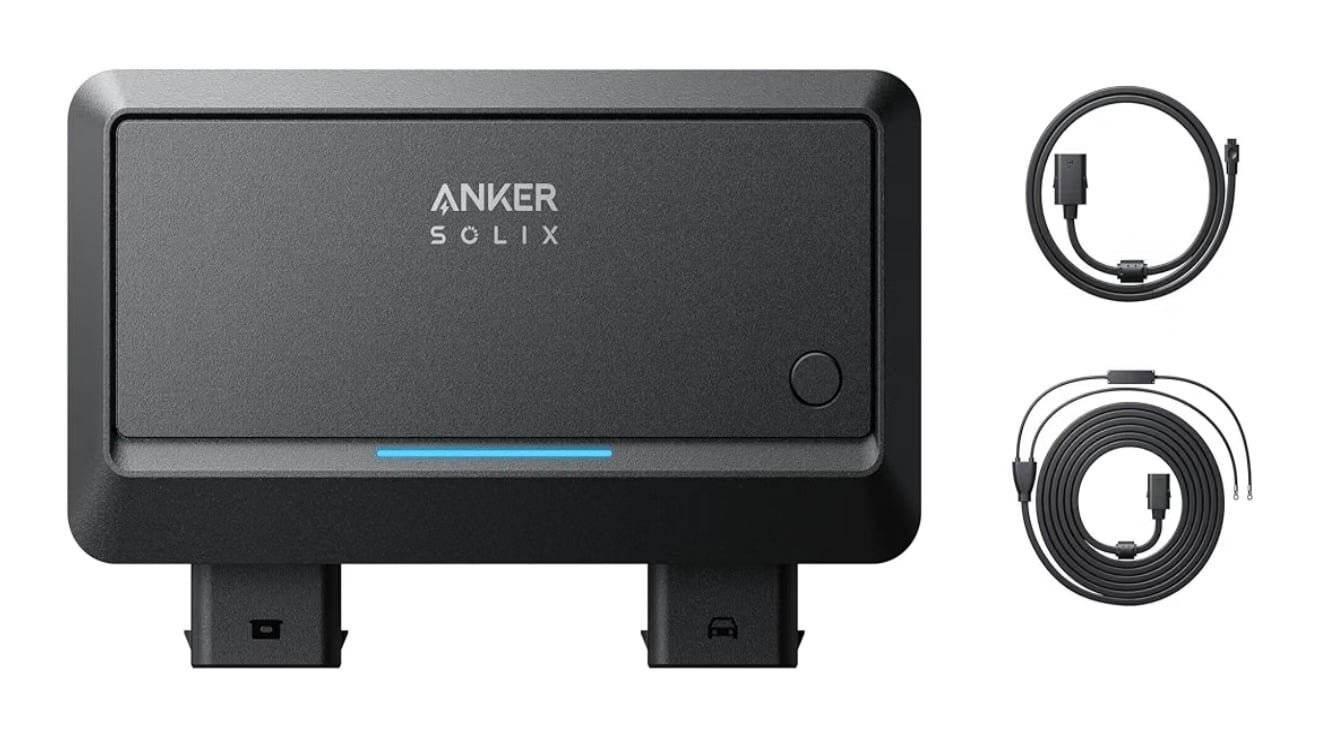
Rated power: 800W maximum in forward charging. Best fit: Selected SOLIX C1000, C1000 Gen 2, C2000 Gen 2 and F3000 models; verify exact connection.
Anker's dedicated alternator charger brings the same basic concept to compatible SOLIX stations. Anker specifies up to 800W from a supported vehicle installation, control through the Anker app and bidirectional charging in approved configurations. The manufacturer lists 12V and 24V starter-battery systems and support for several battery chemistries; the installer must configure the actual vehicle correctly.
Anker offers the charger in combinations with select SOLIX power stations, including the C1000 and C1000 Gen 2, C2000 Gen 2 and F3000. Check the current compatibility documentation for the exact generation, available port, cable arrangement and charging limit. For instance, the C2000 Gen 2 has a published 800W maximum for its PV/XT60i input, but not every SOLIX power station has that same limit.
The appeal is strongest for someone building an Anker-based rig who wants straightforward system control and approved accessory connections. Do not assume the similarly named C-series or S-series units all share the same input characteristics. If the intended port is occupied by solar, work out the approved charging arrangement before spending money. Also distinguish the included PPS connection cable from any additional cables needed for specialized expansion or reverse-charging modes.
What we like
High rated output for compatible SOLIX systems
App control and vehicle battery configuration
Supported bidirectional charging features
What to consider
Confirm exact SOLIX model and port; branding alone is not enough
Some functions may require a different connection
Verify whether solar can be used at the same time in your configuration
Technical reference: manufacturer specifications and compatibility guidance. Check the specific listing and latest installation documentation before purchase.
5. Jackery 600W DC-DC Alternator Charger — Best for compatible Jackery owners
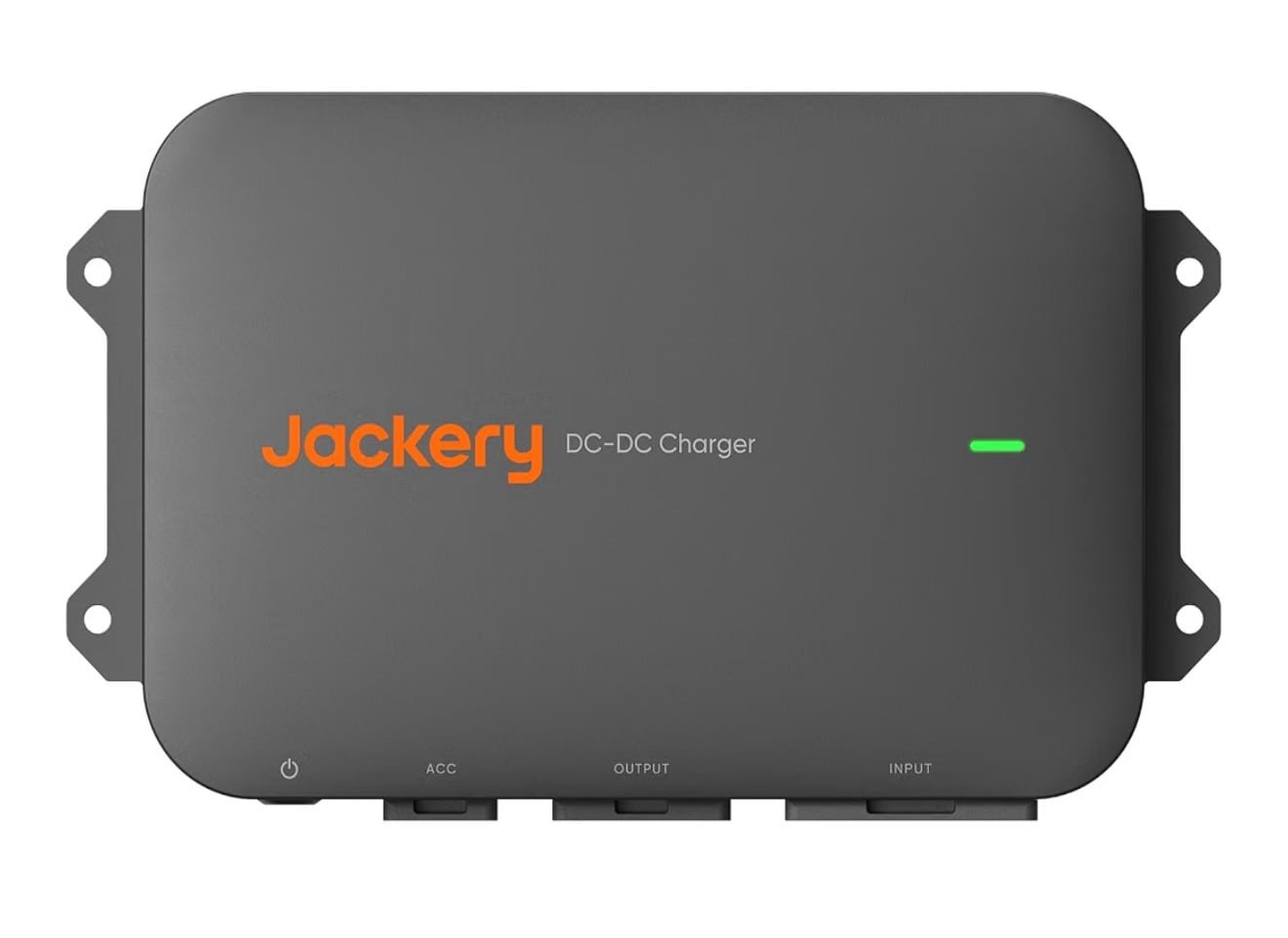
Rated power: 600W maximum; 400W on several popular units. Best fit: Supported Jackery DC8020 input models.
Jackery's dedicated 600W charger is a practical candidate if you already own a compatible Explorer or HomePower power station. It is designed to use available vehicle charging power on supported 12V or 24V installations. The important question is which Jackery station you have, not simply whether its charging socket looks familiar.
Jackery's own compatibility table provides an excellent example of why charger wattage can be misleading. The Explorer 1000 v2 and Explorer 2000 v2 are listed at around 400W when using this charger, whereas the Explorer 2000 Plus is listed at around 600W. The Explorer 1000 Plus is also shown at around 400W. If you own a station from our portable power station comparison, check that exact combination before estimating your recharge time.
Even 400W can represent a substantial improvement over a standard car accessory outlet. The benefit is predictable integration with supported Jackery equipment, provided that the electrical installation and ignition or accessory-signal connection are completed according to the manual. Owners of other brands should not assume that a generic plug adapter makes this charger appropriate for their station.
What we like
Dedicated option for supported Jackery stations
Useful improvement over ordinary car charging
Manufacturer publishes model-specific charging figures
What to consider
Maximum 600W is not available on all supported models
Some popular Explorer models are limited to about 400W
Not a general-purpose cross-brand charging recommendation
Technical reference: manufacturer specifications and compatibility guidance. Check the specific listing and latest installation documentation before purchase.
6. EcoFlow 500W Alternator Charger — Best for smaller setups and XT60 charging
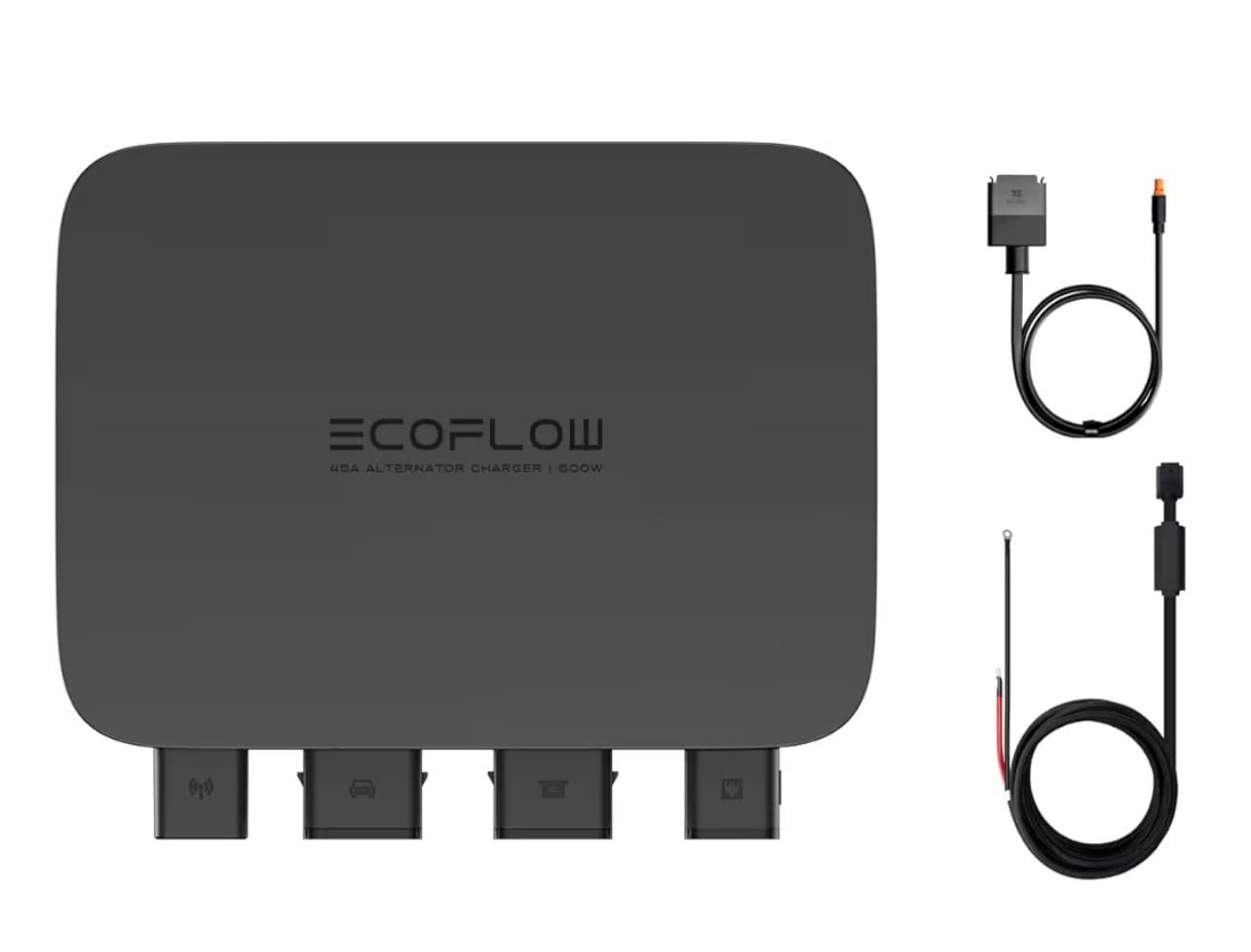
Rated power: 500W maximum; 360W in specified 24V output mode. Best fit: Select RIVER, DELTA and third-party stations depending on cable and settings.
The EcoFlow 500W is attractive when the intended power station or charging port cannot use the full output of the 800W model. Rather than paying for unused performance, match the charger to your energy budget and the station's approved input. It can make sense for supported RIVER and DELTA setups and certain third-party stations.
EcoFlow's published specifications describe a maximum of 500W in its higher-voltage charging mode and 360W at the specified 24V output setting. The company also identifies the XT60 connection as limited to no more than 500W across both EcoFlow charger models. Those numbers describe charger capabilities, not a promise that the receiving station can absorb them.
If you are evaluating a third-party station, check EcoFlow's compatibility instructions and the station manual first, including the permitted voltage setting and cable. Some small stations have modest PV input limits; even this unit may be more than they can use. Reverse charging and maintenance features are only available in specified configurations and require appropriate connections. For occasional short trips and basic loads, a regular approved car-charging cable could still be all you need.
What we like
Lower-power alternative to EcoFlow's 800W model
Potentially better match for restricted DC inputs
Compatible with select additional power station configurations
What to consider
Output depends on configuration and station limits
Not all third-party stations are supported
Still needs a dedicated, correctly installed high-current circuit
Technical reference: manufacturer specifications and compatibility guidance. Check the specific listing and latest installation documentation before purchase.
How fast can an alternator charger really recharge a power station?
Understand watts versus watt-hours before comparing charging speeds. Watts describe instantaneous charging power; watt-hours describe the energy stored or consumed. If you need to replace 600Wh and your station receives a steady 400W, the theoretical minimum is 1.5 hours. Actual recovery takes longer because of conversion losses, tapering, heat, the station's input controls and any gear operating from the battery during the drive.
The following examples assume the stated power is sustained at the station input and no energy is being consumed by connected devices. These are ideal energy-division estimates, not measured results, manufacturer promises or recommended current settings for your vehicle.
Actual station input | 500Wh to replace | 1,000Wh to replace | 2,000Wh to replace |
|---|---|---|---|
100W | 5 hr | 10 hr | 20 hr |
300W | 1 hr 40 min | 3 hr 20 min | 6 hr 40 min |
400W | 1 hr 15 min | 2 hr 30 min | 5 hr |
500W | 1 hr | 2 hr | 4 hr |
800W | 38 min | 1 hr 15 min | 2 hr 30 min |
A 500W charger does not automatically deliver 500W. Nor does a 1,200W multi-input charger guarantee 1,200W while driving. If your station accepts only 400W on its approved connector, the fastest usable charging speed is constrained by that limit. The actual usable amount may be lower still if your alternator cannot safely supply enough power or the charger must reduce output as conditions change.
For example, if your fridge averages 25W over a full day, it uses about 600Wh. Adding 100Wh for lighting and electronics gives a 700Wh daily estimate. Two hours of driving at an actual 400W station input supplies 800Wh before losses and loads. That might be close to the daily requirement, but build in margin for hot days, longer stops, and lower charging rates. Measure your own equipment with a realistic duty cycle. Our portable power station sizing guide helps calculate this budget, and our best 12V fridges for overlanding guide can help you choose a refrigerator suited to your rig.
What to check before buying an alternator charger
1. Start with the exact power station model
Find the station's permitted DC charging voltage range, maximum current, maximum power and supported connectors in its current manual. Confirm how the charger is allowed to connect: solar input, expansion port, dedicated charging port or another manufacturer-supported route. If an adapter is required, use the specific approved adapter. A physically matching XT60 or other plug is not proof that the pinout, polarity, voltage and communication requirements are correct. Do not connect an unknown output to a station to see whether it works.
2. Check available vehicle charging capacity
The alternator's nameplate rating is not automatically the power available for camping gear. Vehicle systems need power for ignition, electronics, lights, fans, climate control and other equipment. Alternator output also varies with engine speed, temperature and charging-system behavior. A qualified automotive electrical installer should evaluate the vehicle's actual system and its spare continuous capacity. For perspective, 800W divided by 12V is about 67A even before accounting for losses; a nominal 800W charger is not an accessory-socket load.
3. Understand smart alternators and starting-battery protection
Many modern vehicles vary charging-system voltage instead of maintaining a constant alternator voltage. A suitable charger must have an approved method to identify when charging is safe, whether through an ignition signal, voltage monitoring or another manufacturer-defined connection. Confirm compatibility with the particular vehicle, especially battery management sensors and any factory wiring requirements. Automatic shutoff and voltage protections are useful safeguards, but not substitutes for professional system design and correct settings. Hybrids and EVs require separate manufacturer approval; do not assume this equipment can connect to them.
4. Include the installation cost
A dedicated alternator charging system is a high-current DC electrical installation, not the same as plugging a cable into the dashboard. Budget for the required conductors, specified fuse or protection device, terminals, approved adapters, mounting hardware and qualified installation. The charging unit must be protected against the conditions it will face and mounted so its cooling system can operate. The published maximum rating is not permission to select any convenient wire or fuse.
5. Plan for solar and stationary camping
Driving charging works well on moving trips; solar can contribute when you remain parked. A dual-input charger like the BLUETTI Charger 2 may simplify a compatible system, but you still need to confirm the allowed solar voltage and current, supported combined charging arrangements and the station's input ceiling. If your station allows only one DC input and the alternator charger occupies it, do not improvise a Y-cable to combine sources. Compare our portable solar panel buyer's guide and solar power sizing calculator to determine whether a separate approved solar option is worth adding.
Installation and electrical safety
We recommend having a qualified automotive electrical technician assess and install these chargers. Follow the charger, station and vehicle manufacturer's instructions for the exact installation. Different vehicles have different battery monitoring, grounding, approved terminal locations and charging capacities; do not copy an installation diagram for another model without checking your own.
Use the specified fuse or breaker, conductors, cable routing and approved connection points. Never increase a fuse rating to prevent it from tripping.
Protect cables from abrasion, heat, sharp metal edges, moving parts, airbags and wet or dusty conditions that exceed the equipment rating.
Secure both the charger and power station so they cannot shift on rough terrain or become projectiles in a collision. Leave the required cooling clearance.
Use only compatible operating modes and connection cables. Confirm safe automatic start and stop behavior with the installer before leaving on a trip.
Stop operating the charger if you notice unusual heat, damaged insulation, a burning smell, repeated protection trips or charging-system warnings. Have the installation inspected before reuse.
Do not idle a vehicle in a garage, enclosed area or near sleeping spaces to recharge a power station. Vehicle exhaust can cause fatal carbon monoxide exposure.
Reverse charging, starter-battery maintenance and emergency-start assistance are separate functions with their own compatibility and operating requirements. They are not universally available and should not replace a dedicated jump-start plan. Do not attempt reverse charging through a port or adapter that the manufacturer does not support.
Which charger makes sense for your overlanding style?
Weekend camper: If you only need to charge small devices and lights, start by measuring power consumption. An approved car charging cable or modest solar panel may be enough. A dedicated 500–560W unit is worth considering only if your station and vehicle can accept it and the extra energy genuinely helps.
Frequent moving overlander: For a 1–2kWh battery powering a refrigerator and other gear, a compatible high-power charger can make long driving days productive. The EcoFlow 800W or Anker SOLIX charger may be a natural choice within those brands, while the Jackery charger suits supported Jackery models. Remember that several Jackery models top out around 400W with its charger.
Mixed-brand or expanding rig: The BLUETTI Charger 1 is a useful candidate if it matches the receiving station's electrical specification. The Charger 2 becomes more appealing if you intend to integrate vehicle charging and solar with compatible equipment.
Stationary base camp: Invest in adequate storage and solar generation first. A charger only contributes vehicle power when an approved vehicle charging source is available. Plan charging around travel rather than relying on extended engine idling.
Still choosing your battery? Start with our best portable power stations for overlanding in 2026 comparison. Selecting the station and its supported charging system together can prevent expensive compatibility mistakes.
Frequently asked questions
Can I use an alternator charger with any portable power station?
No. Some chargers support a wide range of appropriately configured stations while others are intended for specific models or connection types. Verify the exact station, permitted voltage, current, wattage, cable, pinout and any communication requirements. Check with both manufacturers when compatibility is unclear.
Will a dedicated charger drain my starter battery?
A properly selected, correctly installed and configured charger is designed to manage when it draws power, but protection behavior varies. Incorrect settings, incompatible charging systems, wiring problems or operation in an unsuitable mode can still cause problems. Make sure the system stops when appropriate and have the vehicle's charging and starting performance checked by the installer.
Can I charge my power station with solar while driving?
Only in a setup explicitly supported by the relevant charger and station. The BLUETTI Charger 2 has separate solar and alternator inputs. Other products may rely on the same DC input used by a solar panel, so simultaneous charging might not be supported. Never connect multiple sources to an input without manufacturer approval.
Is an 800W charger worth it over a 500W charger?
It depends on whether the vehicle can spare the additional electrical power and the station can accept it through an approved input. For a receiving station limited to 400W, paying for 800W may give little charging-speed benefit. For a compatible station with a higher input limit and frequent long driving days, the extra power may be useful.
Do I need an upgraded alternator?
Not necessarily, but there is no universal answer. A qualified technician should evaluate your vehicle's alternator output under realistic conditions, electrical loads, battery management and the proposed charger's requirements. Choose a supported power limit based on that assessment, not simply the alternator's advertised amperage.
The All Guy verdict
The BLUETTI Charger 2 is our feature-rich overall recommendation for compatible solar-ready rigs because it combines two useful charging sources. The BLUETTI Charger 1 is the more straightforward value-focused choice for compatible setups. If you already have an EcoFlow DELTA, Anker SOLIX or Jackery station, begin with the manufacturer's specific dedicated option and compare the real charging rate it can achieve on your model.
The best alternator charger is the one that fits your vehicle, your power station and your actual energy needs. A complete overlanding power system should balance storage capacity, energy use, vehicle charging, solar generation and safe installation. Aim for a system that still works when the weather changes or your itinerary does not go to plan.
This post may contain affiliate links. We may earn a commission when you purchase through links on this site at no additional cost to you.


