
This article contains affiliate links. We may earn a commission from qualifying purchases.
As an Amazon Associate I earn from qualifying purchases.
A good overlanding power system is not the biggest battery you can fit in your truck. It is the smallest system that reliably runs your equipment, recharges on your actual travel schedule and leaves a sensible reserve when the weather or trail changes. Buying a 2,000Wh station before measuring your refrigerator or checking your vehicle's charging options is an expensive way to guess.
This complete guide walks through battery sizing, portable solar, charging while driving, 12V refrigerators and three example systems. Use the interactive planner to build your own energy budget, then follow the individual buying guides for compatible gear.
Affiliate disclosure: As an Amazon Associate, The All Guy earns from qualifying purchases. Product selections are based on published specifications and practical use cases, not claims of hands-on testing. Prices and specifications can change; confirm the exact model, connectors and manufacturer instructions before buying.
The short answer: what should an overlanding power system include?
A LiFePO4 portable power station with enough usable watt-hours for your longest planned gap between charges.
A 12V compressor refrigerator if you need cold food, plus efficient DC or USB-powered electronics.
Portable solar rated for your station's actual solar input and expected weather.
A vehicle charging solution suited to your driving hours, alternator capacity and station compatibility.
Properly rated cables, connectors, fuses and secure mounting; an energy reserve and a fallback charging plan.
Start with the load, not the gear. A power station stores energy; solar and the alternator replenish it; your devices consume it. A system that consumes more energy each day than it can replenish eventually runs out, regardless of its advertised capacity.
Overlanding Power System Planner
Choose a starting setup, then enter your measured daily device energy and realistic charging conditions. Presets are estimates, not test results.
Estimated daily surplus: keep a margin for weather and shorter drives.
These are planning estimates, not a guarantee of runtime or an electrical installation design. Both recharge sources count only if the equipment supports simultaneous charging or they can be used separately. Verify input voltage, current, port limits, installation instructions and manufacturer-approved charging combinations. Do not rely on this tool for safety-critical loads.
Enter measured or estimated daily energy use in watt-hours (Wh), the longest period you plan to go without any recharge, your intended solar array and realistic driving charge power. All presets are planning examples. The recommended battery size assumes no charging during the specified reserve period. The daily balance is a separate estimate for days when charging is available.
The calculator applies a delivery-loss factor to loads and estimates energy stored from solar and driving separately. Use conservative numbers for winter, shade, short drives and charge taper. Do not add two charging sources unless your power station and chargers explicitly support that combination or you can use them at different times.
1. Calculate your daily energy budget
Watts (W) describe the rate at which equipment consumes power. Watt-hours (Wh) describe how much energy it uses over time. A 60W device running for two hours needs about 120Wh before losses. A fridge's compressor cycles, so its measured daily consumption is much more useful than its instantaneous watt rating.
Device | Illustrative assumptions | Daily delivered energy |
|---|---|---|
12V fridge | 25W average over 24 hours | 600Wh |
Phones and camera | Combined energy estimate | 45Wh |
LED camp lighting | 10W × 3 hours | 30Wh |
Laptop | 75W × 1 hour | 75Wh |
Total | 750Wh |
That 750Wh example is not a universal fridge consumption figure. Hot weather, door openings, warm food, ventilation, temperature settings and fridge size affect duty cycle. Measure your setup over a full day in representative conditions. Include inverter idle draw and accessories; avoid counting the same energy twice if it is already measured at the station's battery.
For fridge comparisons and actual selection criteria, read our best 12V fridges for overlanding. Consider running an efficient refrigerator on its supported DC output rather than through the AC inverter when the station and fridge permit it.
2. Size the portable power station
The battery must cover your longest no-charge gap with enough margin to avoid relying on every last watt-hour. For a first-pass plan, allow 80% of nominal battery capacity for routine use and assume 90% delivery efficiency. These are adjustable planning assumptions, not a guaranteed capacity or battery-life rule.
Nominal battery requirement = daily delivered Wh × reserve days ÷ (delivery efficiency × planned usable fraction).
For 750Wh per day and 1.5 days without charging, the estimate is 750 × 1.5 ÷ (0.90 × 0.80) ≈ 1,563Wh. A 2kWh-class station gives useful margin if its ports and power ratings meet your needs. A nominal 1kWh battery at these assumptions delivers about 720Wh before the planned reserve is reached, which is less than one full day in this example.
Capacity is not inverter power. Also check continuous AC watts, device startup surge, individual DC and USB port limits, charging-input limits, battery temperature ranges, storage requirements and weight. Do not plan to run high-power cooking or heating equipment without checking both energy and instantaneous output. Use the portable power station sizing calculator for a more focused battery calculation, and compare models in the best portable power stations for overlanding guide.
Power station examples worth comparing
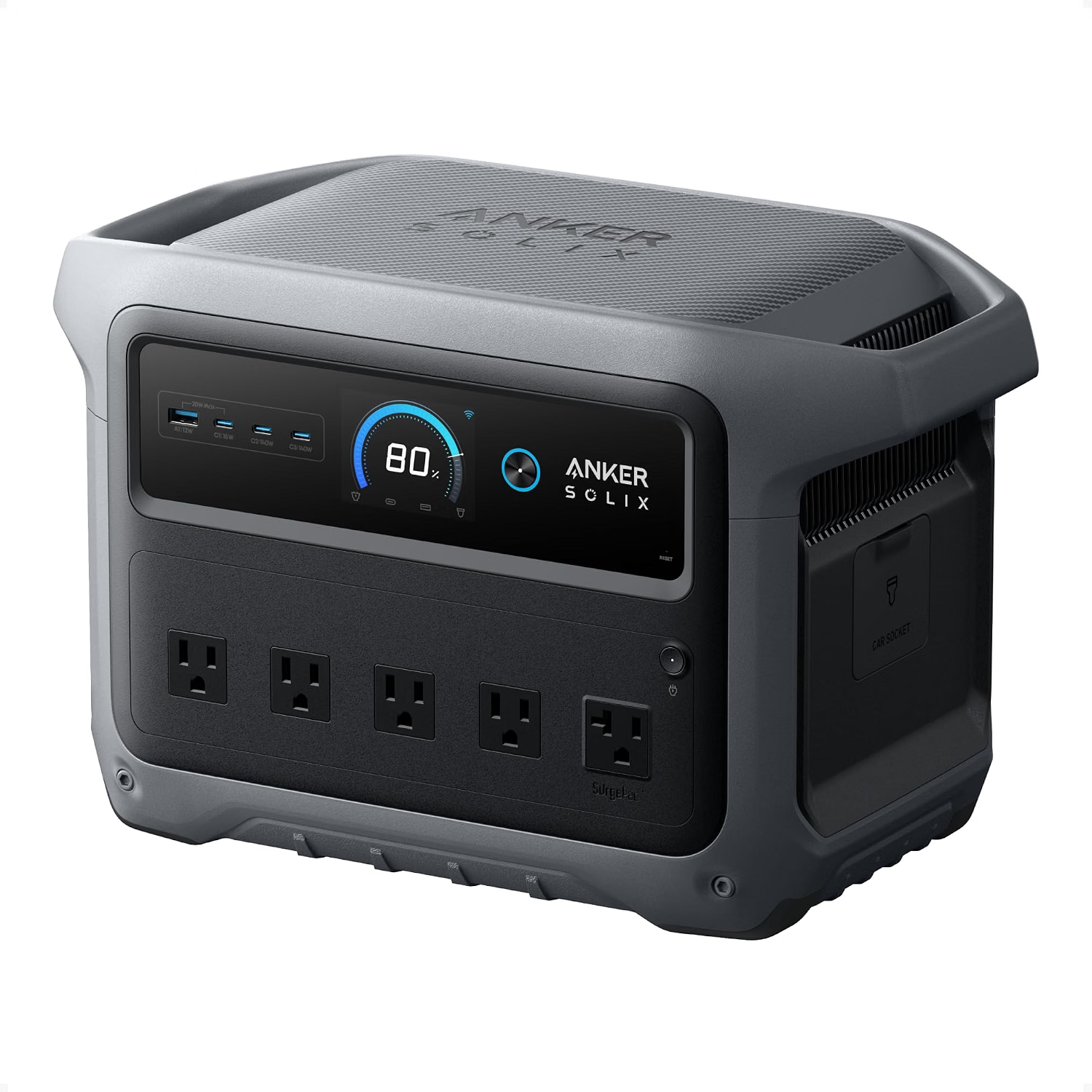
Anker SOLIX C1000 Gen 2 is a 1kWh-class candidate for lower-consumption trips. Verify charging-input compatibility and the exact outlet ratings for your equipment.
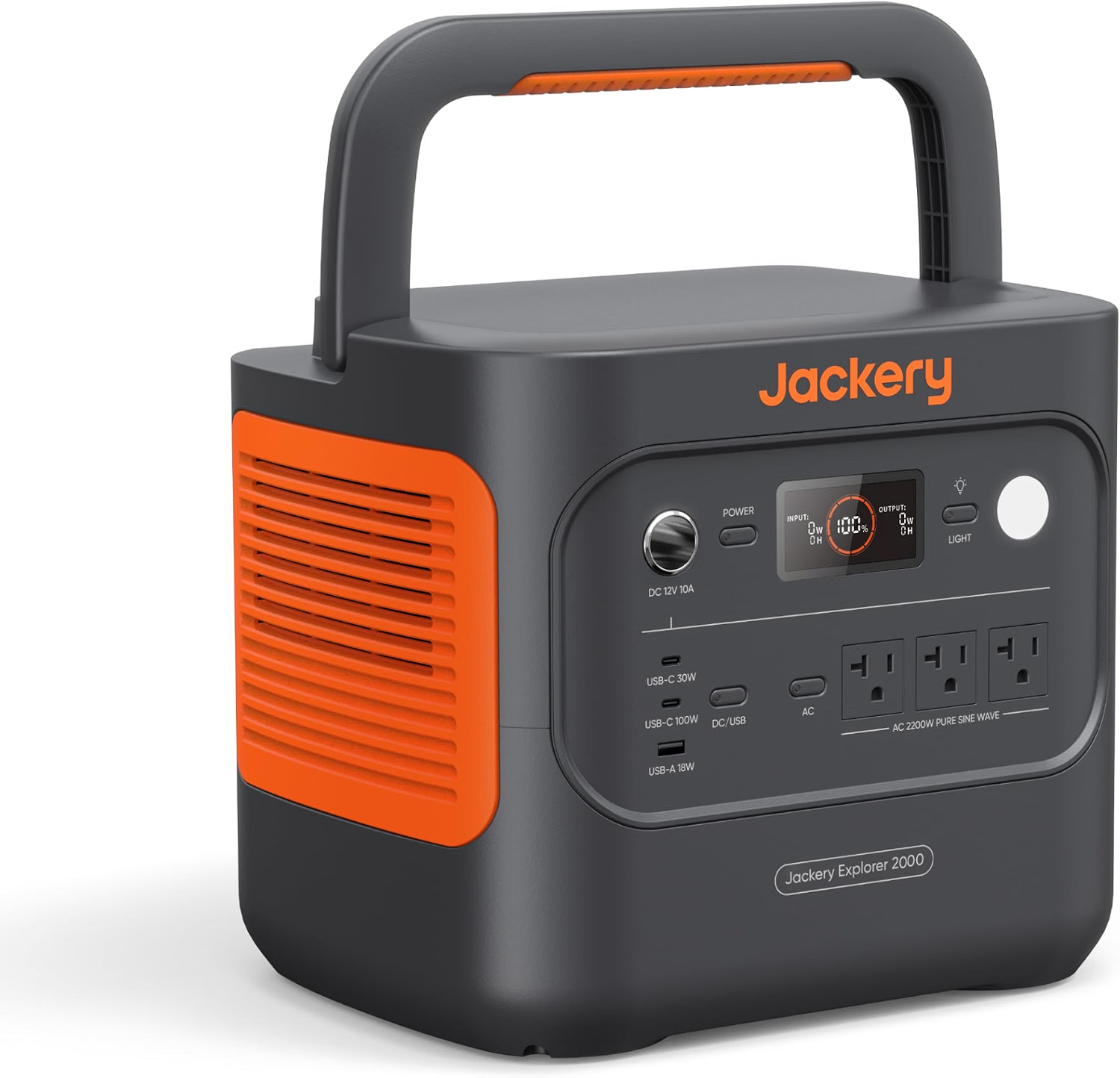
Jackery Explorer 2000 v2 is a 2kWh-class candidate for more reserve or extended travel. Greater storage does not eliminate the need for daily replenishment on long trips.
3. Size your solar array for the conditions you actually camp in
Rated solar wattage is a laboratory figure rather than a daily energy guarantee. A useful first-pass estimate is panel watts × effective peak-sun hours × a net harvest factor. Peak-sun hours represent equivalent full-intensity sunlight, not total daylight. Use a conservative seasonal estimate for where you travel.
Solar array | Peak-sun hours | Net harvest factor | Estimated stored energy |
|---|---|---|---|
100W | 3 | 70% | 210Wh/day |
200W | 4 | 70% | 560Wh/day |
400W | 4 | 70% | 1,120Wh/day |
200W | 1 | 70% | 140Wh/day |
Shade, heat, panel angle, dirt, cable losses and station input limits can cut production. An oversized array is only useful if its voltage and current remain within the station's allowed specifications and the manufacturer approves the configuration. Check open-circuit voltage (including cold-weather voltage rise), operating voltage, current, polarity, connector type, power rating and any combined-port limit. Never assume matching plugs mean electrical compatibility.
The overlanding solar sizing guide and calculator explains how to estimate your array, and the portable solar panel buyer's guide compares foldable and suitcase designs.
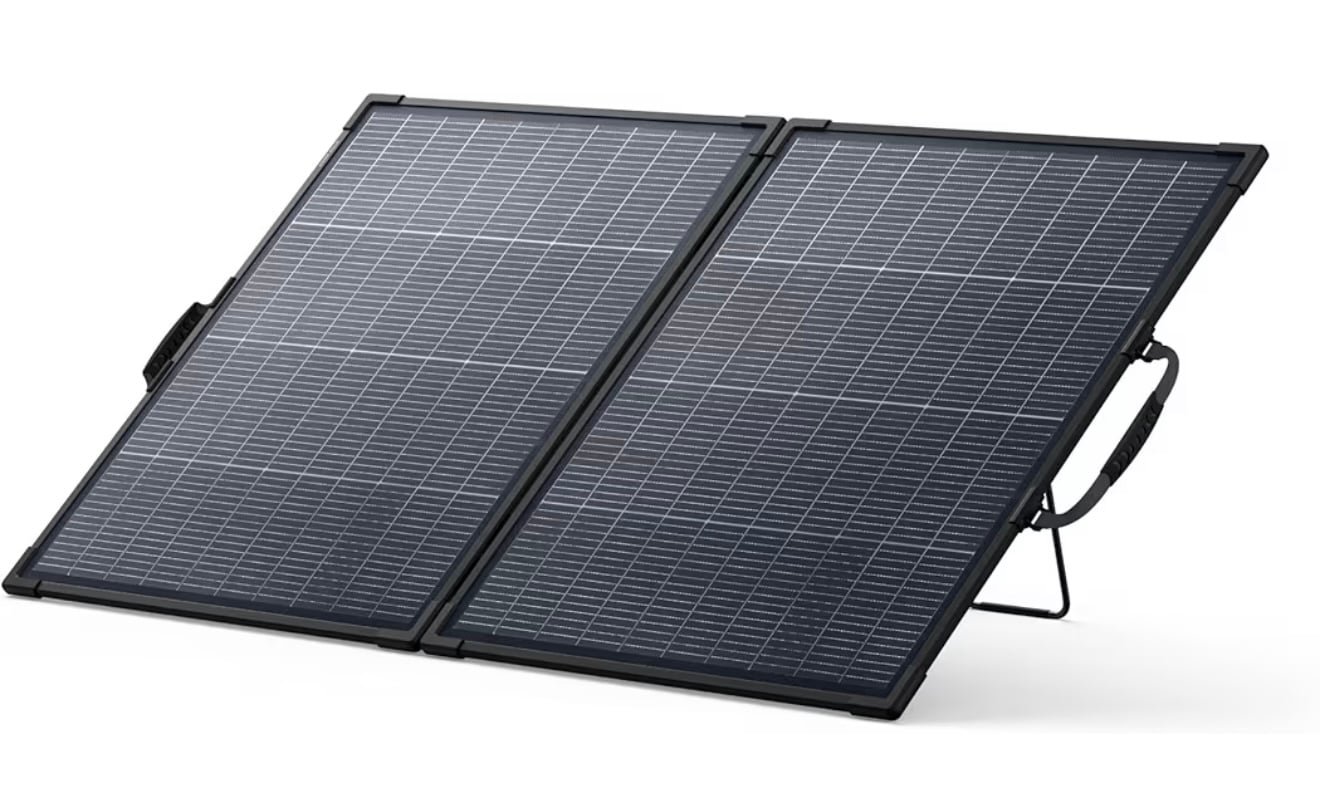
Anker SOLIX PS200 Bifacial 200W is one example of the portable 200W class. Bifacial gain varies with ground reflectivity and setup; plan from conservative real-world harvest rather than an ideal extra gain.
4. Turn driving time into charging time
A vehicle's accessory outlet is convenient for topping up smaller stations, but its supported output may be far below a dedicated DC-to-DC alternator charger. A properly installed dedicated charger can be useful for rigs that drive regularly, particularly when camp is shaded or winter sun is limited.
Estimate stored energy from driving as realistic accepted input watts × hours of driving × a charging-efficiency factor. For example, if a station accepts 400W continuously for one hour, using 90% as an illustrative net factor gives 360Wh stored. Check whether a watt reading is at the station input or the battery itself so losses are not counted twice.
The charger label is not the power every station receives. Jackery's published DC-to-DC charger comparison lists around 400W for the Explorer 1000 v2 and Explorer 2000 v2 despite the charger's 600W maximum. The actual rate can also fall with battery state of charge, temperature and vehicle conditions.
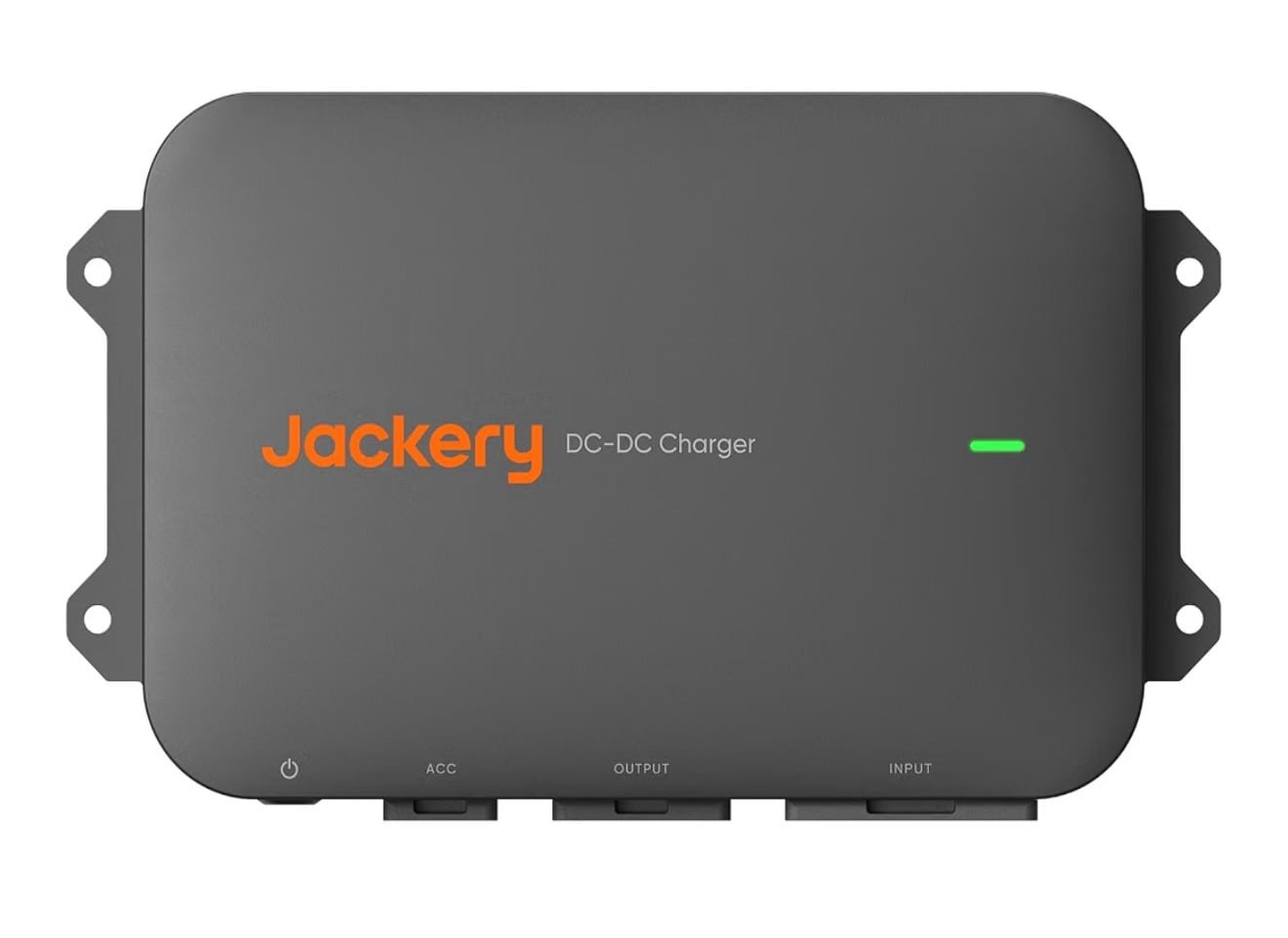
The Jackery 600W charger is worth comparing for compatible Jackery units. Treat the supported station-specific input as the planning value.
A dual-input option such as BLUETTI Charger 2 may work for certain systems that need solar and driving charging. The manufacturer lists up to 800W alternator input and 600W solar input with a combined output limit, so simply adding maximum ratings is misleading.
Read our guide to charging a portable power station while driving before installing anything, then use the best alternator chargers for overlanding comparison to identify the equipment appropriate for your station and vehicle.
5. Three complete overlanding power system plans
Use these examples as budget templates, not universal product bundles. Each assumes 90% delivery efficiency, 80% planned usable battery fraction, 70% solar harvest factor and 90% driving-charge efficiency. Where charging sources are used on the same day, use them sequentially or only with an approved combined-input system.
Planning assumption | Weekend | Extended trip | High demand |
|---|---|---|---|
Daily device energy | 350Wh | 750Wh | 1,200Wh |
Battery draw per day | 389Wh | 833Wh | 1,333Wh |
No-charge reserve | 2 days | 1.5 days | 2 days |
Minimum nominal capacity | 973Wh | 1,563Wh | 3,334Wh |
Practical battery class | 1kWh+ | 2kWh+ | 3.5–4kWh+ |
Solar | 100W × 3h | 200W × 4h | 400W × 4h |
Estimated solar stored | 210Wh | 560Wh | 1,120Wh |
Driving charge | 100W × 1h | 400W × 1h | 600W × 1h |
Estimated driving stored | 90Wh | 360Wh | 540Wh |
Daily recharge | 300Wh | 920Wh | 1,660Wh |
Daily balance | −89Wh | +87Wh | +327Wh |
Weekend warrior: simple, removable and inexpensive
Plan for roughly 350Wh of daily delivered energy, perhaps a small efficient fridge measured at 250Wh/day plus 100Wh of lighting and electronics. A 1kWh-class station, compatible 100W folding panel and approved accessory-outlet charging can be enough for short trips. At these assumptions the daily balance is negative by about 89Wh even with solar and a drive. That is acceptable for a short trip only if the battery reserve covers it; do not expect indefinite operation. If you park in shade or your fridge uses 600Wh/day, recalculate.
Extended-trip setup: balanced solar and alternator
A 750Wh/day load and 1.5 days of no-charge reserve suggest around 1.56kWh nominal storage, so consider the 2kWh class. With a 200W panel delivering 560Wh and one hour of actual 400W accepted vehicle charging supplying 360Wh, the estimated daily surplus is about 87Wh. That margin is thin. One cloudy day can erase several days of surplus, so plan a longer driving charge, additional compatible solar, or a reduced load when conditions worsen.
High-demand setup: remote work and longer off-grid stays
At 1,200Wh/day, two days of no-charge reserve requires about 3.33kWh nominal with these assumptions. A larger or approved expandable system in the 3.5–4kWh range and a 400W array plus one hour of real 600W accepted vehicle charging could restore around 1,660Wh on a favorable day. This leaves about 327Wh of modeled surplus, but the system must be physically practical: large batteries and arrays add weight, require secure mounting, and may exceed charging limits. If parking for a week without driving or with low sun, increase the reserve or decrease demand.
6. Match the system before buying components
Confirm the exact power station model and battery capacity, not just the family name.
Compare maximum solar input voltage, current, watts and approved wiring arrangements with the panel specs.
Verify the alternator charger's supported vehicle voltage, required alternator capacity, approved cables and specific station output mode.
Check your vehicle's electrical system, OEM guidance, available alternator headroom and cable route. A qualified automotive electrical installer is appropriate for high-current installations.
Confirm the fridge's voltage, current, startup behavior and cable requirements. Provide ventilation and avoid trapping heat around the station.
Secure heavy gear against movement; protect the equipment from water, direct heat, abrasion and impacts within its manufacturer's limits.
Do not bypass fuses or reverse polarity, improvise high-current connections, route cables across hot or moving parts, or install a charger based solely on its advertised wattage. Use the manufacturer's specified fuse placement, wire gauge and mounting requirements. Disconnect and isolate power as instructed for the exact installation. Do not charge the station outside its rated temperature limits, and never use a running vehicle in an enclosed space.
7. Make a bad-weather plan
If your normal day uses 750Wh and the battery draw is about 833Wh, but a cloudy day gives only 140Wh of solar and no driving charge, the net depletion is approximately 693Wh. Two such days use about 1,386Wh of battery energy. A 2,000Wh station with a planned usable 80% has about 1,600Wh available before your reserve is reached, assuming it starts full. Do not let the reserve calculation become a promise; verify the actual capacity and track the battery's state of charge.
Prioritize food refrigeration and essential communications; postpone nonessential AC loads.
Set up panels before you need energy, orient them appropriately, and keep them out of shade.
Monitor actual daily recharge and battery draw rather than relying on the display's instantaneous watt numbers.
Plan a safe approved recharge opportunity before the reserve is exhausted; bring a non-electrical food/cold-storage backup where practical.
Recalculate for your longest stationary camp, the coldest or hottest expected conditions, and shorter winter sunlight.
Frequently asked questions
Is a 1,000Wh power station enough for overlanding?
It can be for efficient weekend trips with modest loads or regular charging. At 80% usable capacity and 90% delivery efficiency, a 1,000Wh unit supports roughly 720Wh of delivered energy before the modeled reserve. A fridge-heavy 750Wh/day example demands more than one day's planned usable energy.
Can a 200W solar panel keep a 12V fridge running?
Possibly. At four peak-sun hours and 70% net harvest, it contributes around 560Wh of stored energy. Whether that is enough depends on measured fridge consumption, delivery losses, other loads and available sunlight. A hot-weather fridge drawing 600Wh/day requires about 667Wh from the battery at the illustrative 90% delivery efficiency, so that panel alone falls short.
Do I need both solar and an alternator charger?
Not necessarily. Solar suits stationary camps, and vehicle charging suits frequent drives. Both can reduce dependence on a single charging source, provided the system supports each source and the planned charging schedule.
Can I connect solar and an alternator charger at the same time?
Only when the exact charger and power station configuration explicitly permit it and you comply with input voltage, current and combined power limits. Otherwise plan to use the sources separately.
Should I buy a bigger battery or more charging power?
If your energy balance is consistently negative on multi-day trips, adding recharge or cutting consumption solves the long-term problem. If daily recharge is adequate but you need to survive longer gaps between charges, prioritize battery capacity. Size both for the worst realistic travel day.
The bottom line
Build your system from three numbers: measured daily watt-hours, the longest realistic no-charge gap, and realistic daily recharge. Choose a battery that covers the gap, solar that fits your stationary schedule and an alternator charger that suits your driving schedule and electrical limits. Start with this planner, validate the assumptions with real measurements and scale the system only when the energy budget demands it.
This post may contain affiliate links. We may earn a commission when you purchase through links on this site at no additional cost to you.


