
This article contains affiliate links. We may earn a commission from qualifying purchases.
As an Amazon Associate I earn from qualifying purchases.
Cold weather has a way of finding the weak battery you forgot about. A truck that starts normally through summer can crank slowly or refuse to start when temperatures drop, which makes a portable jump starter one of the more practical pieces of winter roadside gear you can carry.
This guide compares eight current jump starters for pickups, SUVs and overlanding rigs. The lineup includes compact lithium packs, larger AGM jump boxes and one jump-starter/compressor combination. We have not personally tested every model here. Recommendations are based on current manufacturer specifications, published product information and how each design fits different truck and winter-use scenarios.
As an Amazon Associate I earn from qualifying purchases. Some links below are affiliate links. Grainger and Walmart links are retailer links rather than Amazon Associates links.
Quick answer: choose by your engine size, battery type and real use case, not by the biggest peak-amp number on the box. For winter, keeping the pack charged and within its manufacturer-specified operating and storage limits matters just as much as buying it.
This guide fits into our larger truck setup. See Best Overlanding Gear in 2026, Best Portable Power Stations for Overlanding in 2026, Best Portable Air Compressors for Overlanding in 2026 and our Overlanding for Beginners guide.
Quick Comparison: Best Portable Jump Starters for Trucks in 2026
Jump Starter | Best For | Published Starting Rating | Truck Fit |
|---|---|---|---|
NOCO Boost X GBX155 | Best overall for large trucks | 4,250A peak | Up to 10.0L gas / 8.0L diesel |
NOCO Boost PRO GB150 | Heavy-duty lithium alternative | 3,000A peak | Up to 9.0L gas / 7.0L diesel |
Schumacher SL1639 | Cold-weather features | 1,000A | Up to 8.0L gas / 6.0L diesel |
Jump-N-Carry JNC770R | Traditional AGM jump box | 1,700 peak / 425 cranking amps | Light- and medium-duty use |
NOCO Boost GB70 | Many full-size trucks | 2,000A peak | Up to 8.0L gas / 6.0L diesel |
Jump-N-Carry JNCPRO1 | Extreme-cold AGM option | 1,700 peak / 425 cranking amps | Professional-style 12V jump box |
NOCO Boost X GBX75 | Mid-size Boost X | 2,500A peak | Up to 8.5L gas / 6.0L diesel |
Jump-N-Carry JNCAIR | Jump starter + compressor | 1,700 peak / 425 cranking amps | Roadside two-in-one |
Why a Jump Starter Matters More When Winter Arrives
Cold weather is hard on starting systems. As temperatures fall, a battery has less available performance while cold engine oil and other mechanical loads can make the engine harder to crank. That combination is why the first genuinely cold morning often exposes a battery that seemed fine a few weeks earlier.
A jump pack does not fix a worn-out battery, charging-system problem or bad connection. What it can do is give you an independent source of starting power when the vehicle battery does not have enough left to crank the engine. For a truck parked at a trailhead, hunting spot, airport lot or remote campsite, that independence matters.
Winter readiness also means maintaining the jump starter itself. Recharge it on the schedule in its manual, check its state of charge before a trip, inspect the clamps and cables, and pay attention to the manufacturer's operating and storage temperature guidance. Leaving a lithium pack forgotten in a truck for months is not a maintenance plan.
1. NOCO Boost X GBX155: Best Overall for Large Trucks
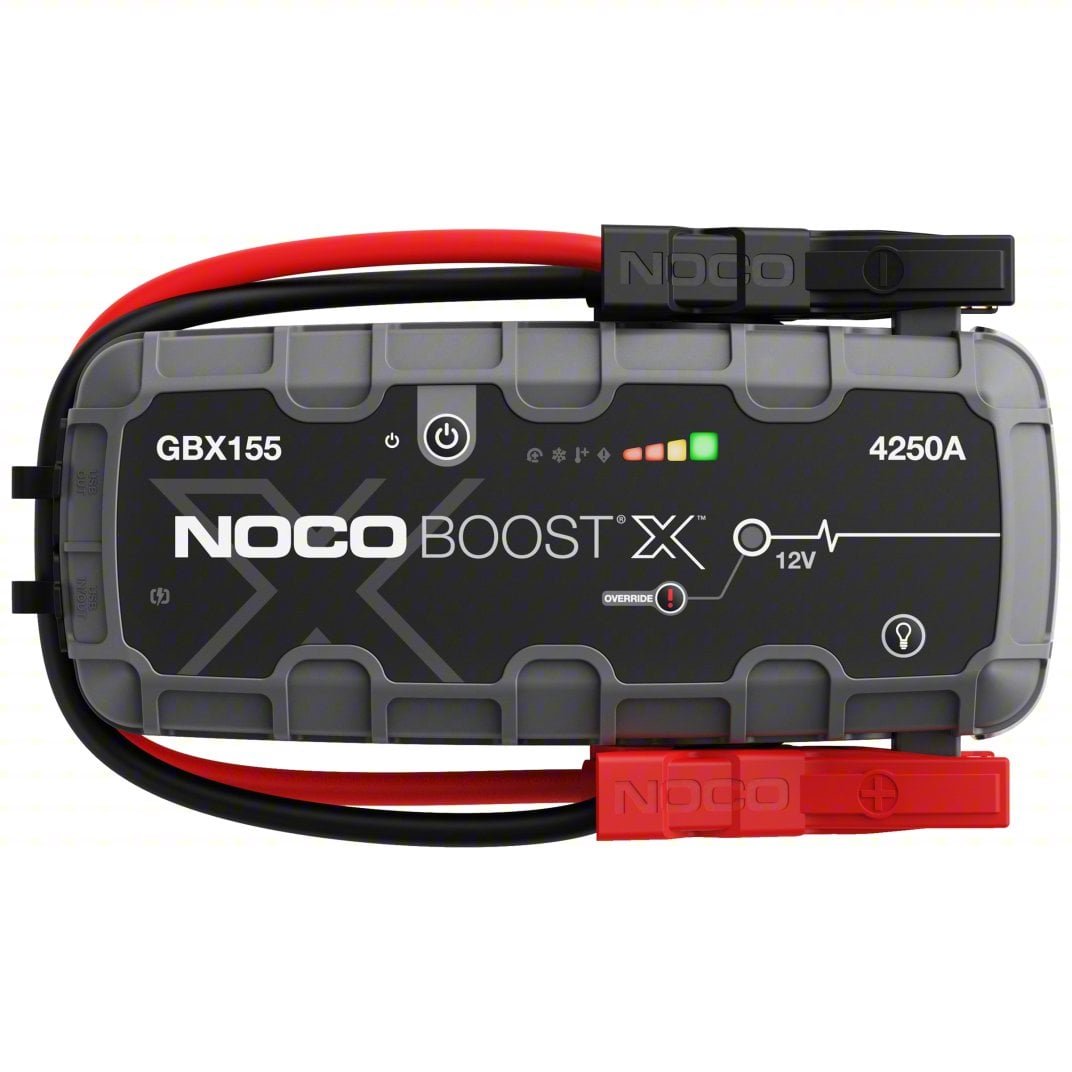
NOCO Boost X GBX155 is the high-output lithium option in this comparison for larger truck engines and demanding roadside use.
The GBX155 is the largest Boost X model in this group. NOCO currently rates it at 4,250 peak amps for 12-volt lead-acid batteries and engines up to 10.0 liters gasoline or 8.0 liters diesel. Its 99Wh lithium-ion internal battery, USB-C Power Delivery input/output, 500-lumen light and IP65 rating with the ports closed make it a strong fit for larger pickups and overlanding rigs.
The practical reason to step up to the GBX155 is engine coverage. If you own a large-displacement gas truck or a diesel that sits near the limit of smaller packs, the extra capacity is easier to justify. USB-C fast charging is also useful because a jump starter is only valuable when it is actually charged.
It is more expensive and larger than most people with half-ton gas trucks need. Buy it for the engine and use case, not because 4,250 is a bigger number than a competitor's advertised peak rating.
Best fit
Large gas-engine pickups and diesel trucks.
Drivers who want USB-C Power Delivery for faster recharging.
Overlanding rigs where one jump pack may need to cover multiple vehicles.
2. NOCO Boost PRO GB150: Best Heavy-Duty Lithium Alternative
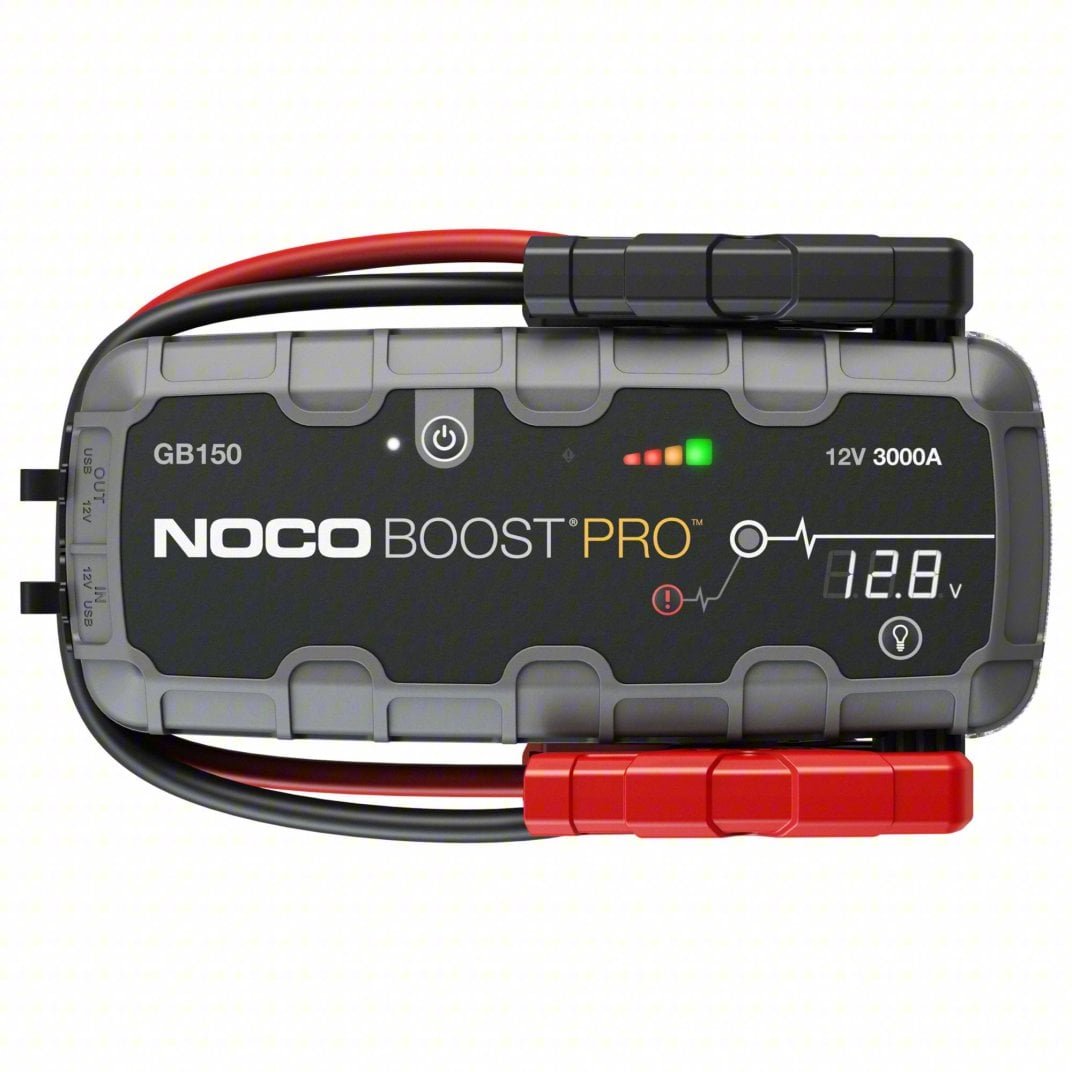
NOCO Boost PRO GB150 combines a high-output lithium jump pack with a rugged enclosure for truck and roadside emergency kits.
The GB150 is NOCO's older Boost PRO heavy-duty lithium design. NOCO lists 3,000 peak amps, compatibility with gasoline engines up to 9.0 liters and diesel engines up to 7.0 liters, an 88Wh lithium-ion battery and IP65 protection with the ports closed.
Compared with the Boost X line, the GB150 gives up the newer high-power USB-C charging approach. Its appeal is the established heavy-duty format and broad engine coverage. For owners who find it at a meaningful discount, it remains a capable truck-focused alternative.
Best fit
Full-size pickups with large gas or diesel engines.
Buyers who prefer the established Boost PRO platform.
Truck emergency kits where compact size still matters.
3. Schumacher SL1639: Best Cold-Weather Feature Set
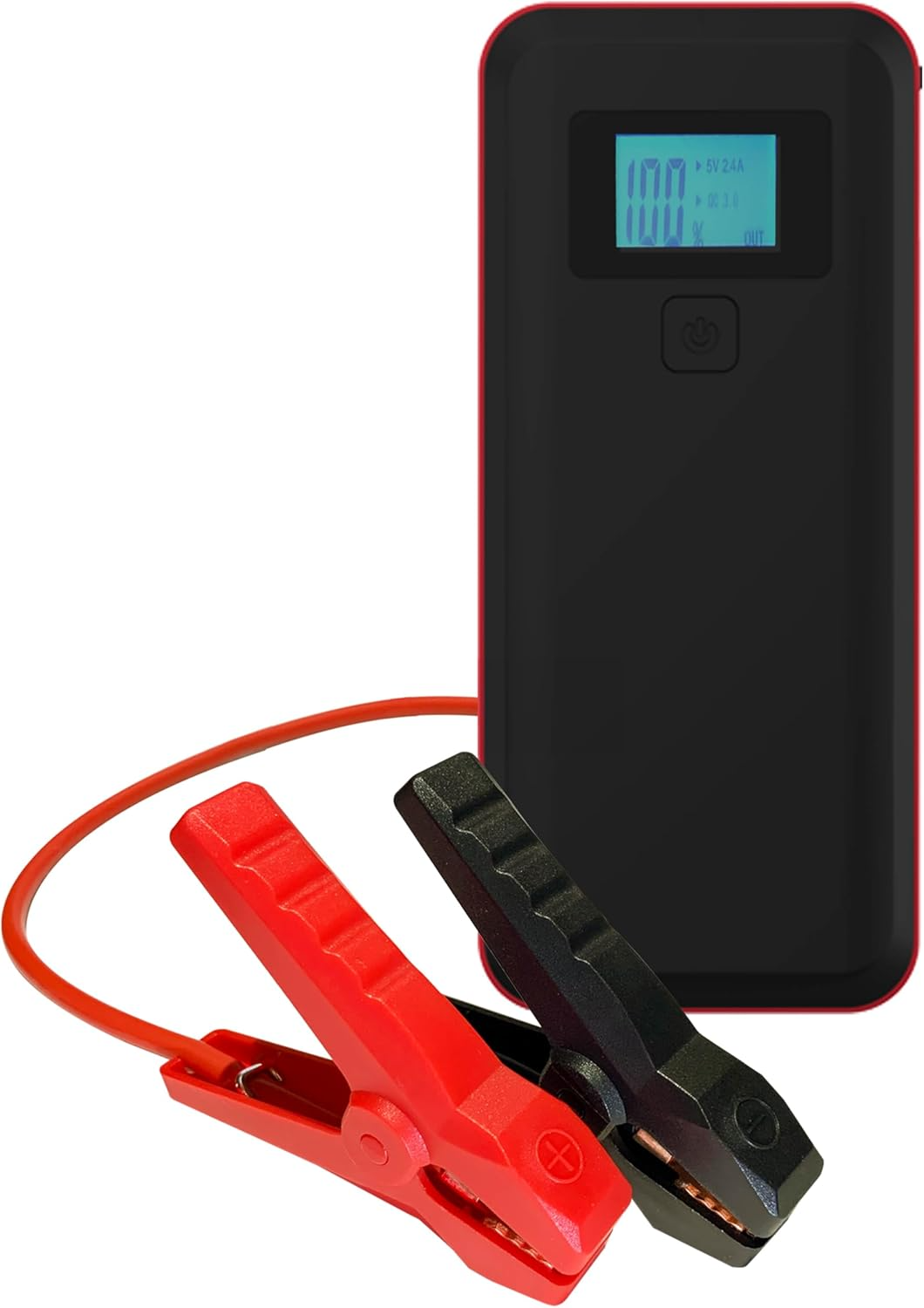
Schumacher SL1639 stands out for winter preparation because its published feature set includes Pre-Boost and Pre-Heating functions.
Schumacher's SL1639 earns its place because winter is part of the buying decision here. Schumacher rates the 1,000A lithium pack for engines up to 8.0 liters gas and 6.0 liters diesel and specifically lists Pre-Boost for deeply discharged batteries plus Pre-Heating technology intended to warm the jump starter's battery in cold conditions.
At about 1.6 pounds with a 29.6Wh lithium-ion battery, it is much easier to stash than an AGM jump box. It also includes smart-clamp protections, USB power and an area light.
The tradeoff is that its published starting rating is lower than the larger NOCO models. For a big diesel or repeated professional use, we would look toward a larger pack. For a typical pickup owner specifically thinking about winter preparedness, its cold-weather feature set is the reason it makes this list.
Best fit
Drivers prioritizing compact winter emergency gear.
Gas trucks and compatible diesels within Schumacher's published engine limits.
People who want a lightweight pack with explicit cold-weather starting features.
4. Jump-N-Carry JNC770R: Best Traditional AGM Jump Box
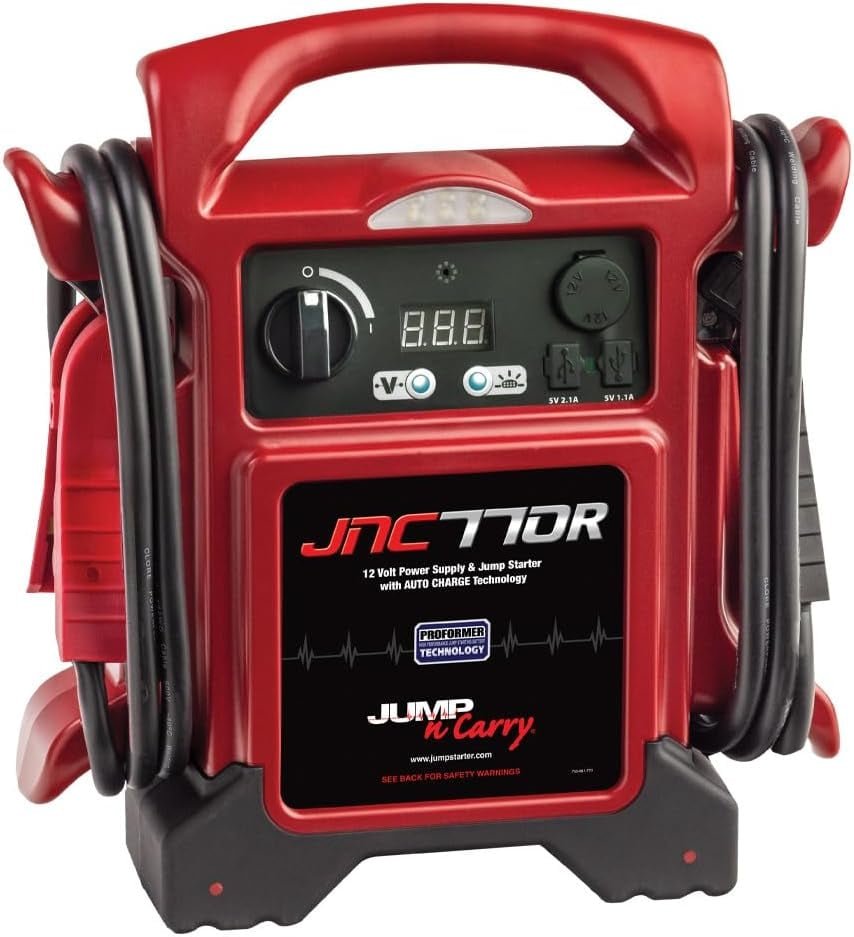
Jump-N-Carry JNC770R uses a traditional AGM-based design with long heavy-gauge leads for users who prioritize robust starting hardware over compact size.
The JNC770R takes a different approach from the pocket-size lithium packs. Clore Automotive rates it at 1,700 peak amps and 425 cranking amps and equips it with a Clore PROFORMER battery, 68-inch #2 AWG cable leads, PowerJaw clamps and a built-in 3A automatic charger.
At roughly 23 pounds, this is not the pack you buy to save cargo space. The reason to choose it is the professional-style hardware, long cable reach and AGM-based design. The 68-inch leads can be especially useful when the vehicle's jump points are awkward or when you want to keep the box on the ground.
The built-in automatic charger also changes the maintenance routine. This is more like a traditional shop or tow-style jump box than a USB gadget, which will appeal to some truck owners and be excessive for others.
Best fit
Owners who prefer an AGM jump box over lithium.
Garages, farms, fleets and trucks where long heavy-gauge leads matter.
Users willing to trade weight for traditional jump-starter construction.
5. NOCO Boost GB70: Best for Many Full-Size Trucks
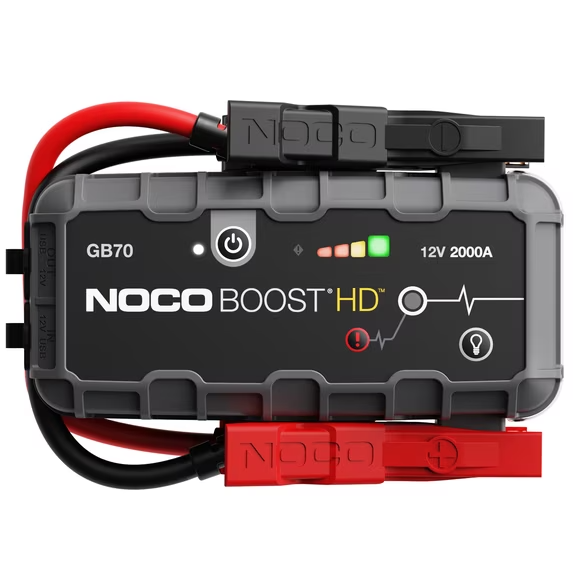
NOCO Boost GB70 is a smaller truck-friendly lithium jump pack aimed at owners who do not need the size and output of the larger GBX155.
The GB70 is the smaller, less expensive NOCO option in this lineup. NOCO currently rates it at 2,000 peak amps for gas engines up to 8.0 liters and diesel engines up to 6.0 liters. The enclosure is rated IP65 with its ports closed, and the unit weighs about five pounds.
That engine coverage includes a wide range of full-size gas pickups and many diesel applications, making the GB70 a sensible middle ground when the GBX155 is more jump starter than you need. It is also easier to store in a truck than a 20-plus-pound AGM box.
Check your exact engine displacement before buying. A model that is ideal for a gas half-ton may not be the right choice for a larger diesel.
Best fit
Full-size gas trucks within the published 8.0L limit.
Drivers who want a compact lithium pack without buying the largest NOCO.
SUV and truck owners building a general roadside kit.
6. Jump-N-Carry JNCPRO1: Best Extreme-Cold AGM Option
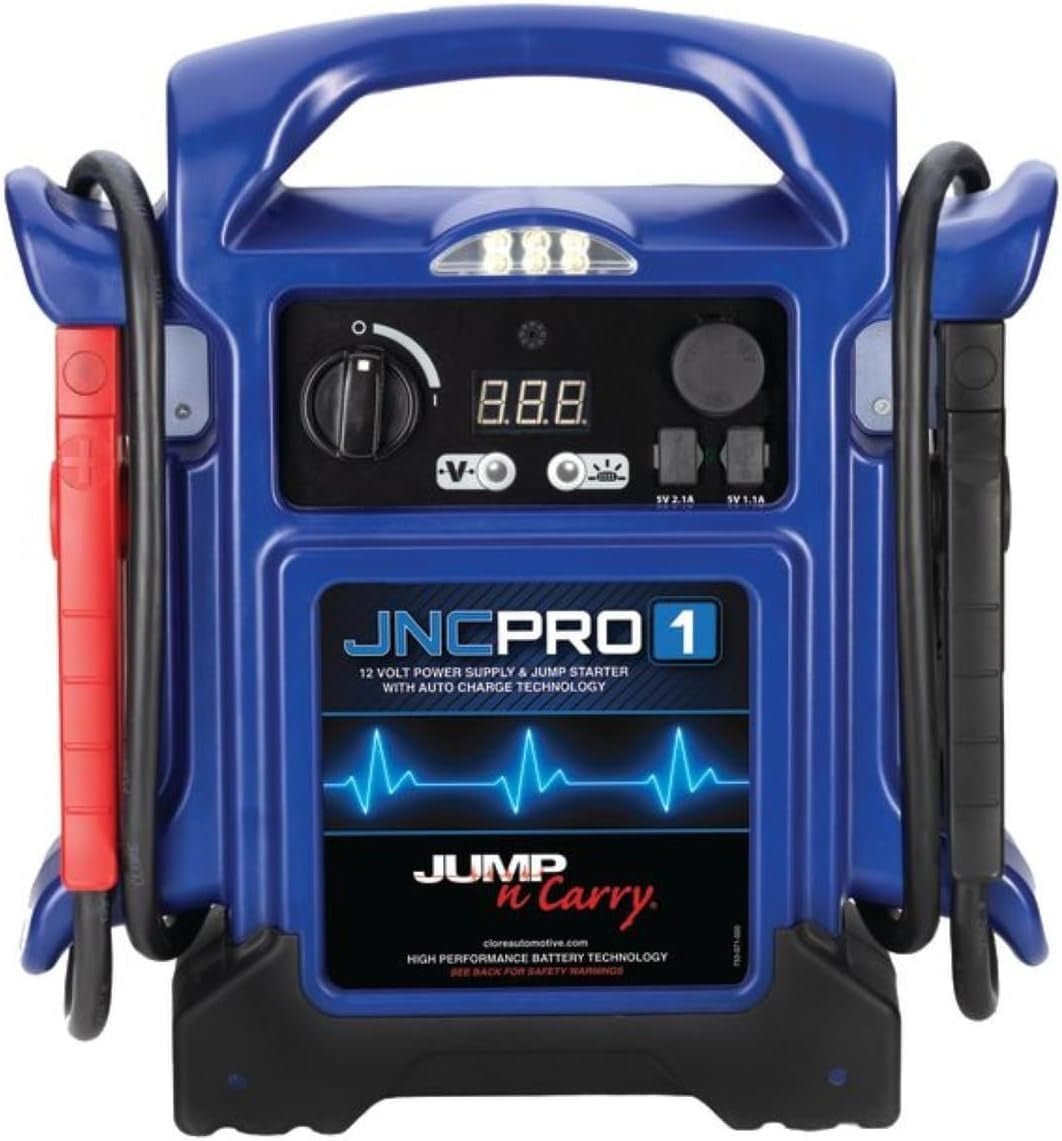
Jump-N-Carry JNCPRO1 is the cold-weather-focused AGM choice, built around a professional-style jump-starter format rather than a pocket-size lithium pack.
The JNCPRO1 is a newer professional-style Jump-N-Carry model built around a non-spillable Clore PROFORMER AGM battery. Clore rates it at 1,700 peak amps and 425 cranking amps, with 46-inch #2 AWG cables, HotJaw clamps and a built-in automatic charger.
The winter-specific reason it is here is unusually clear: Clore states that it rates the JNCPRO1's effectiveness to -30°F. That does not mean every vehicle will start at -30°F regardless of battery condition, oil viscosity or engine size. It does mean the manufacturer is explicitly positioning and rating this unit for severe cold.
At about 22 pounds, this is not a glove-box solution. It makes the most sense for someone who values cold-weather capability, long cranking duration and professional-style construction more than portability.
Best fit
Very cold climates where winter starting is a primary concern.
Farm, fleet, shop and work-truck use.
Owners who want an AGM unit with a published extreme-cold effectiveness rating.
7. NOCO Boost X GBX75: Best Mid-Size Boost X
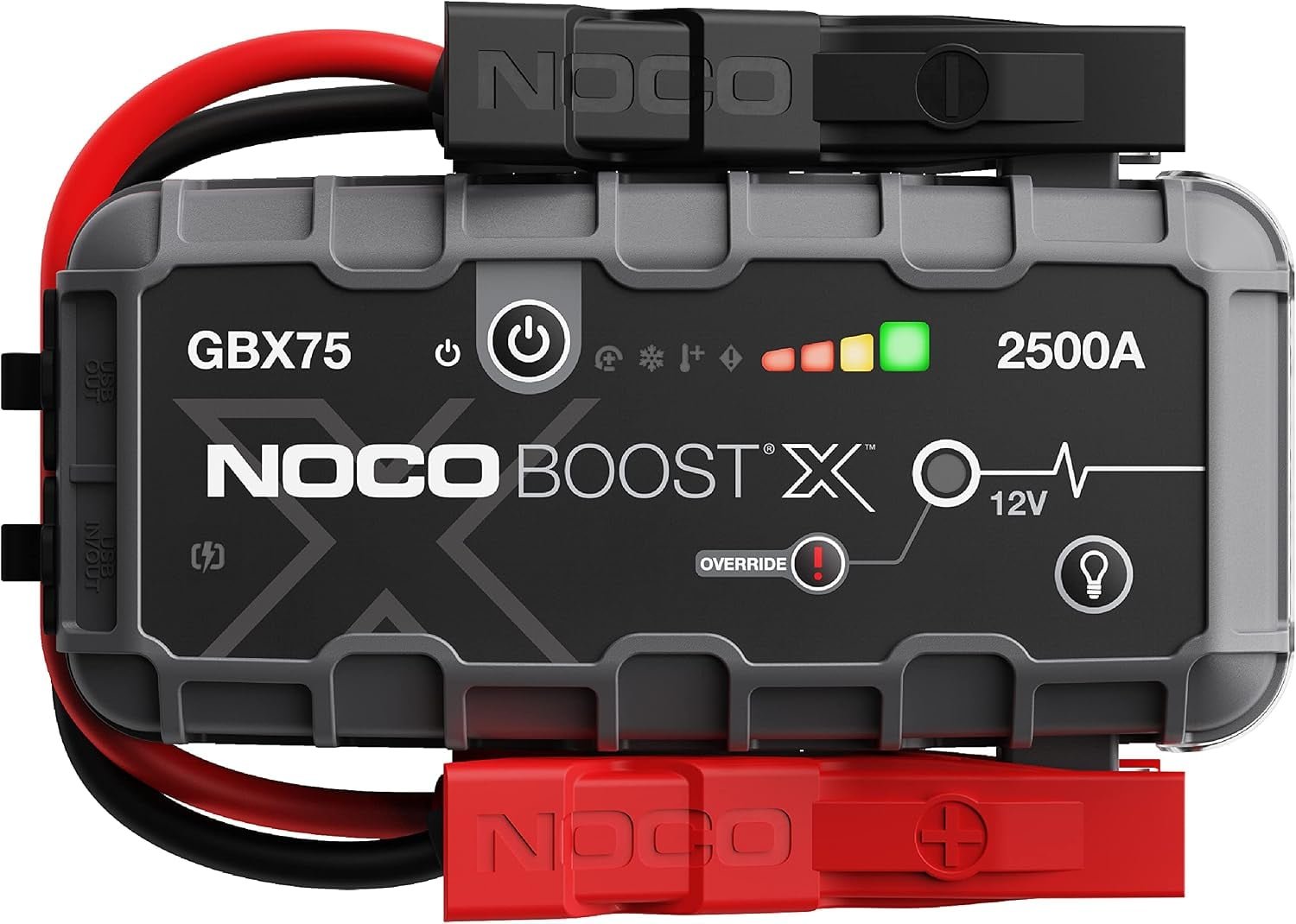
NOCO Boost X GBX75 offers a middle ground for truck owners who want the Boost X platform without stepping up to the larger GBX155.
The GBX75 is the middle ground in NOCO's Boost X family. NOCO currently lists 2,500 peak amps, support for gas engines up to 8.5 liters and diesel engines up to 6.0 liters, a 74Wh lithium-ion battery and USB-C Power Delivery fast charging.
For many full-size gas trucks, that is enough engine coverage without stepping up to the physically larger and more expensive GBX155. The Boost X charging system is another advantage for travelers already carrying USB-C PD chargers or portable power stations.
As with every lithium pack, do not treat its compact size as permission to ignore maintenance. Check charge before winter trips and follow NOCO's storage and temperature instructions.
Best fit
Full-size gas pickups and compatible diesels.
Drivers who want Boost X USB-C charging in a smaller package.
Overlanders balancing storage space and starting capability.
8. Jump-N-Carry JNCAIR: Best Jump Starter + Air Compressor Combo
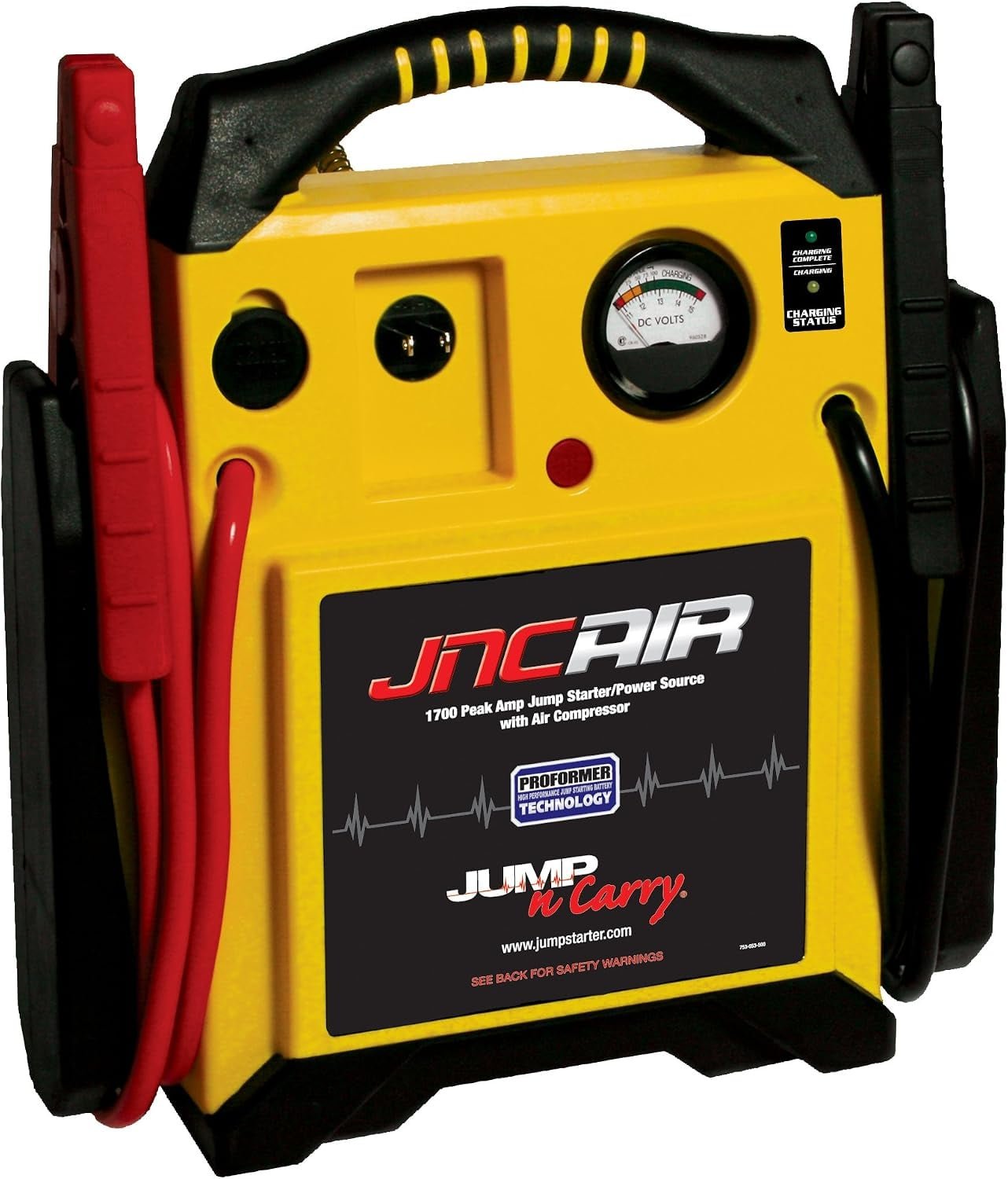
Jump-N-Carry JNCAIR combines starting power and an onboard air system for a two-in-one truck roadside emergency setup.
The JNCAIR combines two common roadside needs in one large unit. Clore rates the jump starter at 1,700 peak amps and 425 cranking amps, with 68-inch #2 AWG cables. The integrated air system uses a 12-foot coiled hose with a screw-on chuck.
For truck owners, the attraction is obvious: a weak battery and a low tire are two of the more common reasons a vehicle stops being useful. Carrying one unit that addresses both can simplify a roadside kit.
The compromise is weight and specialization. At about 28.5 pounds, it is substantially heavier than a lithium jump pack, and a dedicated high-output overlanding compressor may be better for repeatedly airing up large off-road tires. Think of the JNCAIR as a roadside combination tool rather than a replacement for every trail-air system.
Best fit
Truck owners who want starting power and emergency tire inflation together.
Garage and roadside use where weight is less important.
Drivers building one consolidated emergency kit.
Lithium vs. AGM Jump Starters for Winter
Lithium jump starters win on size and weight. A pack that fits under a seat can deliver substantial starting power, and USB-C models are easy to recharge from modern vehicle and camping power systems. That portability makes it more likely that the jump starter is actually in the truck when you need it.
AGM jump boxes are larger and heavier, but professional-style models often provide long heavy-gauge cables, extended cranking capability and simple built-in charging. Clore also emphasizes cold-weather performance on several of its AGM-based products.
Neither chemistry eliminates the need to follow temperature guidance. Batteries are electrochemical devices, and extreme temperatures affect performance and charging. Check the manual for your exact model rather than relying on a generic rule from the internet.
How to Choose a Jump Starter for a Truck
Start with engine size
Manufacturer engine-size limits are more useful than shopping by a giant amp number alone. Match the pack to the largest engine you expect it to start, and pay special attention to diesel ratings because diesels generally demand more starting capability.
Do not compare peak amps as if every brand measures them identically
Peak-amp labels are useful within a manufacturer's own lineup, but they should not be treated as a universal performance benchmark across brands. Published cranking amps, engine-size guidance, cable construction, battery chemistry and the manufacturer's intended duty cycle give you a more complete picture.
Look at the clamps and cable reach
Compact packs are easy to store, but short leads can be awkward around remote jump posts or crowded engine bays. Traditional boxes such as the JNC770R and JNCAIR use much longer heavy-gauge cables, which is one reason they remain relevant despite their weight.
Think about how you will recharge it
A jump starter that is dead when the truck is dead is just ballast. USB-C Power Delivery can make lithium packs easier to top off during travel. AGM units with built-in automatic chargers can be convenient in a garage where they can be plugged in between trips.
Weather resistance matters in truck use
If a pack will live around dust, rain and open truck beds, check the published ingress-protection rating and what conditions apply. NOCO, for example, specifies IP65 on several models with the ports closed. That does not make them waterproof in every situation.
How to Keep a Jump Starter Ready All Winter
Charge the unit before the first cold snap and before long winter trips.
Set a recurring reminder to inspect charge state rather than assuming the pack is still full.
Store and charge it within the temperature limits in the manufacturer's manual.
Inspect clamps, cables, ports and the case for damage before relying on it.
Keep the owner's manual or a saved digital copy available, especially for override modes and deeply discharged batteries.
If your truck repeatedly needs a jump, diagnose the vehicle battery and charging system instead of treating the jump pack as the repair.
Where Should You Store a Jump Starter in a Truck?
The best location is secure, dry, accessible and within the storage-temperature range specified for the product. A pack buried under camping gear is not helpful on the shoulder of a snowy highway. A loose 20-pound AGM box is also something you do not want moving around the cab during a sudden stop.
Use the supplied case when available, secure heavier units, keep terminals and clamps protected from accidental contact, and avoid locations exposed to water or temperature extremes beyond the manufacturer's guidance.
Jump Starter Safety
Follow the connection sequence and safety instructions for the exact model. Confirm the vehicle uses a compatible 12-volt lead-acid starting system, identify the correct jump points, keep clamps separated, and never use a damaged or swollen battery pack.
Manual or override modes deserve extra caution because they can disable some automatic safety checks. If a vehicle battery is frozen, physically damaged, leaking or otherwise unsafe, do not treat a jump starter as a workaround. Consult the vehicle and jump-starter manuals.
Frequently Asked Questions
What size jump starter do I need for a full-size truck?
Use the manufacturer's engine-size rating as the starting point. Many full-size gas pickups fit within the published limits of models such as the NOCO GB70 or GBX75, while larger diesels may justify a GB150, GBX155 or a heavy-duty AGM solution. Verify your engine displacement before buying.
Are lithium jump starters good in cold weather?
They can be, but cold affects battery performance and each model has its own operating and charging limits. Schumacher specifically equips the SL1639 with a Pre-Heating feature, while other manufacturers provide model-specific temperature guidance. Follow the manual rather than assuming every lithium pack behaves the same way.
Is AGM better than lithium for winter?
There is no universal winner. AGM jump boxes are heavier but can offer long cranking duration, heavy cables and strong cold-weather positioning. Lithium packs are dramatically easier to carry. The better choice depends on climate, engine, storage space and how often you expect to use it.
How often should I recharge a portable jump starter?
Follow the maintenance interval in the owner's manual and check charge before trips. Recharge after use. Because self-discharge, storage temperature and parasitic electronics vary by model, a single universal interval is less useful than the manufacturer's instructions.
Can I leave a jump starter in my truck all winter?
Only if the storage environment stays within the manufacturer's limits and the unit is secured and protected. Extreme cabin temperatures can exceed what you expect, so check the manual for your exact pack.
Will a jump starter fix a bad truck battery?
No. It may provide enough temporary power to start the engine, but a failing battery, alternator problem, corroded connection or parasitic drain still needs diagnosis and repair.
Final Take
For a large truck where maximum engine coverage is the priority, the NOCO Boost X GBX155 is the broadest lithium option in this group. The GB70 and GBX75 make more sense when your engine falls comfortably inside their published limits and you want to save space and money.
For winter-specific features in a compact pack, the Schumacher SL1639 is interesting because it explicitly includes pre-heating technology. For severe cold and professional-style use, the AGM-based Jump-N-Carry JNCPRO1 stands apart because Clore rates its effectiveness to -30°F. The JNC770R is the traditional heavy-duty box, while the JNCAIR adds tire inflation for a consolidated roadside setup.
Whichever one you choose, buy it before the dead battery, not after it. Charge it, learn how its controls work, and check it before winter travel. That routine matters more than another thousand amps printed on a product page.
Sources and Further Reading
NOCO GBX155 specifications • NOCO GB150 specifications • NOCO Boost model comparison • NOCO Boost X model comparison
Schumacher SL1639 product specifications • Jump-N-Carry JNC770R specifications • Jump-N-Carry JNCPRO1 specifications • Jump-N-Carry JNCAIR specifications
This post may contain affiliate links. We may earn a commission when you purchase through links on this site at no additional cost to you.


