
This is a research-based buying guide. We may earn a commission from qualifying purchases or partner links at no additional cost to you. We have not personally tested every radio in this roundup.
As an Amazon Associate I earn from qualifying purchases.
Cell service disappears quickly once an overlanding route moves into mountain passes, desert backroads, forests, and remote trail systems. A GMRS radio gives a convoy a simple way to coordinate turns, warn about obstacles, spot vehicles through technical sections, and keep the group together without depending on a phone network.
The important choice is not simply how many watts a radio advertises. Antenna placement, terrain, repeater access, installation quality, radio controls, and whether you need an in-vehicle unit or a handheld all matter just as much.
This is a research-based guide built from current manufacturer specifications and documentation. We have not personally trail-tested every radio below, so range and performance claims are treated as manufacturer specifications rather than guaranteed real-world results.
Quick answer: choose a mobile GMRS radio if convoy and vehicle-to-vehicle communication is the priority. Add at least one handheld if you regularly use spotters, split camp tasks, or need communication away from the truck.
Best GMRS Radios for Overlanding at a Glance
Radio | Best For | Max Power | Repeater Capable |
|---|---|---|---|
Midland MXT575 MicroMobile | high-power vehicle radio | 50W | Yes |
Midland MXT295 PRO MicroMobile | modern hideaway install | 15W | Yes |
Midland MXT275 MicroMobile | simple plug-and-play value | 15W | Yes |
Wouxun KG-1000G Plus | advanced GMRS mobile | Up to 50W | Yes |
BTECH GMRS-50V2 | customizable 50W value | 50W | Yes |
Radioddity DB25-G | budget mobile radio | 25W | Yes |
Midland GXT67 PRO | handheld companion radio | 5W | Yes |
Do You Need a GMRS License?
Yes. In the United States, GMRS operation requires an FCC license. Current Midland documentation for its GMRS mobile and handheld radios explicitly states that a GMRS license is required.
A GMRS license is tied to the operator rather than to one specific radio. Before transmitting, use the FCC's current licensing system and rules rather than relying on old forum posts or outdated fee information.
Why GMRS Works Well for Overlanding
Simple vehicle-to-vehicle communication without cellular service.
Higher-power mobile radios are available for installed vehicle use.
Repeater-capable radios can extend useful coverage where repeaters are available.
FRS and GMRS radios can communicate on shared compatible channels when settings match.
Handheld radios can stay with spotters or people away from the vehicle.
NOAA weather reception is common on many current GMRS radios.
What Matters Most in an Overlanding GMRS Radio
Antenna placement can matter as much as transmitter power
GMRS is primarily line-of-sight radio. A clean antenna installation with a good location can be more useful than chasing the highest power number while using a poorly placed antenna. Roof, hood-lip, rack, and other mounting choices all involve tradeoffs in height, ground plane, durability, cable routing, and garage clearance.
15 watts can be enough for convoy use
A 15-watt mobile radio is already a major step above a basic handheld for vehicle-to-vehicle communication. For many groups, the convenience of a simple plug-in radio matters more than having 50 watts available at all times.
50 watts makes more sense for demanding installations
Higher-power radios are attractive when you regularly travel across larger open areas, use repeaters, or want the strongest legal mobile setup available. They usually require more deliberate power wiring and antenna planning than a cigarette-lighter radio.
Repeater support adds flexibility
Repeater access can extend communication beyond direct radio-to-radio range when a compatible repeater is available and you are authorized to use it. Split-tone support can be useful for repeaters that use different tones on transmit and receive.
Controls matter inside a real truck
A technically powerful radio can still be frustrating if the display is buried under the dashboard or the microphone cable blocks controls. Hideaway designs put most controls on the microphone, while remote-face radios let you separate the display from the main chassis.
QUICK PICKS: BEST GMRS RADIOS FOR OVERLANDING IN 2026: 7 PICKS FOR TRAIL & CONVOY COMMS
A fast comparison of the products already selected in this guide, using the article's existing retailer links and best-for positioning.
Midland MXT575 MicroMobile
Check Price on Amazon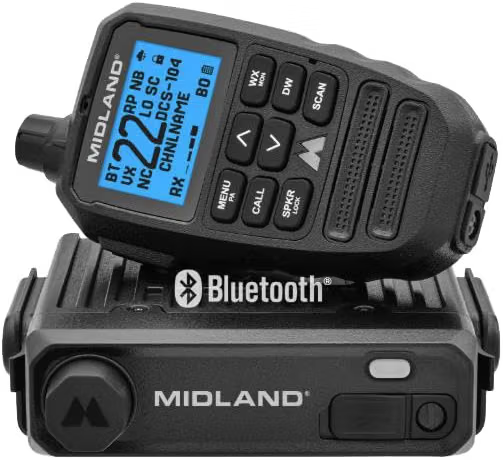
Midland MXT295 PRO MicroMobile
Check Price on Amazon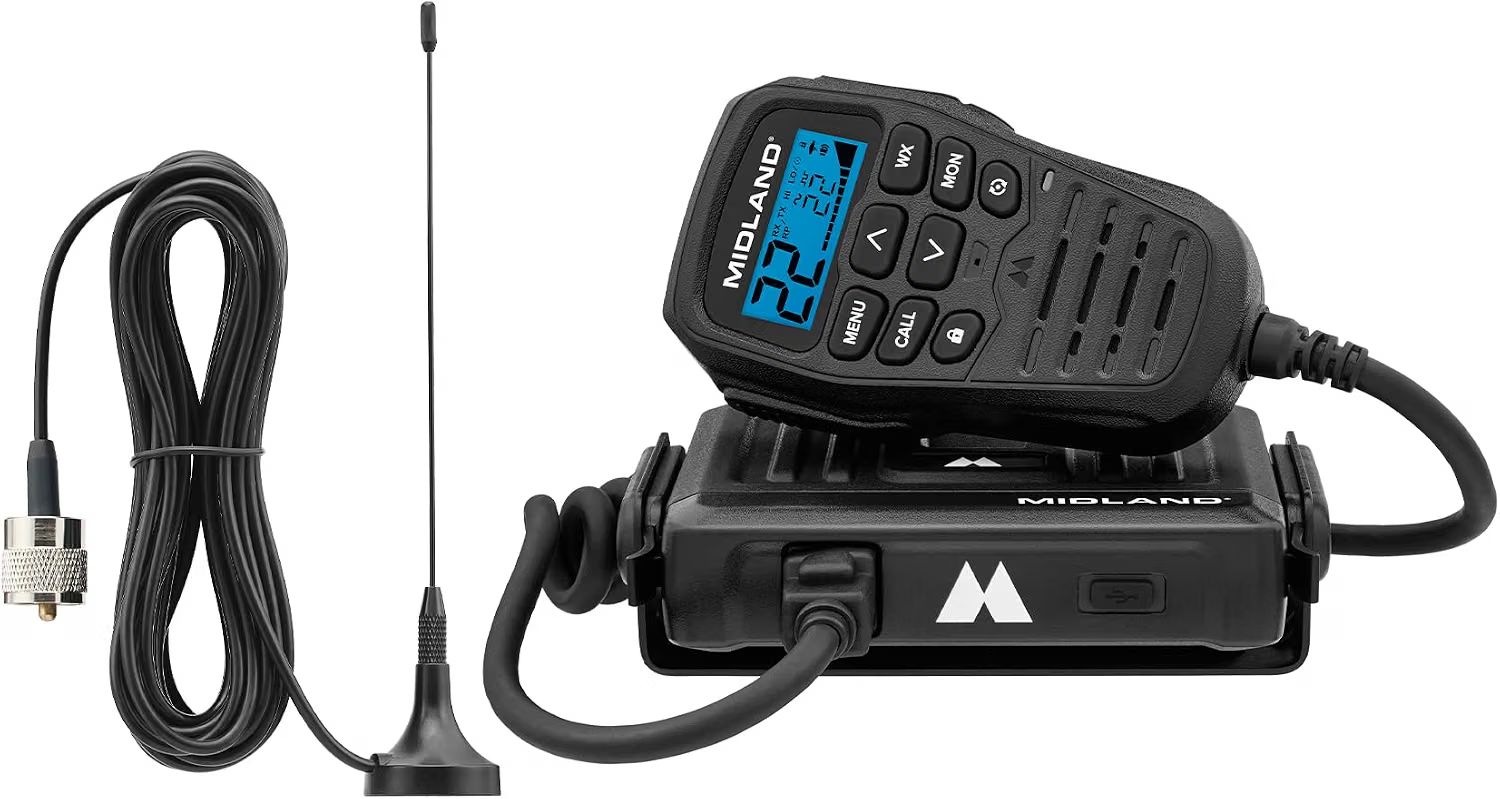
Midland MXT275 MicroMobile
Check Price on Amazon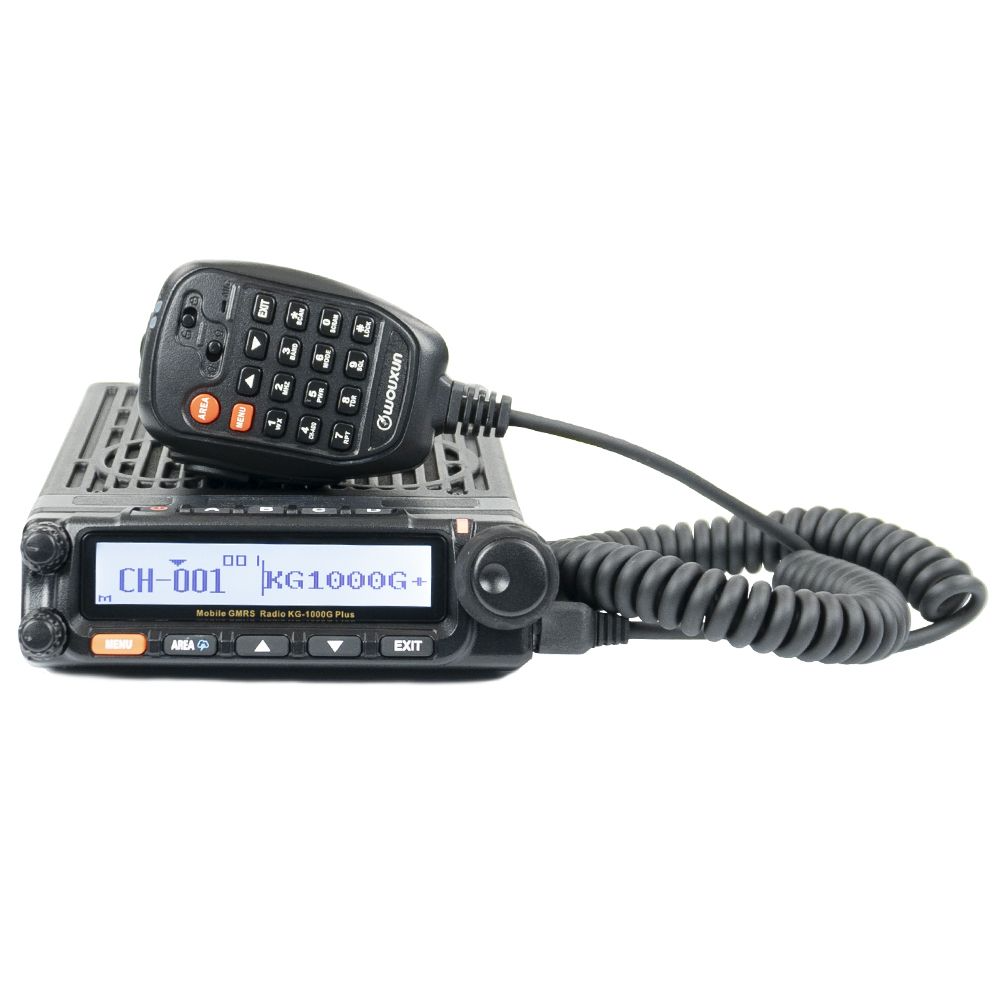
Wouxun KG-1000G Plus
View at Buy Two Way Radios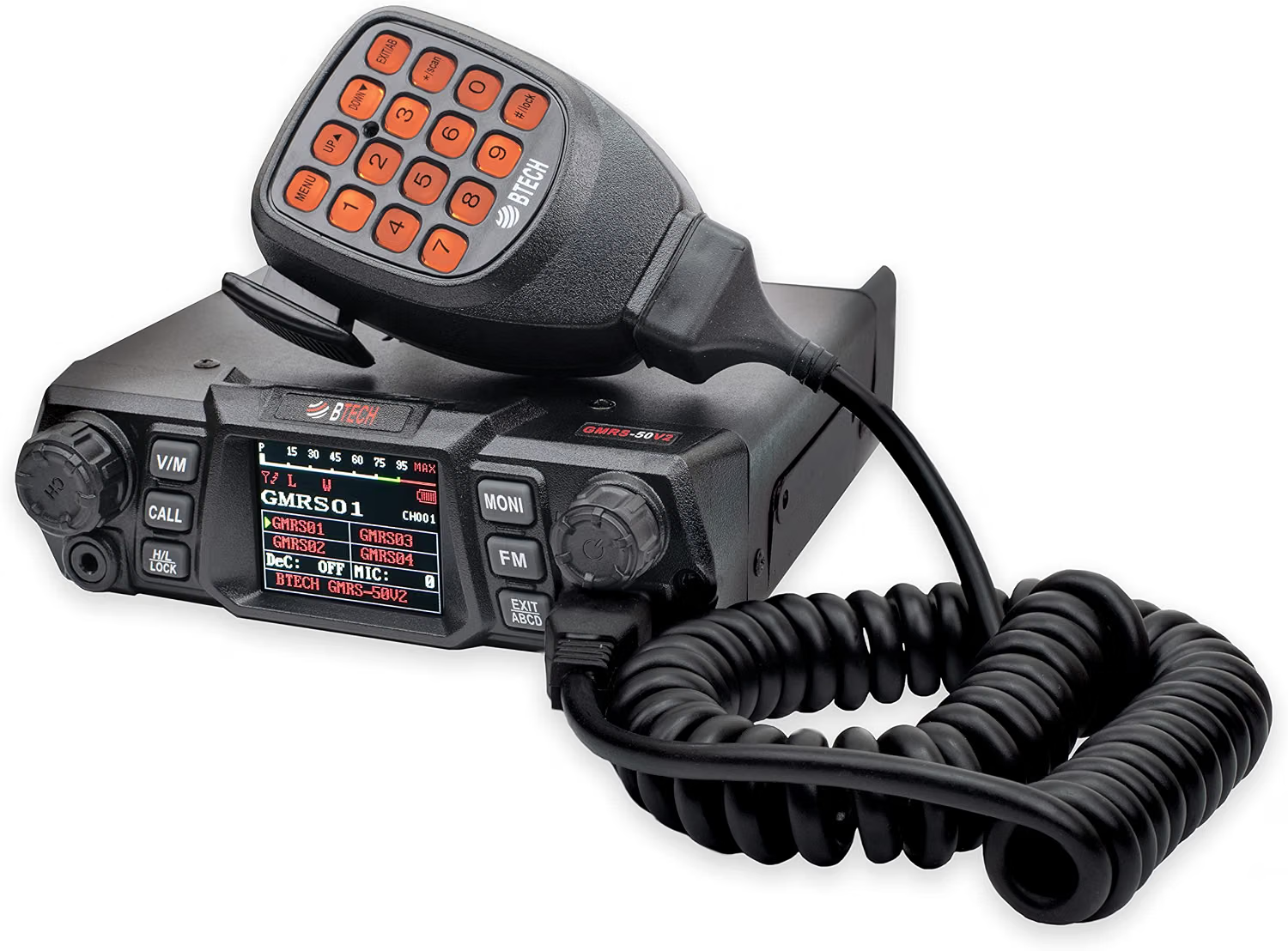
BTECH GMRS-50V2
Check Price on Amazon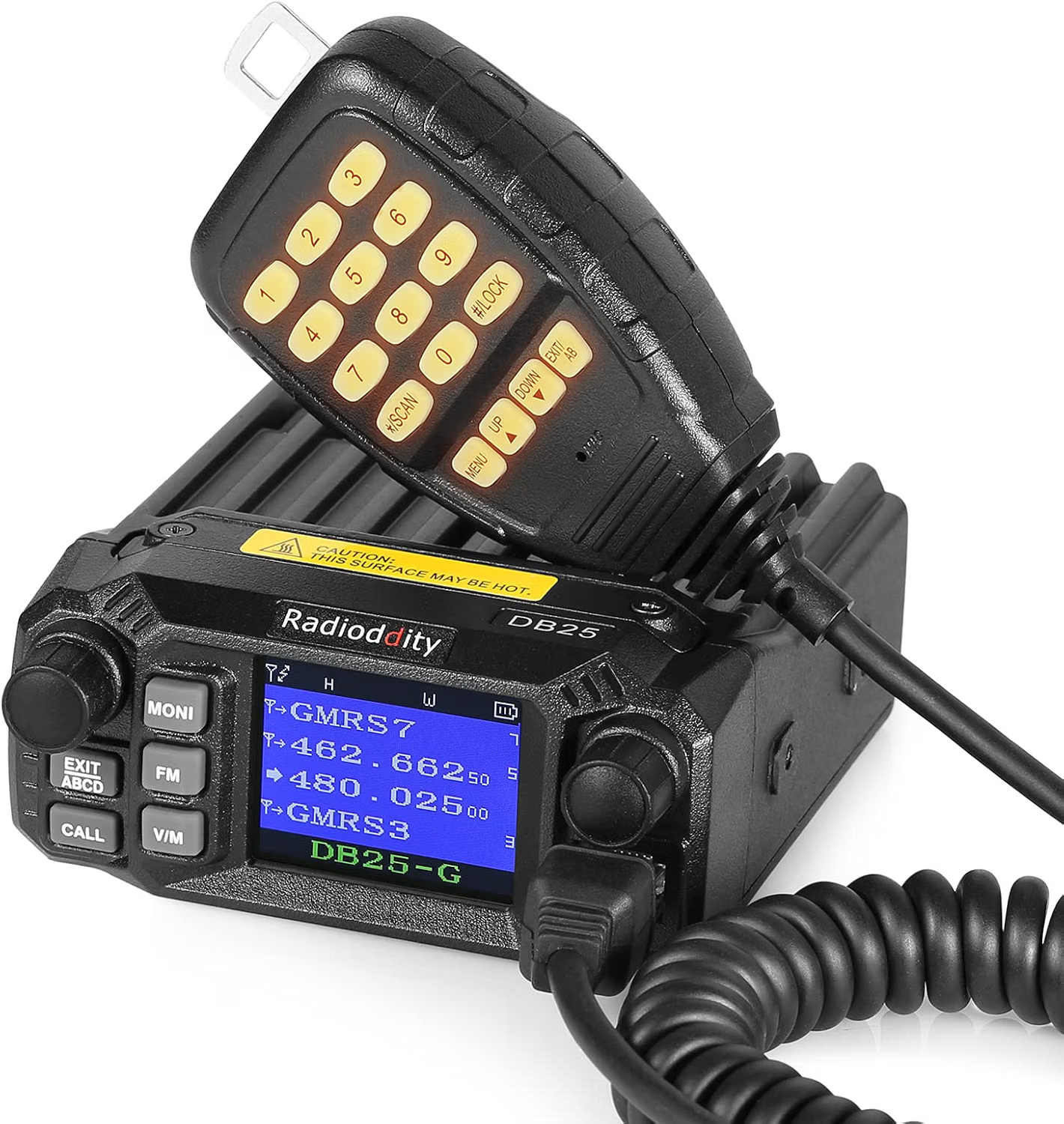
Radioddity DB25-G
Check Price on Amazon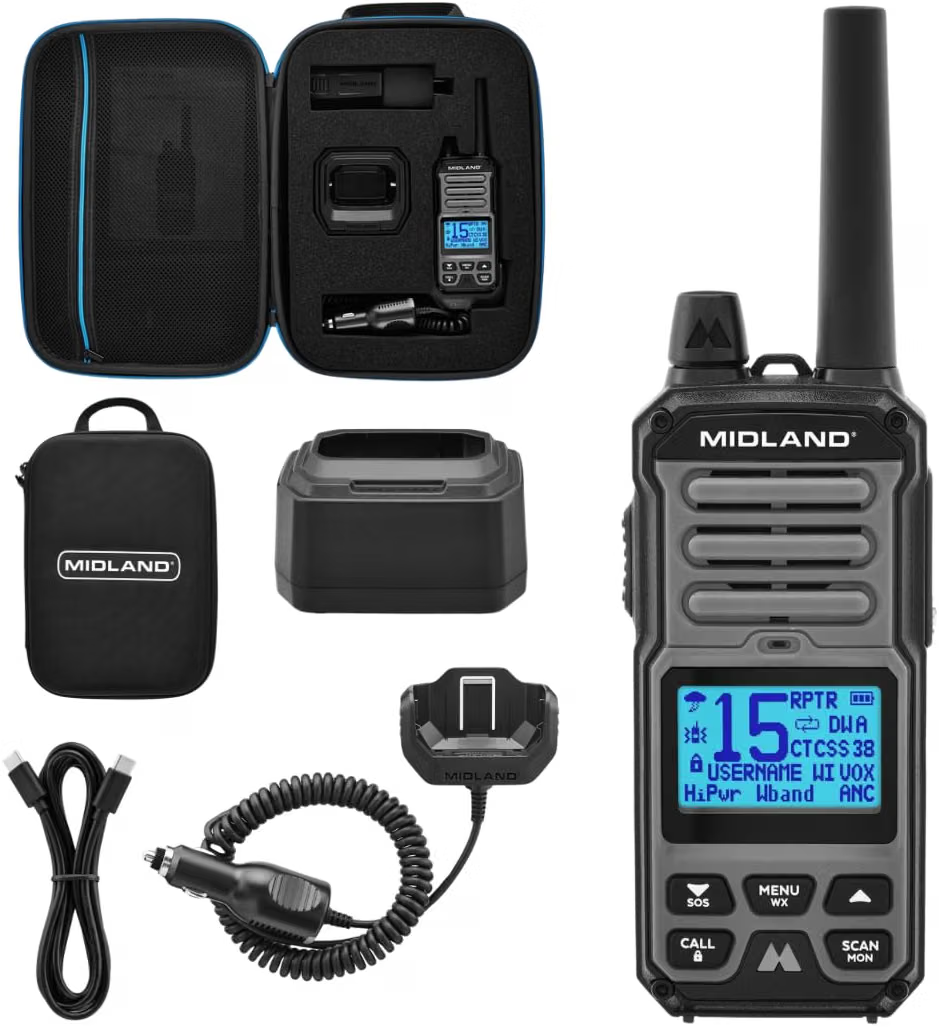
Midland GXT67 PRO
Check Price on Amazon1. Midland MXT575 MicroMobile: Best High-Power Vehicle Radio
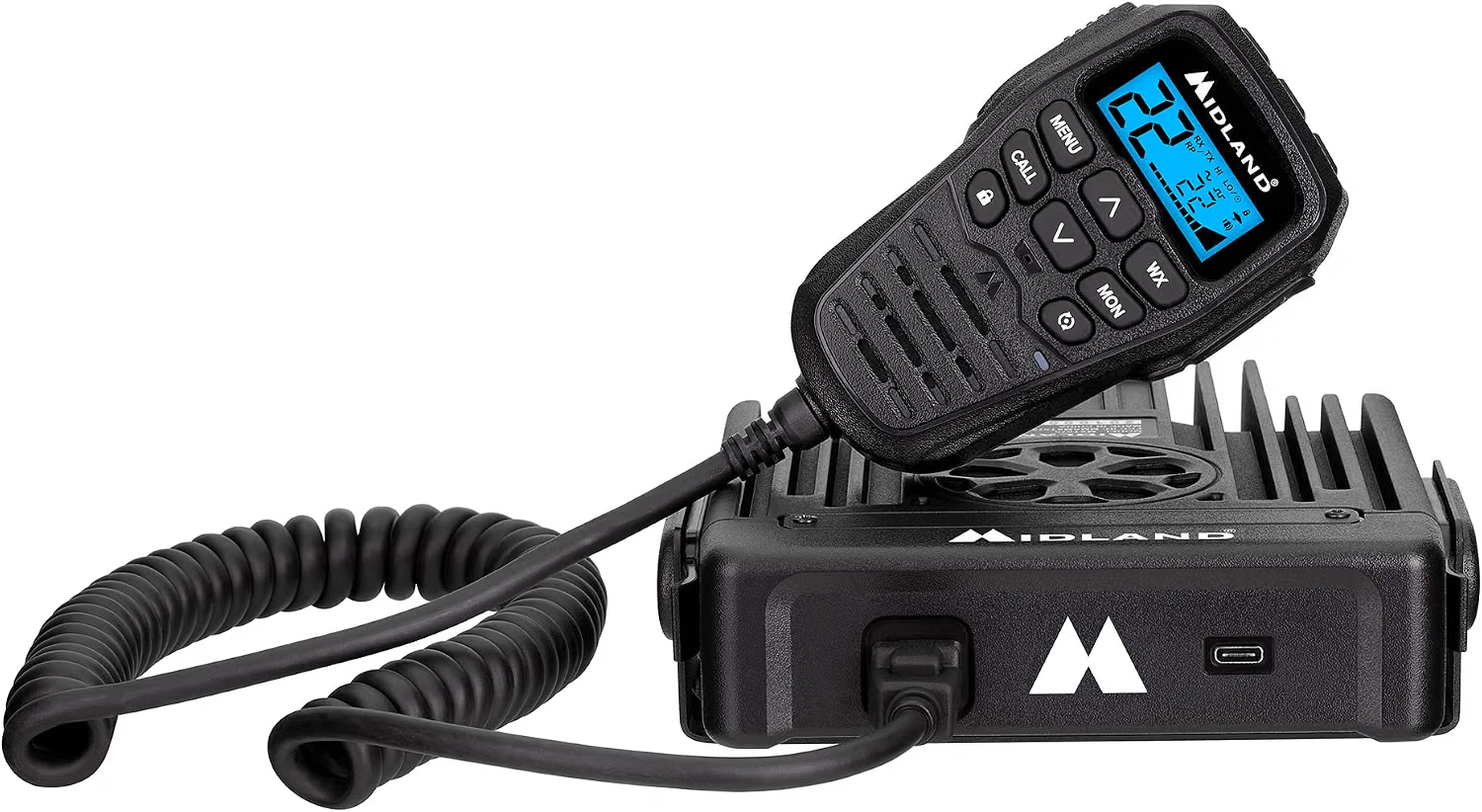
The MXT575 is Midland's 50-watt MicroMobile built for drivers who want the maximum GMRS transmitter power available in a conventional installed vehicle radio.
Midland lists 15 high-power GMRS channels, eight repeater channels with split-tone capability, wide and narrow bandwidth, NOAA Weather Scan and Alert, 142 privacy codes, USB-C charging, and a fully integrated control microphone. The main radio body can be hidden while the microphone handles the controls.
For overlanding, the attraction is the combination of high output and a clean cab layout. The tradeoff is installation. A 50-watt radio belongs in a properly wired electrical setup with a thoughtfully mounted external antenna.
Best fit
Frequent trail groups and long-distance convoys.
Drivers who actively use GMRS repeaters.
Full-size trucks and SUVs with room for a permanent radio and antenna installation.
2. Midland MXT295 PRO MicroMobile: Best Modern Hideaway Install
The MXT295 PRO is one of the newest options in Midland's lineup and takes a different approach from the brute-force MXT575. It uses 15 watts but adds a wireless Bluetooth control microphone, IP67 waterproof and dustproof protection, Bluetooth headset compatibility, automatic noise canceling, and a true hideaway base unit.
Midland lists up to 99 channels, eight repeater channels, split privacy tones, NOAA Weather Radio, wide and narrow bandwidth, dual watch, PC programming, an external speaker jack, a PA speaker jack, and a wired intercom connection.
That feature set makes the MXT295 PRO especially attractive in modern truck interiors where dashboard space is limited and a hanging microphone cable can become annoying around shifters, screens, switches, and center-console storage.
Best fit
Modern trucks with limited dashboard space.
Drivers who value a wireless microphone more than maximum transmitter power.
Overlanders who want IP67 protection and expanded control features in a 15-watt platform.
3. Midland MXT275 MicroMobile: Best Simple Plug-and-Play Value
The MXT275 remains one of the easiest ways to add a real mobile GMRS radio to a vehicle without committing to a complicated installation.
Midland rates it at 15 watts and includes a magnetic external antenna, DC vehicle adapter, eight split-tone repeater channels, NOAA Weather Scan and Alert, 142 privacy codes, and a fully integrated control microphone. The radio body can stay out of sight while the controls remain in the mic.
The biggest advantage is simplicity. Plug it into vehicle power, mount the antenna and mic, and you have a much more useful convoy setup than relying only on handhelds. The MXT295 PRO adds newer features, but the MXT275 costs less and keeps the same basic hideaway concept.
Best fit
First GMRS vehicle installation.
Weekend overlanders and convoy travel.
Drivers who want repeater capability without hardwiring a 50-watt radio.
4. Wouxun KG-1000G Plus: Best Advanced GMRS Mobile
The Wouxun KG-1000G Plus is built for users who want more control than a typical consumer GMRS mobile provides. It supports up to 50 watts, eight built-in GMRS repeater channels, simultaneous dual-mode operation, a wide receive range, NOAA weather channels, multiple transmit-power levels, and up to 999 custom channels.
One of its most useful installation features is a remote front panel. That allows the main radio chassis to be mounted elsewhere while the display and controls stay accessible in the cab.
The KG-1000G Plus is more radio than a casual convoy needs, but it makes sense for technically inclined GMRS users who want detailed programming, scanning, remote mounting, and a platform that can also serve as a capable base radio.
Best fit
Experienced GMRS users.
Custom vehicle installations with a remote display.
Drivers who want advanced programming and scanning flexibility.
5. BTECH GMRS-50V2: Best Customizable 50W Value
BTECH's GMRS-50V2 brings 50-watt output into a lower price tier than many premium mobile radios while emphasizing customization.
BTECH lists 256 fully customizable channels, 30 modifiable GMRS channels, repeater compatibility, quad watch, NOAA and VHF/UHF receive capability, VOX, and broad accessory support.
The value proposition is straightforward: high transmitter power and a deep feature set for buyers who are comfortable spending more time configuring a radio. Someone who wants the simplest possible interface may prefer Midland, while a user who likes programming and monitoring multiple channels may get more from the BTECH.
Best fit
Budget-conscious buyers who still want a 50-watt mobile.
GMRS users who enjoy programming custom channel layouts.
Drivers who want quad-watch monitoring and repeater support.
6. Radioddity DB25-G: Best Budget Mobile Radio
The Radioddity DB25-G is one of the more affordable ways to move from handheld-only communication to an in-vehicle GMRS radio.
Radioddity rates the DB25-G for 25 watts at the high setting, with 10-watt and 5-watt options. It supports GMRS repeaters, quad-channel standby, wide and narrow bandwidth, VHF/UHF receive scanning, CHIRP programming, and vehicle power through a cigarette-lighter plug.
The compact chassis and plug-in power arrangement make it attractive for vehicles where you do not want a permanent hardwired installation. Radioddity also makes ambitious range claims, but real GMRS range depends heavily on terrain, antenna placement, obstructions, and repeater availability, so those numbers should not be treated as guaranteed trail performance.
Best fit
Budget builds.
Temporary or transferable vehicle installations.
Drivers who want 25-watt capability without immediately building a full hardwired radio system.
7. Midland GXT67 PRO: Best Handheld Companion Radio
A mobile radio is excellent while everyone is inside a vehicle. It becomes much less useful when someone gets out to spot a tire around a rock, walks ahead to inspect a water crossing, or leaves the truck to set camp.
The Midland GXT67 PRO fills that gap with a 5-watt handheld design, repeater capability, IP67 waterproof and dustproof protection, USB-C charging, NOAA Weather Alert Radio, split-tone repeater support, and up to 99 channels.
Midland rates the battery for up to four days under its current published product specifications, though actual runtime will vary with transmit time, volume, temperature, and other use conditions.
Best fit
Trail spotters.
Camp communication away from the vehicle.
A handheld companion to a permanently installed mobile GMRS radio.
Which GMRS Radio Fits Your Overlanding Setup?
Your Priority | Radio to Consider |
|---|---|
Maximum installed vehicle power | Midland MXT575 |
Clean modern hideaway install | Midland MXT295 PRO |
Simple plug-and-play vehicle radio | Midland MXT275 |
Advanced programming and remote-face installation | Wouxun KG-1000G Plus |
Customizable 50W value | BTECH GMRS-50V2 |
Low-cost mobile upgrade | Radioddity DB25-G |
Spotter and out-of-vehicle communication | Midland GXT67 PRO |
Mobile GMRS vs. Handheld GMRS
For an overlanding vehicle, the strongest setup is usually not mobile versus handheld. It is mobile plus handheld.
The mobile radio provides the external antenna, continuous vehicle power, better in-cab audio options, and higher transmitter power. The handheld gives the group freedom to leave the vehicle without losing communication.
A common practical setup is one mobile radio in each primary vehicle and at least one handheld per vehicle for spotting, campsite communication, or handing to a passenger.
How Much Power Do You Actually Need?
Higher wattage can improve the link margin, but GMRS does not become immune to terrain because the radio says 50 watts on the box. A ridge, canyon wall, dense forest, or poor antenna position can limit communication even with a high-power radio.
For tight convoys and routine trail communication, 15 watts may be entirely adequate. A 25- or 50-watt radio becomes more compelling when the group spreads out, open-country distance increases, or repeater use is a meaningful part of the plan.
Antenna Upgrades: Where Many Builds Gain the Most
The supplied antenna can get a system running, but antenna choice and mounting location have a major influence on practical communication. A better antenna mounted higher and clear of nearby metal obstructions can improve a mobile system without replacing the radio itself.
Keep cable runs clean and protected from sharp edges.
Use a mount appropriate for the antenna and vehicle.
Consider vehicle height before installing a tall antenna on a roof rack.
Match the antenna to GMRS frequencies rather than assuming any UHF antenna is ideal.
Check SWR or installation requirements when the antenna manufacturer calls for it.
GMRS Is Not a Satellite Communicator
GMRS is excellent for local group communication, but it does not replace a satellite messenger or emergency beacon when you travel beyond cellular coverage and beyond reliable contact with other radio users.
Treat communications the same way you treat recovery gear: use layers. Our Best Overlanding Gear in 2026 guide puts radios into the broader vehicle system alongside recovery, tire support, navigation, power, and emergency equipment.
Build the Rest of the Trail System
For tire support, pair your communications setup with our Best Portable Air Compressors for Overlanding in 2026 and Best Tire Repair Kits for Trucks & Overlanding in 2026.
If you are still building the vehicle from scratch, start with Overlanding for Beginners: Gear & Setup Guide or the Truck & Overlanding Start Here hub.
Frequently Asked Questions
Does GMRS require a license?
Yes. GMRS operation in the United States requires an FCC license. Check the FCC's current licensing process before transmitting.
Can GMRS radios talk to FRS radios?
They can communicate on shared compatible FRS/GMRS channels when both radios are configured for the same channel and compatible privacy-tone settings. Mobile GMRS radios cannot transmit on the handheld-only FRS channels 8 through 14.
Is a 50-watt GMRS radio always better than a 15-watt radio?
No. Power is only one part of the system. Terrain, antenna quality, antenna height, installation, receiver performance, and repeater access can matter just as much. A well-installed 15-watt radio can be a better real-world setup than a poorly installed 50-watt radio.
Do I need a repeater-capable radio for overlanding?
Not necessarily, but repeater capability is useful if you travel in areas with accessible GMRS repeaters or want more flexibility in the future. All seven radios in this guide support GMRS repeater use.
Should every vehicle have the same brand of radio?
No. GMRS radios from different brands can communicate when they use compatible GMRS channels and matching tone settings. Keeping the same brand can simplify menus and programming for a group, but it is not required for basic interoperability.
Final Take
For a serious installed overlanding radio, the Midland MXT575 gives you the maximum-power approach with a clean control-mic layout. The newer MXT295 PRO trades maximum output for a modern wireless-mic design, while the MXT275 remains the straightforward plug-and-play choice.
Wouxun and BTECH make more sense for users who want advanced programming and control. Radioddity offers a lower-cost path into mobile GMRS, and the Midland GXT67 PRO is the handheld that rounds out the system when someone steps away from the vehicle.
The most useful radio is the one your group knows how to operate. Pick the system, install the antenna correctly, program the channels before the trip, and make sure everyone understands the communication plan before cell service disappears.
Sources and Further Reading
This is a research-based buying guide. We may earn a commission from qualifying purchases or partner links at no additional cost to you. We have not personally tested every radio in this roundup.


