(Backed by Science, Not Fads)
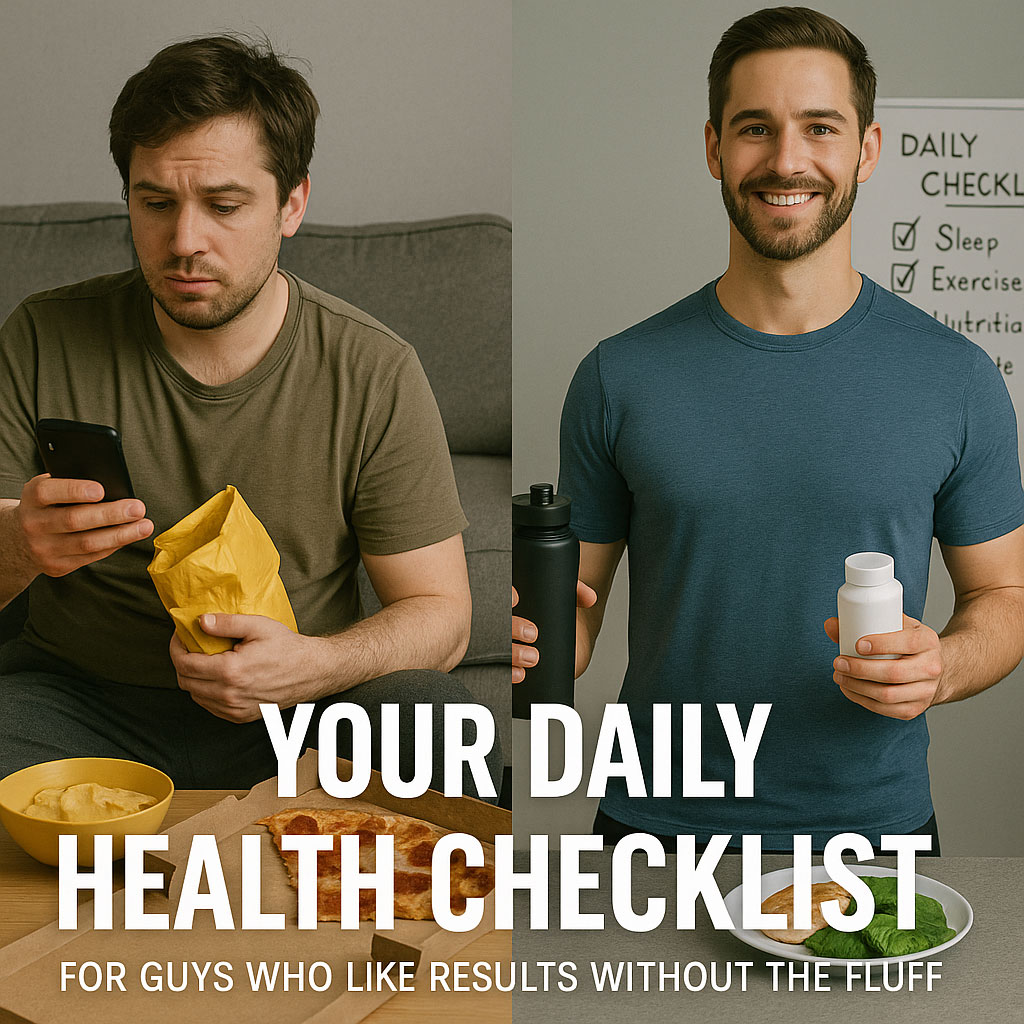
Most men do not struggle with their health because they do not care. The real problem is that modern health advice is often confusing, extreme, and nearly impossible to maintain in everyday life.
I have tried rigid routines, strict schedules, and tracking everything imaginable. On paper, those systems looked perfect. In reality, they broke down the moment life became busy, stressful, or unpredictable.
This checklist is not about perfection.
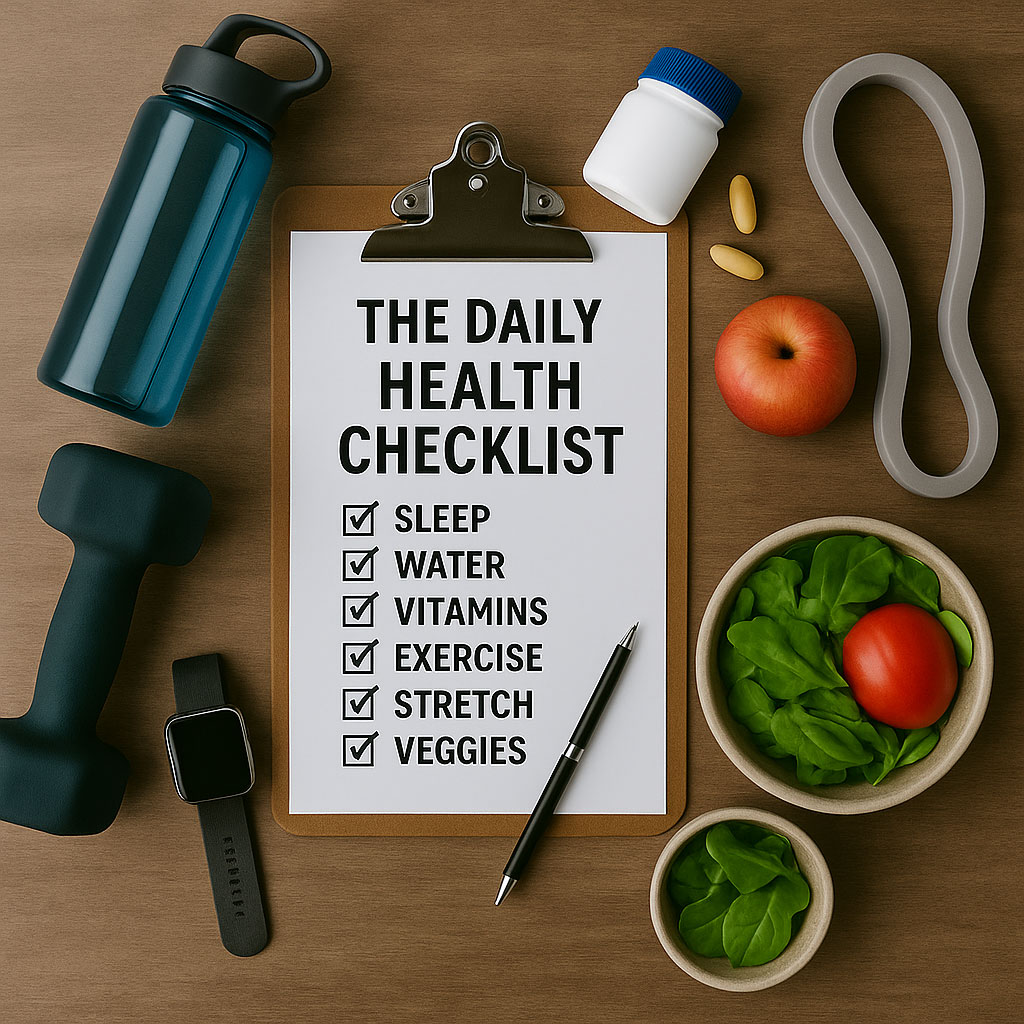
It is about the basics. These habits are not exciting, not trendy, and do not rely on hacks, but they consistently deliver results over time.
Doctors, researchers, and health experts continue to recommend these habits because they survive real-world testing, long-term studies, and decades of data. They are not fads. They are fundamentals.
When you look at respected health voices like Dr. Peter Attia, Dr. Andrew Huberman, and Dr. Rhonda Patrick, something becomes clear.
They may disagree on supplements, protocols, fasting styles, or workout preferences, but they almost never disagree on the basics.
That is not coincidence. It is consensus.
This checklist is built on habits that consistently appear in:
Epidemiological studies
Clinical research
Public health data
Long-term outcome tracking
These recommendations are not exciting, which is exactly why they endure.
If you had to choose only one habit to protect, it should be sleep.
Sleep directly influences:
Hormone regulation
Insulin sensitivity
Immune function
Mental health
Injury risk
Cognitive performance
Dr. Attia frequently emphasizes that sleep debt accumulates quietly. You may not feel the consequences immediately, but over time it shows up as metabolic issues, reduced resilience, impaired focus, and poorer recovery.
What Most Guys Get Wrong
They try to catch up on weekends. Research consistently shows that lost sleep cannot be fully repaid this way.
What Actually Works
A consistent sleep window, because timing matters, not just total hours
Treating bedtime like a non-negotiable appointment
Acknowledging that staying up late has a cost, without guilt, just awareness
Chronic sleep deprivation is strongly associated with increased mortality risk across large population studies.
You do not need punishing workouts every day.
You need regular movement that keeps your body active and responsive.
Dr. Huberman often highlights that low-intensity movement, such as walking, plays a key role in:
Blood sugar regulation
Nervous system balance
Joint health
Recovery capacity
What Most Guys Get Wrong
They associate health with all-or-nothing intensity. If they miss one workout, the week feels ruined.
What Actually Works
Walking daily
Strength training a few times per week
Staying active even on off days
Research consistently shows that prolonged sitting is an independent health risk, even for people who exercise regularly.
Protein intake is not a gym obsession. It is a biological requirement.
Protein supports:
Muscle maintenance
Bone density
Metabolic health
Appetite regulation
Dr. Rhonda Patrick frequently references research showing that adequate protein intake supports healthier aging, improved body composition, and long-term metabolic outcomes, particularly in men as they get older.
What Most Guys Get Wrong
They under-consume protein while over-consuming ultra-processed foods.
What Actually Works
Prioritizing protein at meals
Avoiding obsession over exact macros
Focusing on consistency instead of precision
Protein needs increase with age. That is physiology, not marketing.
Hydration does not require massive water bottles or constant reminders.
Even mild dehydration has been shown to negatively affect:
Cognitive performance
Physical endurance
Mood and focus
What Most Guys Get Wrong
They overcomplicate hydration until it becomes annoying and then abandon it.
What Actually Works
Drinking water with meals
Adding one or two additional servings during the day
Adjusting intake based on activity and environment
This recommendation persists because it is measurable, repeatable, and consistently supported by research.
This habit may sound trendy, but the mechanism is well established.
Morning light exposure helps:
Anchor circadian rhythm
Improve sleep quality
Regulate cortisol patterns
Dr. Huberman has explained extensively how early-day light exposure influences melatonin release later at night. This process has been documented in sleep and chronobiology research for decades.
What Most Guys Get Wrong
They try to optimize sleep without addressing light exposure.
What Actually Works
Five to twenty minutes of natural daylight in the morning
No supplements or devices required
This is basic chronobiology.
Stress cannot be eliminated, but unnecessary stress can be reduced.
Chronic stress is associated with:
Cardiovascular disease
Depression
Impaired immune function
What Most Guys Get Wrong
They focus only on physical habits while ignoring mental inputs.
What Actually Works
Limiting constant news consumption
Reducing doom-scrolling
Creating short mental breaks throughout the day
Overall stress load matters more than individual stressful moments.
You do not need to quit alcohol to be healthy, but pretending it has no cost is unrealistic.
Alcohol affects:
Sleep quality
Hormone production
Recovery
Dr. Attia is clear that alcohol’s effects are dose-dependent. This is not a moral issue. It is a physiological one.
What Most Guys Get Wrong
They assume moderation means as long as it is not every day.
What Actually Works
Fewer drinking days
Earlier cut-off times
Awareness of sleep disruption
The relationship between alcohol and health outcomes is well documented.
Non-Negotiables
Sleep consistency
Daily movement
Adequate protein
Basic hydration
These are supported across disciplines and decades of research.
Optional (Nice to Have)
Supplements
Cold exposure
Intermittent fasting
Advanced tracking
They may help some people, but they are not required for good health.
Perfect meal prep
Early-morning workouts that compromised sleep
Tracking every metric
Aggressive supplementation
None of these failed because they were bad ideas.
They failed because they were not sustainable in real life.
Consistency beats intensity every time.
Do not start all at once
Protect the basics first
Missed days do not erase progress
Track weeks, not days
Good health is not built on perfect streaks. It is built on long-term averages.
These habits are not exciting.
They do not promise miracles.
They do not sell transformations in thirty days.
They keep showing up because they work, even when life is messy.
That is not a trend.
That is biology.
Author Note
Written by Eli, focused on consistency, sustainability, and long-term health rather than hype.
Subscribe to our weekly newsletter. We don’t send any spam email ever!

Welcome to The All Guy. A blog dedicated to all the guys and topics they are interested in.
Copyright © 2026The All Guy. All rights Reserved.