Why Some EVs Feel Like Appliances (And Why a Few Still Have Soul)

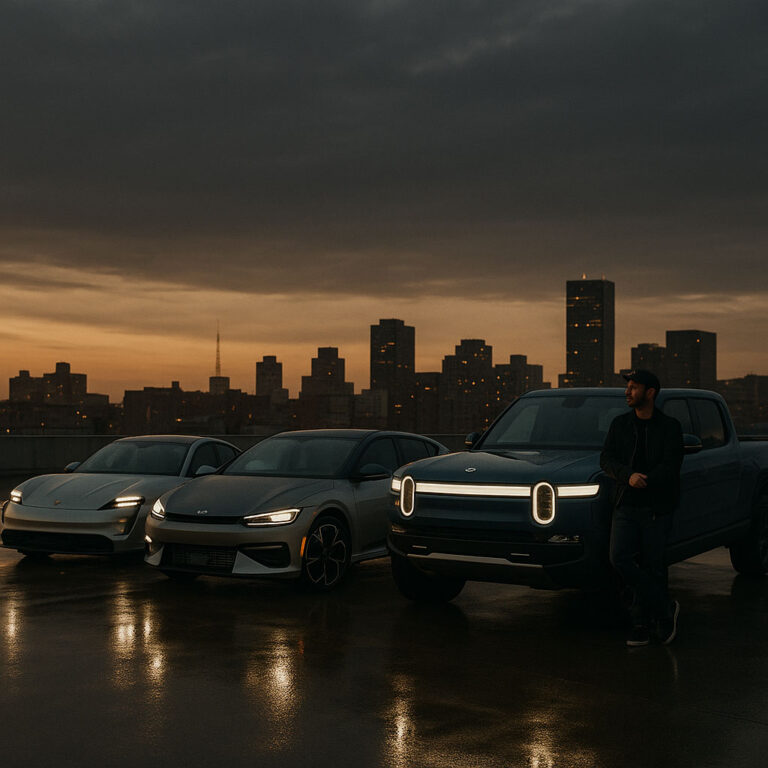
Three EV Vehicles on wet pavement on dark stormy night

Electric vehicles have a perception problem.

For many drivers, EVs do not feel like cars. They feel like appliances. Quiet, efficient, technically impressive, and emotionally flat. For some people, that is the appeal. For others, it is a dealbreaker.

This post is not about arguing that one side is right. It is about explaining why that feeling exists, what actually gives a car personality, and why a small group of electric vehicles manage to avoid the appliance effect.

This is not a buying guide. It is a framework for understanding what you are reacting to when an EV feels lifeless or engaging.


Why So Many EVs Feel Like Appliances

The appliance comparison is not an insult. It is a design outcome.

Most modern EVs are built to optimize efficiency, comfort, and simplicity. That naturally pushes them toward the same traits people expect from household devices.

Several factors contribute to this.

Isolation Over Interaction

Many EVs are tuned to remove feedback. Steering is light. Suspension is soft. Acceleration is instant but filtered. Road feel is minimized.

For daily commuting, this is comfortable and calm. For drivers who enjoy interaction, it can feel disconnected.

Screens Replace Controls

Touchscreens have become the control center for everything. Climate, drive modes, audio, navigation, and even basic functions are buried in menus.

This reduces mechanical interaction and replaces it with digital input. Some drivers enjoy that. Others feel removed from the act of driving.

Neutral Design by Intent

Many EVs are intentionally designed to offend no one. Clean lines, minimal interiors, muted styling.

That approach makes sense for mass appeal, but it also strips away personality.

None of this is accidental. It is intentional product design.

Porsche Taycan

What Actually Gives a Car a Sense of Soul

“Soul” is not about sound alone. It is not about horsepower, speed, or nostalgia. It comes from a combination of decisions that prioritize driver engagement over pure efficiency.

Several traits consistently show up in vehicles that feel engaging.

Steering That Communicates

Steering feel matters. Not heaviness, but feedback. A driver should understand what the front tires are doing without guessing.

When steering is tuned purely for ease, connection is lost.

Chassis Tuning With Intent

A well-tuned chassis does not need to be harsh. It needs to feel cohesive. Body control, balance, and predictability create confidence.

That confidence is part of what drivers describe as soul.

Design That Reflects Purpose

Cars with personality usually have a point of view. That can be aggressive, elegant, understated, or playful. What matters is that the design feels intentional, not generic.

Brand Philosophy

Some brands build cars to disappear into the background. Others build cars to be felt.

Neither is wrong, but the philosophy shapes the experience.


EVs That Manage to Avoid the Appliance Feeling

Most EVs prioritize comfort and simplicity. A smaller group chooses a different balance.

These vehicles still benefit from electric performance, but they retain a sense of engagement.

Porsche Taycan

The Taycan is often cited because it does not try to hide its identity. Steering feel, suspension tuning, and driver positioning are all designed with engagement in mind.

It feels engineered first and electrified second.

BMW i4

BMW has historically focused on driver involvement, and that philosophy carries into the i4. While still refined and modern, it preserves feedback and balance that many EVs lack.

Ford Mustang Mach-E

The Mach-E succeeds not because it mimics a gasoline Mustang, but because it embraces a sense of attitude. Steering and acceleration feel deliberate rather than sanitized.

Lucid Air

The Lucid Air blends refinement with performance in a way that feels intentional. It is luxurious, but not numb. The engineering focus shows through the driving experience.

These vehicles are not perfect, and they are not for everyone. What they share is a willingness to prioritize feel alongside efficiency.


Tesla Model 3 performance

Why Some Drivers Prefer Appliance-Like EVs

It is important to say this clearly.

Many people want an EV that feels like an appliance.

They value:

  • Quiet operation

  • Minimal input

  • Smooth isolation

  • Low mental load

For commuting, errands, and daily driving, this makes sense. A calm, predictable vehicle reduces stress and effort.

Choosing an appliance-like EV is not settling. It is selecting a tool that fits a lifestyle.


The Real Question Buyers Should Ask

The question is not whether an EV has soul.

The question is what you want from driving.

If driving is transportation, efficiency, and comfort, an appliance-like EV may be ideal.

If driving is engagement, feedback, and identity, certain EVs will resonate more than others.

Neither preference is wrong. Problems arise when expectations do not match design intent.


Final Thought

Electric vehicles did not remove soul from cars. Design priorities did.

Some EVs are built to disappear into daily life. Others are built to be felt.

Understanding the difference matters more than specs, range numbers, or acceleration times.

A car does not need an engine to have personality.
It needs intention.


Author Note
Written by Eli, focused on driving experience, real-world ownership perspective, and thoughtful automotive design rather than hype or tribal loyalty.

Share your love
Facebook
Twitter
Newsletter

Leave a Reply

Your email address will not be published. Required fields are marked *